
Last updated October 10, 2026
Free on-site gate assessment - hinges, posts, and your LiftMaster or Nice gate operator checked before anything is quoted
The assessment is free and the quote is the invoice.
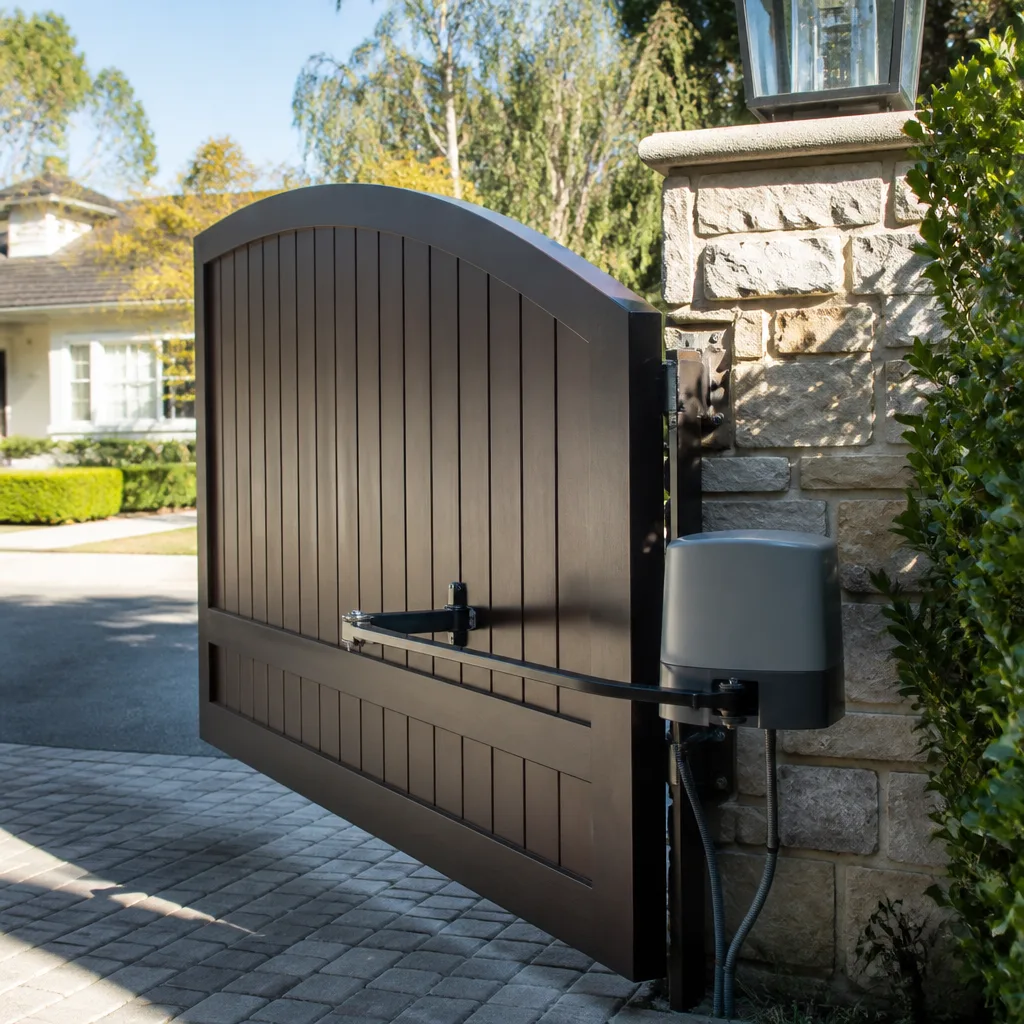
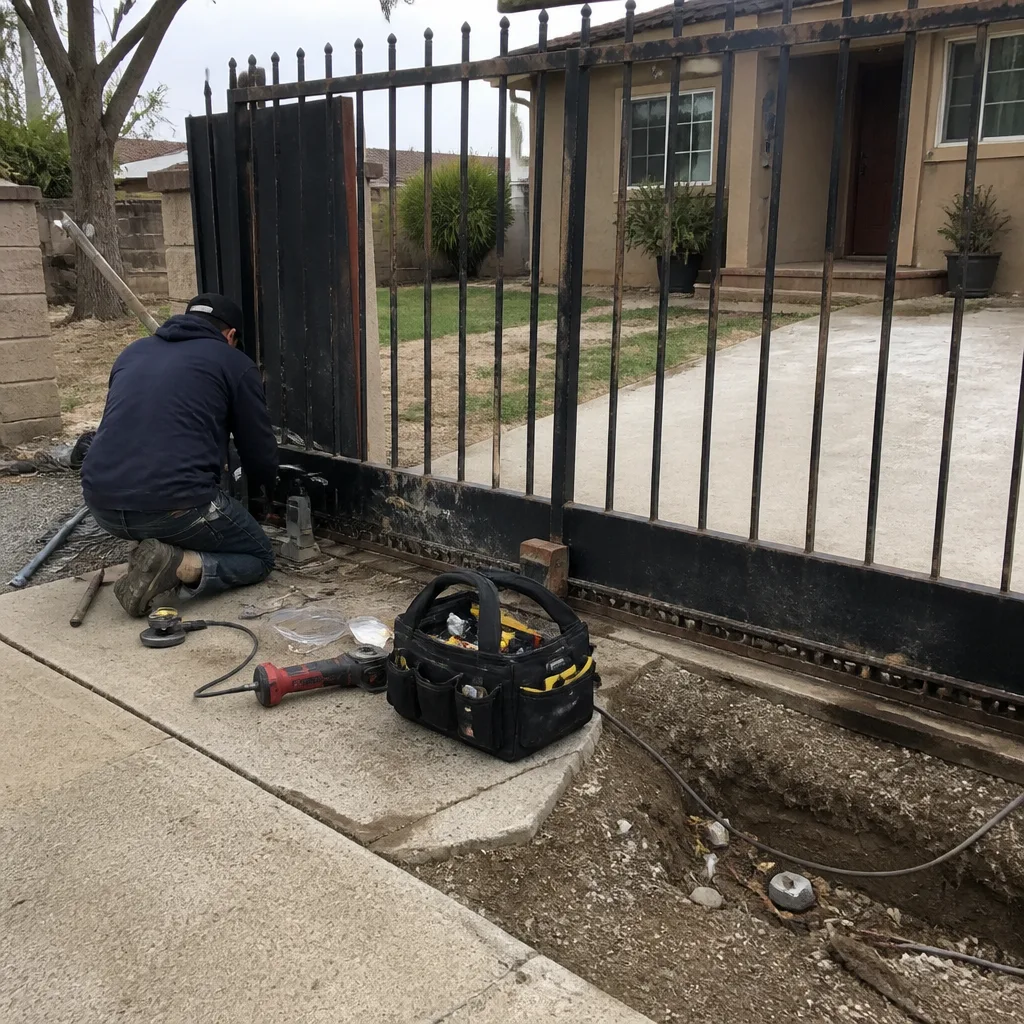 Before
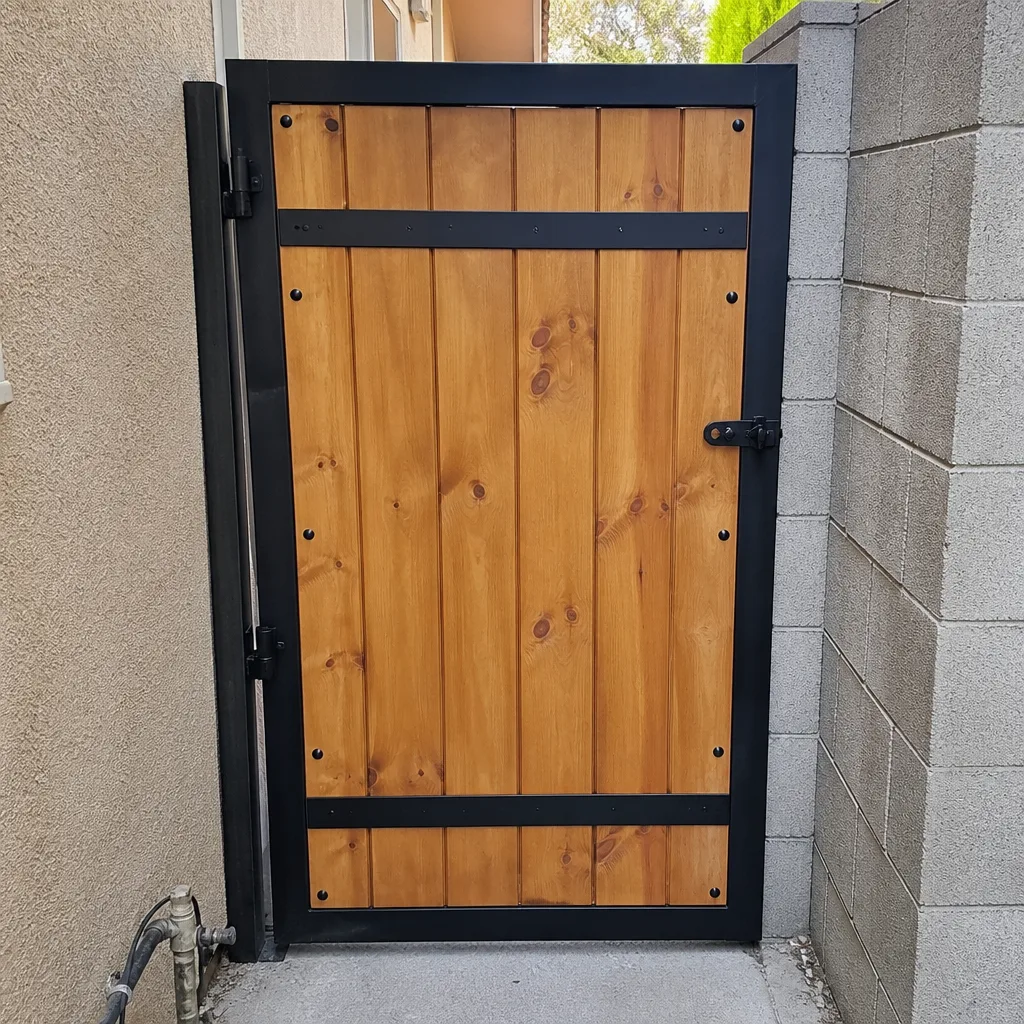 After
After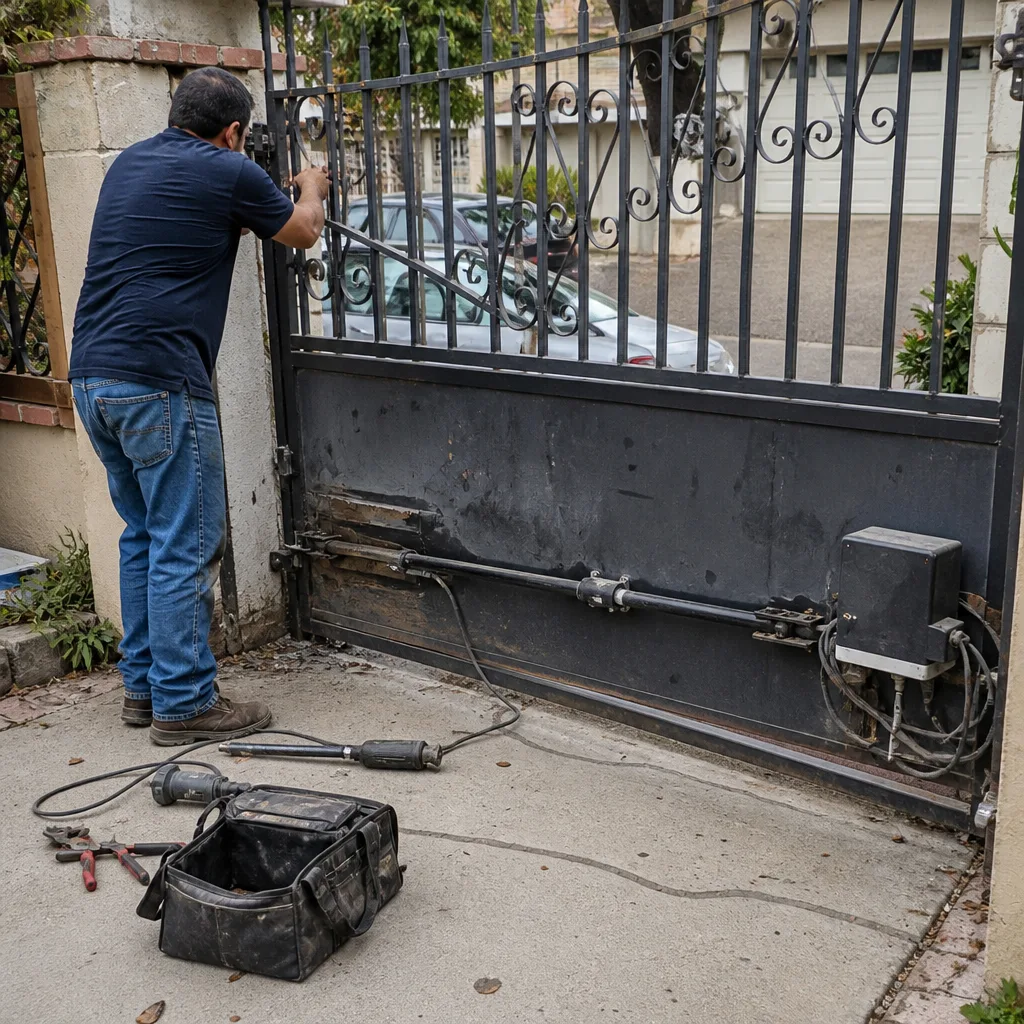 Before
 After
After Before
 After
AfterChoosing the Right Gate Repair Brand: A Buyer’s Guide for Los Angeles
Several gate operator brands sold aggressively in the Los Angeles market have limited authorized service networks and 6-to-12-week parts lead times on key control boards. That detail is invisible at purchase and critical at failure. In this guide, we’ll show you how to evaluate gate operator brands not just by their marketing, but by their real-world serviceability in LA’s specific conditions: coastal salt air, hillside power fluctuations, high-cycle residential use, and HOA multi-user environments. You’ll learn which brands have local parts distributors, which warranties actually transfer to new homeowners, and what five-year ownership really costs.
Quick Answer
The best gate repair brand for your Los Angeles property depends on your gate type, usage cycle, and location-and when problems arise, our Gate Repair services can get you back up and running quickly. LiftMaster and FAAC lead for local parts availability and technician training density in the LA metro. Mighty Mule suits budget-conscious residential swing gates with moderate use, while Elite excels in commercial and multi-family HOA settings. For coastal properties from Marina del Rey to Palos Verdes, prioritize brands with sealed control enclosures and local salt-air service experience.
Table of Contents
- Why Brand Choice Matters More in Los Angeles Than Most Markets
- The Nine Major Gate Operator Brands: What Each Actually Does Best
- Parts Availability and Service Network Depth in the LA Metro
- How to Evaluate a Brand’s Warranty: What’s Real and What’s Marketing
- Total Cost of Ownership: Purchase Price vs. Five-Year Reality
- LA-Specific Use Cases: Matching Brand to Environment
- Common Mistakes to Avoid
- When to Call a Professional
- Frequently Asked Questions
Why Brand Choice Matters More in Los Angeles Than Most Markets
Los Angeles gate owners face a combination of stressors that shorten operator lifespan and complicate repairs. The coastal marine layer deposits salt on exposed electronics from Santa Monica through San Pedro. Hillside properties in the Hollywood Hills, Silver Lake, and the Santa Monica Mountains experience voltage fluctuations that fry control boards. And the sheer density of gated communities, from the San Fernando Valley to Orange County border cities, means many residential operators cycle 15-20 times daily, far beyond the light-duty rating of entry-level systems.
These conditions make brand selection a long-term infrastructure decision, not just a performance comparison. A brand with excellent torque specs and weak local support will leave you waiting weeks for a replacement board while your gate hangs open. A brand with modest features and a parts warehouse in Commerce or Ontario gets you operational in 48 hours.
We’ve operated under The Garrison Standard since 2008, and our Los Angeles crews have learned which brands hold up and which leave customers stranded. The Garrison Code requires us to stock common failure parts for every brand we service, but we cannot stock what manufacturers cannot deliver. That reality shapes every recommendation in this guide.
Three factors make LA uniquely demanding:
- Salt-air corrosion: Within three miles of the coast, unsealed circuit boards fail at 2-3x the inland rate. Brands with conformal coating or sealed enclosures last longer but cost more upfront.
- High-cycle residential use: A gate on a busy Venice or Koreatown rental cycles 7,000-10,000 times yearly. Light-duty operators rated for 5,000 cycles annually fail mid-year.
- Power quality: PG&E infrastructure in hillside areas delivers voltage swings that trigger fault codes on sensitive boards. Some brands handle this gracefully; others lock out until manually reset.
The Nine Major Gate Operator Brands: What Each Actually Does Best
We service nine gate-motor brands across Los Angeles: LiftMaster, FAAC, BFT, Linear, Viking, Ghost Controls, DoorKing, Elite, and Mighty Mule. Each has genuine strengths and real limitations. Here’s what our field experience shows, neighborhood by neighborhood and application by application.
LiftMaster
LiftMaster dominates Los Angeles residential installations for straightforward reasons: local distribution through Chamberlain Group’s Carson warehouse, extensive technician training programs, and a parts pipeline that rarely exceeds 3-5 business days. For a deeper look at the full process, see The Complete Gate Installation Guide for Los Angeles Homeowners. Their residential swing and slide operators (CSW, SL series) handle the 8-12 foot gates common in Mid-City and Pasadena bungalows without strain. The MyQ integration appeals to tech-forward homeowners in Culver City and DTLA lofts.
Where LiftMaster struggles: coastal salt-air environments without additional enclosure protection. We’ve replaced CSW200 control boards in Marina del Rey at 18 months where inland Pasadena units run 7+ years. Their commercial-grade HCT and GT series perform better but carry higher parts costs.
FAAC
FAAC’s hydraulic swing operators (400 series, 750 series) are the standard for heavy iron gates in Hancock Park, Hancock Park-adjacent neighborhoods, and the historic districts of Pasadena and South Pasadena. The hydraulic ram delivers smooth, consistent force regardless of temperature, and the oil-bath mechanics tolerate dust better than screw-drive or chain systems. Italian-built quality control is evident in the casting and sealing.
FAAC’s weakness in Los Angeles is technician density. Fewer local techs train deeply on hydraulic troubleshooting, and the pressure-relief valve adjustment requires specific knowledge. Parts ship from a regional warehouse in Phoenix, typically 5-7 days. For FAAC owners, this means selecting a service company with demonstrated hydraulic experience matters enormously.
Elite
Elite built its reputation on commercial and multi-family applications, and that strength translates directly to Los Angeles HOA communities. Their CSW200 and Robus slide operators handle 20-30 foot gates with continuous duty cycles. The diagnostic LED system simplifies troubleshooting for trained technicians, reducing labor time on complex failures.
We’ve installed and serviced Elite operators at HOA communities from Woodland Hills to Alhambra. The brand’s real value emerges in multi-gate environments where standardized parts and consistent programming reduce maintenance complexity. Elite’s warranty requires registration within 30 days of installation, a detail many homeowners miss.
Mighty Mule
Mighty Mule occupies the budget residential segment honestly. Their FM500 and MM560 series suit light-duty swing gates on single-family homes with moderate use, 4-6 cycles daily. For a Pasadena craftsman with a 10-foot wood gate and two drivers, it’s adequate. For a Venice rental with four roommates and frequent Uber arrivals, it’s under-specified and will fail prematurely.
Parts availability is the critical constraint. Mighty Mule distributes through big-box retailers and direct shipment; there is no local warehouse. A failed control board in Los Angeles typically means 10-14 days from order to delivery. We stock common Mighty Mule parts when possible, but proprietary components limit our ability to guarantee rapid turnaround.
BFT, Linear, Viking, Ghost Controls, DoorKing
BFT’s Italian engineering matches FAAC quality with slightly better Los Angeles parts distribution through a West Covina distributor. Their subterranean hydraulic operators suit historic districts with aesthetic restrictions. Linear offers solid mid-market slide operators with good value, though their diagnostic systems lag LiftMaster and Elite. Viking’s slide operators perform well in commercial settings but have limited residential application. Ghost Controls targets the DIY solar market with battery-backed systems for off-grid or remote gates, common in Topanga and Malibu canyon properties. DoorKing remains the legacy standard for telephone-entry integrated systems in older LA HOAs, with parts availability that depends heavily on whether your installer maintained documentation.
Parts Availability and Service Network Depth in the LA Metro
Parts availability is the hidden variable that determines whether your gate repair takes two days or two months. Here’s the actual landscape for Los Angeles property owners.
| Brand | Local Warehouse | Typical Lead Time | Authorized Service Network Density |
|---|---|---|---|
| LiftMaster | Carson, CA | 2-5 business days | High (20+ authorized companies) |
| FAAC | Phoenix, AZ (regional) | 5-10 business days | Moderate (8-12 trained companies) |
| BFT | West Covina, CA | 3-7 business days | Moderate (6-10 trained companies) |
| Elite | Ontario, CA | 3-6 business days | Moderate-High (15+ trained companies) |
| Linear | Regional (varies by part) | 5-12 business days | Moderate |
| Mighty Mule | No local warehouse | 10-18 business days | Low (retail-focused support) |
| Viking | Texas (factory direct) | 7-14 business days | Low-Moderate |
| Ghost Controls | Texas (factory direct) | 7-14 business days | Low (DIY-oriented) |
| DoorKing | Inglewood, CA (limited stock) | 3-10 business days | Moderate (legacy systems) |
The practical implication: if you live in Pacific Palisades and your gate fails on a Friday evening, a LiftMaster or Elite operator gets diagnosed Monday and repaired Wednesday. A Mighty Mule or Ghost Controls failure means your gate stays open until the following week at earliest, assuming no shipping delays.
Our Los Angeles gate repair crews stock control boards, limit switches, loop detectors, and articulating arms for LiftMaster, FAAC, Elite, and Linear systems specifically because those brands’ local infrastructure supports rapid turnaround. For other brands, we communicate realistic timelines upfront so customers make informed decisions about temporary security measures.
How to Evaluate a Brand’s Warranty: What’s Real and What’s Marketing
Gate operator warranties vary enormously in substance, and the sales brochure rarely matches the claim process. Here’s how to read the fine print for Los Angeles conditions.
- Check the registration requirement. Elite requires online registration within 30 days; failure voids coverage entirely. LiftMaster’s standard warranty activates at purchase but extended coverage requires dealer registration. FAAC’s international warranty sometimes creates documentation gaps when US distributors change.
- Verify who honors the warranty. Some brands restrict warranty service to factory-authorized technicians. In Los Angeles, that means waiting for a scheduled visit, not same-day service. Others allow any licensed technician to perform warranty work with proper documentation. Ask explicitly: “If this fails Tuesday, who comes, and when?”
- Identify exclusions for environmental damage. Salt-air corrosion, water intrusion, and power surge damage are commonly excluded. For coastal Los Angeles properties, this exclusion eliminates most control board failures from coverage. Some brands offer enhanced environmental warranties for additional cost; evaluate whether the premium exceeds expected repair costs.
- Confirm parts vs. labor coverage. A “three-year warranty” on parts only still leaves you paying $150-300 for technician labor. The most protective warranties cover both for the full term. Carver’s 365-Day Done Right Promise covers parts and labor with no deductible, a structure we adopted because factory warranties left customers exposed.
- Check transferability. If you sell your Los Angeles property, does the warranty transfer? LiftMaster’s standard warranty does; some competitors’ do not. For investment properties in Silver Lake or Echo Park where turnover is high, this matters.
The Garrison Standard requires our technicians to document warranty status on every service call and to communicate clearly when a factory warranty applies versus when our guarantee replaces it. We’ve seen too many customers pay for repairs that should have been covered by documentation they didn’t know existed.
Total Cost of Ownership: Purchase Price vs. Five-Year Reality
The installed price of a gate operator tells you almost nothing about what it costs to own. Here’s a realistic five-year cost comparison for typical Los Angeles residential applications, based on our field data from 2008-2024.
Scenario: Single-family home, 12-foot swing gate, 8 cycles daily, inland Los Angeles (Pasadena, Altadena, Sherman Oaks)
| Brand/Model | Installed Price | 5-Year Maintenance | Expected Parts Replacement | 5-Year Total |
|---|---|---|---|---|
| Mighty Mule MM560 | $800-1,200 | $300-400 | $600-900 (board, arm, battery) | $1,700-2,500 |
| LiftMaster CSW200 | $1,400-1,800 | $200-300 | $300-500 (battery, limit switch) | $1,900-2,600 |
| FAAC 415 | $1,800-2,400 | $250-350 | $200-400 (seals, hydraulic fluid) | $2,250-3,150 |
| Elite CSW200 | $1,600-2,200 | $200-300 | $250-450 (board, battery) | $2,050-2,950 |
Scenario: Same application, coastal Los Angeles (Marina del Rey, Playa del Rey, Palos Verdes Estates)
Add 40-60% to parts replacement costs for unsealed operators due to salt-air acceleration. A Mighty Mule board that lasts 4 years inland fails at 18-24 months coastal. LiftMaster’s standard CSW200 shows similar degradation; their HCT commercial series with sealed enclosure performs better but carries higher installed cost. FAAC’s hydraulic sealing and Elite’s commercial enclosures justify their premium in coastal applications through reduced failure frequency.
The five-year frame matters because most Los Angeles homeowners stay in properties 5-7 years. Choosing on purchase price alone means likely paying for replacement or major repair before you sell. Choosing on total cost of ownership means predictable expenses and a functioning gate at resale.
Our gate installation quotes in Los Angeles include a five-year maintenance projection specific to your location and use case. The written price covers installation; the projection informs brand selection.
LA-Specific Use Cases: Matching Brand to Environment
High-Cycle Residential Use (7,000-10,000 cycles/year)
Rental properties, multi-generational homes, and properties with home offices generate gate cycles far exceeding standard residential ratings. In Venice, Koreatown, and the denser parts of Santa Monica, we’ve measured 15-20 daily cycles. For these applications, commercial-grade operators are not overkill; they’re correct specification.
LiftMaster’s HCT series and Elite’s continuous-duty models handle this load with thermal protection and heavier gearing. Mighty Mule and entry-level Linear systems will fail within 18-24 months. The upfront cost difference of $600-800 pays back in avoided emergency repairs and tenant complaints.
Coastal Salt-Air Environments
The marine layer extends 1-3 miles inland, affecting properties from Malibu through San Pedro. Standard control boards without conformal coating or sealed enclosures corrode at contact points, producing intermittent faults that are maddening to diagnose. For motor-specific troubleshooting in these conditions, see The Complete Gate Motor Repair Guide for Los Angeles Homeowners.
FAAC’s hydraulic operators and BFT’s subterranean systems minimize above-ground electronics exposure. LiftMaster’s HCT and some Elite commercial models offer sealed enclosures as standard. For coastal properties, we recommend against any operator without environmental sealing, regardless of brand reputation in inland markets.
Hillside Properties with Power Fluctuations
The Hollywood Hills, Silver Lake, Echo Park, and Santa Monica Mountains experience voltage sags and surges from long distribution runs and transformer loading. These conditions trigger fault codes, damage capacitors, and shorten board life.
Operators with robust power supplies and surge tolerance perform better. FAAC’s hydraulic systems are less sensitive to voltage variation than electromechanical screw or chain drives. Adding a dedicated surge protector and voltage regulator at the operator adds $200-400 to installation but extends board life 2-3x in these areas. We specify this on hillside gate motor repair and replacement quotes in Los Angeles.
HOA Communities with Multiple Users
Los Angeles HOAs from Woodland Hills to Alhambra manage 50-200 units through common gates. These systems require telephone entry integration, multiple access methods (remote, keypad, vehicle detector), and audit logging for security incidents.
Elite and DoorKing dominate this segment through purpose-built multi-user programming and event logging. LiftMaster’s commercial access systems compete effectively but require more integration labor. The critical factor is not the operator alone but the ecosystem: entry system, loop detectors, safety edges, and remote management. Standardizing on one brand across all gates in an HOA simplifies maintenance and reduces parts inventory.
Common Mistakes to Avoid
- Choosing on brand reputation alone without checking local service coverage. A premium brand with no trained technicians in Los Angeles leaves you waiting weeks for factory service. Verify who services the brand within 20 miles of your property before purchase.
- Underspecifying for actual use cycles. Homeowners consistently underestimate daily gate cycles. Count actual openings for two weeks before selecting an operator rating. In high-cycle applications, commercial-grade specification prevents mid-life failure.
- Ignoring coastal environmental ratings. A standard-duty operator purchased for a Playa Vista or Redondo Beach property based on inland recommendations will fail prematurely. The salt-air penalty is real and measurable.
- Accepting verbal warranty terms. Every warranty detail should be in writing: duration, parts/labor split, environmental exclusions, registration requirements, and transferability. Verbal assurances from sales staff do not bind the manufacturer.
- Failing to plan for parts obsolescence. Some brands discontinue control boards after 7-10 years, forcing full operator replacement for a $400 part. LiftMaster and FAAC maintain longer parts availability; smaller brands with limited US presence do not. Ask the installer: “If this board fails in year eight, will parts be available?”
- Selecting DIY-oriented brands for complex installations. Mighty Mule and Ghost Controls market to homeowners with straightforward single-gate applications. Hillside installations with uneven grade, custom ironwork, or integrated access control require professional-grade equipment and should not use consumer-targeted products.
- Neglecting to verify installer brand authorization. Warranty coverage often requires installation by a factory-authorized or certified technician. Using a general handyman or unlicensed contractor can void coverage entirely. Verify authorization before signing.
When to Call a Professional
Gate operator systems involve high-tension springs, heavy moving gates, and 110-240V electrical connections. Specific scenarios require professional intervention: grinding or binding in the drive mechanism, intermittent operation that suggests control board failure, safety edge or photo-eye malfunction that prevents automatic closing, and any operator installation on a gate exceeding 400 pounds or 16 feet in length.
High-torsion spring systems on sliding gates store significant energy and can cause serious injury if released improperly. Electrical troubleshooting on 220V commercial operators presents shock and fire hazards. We do not recommend DIY repair on these components.
Carver Gate Repair offers free estimates in Los Angeles. Our background-checked, uniformed technicians arrive with written prices before any work starts, and every repair carries our 365-Day Done Right Promise. Call (469) 530-2485 to schedule evaluation, or explore more guides & resources on our blog.
Frequently Asked Questions
Gate operator repair in Los Angeles typically ranges from $180 for simple limit switch or photo-eye adjustments to $650-900 for control board replacement on commercial-grade systems. Diagnostic service calls run $95-150, often credited toward repair if approved. Call (469) 530-2485 for an exact quote – estimates are free.
LiftMaster and Elite offer the most straightforward warranty claims processing in Los Angeles due to local authorized service networks. FAAC’s warranty coverage is strong but requires careful documentation due to international manufacturing. The most protective coverage combines factory warranty with a service company’s labor guarantee – Carver’s 365-Day Done Right Promise covers parts and labor with no deductible for a full year.
Technically possible but generally inadvisable. Integration complexity increases, warranty coverage becomes unclear when failures occur, and troubleshooting requires expertise across multiple manufacturer protocols. For Los Angeles HOAs and multi-gate properties, standardizing on one brand ecosystem reduces long-term maintenance cost and technician dispatch time.
A properly specified and maintained gate operator lasts 10-15 years inland and 7-12 years coastal. Actual lifespan depends heavily on cycle count, environmental exposure, and power quality. Operators running beyond rated cycles or without surge protection in hillside areas often fail at 5-7 years regardless of brand.
Operator replacement on existing gates typically does not require permit in Los Angeles if electrical supply and gate structure remain unchanged. New installations, structural modifications, or changes to gate weight/classification may trigger LADBS or local jurisdiction requirements. We verify permit status on every installation quote and handle submittals when required.
Different use cycles, power quality, and environmental exposure create divergent failure patterns even with identical equipment. A gate on a busy rental property in Venice cycles 3-4x more than a retired couple’s gate in Pasadena. Hillside power fluctuations damage electronics that stable grid supply protects. Coastal salt air accelerates corrosion invisible inland. The operator model is one variable among several.
The Bottom Line
Brand selection for gate operators in Los Angeles is a service infrastructure decision disguised as a product choice. The best-performing motor on paper means little if parts take six weeks and no local technician can diagnose it. Prioritize brands with demonstrated local parts availability, trained technician networks, and warranties that transfer to professional service without factory-only restrictions. Match specification to actual use cycles and environmental exposure, not to optimistic marketing. For coastal properties, commercial-grade sealing justifies its cost through extended board life. For high-cycle applications, commercial specification prevents premature failure. And for every installation, get the warranty terms, parts availability commitment, and total five-year cost projection in writing before work begins.
Written by Lonnie Burke, Owner at Carver Gate Repair, serving Los Angeles since 2008.