
Last updated October 10, 2026
Free on-site gate assessment - hinges, posts, and your LiftMaster or Nice gate operator checked before anything is quoted
The assessment is free and the quote is the invoice.
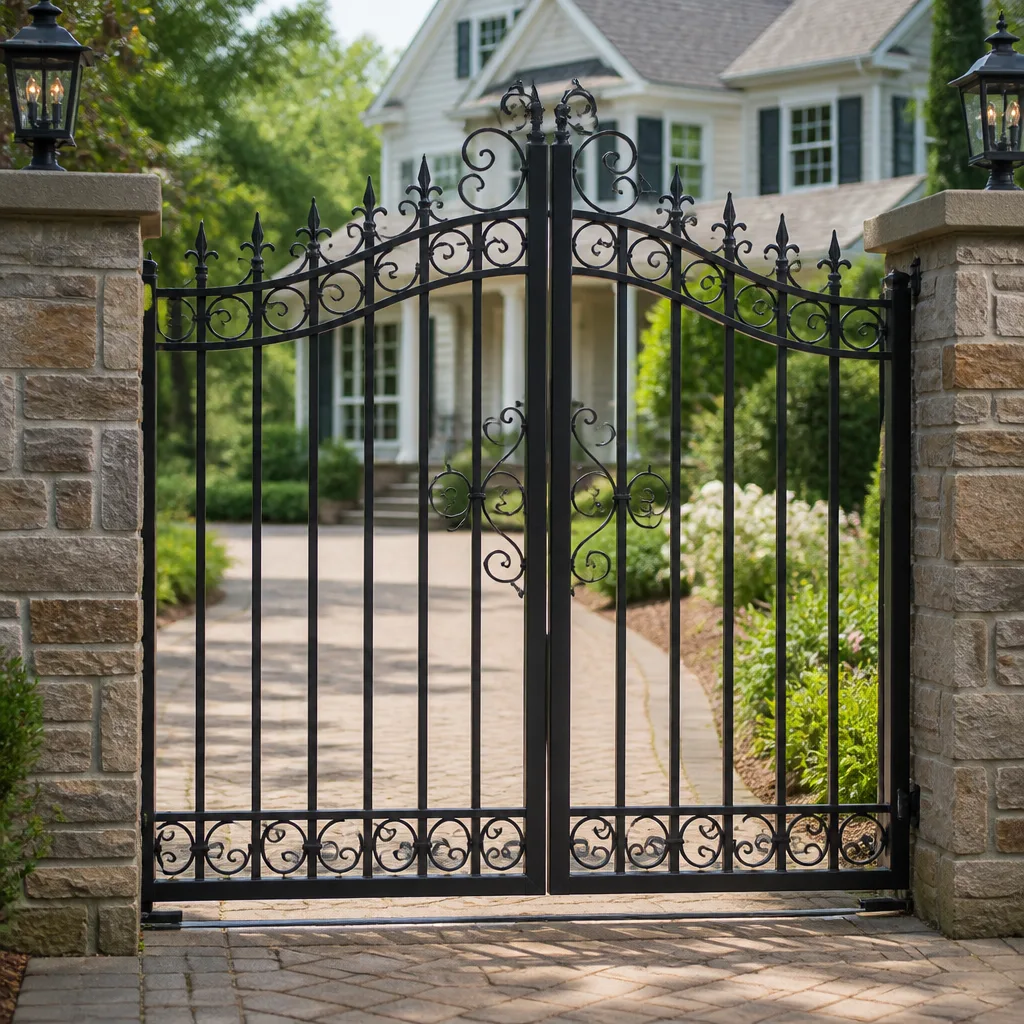
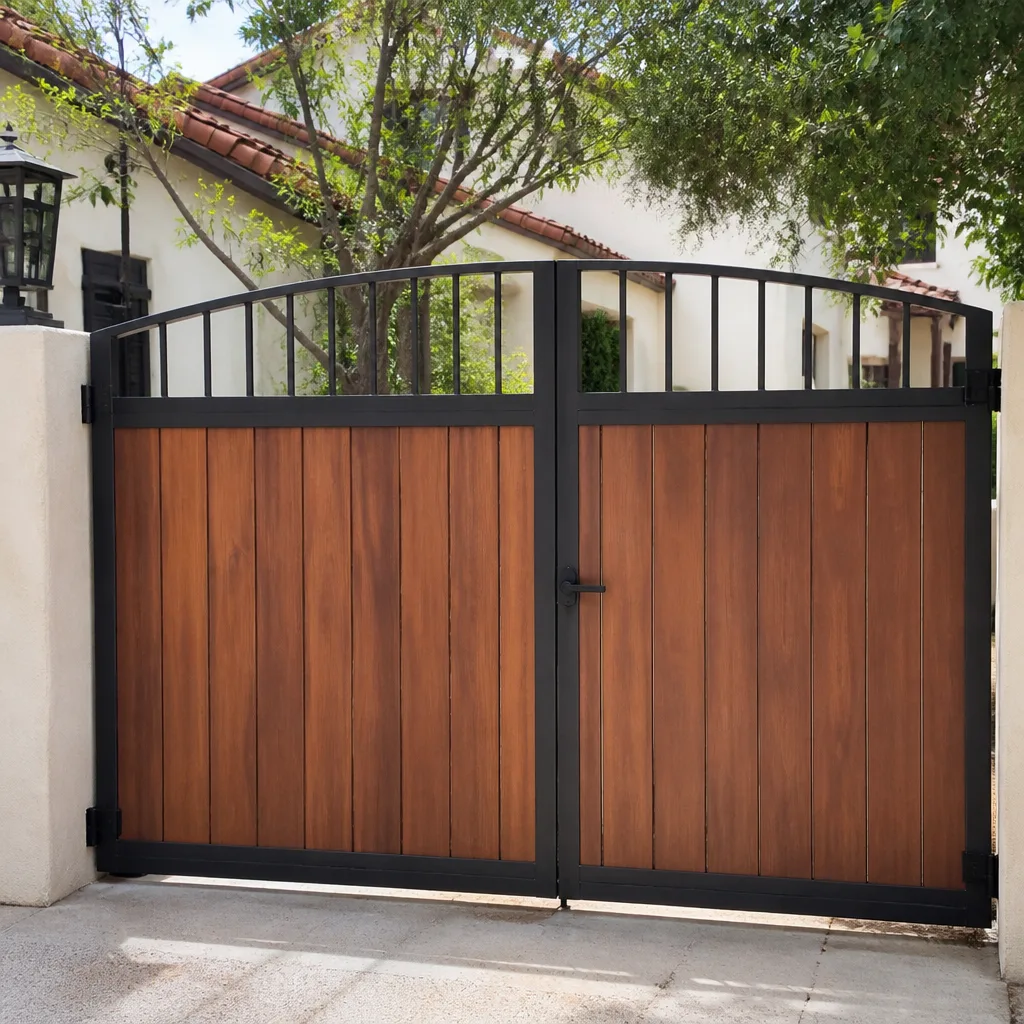
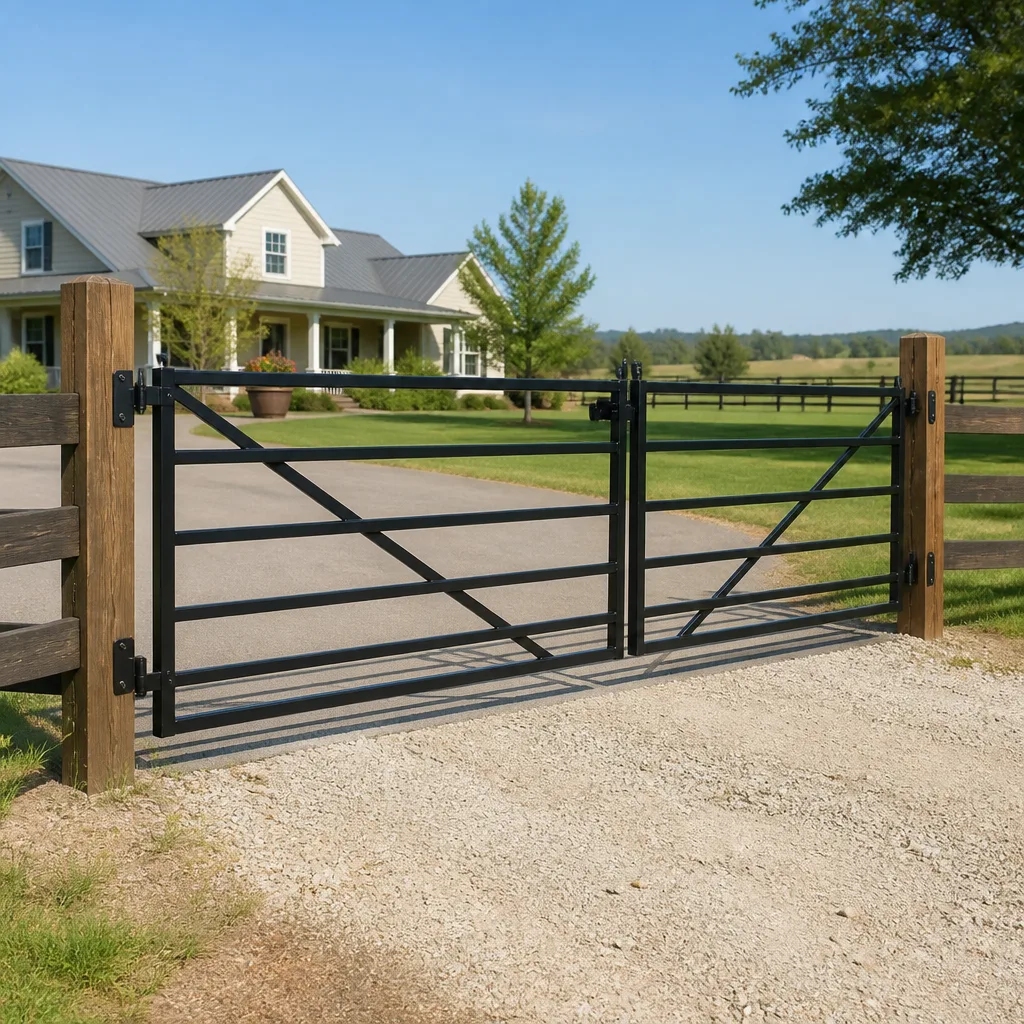
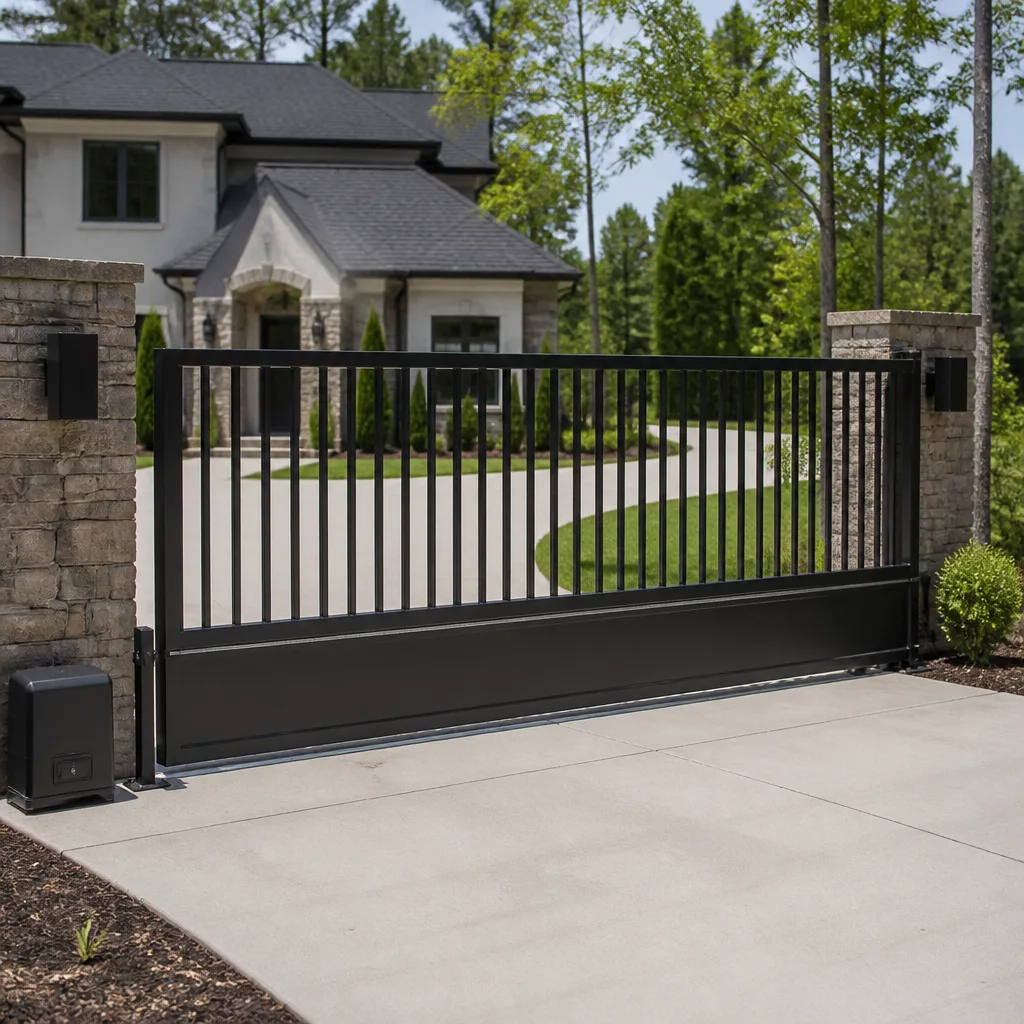
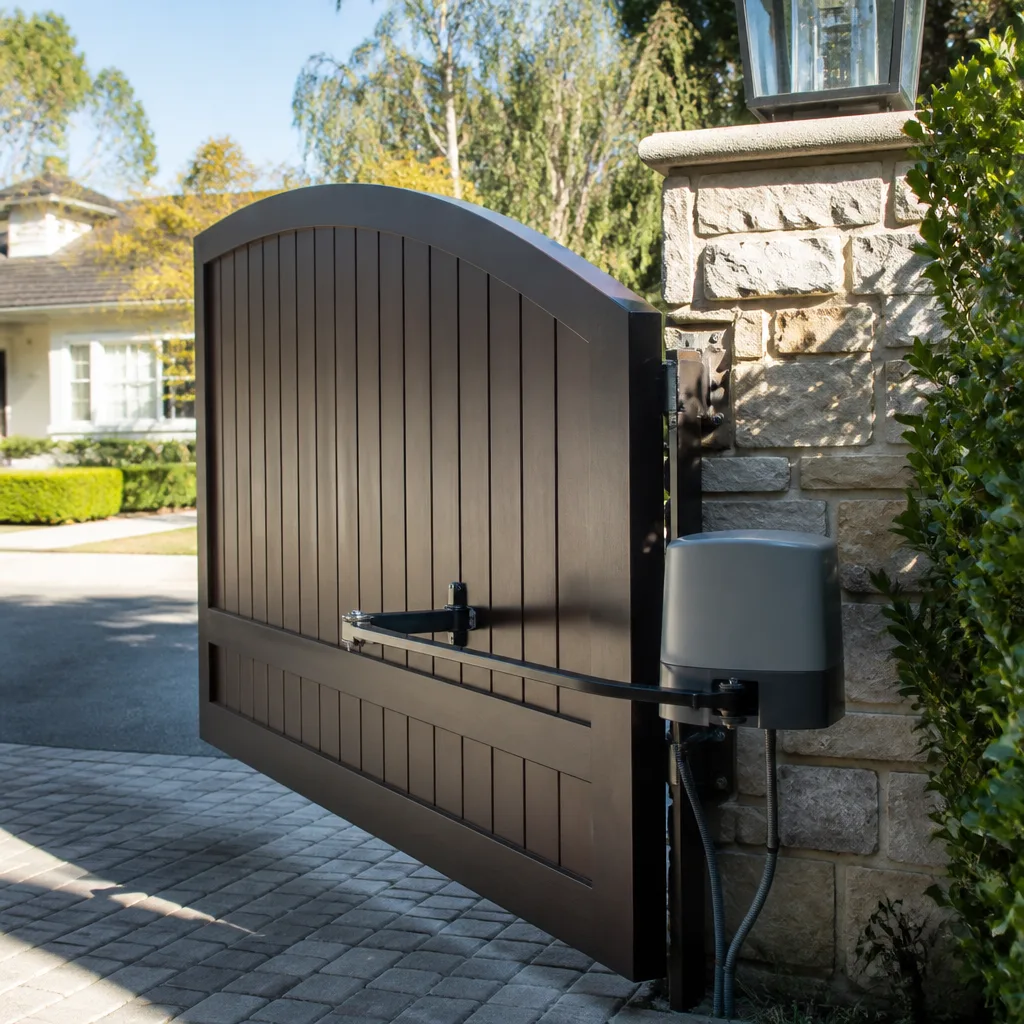
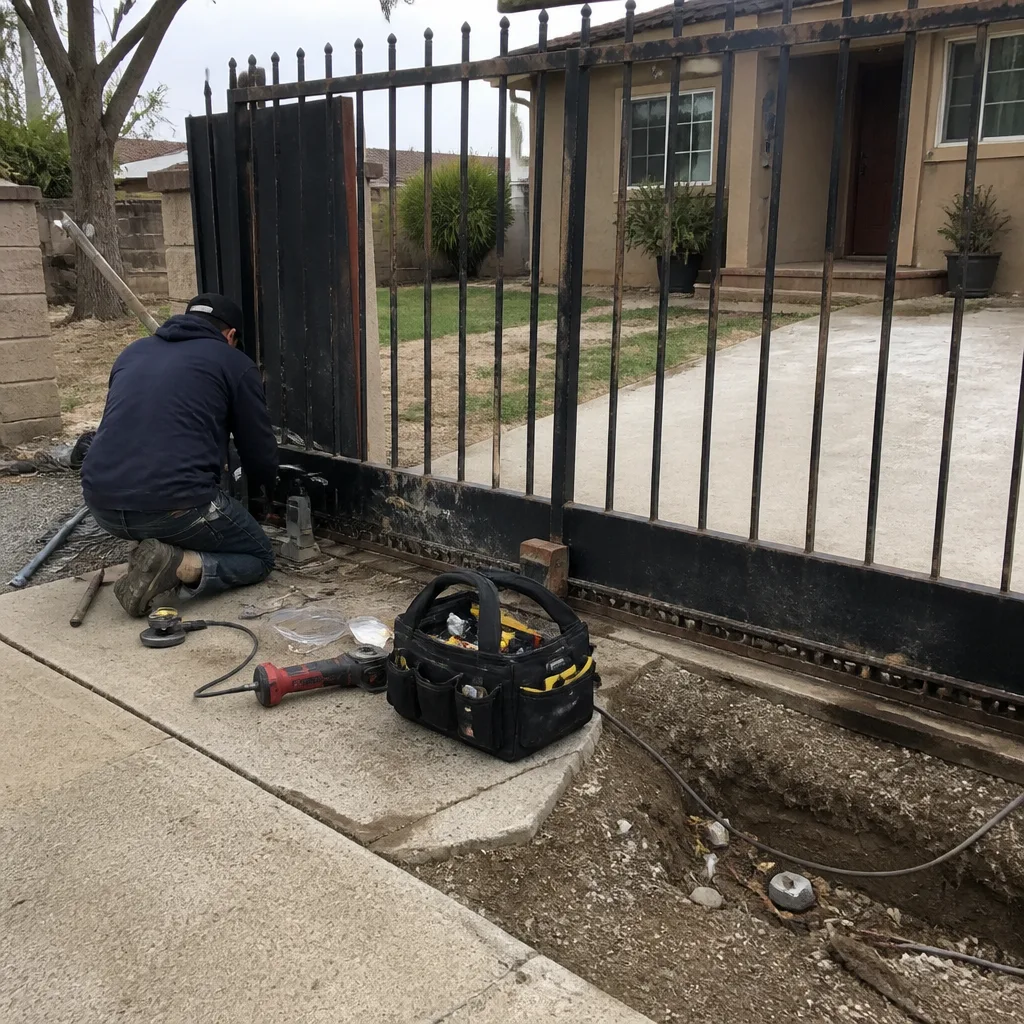 Before
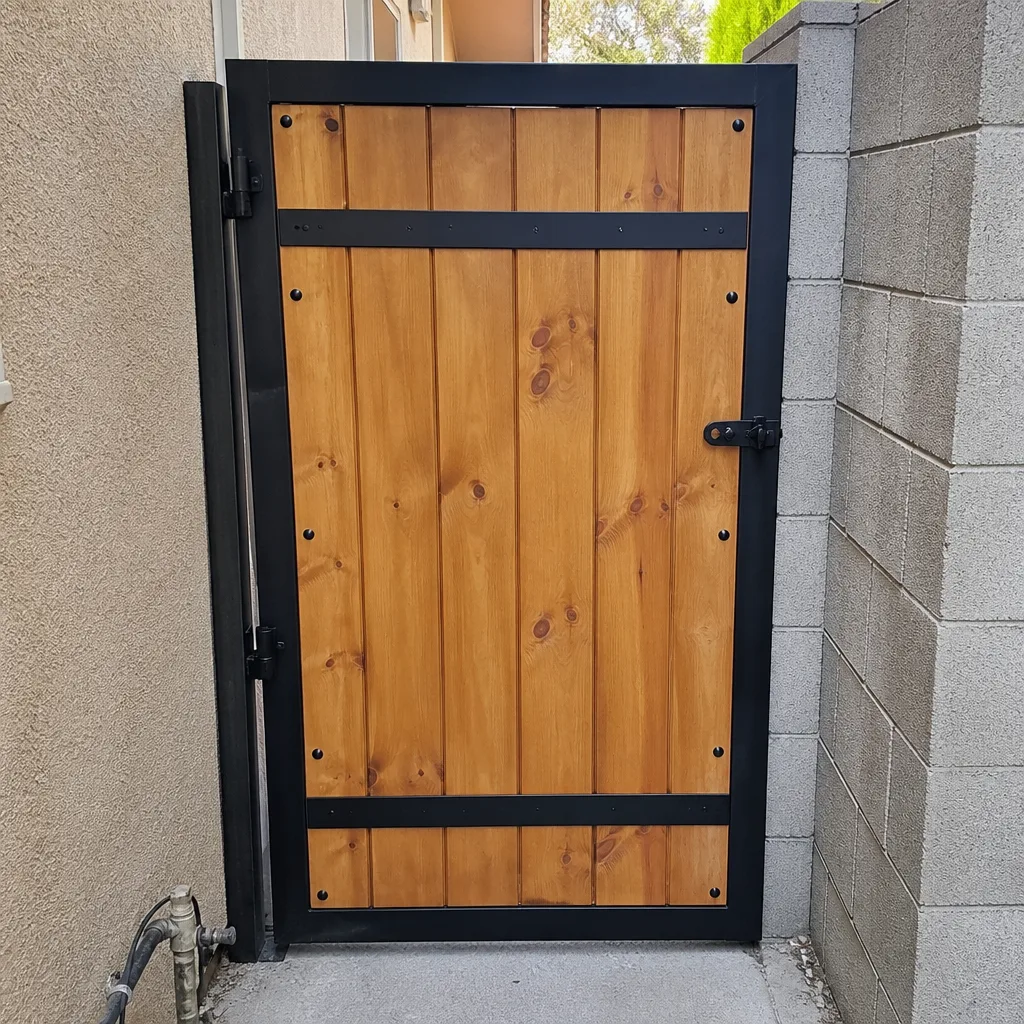 After
After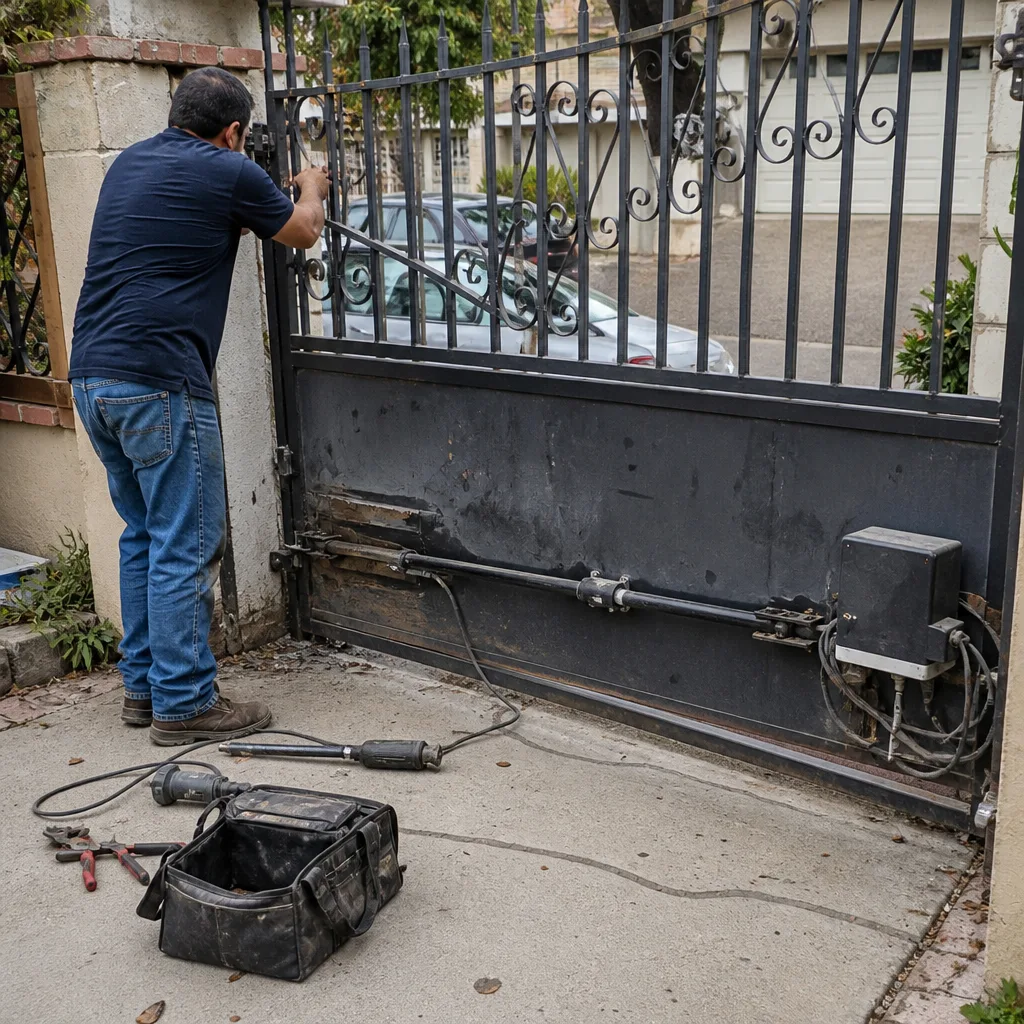 Before
 After
After Before
 After
AfterThe Complete Gate Installation Guide for Los Angeles Homeowners
Most homeowners in Los Angeles start a gate installation by choosing a style online. The ones who avoid expensive mistakes start by pulling their property’s setback requirements and checking whether the city requires a permit for a motorized gate – because in some LA municipalities, an unpermitted motorized gate is grounds for a stop-work order that freezes the project mid-installation. In this guide, we’ll walk through the engineering and permitting decisions that need to happen before you ever pick a material or brand.
Quick Answer
Gate installation in Los Angeles requires verifying municipal permit rules, matching your soil type to post depth and concrete specifications, confirming setback compliance against your property’s site plan, and sizing the gate operator to actual daily cycles and leaf weight. A proper installation contract should specify concrete cure time, motor commissioning, UL 325 entrapment device verification, and separate warranty terms for parts and labor.
Table of Contents
- Permit Requirements by Los Angeles Municipality
- Soil Conditions and Post Installation Spec
- Reading Your Site Plan for Setback Compliance
- Gate Operator Sizing: Cycles, Weight, and Why Undersizing Fails
- What a Legitimate Installation Contract Must Specify
- Gate Materials and Los Angeles Climate
- Common Mistakes to Avoid
- When to Call a Professional
- Frequently Asked Questions
Permit Requirements by Los Angeles Municipality
Los Angeles is not one jurisdiction. The city of Los Angeles, Beverly Hills, Santa Monica, Malibu, and unincorporated LA County each run separate building departments with their own submittal processes, fee schedules, and plan-check timelines. An automatic gate permit in Santa Monica does not transfer to a property three blocks east in Los Angeles proper.
Here’s what we’ve learned from installations across these municipalities:
- City of Los Angeles: Motorized gates require a building permit and electrical permit. The Department of Building and Safety (LADBS) requires a site plan, gate detail drawing, and electrical schematic. Plan check typically runs 2-4 weeks. Gates over 6 feet in height trigger additional zoning review.
- Beverly Hills: Separate building department with its own online portal. Requires a licensed contractor’s bond on file before permit issuance. Plan check is thorough; expect 3-5 weeks. They flag aesthetic compatibility with neighborhood character.
- Santa Monica: Combines building and planning review. Coastal zone properties may need additional Coastal Commission documentation. Their inspectors verify UL 325 entrapment devices on the final inspection – no exceptions.
- Malibu: LA County handles unincorporated areas, but Malibu city limits have their own process. Hillside properties trigger geotechnical review for post footings. Fire department access clearance is strictly enforced.
- Unincorporated LA County: Permits through the County of Los Angeles Department of Public Works. Simpler for basic swing gates; motorized gates still need electrical. Setback enforcement varies by local zoning ordinance.
A typical plan check for a motorized gate requires: property site plan with dimensions, gate location and swing arc, footing detail with depth and concrete spec, operator electrical requirements, and manufacturer cut sheets for the motor and safety devices. Some jurisdictions now require photometric studies if the gate has integrated lighting.
We’ve seen projects in Hancock Park and Pacific Palisades delayed six weeks because the homeowner’s contractor started excavation before the permit posted. The stop-work order sat until the plan check caught up. Pull the permit first. The Garrison Standard doesn’t allow work to begin until the permit is in hand and visible on-site.
Soil Conditions and Post Installation Spec
Gate posts in Los Angeles face four distinct soil conditions, and each demands a different footing approach. Get this wrong and the gate sags, binds, or tears the operator off its mount within two years.
Valley Caliche
Parts of the San Fernando Valley, especially around Van Nuys and Northridge, sit on caliche – a cemented calcium carbonate layer that can be as shallow as 18 inches. You can’t auger through it with standard equipment. Options: rent a hydraulic breaker to punch through, or design a wider, shallower footing that achieves bearing capacity without full depth. We typically spec 24-inch diameter footings at 30-inch depth in caliche zones, versus 36-inch depth in normal soils. More concrete volume, less depth.
Hillside Decomposed Granite
Properties in the Hollywood Hills, Laurel Canyon, and Topanga sit on decomposed granite that shifts seasonally with moisture. Standard concrete footings crack and rotate. The fix: bell-bottom piers or helical piers that anchor below the active layer. We’ve replaced gates in Los Feliz where the original installer used a standard 36-inch post depth; the post tilted 4 degrees in eighteen months. The replacement spec called for a 48-inch pier with a 30-inch bell, 3,000 PSI concrete with fiber reinforcement.
Coastal Sandy Soil
Santa Monica, Venice, and Marina del Rey properties near the beach face sandy soils with high water tables. Excavations collapse without shoring. Post footings need to be oversized to compensate for reduced bearing capacity – think 30-inch diameter minimum – and often require dewatering during the pour. Salt air accelerates rebar corrosion, so we spec epoxy-coated rebar and concrete with a water-cement ratio below 0.45.
Clay and Expansive Soils
Pockets of expansive clay exist throughout Los Angeles, particularly in older alluvial areas. Wet seasons swell the clay; dry seasons shrink it. Footings need to extend below the zone of seasonal moisture change, typically 36-48 inches, with void forms or isolators to prevent uplift on the post. We’ve seen gate frames twist in these conditions when the installer treated it like standard soil.
| Soil Type | Typical Location | Minimum Post Depth | Concrete Spec | Special Requirement |
|---|---|---|---|---|
| Caliche | San Fernando Valley | 30 in (wider footing) | 3,000 PSI, 24-in diameter | Break caliche layer or use wider base |
| Decomposed granite | Hollywood Hills, Topanga | 48 in with bell | 3,000 PSI with fiber | Bell-bottom or helical pier below active layer |
| Coastal sand | Santa Monica, Venice | 36 in | 3,000 PSI, low W/C ratio | Epoxy-coated rebar; dewatering may be needed |
| Expansive clay | Older alluvial zones | 42-48 in | 3,500 PSI | Void forms or isolators to prevent uplift |
Reading Your Site Plan for Setback Compliance
“Property line” and “buildable line” are not the same thing, and confusing them is how you end up tearing out a completed gate. Here’s how to read what you have before a contractor pours concrete.
- Locate the official site plan. This is the survey drawing filed with your original building permit, not the realtor’s marketing sketch. It shows the legal property boundary, easements, and setback lines. If you don’t have it, request a copy from your city’s building department or hire a surveyor.
- Identify all easements. Utility easements, sidewalk easements, and slope easements can extend well inside the fence line. In Los Angeles, a sidewalk easement often runs 10-15 feet from the curb, meaning your front fence line is not your property boundary. A gate installed in that easement can be removed by the city or utility without compensation.
- Check front, side, and rear setbacks. These are measured from the property line, not the curb or neighbor’s fence. In R-1 zones in Los Angeles, front setbacks are typically 20-25 feet, side setbacks 5 feet, rear setbacks 10-15 feet. Corner lots have additional sight-triangle requirements that can prohibit gate placement.
- Verify the gate swing arc. A swing gate’s arc must remain entirely within your property. If it swings over a sidewalk or into a side setback, you’ve violated code. Sliding gates avoid this but need lateral run space.
- Confirm driveway width. Los Angeles Fire Department requires minimum driveway widths for emergency access. A gate that narrows the usable driveway below 12 feet (20 feet for commercial) can fail final inspection.
We’ve been called to jobs in Brentwood and Bel Air where the homeowner’s original installer poured footings before verifying setbacks. The gate was built. The inspector red-tagged it. The fix involved cutting the concrete, relocating the post, and replastering a stucco wall. The Garrison Standard requires setback verification in writing before any excavation – it’s that common a problem.
Gate Operator Sizing: Cycles, Weight, and Why Undersizing Fails
The most common installation mistake we see in Los Angeles is an undersized operator, as detailed in The Complete Gate Motor Repair Guide for Los Angeles Homeowners. It opens the gate fine on day one. Eighteen months later, the motor overheats, the gearbox strips, and the homeowner pays for a replacement that should have been spec’d correctly from the start.
Operator sizing requires matching two numbers: daily cycle count and leaf weight (or linear foot weight for sliding gates).
Cycles Per Day
A residential gate in a single-family home might see 8-15 cycles daily. A multi-tenant property in Koreatown or a short-term rental in Silver Lake can see 40-60. Operators are rated for continuous duty (100% duty cycle), heavy duty (60-80%), or standard residential (20-30%). Running a standard-duty operator at 50 cycles daily means it’s working beyond its thermal limit every day. The motor windings degrade. The control board fails. We’ve replaced FAAC and Linear operators in Los Angeles that failed prematurely because the original installer sized for a single-family home on a multi-family property.
Leaf Weight and Wind Load
The operator’s torque rating must handle not just the gate’s static weight, but the dynamic load when wind pushes against it. A solid-panel wrought iron gate in the Santa Ana wind corridor – Pasadena, Altadena, the foothills – can see wind loads that double the effective resistance. We spec operators with 50% torque reserve minimum in these zones. Viking and BFT both make operators with high starting torque for wind-loaded applications.
Linear foot weight for sliding gates
Sliding gates transfer all load to the track and rollers. The operator only overcomes rolling friction and wind resistance. But if the track isn’t level or the rollers bind, the operator sees effective loads far above spec. We always verify track installation tolerance (1/4 inch in 10 feet) before commissioning the motor.
A proper commissioning checklist includes: verifying open and close limit switch positions, setting auto-close timer per UL 325, testing entrapment devices (photo eyes, edge sensors, loop detectors), and recording baseline current draw. A motor drawing 20% over baseline current at six months indicates developing mechanical resistance – track, hinges, or gate alignment issue.
What a Legitimate Installation Contract Must Specify
Verbal promises and handshake deals are how homeowners get stuck with half-finished gates and no recourse. A legitimate installation contract in Los Angeles should contain these specific items:
- Concrete cure time before gate hanging. Minimum 7 days for standard concrete, 3 days minimum for high-early mix (if specified). Hanging a gate on green concrete crushes the footing. We’ve repaired gates in Encino where the installer hung the gate 48 hours after the pour. The post rotated within a month.
- Motor commissioning checklist. The contract should list what gets tested: limit switches, auto-close, entrapment devices, manual release, and baseline current draw. Without this, you’re accepting an untested system.
- UL 325 entrapment device verification. California requires compliant entrapment protection on all automatic gates. The contract should specify which devices (photo eyes, safety edges, loop detectors) and who verifies operation – installer, electrician, or third-party inspector.
- Warranty terms distinguishing parts from labor. A “one-year warranty” means nothing if it only covers the motor and excludes labor to replace it. Legitimate contracts separate parts warranty (often 3-5 years from manufacturer) from labor warranty (typically 1 year from installer). Our 365-Day Done Right Promise covers both: if any part of our installation fails within a full year, we return and fix it at no charge.
- Permit responsibility. Who pulls the permit? Who schedules inspections? Who pays re-inspection fees if the first inspection fails? Ambiguity here kills timelines.
- Cleanup and site restoration. Excavation disturbs irrigation, landscaping, and hardscape. The contract should specify what gets restored and to what standard.
At Carver Gate Repair, every installation contract includes a written price before work starts, the full commissioning checklist, and our guarantee in writing. The price doesn’t move once the job is open. That’s The Garrison Standard, and it’s been non-negotiable since 2008.
Gate Materials and Los Angeles Climate
Los Angeles climate is harder on gates than most homeowners expect. Salt air within three miles of the coast, intense UV at elevation, Santa Ana wind events, and occasional heavy rain all degrade materials on different timelines.
Wrought Iron and Steel
Most common for decorative and security gates. Powder coating is standard, but preparation matters more than the coating itself. In coastal Los Angeles – Santa Monica, Marina del Rey, San Pedro – we specify hot-dip galvanizing beneath powder coat. The galvanizing protects at cut edges and scratch points where powder coat fails. Without it, we’ve seen rust bloom at weld points within three years.
Aluminum
Lighter, no rust, lower maintenance. Good for large sliding gates where weight matters. Trade-off: aluminum is softer. A vehicle impact that dents steel will tear aluminum. We spec aluminum for residential swing gates in corrosive environments, steel for high-impact commercial applications.
Wood
Cedar and redwood hold up better than pressure-treated pine in Los Angeles dry heat. But wood gates move seasonally, and that movement stresses operators and latches. We always recommend steel or aluminum frames with wood infill, rather than solid wood construction, for gates over 8 feet wide. The frame carries the load; the wood provides the aesthetic.
Vinyl and Composite
Low maintenance, limited style range. Vinyl becomes brittle after 5-7 years of UV exposure; we’ve replaced vinyl gates in the Valley that cracked in Santa Ana winds. Composite performs better but costs significantly more. Neither material works well for heavy or wide gates.
Common Mistakes to Avoid
- Skipping permit research. Beverly Hills and Santa Monica actively patrol for unpermitted motorized gates. The stop-work order and fine cost more than the permit would have.
- Ignoring soil conditions. An installer who specs the same 36-inch post depth for a Hollywood Hills hillside lot as for a flat Valley property is guessing. We’ve replaced tilted posts that failed because decomposed granite shifted underneath.
- Undersizing the operator. The cheapest motor that “works” today fails prematurely under real load. We see this most often on multi-tenant properties where the installer assumed single-family use.
- Installing in an easement. That front corner by the sidewalk looks perfect for a pedestrian gate. If it’s in a utility or sidewalk easement, the city can remove it without notice.
- Neglecting entrapment protection. UL 325 compliance isn’t optional in California. Gates without functioning photo eyes, safety edges, or loop detectors fail inspection and create liability exposure.
- Hanging on green concrete. The installer wants to finish the job. You want a gate that doesn’t sag. Those interests conflict when concrete hasn’t cured. Minimum 7 days, or specify high-early mix in the contract.
When to Call a Professional
Call a gate specialist when your project involves motorized operation, any hillside or coastal property, a gate over 10 feet wide or 6 feet tall, or any location where setback or permit status is uncertain. Generalist contractors often lack the electrical and structural knowledge for automatic gate systems, and the rework costs more than doing it right the first time.
Carver Gate Repair offers free estimates in Los Angeles and publishes more guides & resources. We’ll pull your property’s permit history, verify setback requirements, and spec the installation to your soil conditions and usage pattern. Call (469) 530-2485 to schedule.
Frequently Asked Questions
A basic manual swing gate installation in Los Angeles typically runs $2,500-$4,500, while a motorized automatic gate with operator, safety devices, and permit compliance generally ranges $6,500-$14,000 depending on width, material, and site conditions. Hillside properties with pier foundations, coastal properties with corrosion-resistant specs, and gates requiring electrical trenching from the main panel fall at the higher end. Call (469) 530-2485 for a written price based on your specific property – estimates are free.
Yes, if the gate is motorized or over 6 feet in height. The city of Los Angeles, Beverly Hills, Santa Monica, and Malibu each have separate building departments with their own requirements. Unincorporated LA County also requires permits for automatic gates. A manual gate under 6 feet may not need a building permit in some jurisdictions, but setback rules still apply.
Permit approval typically takes 2-5 weeks depending on the municipality. Once permitted, physical installation of a standard residential automatic gate takes 2-3 days: one day for excavation and concrete footings, a cure period (minimum 7 days for standard concrete), then one day for gate hanging and operator commissioning. Custom fabrication, electrical trenching, or hillside pier work adds time.
Swing gates need clear arc space inside the property equal to the gate leaf length – a 16-foot gate needs 16 feet of clear swing radius. Sliding gates need lateral run space along the fence line equal to the gate width plus operator clearance. Sliding gates work better on sloped driveways and tight sites; swing gates are simpler, quieter, and typically less expensive for standard flat installations.
Match the operator’s duty cycle rating to your actual daily use, and its torque rating to the gate’s weight plus 50% reserve for wind load. A single-family home at 10-15 cycles daily needs a standard-duty operator; a multi-tenant or commercial property at 40+ cycles needs continuous-duty rating. The operator nameplate should list both cycle rating and maximum leaf weight – verify these against your application.
UL 325 requires at least one primary entrapment protection device (photo eyes or safety edges) and a secondary device (typically a loop detector or additional photo eye) for automatic gates. The installer must verify function and document testing. California inspectors check this on final inspection; gates without compliant protection fail and cannot be operated until corrected.
The Bottom Line
Installing a gate in Los Angeles is a permitting and engineering problem first, a product selection second, as covered in The Complete Gate Repair Guide for Los Angeles Homeowners. Verify your municipality’s requirements, match your soil conditions to the footing spec, confirm setbacks against your site plan, and size the operator to real usage. Get a contract that specifies concrete cure time, commissioning, UL 325 verification, and separate parts and labor warranties. The homeowners who avoid expensive mistakes do this work before choosing a style. The ones who don’t call us to fix what should have been done right the first time.
Written by Lonnie Burke, Owner at Carver Gate Repair, serving Los Angeles since 2008.