
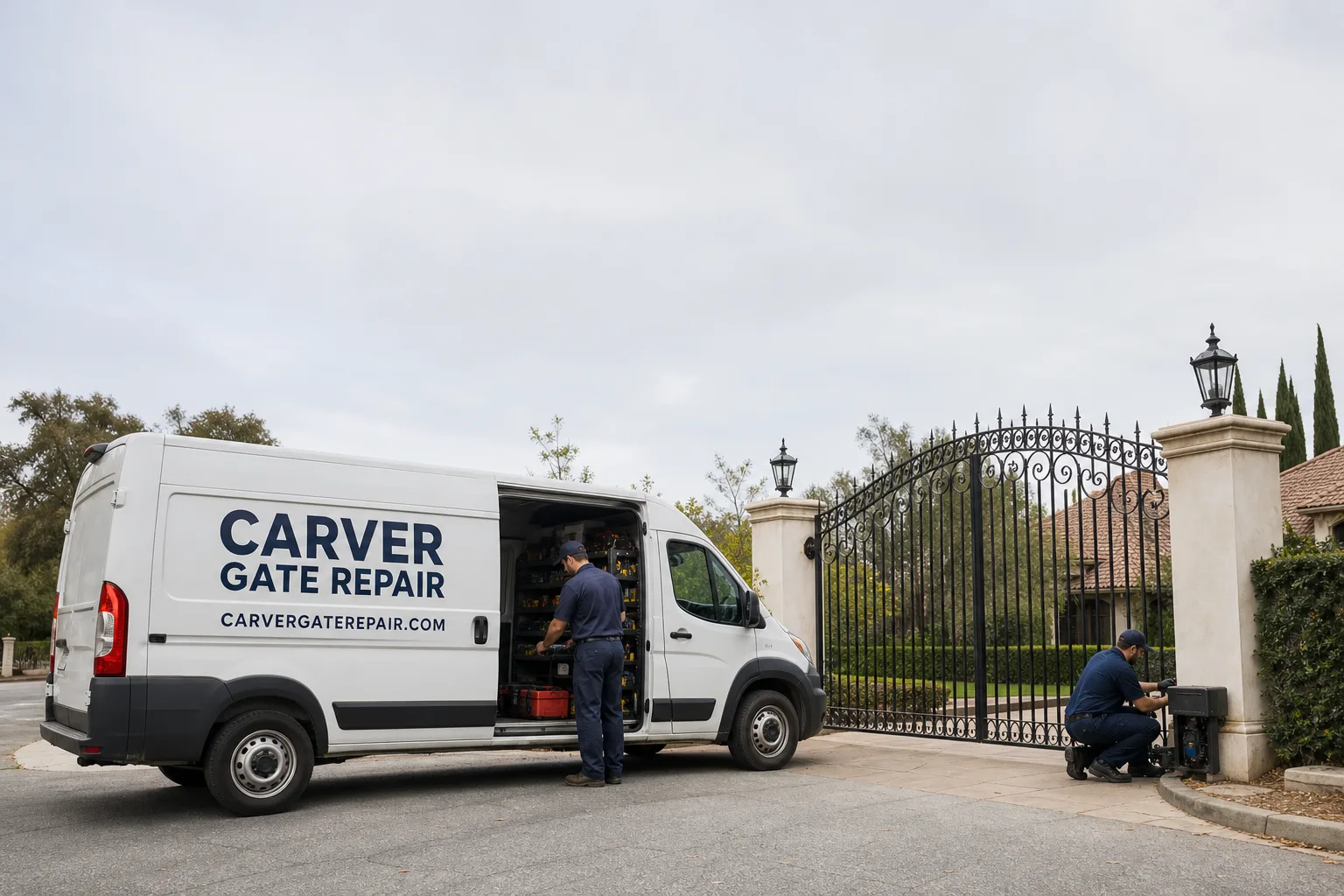
Free on-site gate assessment - hinges, posts, and your LiftMaster or Nice gate operator checked before anything is quoted
The assessment is free and the quote is the invoice.

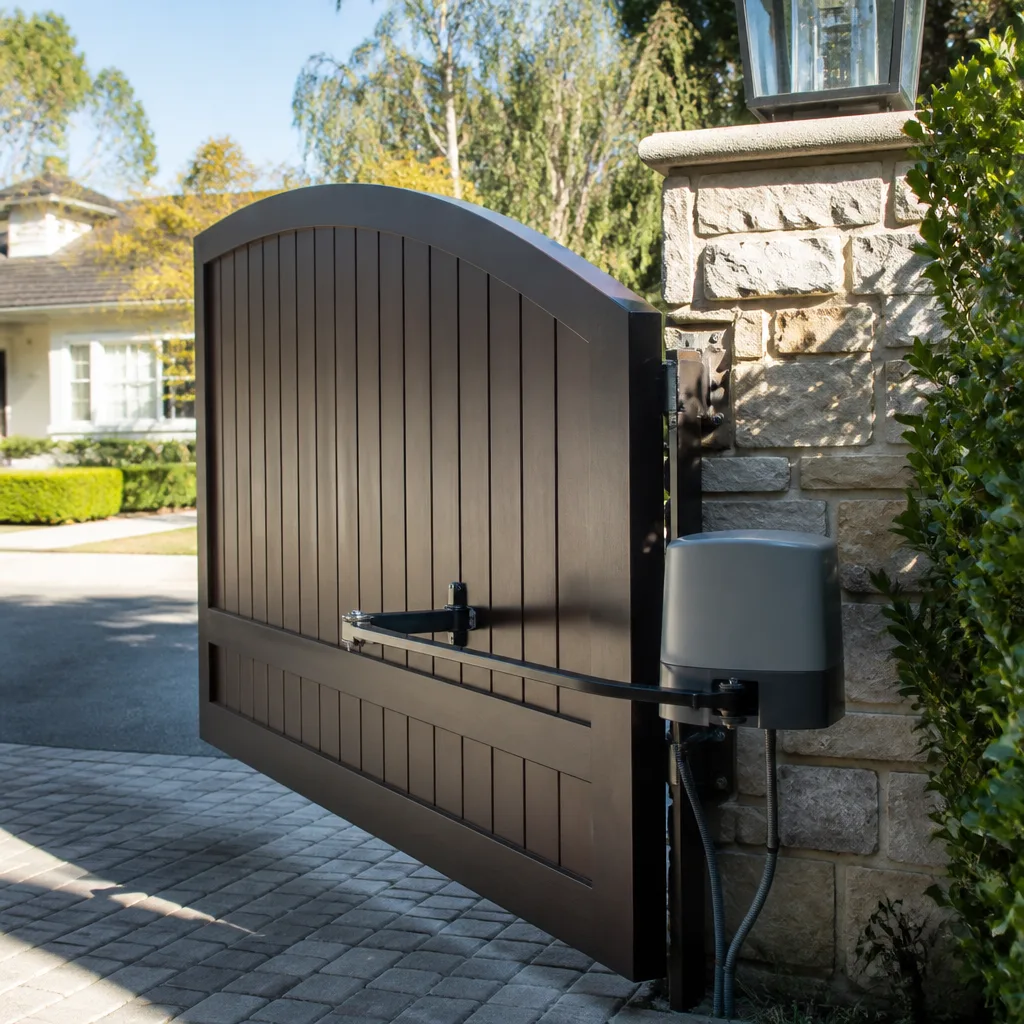
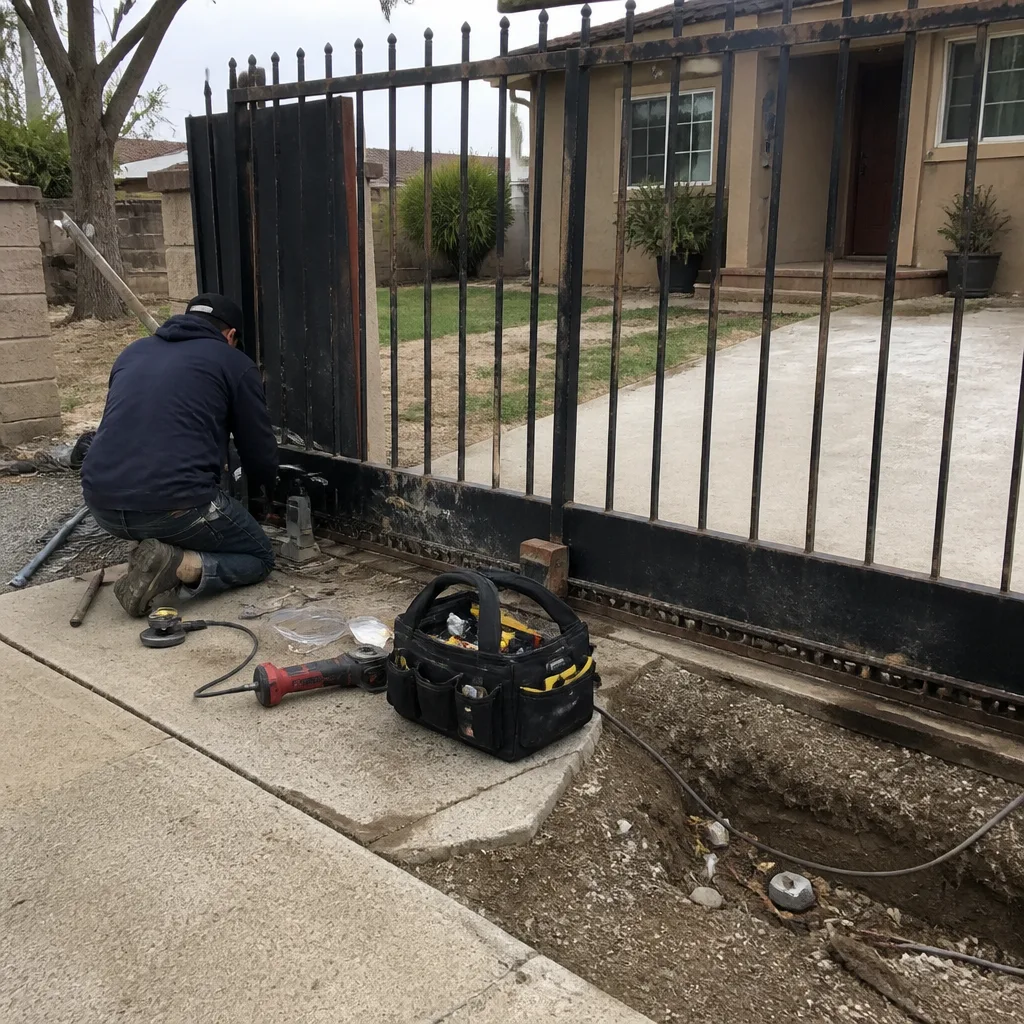 Before
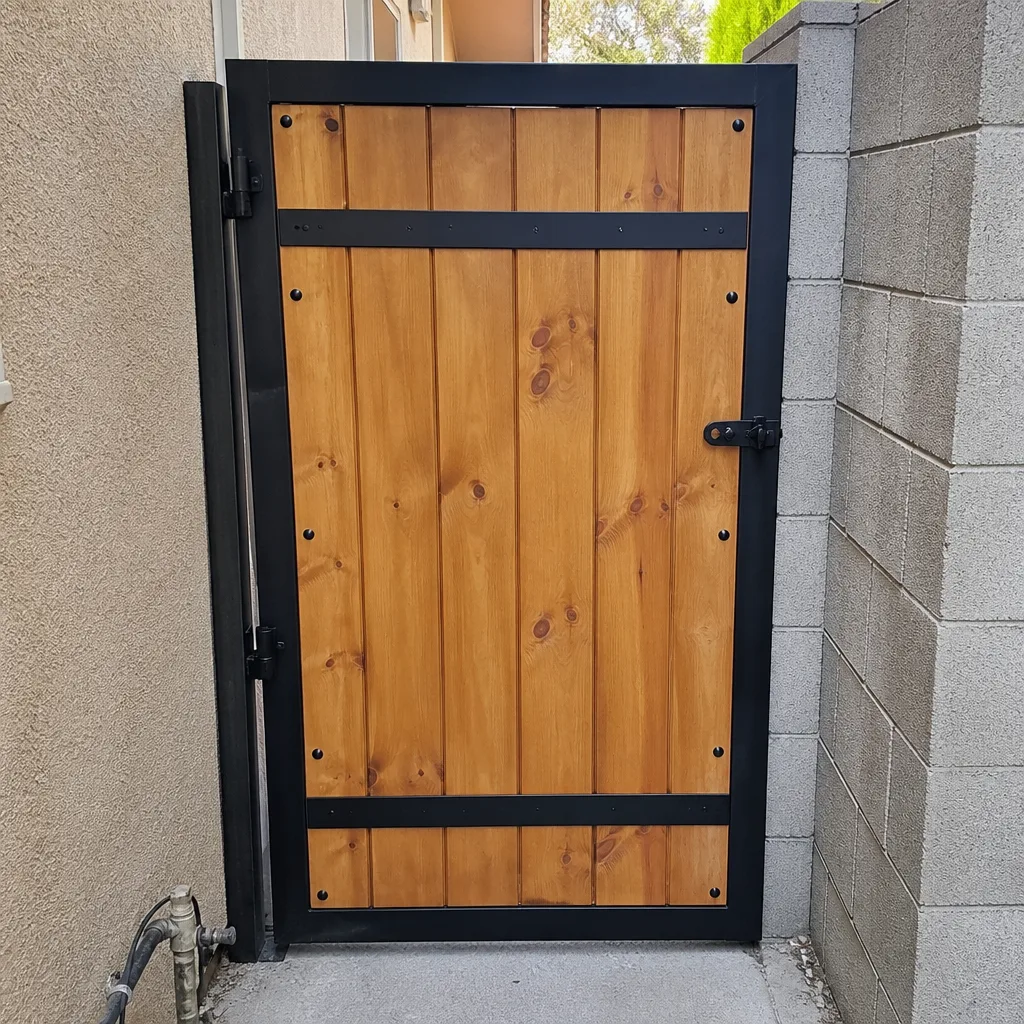 After
After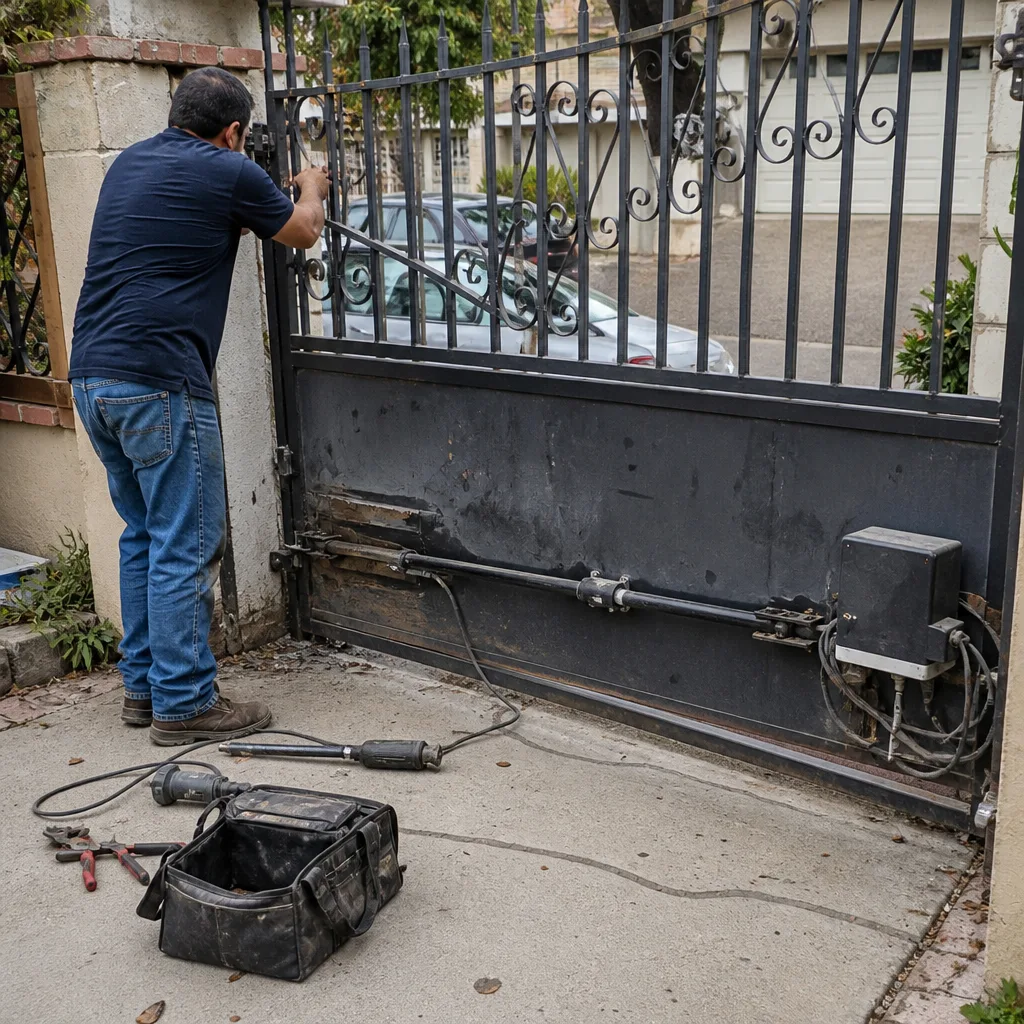 Before
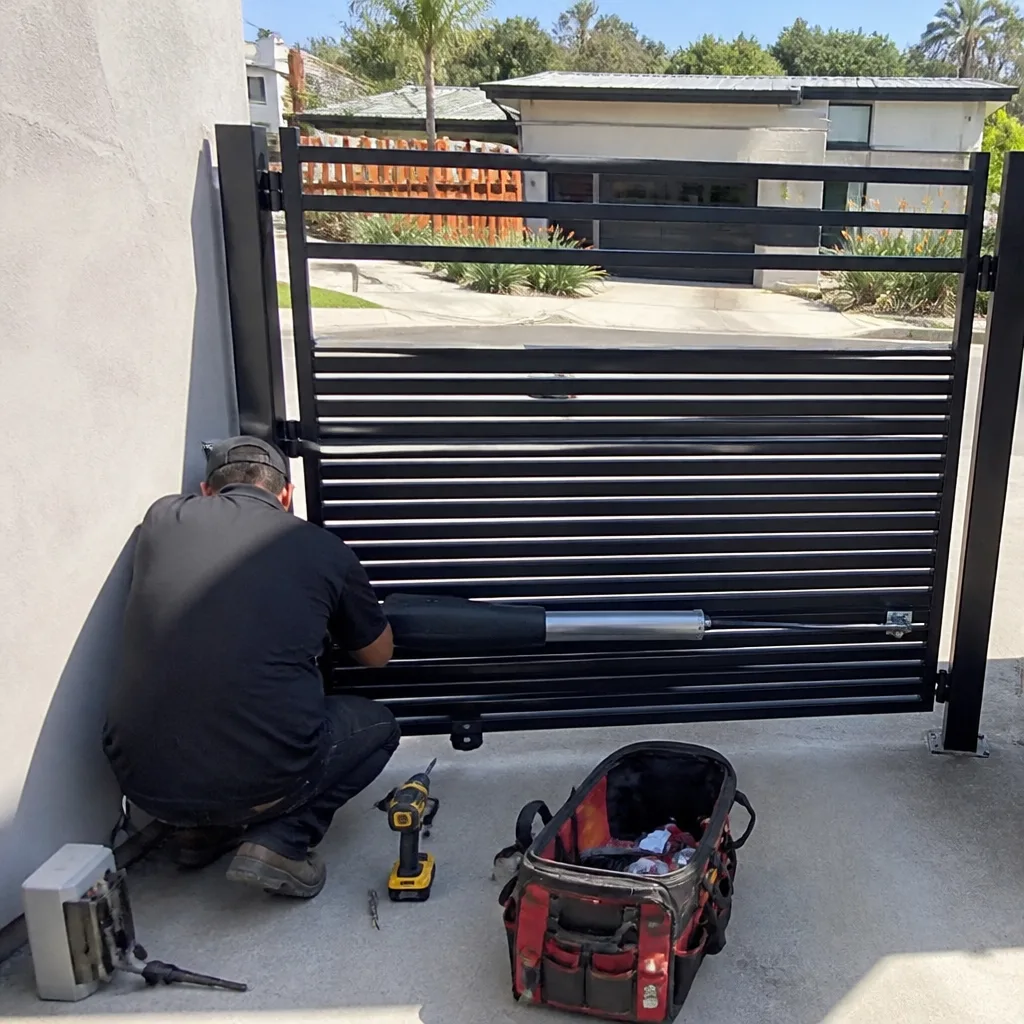 After
After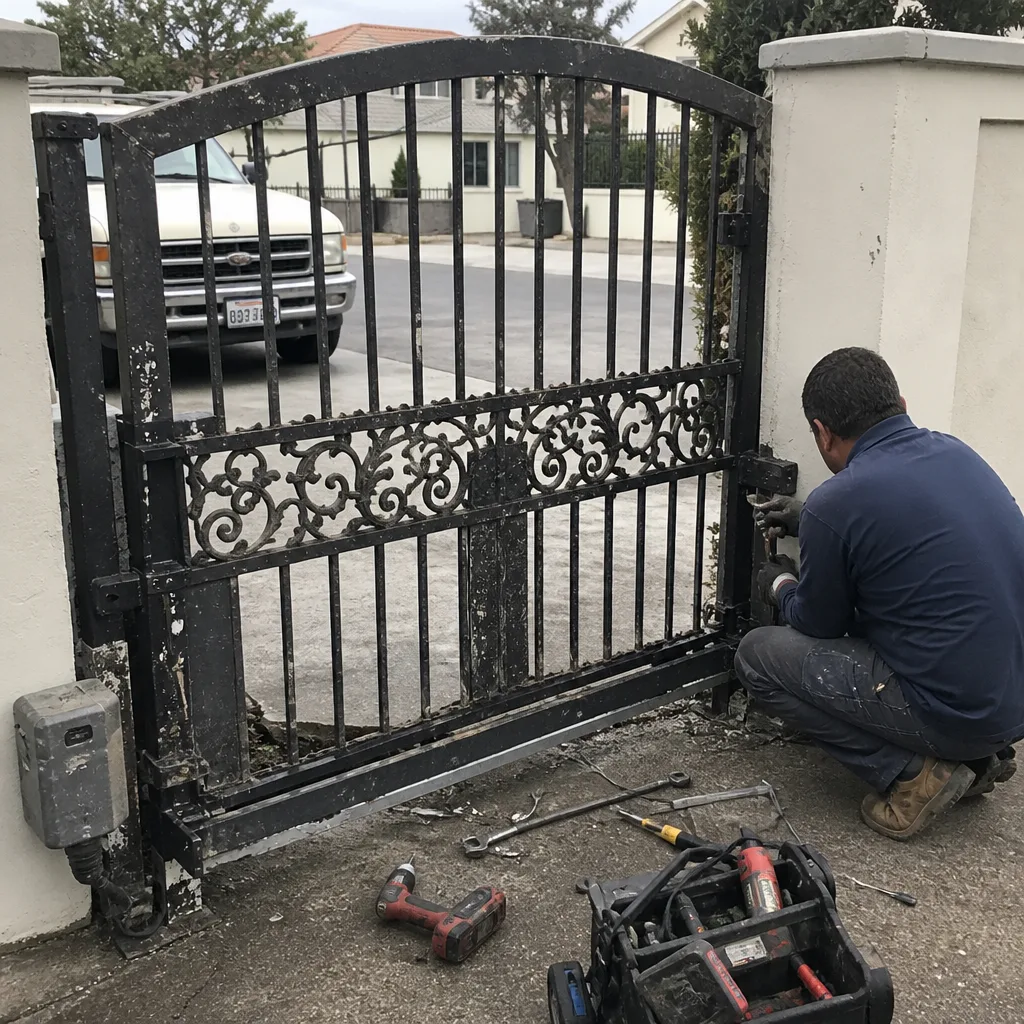 Before
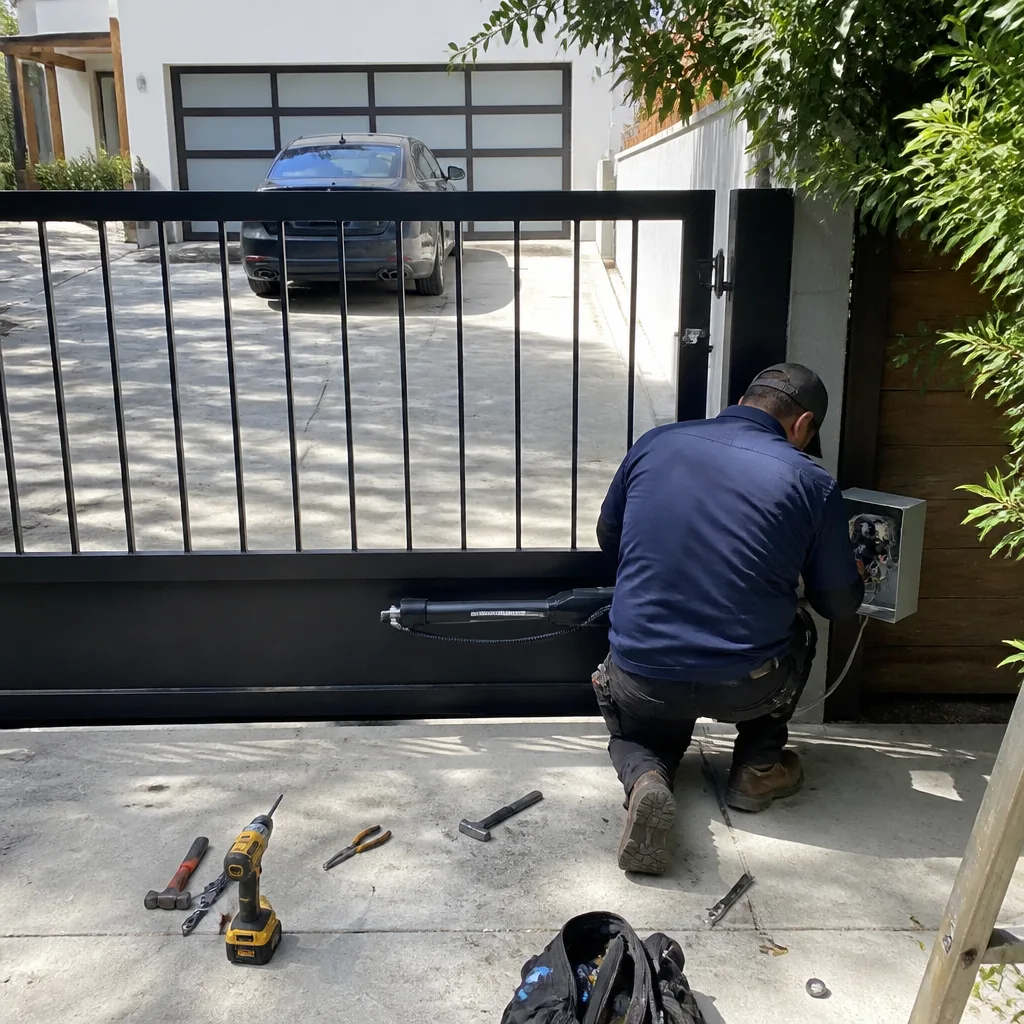 After
AfterBuzzing but Not Moving
When your gate hums or buzzes but won’t move, the motor is getting power but something is stopping it from turning the gate. The most common causes are a seized or stripped drive gear, a gate that’s mechanically bound at the hinge or track, or a motor capacitor that has failed. In most cases, a technician can diagnose and fix this in a single visit.
The buzz itself is important information. It tells you the motor is alive and trying – electricity is reaching it and the internal coil is energizing. What it can’t do is complete the rotation, either because the mechanical drivetrain has failed, because something is physically blocking the gate, or because the capacitor that kicks the motor into motion has given out. Each of those is a different repair, and how your gate sounds and looks right now will usually point to which one it is.
Why It Happens
Failed Motor Capacitor
The capacitor is a small cylindrical component that gives the motor its starting torque – the initial surge it needs to break the gate out of its resting position and get it moving. When the capacitor fails, the motor energizes, buzzes, but can’t generate enough force to turn. You’ll often hear a loud, sustained hum rather than a brief click followed by movement. If the gate doesn’t attempt to move at all, not even a twitch, a dead capacitor is the first thing a technician checks.
Seized or Stripped Drive Gear
Gate operators drive the gate through a gear train. If a gear tooth cracks, strips, or seizes – usually from age, impact, or running without lubrication – the motor spins internally but nothing transfers to the gate. You may hear a buzzing or whirring sound with a slight mechanical rattle underneath it. If you can safely peer into the operator housing and see that the motor shaft is moving but the gate arm is stationary, a gear failure is likely the culprit. This is one of the more common repairs on operators past the five-year mark.
Gate Mechanically Bound at the Hinge or Track
Sometimes the motor is fine. The gate is the problem. A hinge that’s worked loose, a track that’s bent or debris-filled, or a post that has shifted after ground movement can pin the gate in place. The motor buzzes because it’s fighting a physical obstacle it cannot overcome. Look at the hinge points and along the bottom rail or track. If you can see a visible gap at a hinge plate, rust buildup, or dirt and gravel packed against the gate’s path, the gate itself is likely what’s stopping movement – not the motor.
Thermal Overload or Internal Motor Fault
Most gate motors have a built-in thermal overload cutout that trips when the motor runs too hot – often from a previous binding event where it kept trying and couldn’t move the gate. Once tripped, the motor buzzes when power is applied but the cutout prevents full operation. Some operators reset on their own after cooling down for fifteen to thirty minutes; others require a manual reset or indicate the condition through a flashing status light on the control board. If the gate was working intermittently before it stopped completely, check whether the operator has a diagnostic LED and count the flash pattern – that pattern often tells the technician exactly where the fault sits.
What to Do Right Now
- Stop cycling the motor. Every failed attempt at moving a bound gate adds heat and stress. If the gate isn’t moving after two tries, let it rest. Continuing to run the motor against a hard stop can turn a capacitor replacement into a full motor replacement.
- Disconnect the operator and move the gate by hand. Most operators have a manual release – usually a hanging cord or lever on the unit. Engage it so you can push or roll the gate manually. This tells you two things: whether the gate itself moves freely (pointing to a motor or capacitor fault) or whether it’s stiff and hard to move (pointing to a mechanical bind at the hinge or track).
- Look at the gate without touching the hardware. Check hinges, the bottom rail, the track or wheel path, and the area around any lock mechanism. If you see a hinge pulling away from a post, a wheel off the track, or debris packed against the gate path, photograph it before calling – that photo speeds up diagnosis significantly.
- Do not attempt to adjust the springs, tension hardware, or any component that looks like it’s under load. Some gate configurations use counterbalance springs that carry significant stored tension. If you see a coiled or stretched spring anywhere on the gate frame or operator arm, leave it alone. Call a technician. A spring under tension that releases suddenly can cause serious injury.
- Check the operator’s status light if it has one. A flashing LED on the control board often corresponds to a fault code in the owner’s manual. If you have the manual, look it up and note the pattern. If you don’t, photograph the flashing sequence – your technician will know what it means.
How We Fix It
When your local Carver Gate Repair technician arrives, the first thing they do is run a hands-on diagnosis – power at the unit, motor behavior under load, capacitor function, gear train condition, and gate movement when the operator is disengaged. That takes about fifteen minutes and gives a clear picture of what’s actually failed.
Before any part is touched, you receive a written price. That number doesn’t move when the job opens. You decide whether to proceed.
Depending on what the diagnosis turns up, the repair is either a gate motor repair – replacing the capacitor, drive gear, or internal motor components – or a combination that also addresses the mechanical issue at the gate itself. Capacitor swaps are typically done in under an hour. Drive gear replacements take longer, usually two to three hours depending on the operator model, and our technicians carry parts for LiftMaster, FAAC, BFT, Linear, Viking, Ghost Controls, DoorKing, Elite, and Mighty Mule units.
Every repair completed by Carver Gate Repair is covered by our 365-Day Done Right Promise – in writing, from the date of service. If the repair fails inside that year, we come back and make it right at no charge.
Frequently Asked Questions
It depends on whether the gate is stuck open or stuck closed. A gate stuck open leaves your property unsecured, which is a real problem. A gate stuck closed is less urgent security-wise, but running the motor repeatedly against the bind can cause heat damage that turns a minor repair into a larger one. Either way, don’t keep cycling it – call and get it looked at the same day if you can. Reach your local Carver Gate Repair team at (469) 530-2485.
Your local Carver Gate Repair team handles repair calls – not installations or system upgrades, which are scheduled work – so same-day dispatch for a gate that’s down is something we work toward. Call (469) 530-2485 and a live person will answer, tell you what’s available in your area, and get someone moving. We staff the phones every hour of every day, including weekends and holidays – no voicemail, no callback queue.
The repair cost depends on the specific fault – a capacitor is a different job from a stripped gear train, and adding a mechanical repair at the hinge changes the scope again. What we can promise is that your technician will diagnose the problem, put the full price in writing, and hand it to you before any work starts. That number doesn’t move. Call (469) 530-2485 for a free written estimate specific to your gate and operator.
Occasionally a force-limit setting that’s slipped too low will cause the operator to stall and buzz when it meets normal gate resistance. That’s a legitimate adjustment you can make through the operator’s settings – consult your manual for the force or torque adjustment procedure. But if the gate doesn’t respond at all, or if it buzzed and then stopped trying entirely, a programming adjustment won’t resolve a failed capacitor, a stripped gear, or a mechanical bind. If you’ve already checked the settings and nothing changed, it’s a hardware fault.
Get It Fixed
Your gate should open and close every time. If it’s buzzing and not moving, your local Carver Gate Repair team is ready to diagnose it, put a written price in front of you, and get it fixed right. Call (469) 530-2485 – a live person answers around the clock – or book online to schedule your visit.
Written by Lonnie Burke, Owner at Carver Gate Repair, part of the Garrison Partners family serving communities nationwide since 2008.
What Our Customers Say
"Good repair on a motor board. Waited a few days on the part, but they stayed in contact."
- Shelby T."Showed up a little after the window, but he called ahead. On time otherwise, polite, and efficient. Cleaned up all the tools."
- Joan K."Swing gate arm snapped. They replaced the actuator and tested the safety reverse. Fair price."
- Angela P.