
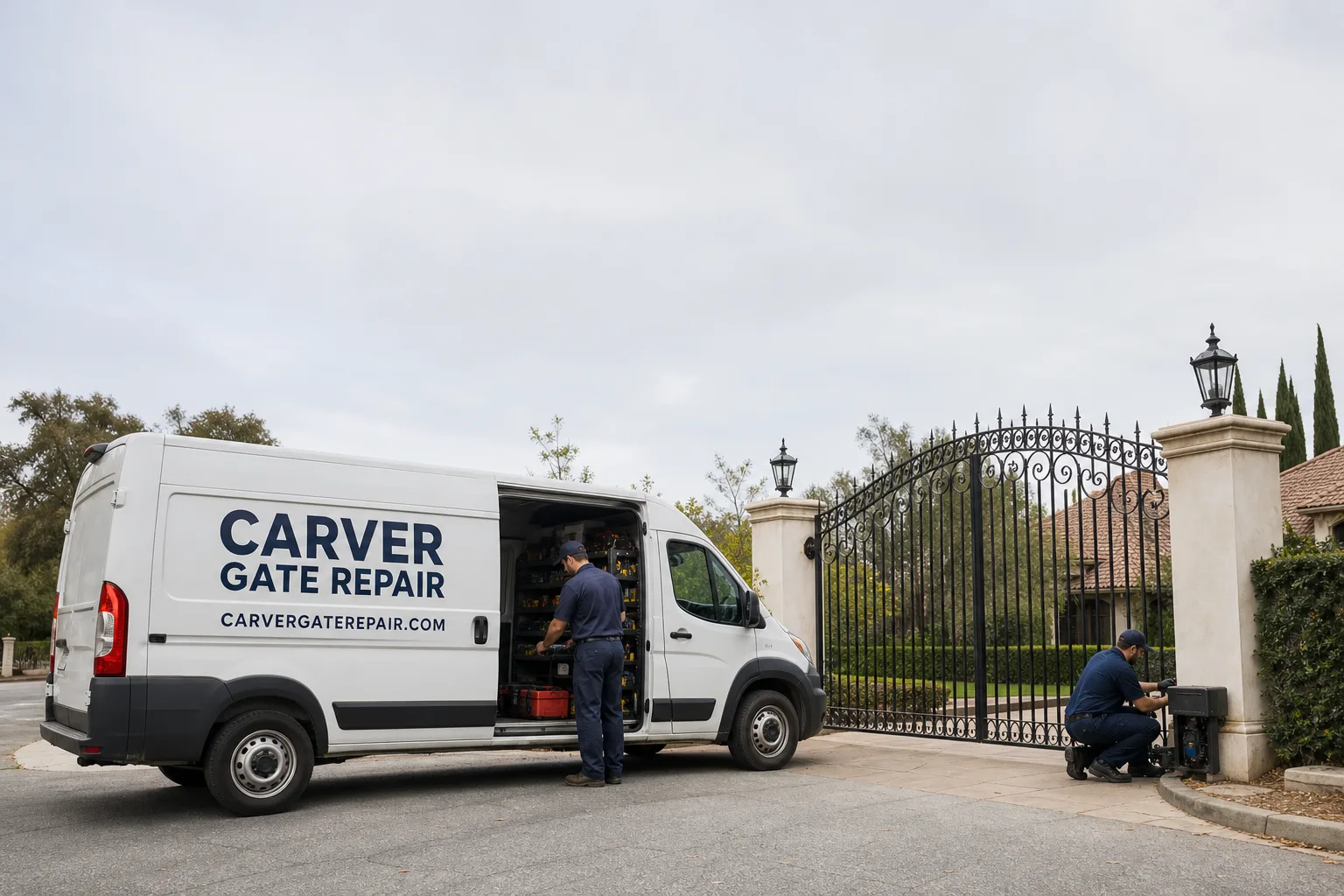
Free on-site gate assessment - hinges, posts, and your LiftMaster or Nice gate operator checked before anything is quoted
The assessment is free and the quote is the invoice.

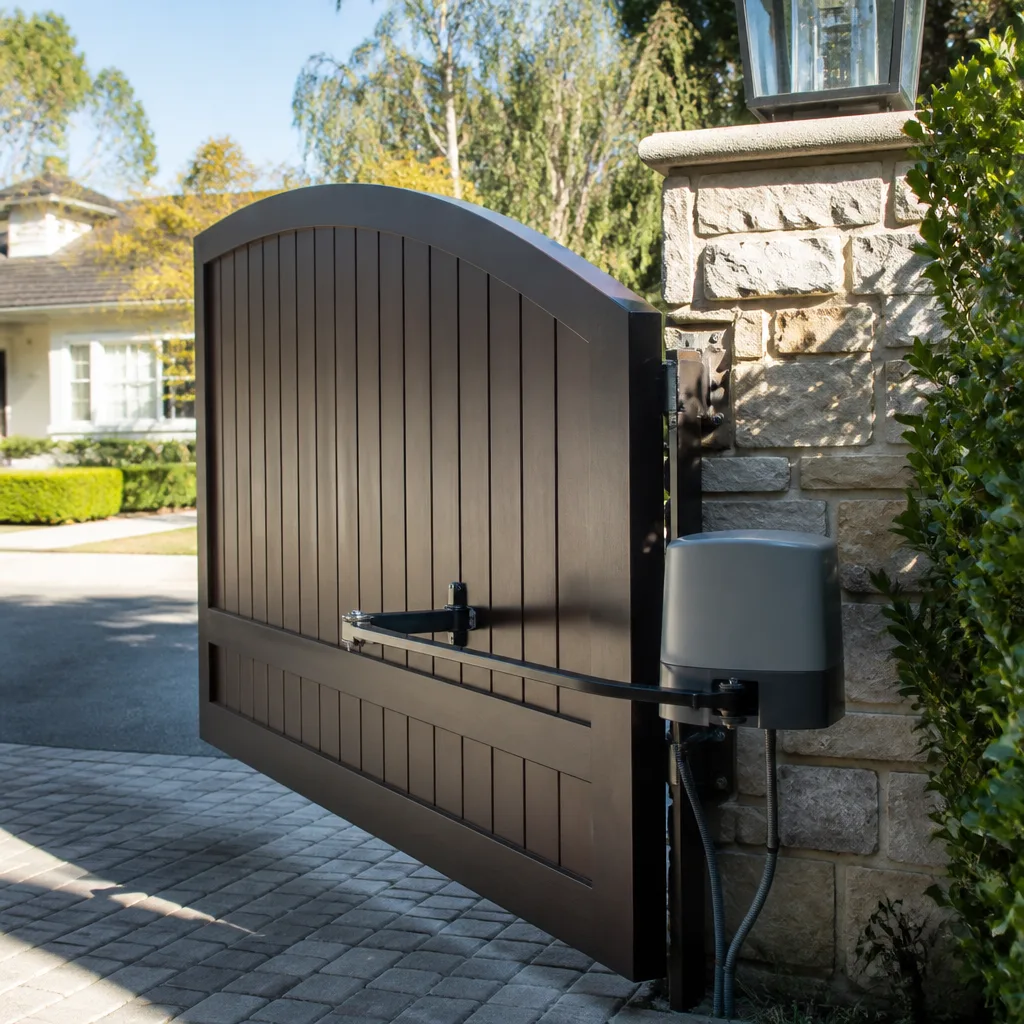
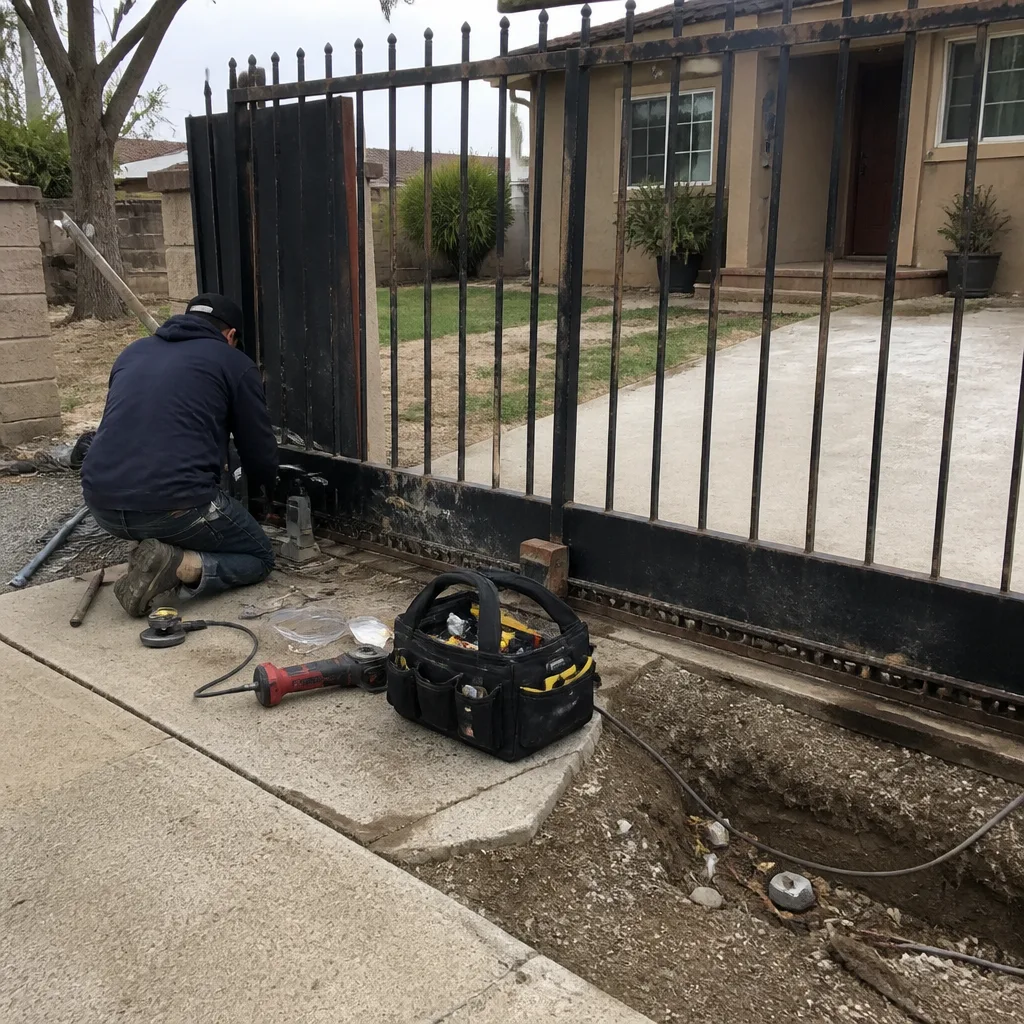 Before
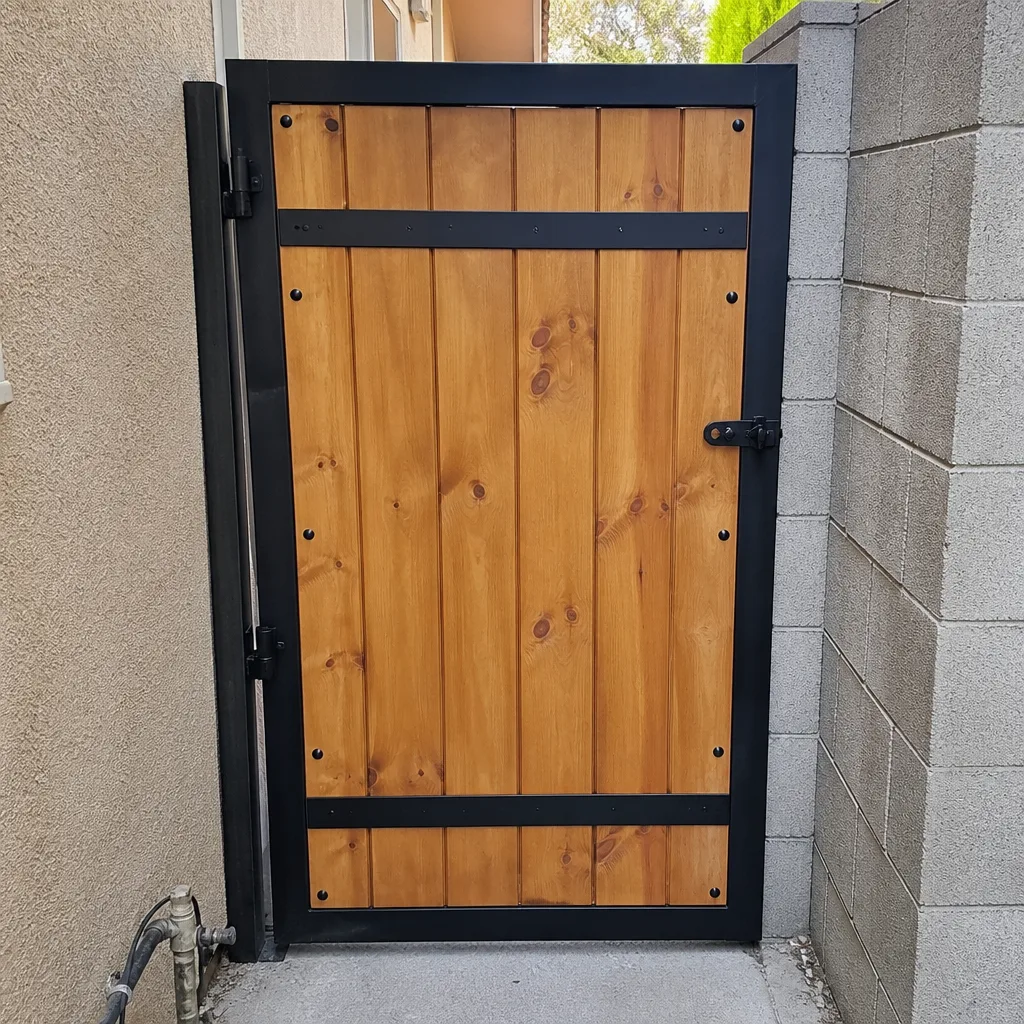 After
After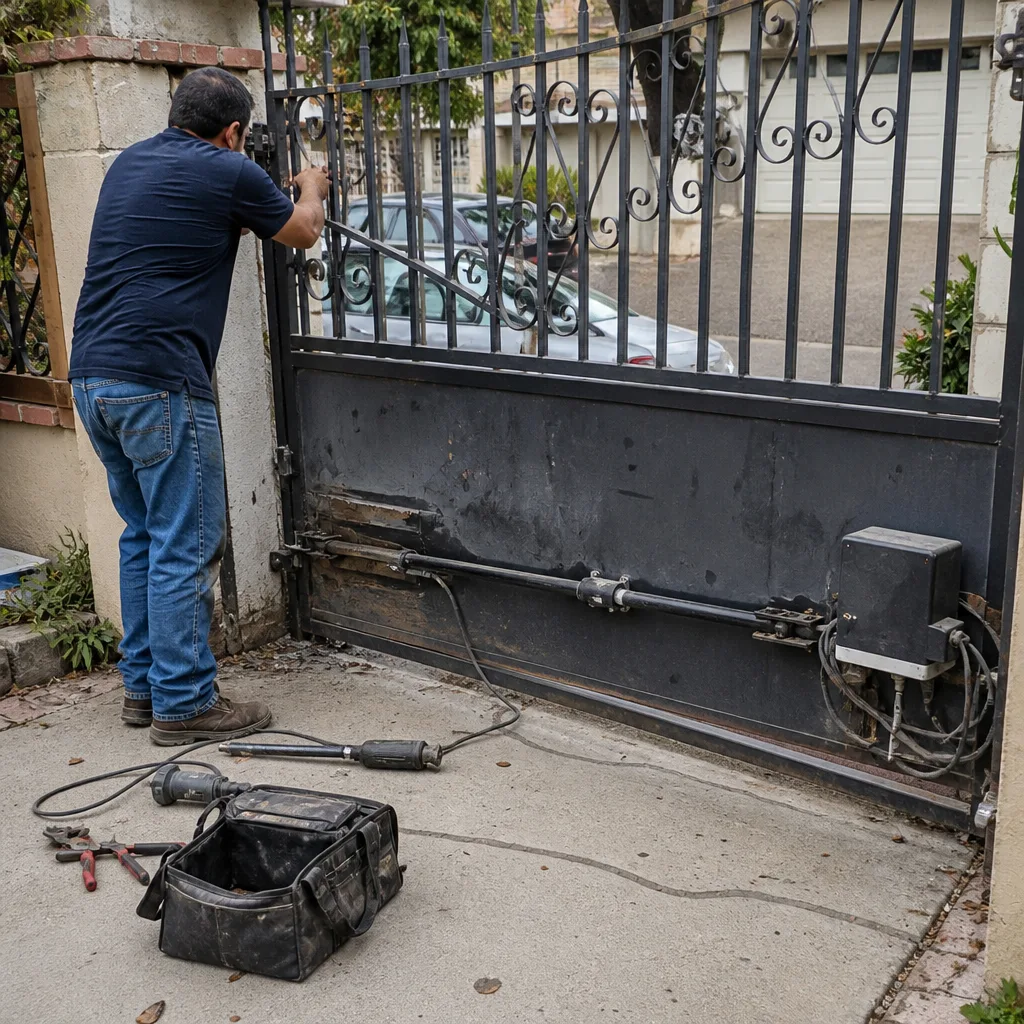 Before
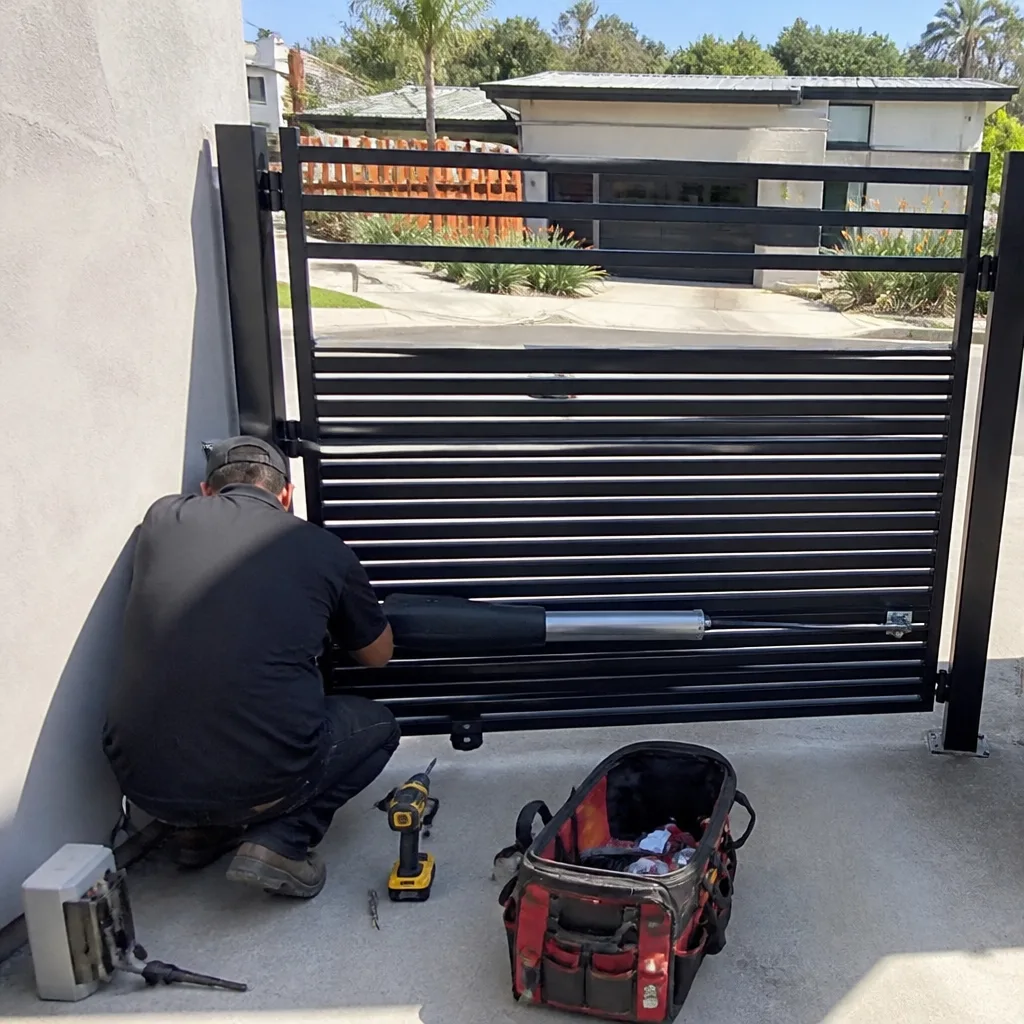 After
After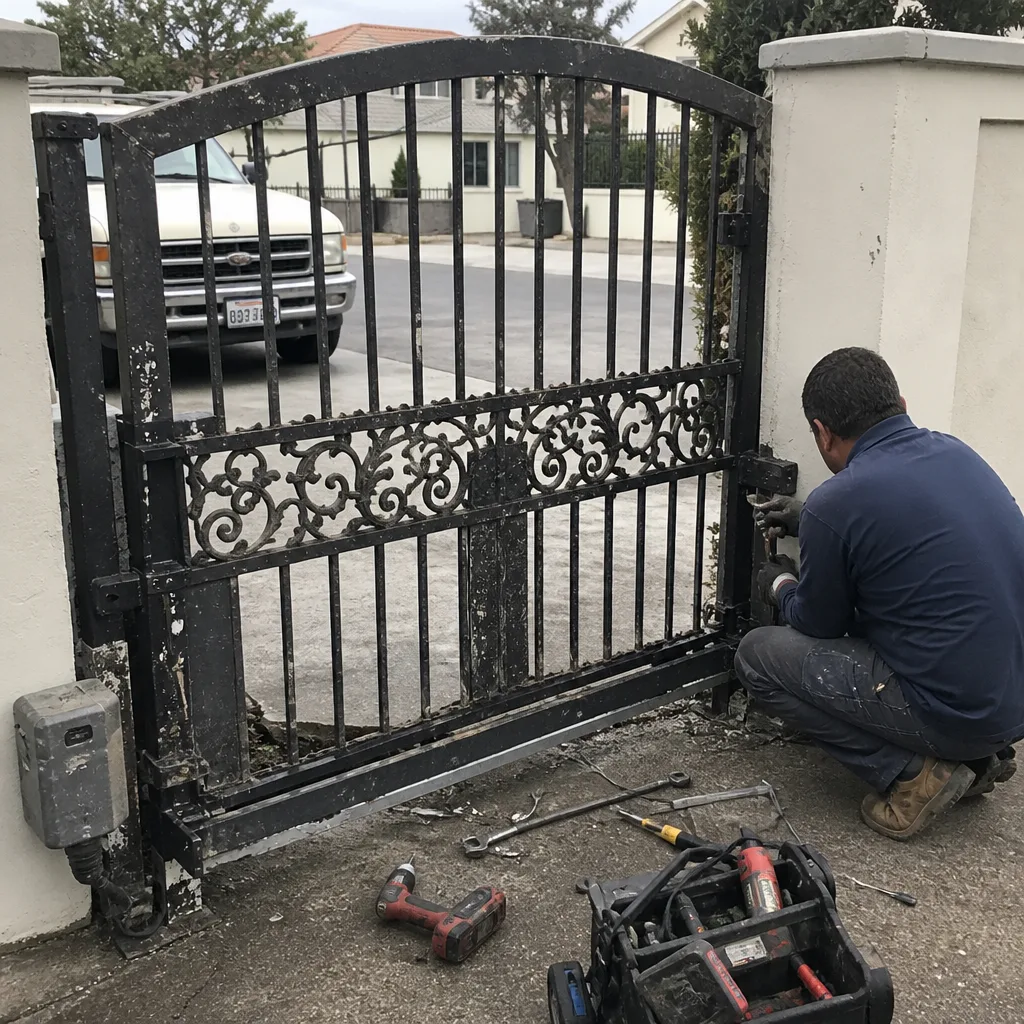 Before
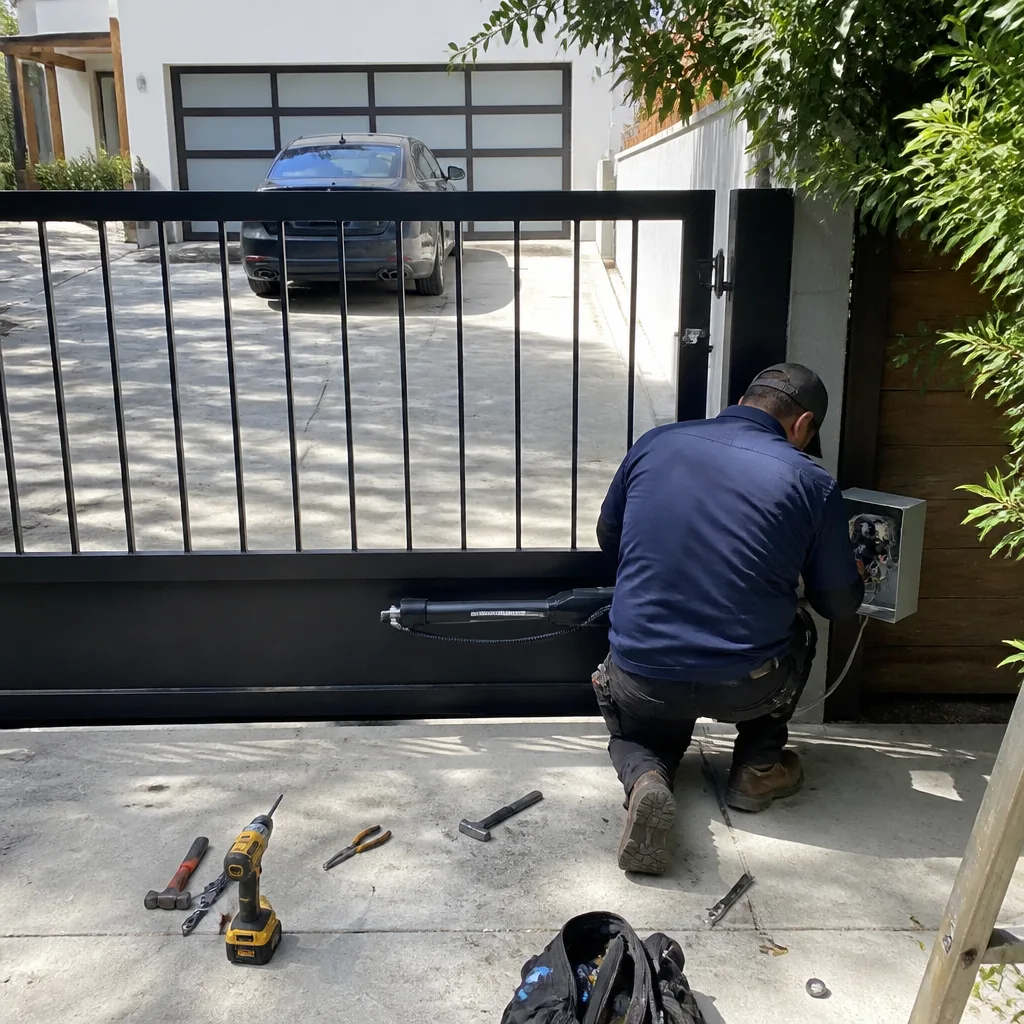 After
AfterGate Opens Partway and Stops
What’s Happening
A gate that opens partway and stops is almost always caused by one of four things: a motor that’s losing power or overheating, a limit switch set too short, an obstruction the safety sensors are detecting, or a mechanical problem in the track or hinge that’s loading the motor past its limit. In most cases, the gate can be fixed the same day a technician arrives.
The gate isn’t broken in some mysterious way – it’s doing exactly what it was told to do, just with the wrong instructions or the wrong conditions. Either the motor gave up before the job was done, something in the gate’s path told the system to stop, or the hardware is fighting the motor hard enough that the motor quits on its own. A trained technician can usually pinpoint the cause within the first ten minutes on site, because each of these failures leaves a pretty clear trail.
Why It Happens
Motor Force or Sensitivity Set Too Low
Every gate motor has a force or torque setting – how hard the drive is allowed to push before it decides it’s met an obstacle and quits. If that setting drifts low over time, or was never dialed in correctly after an installation, the motor stops short even when nothing is actually in the way. You’ll usually notice this symptom is consistent: the gate stops at roughly the same point every time, and there’s no grinding or obvious mechanical struggle – the motor just gives up quietly.
Limit Switch or Travel Setting Out of Calibration
The limit switch tells the motor where “fully open” and “fully closed” are. If the limit is set too short, the gate reads that position as the end of travel and stops, even though the gate is only half open. This is one of the more common causes we see after a power surge, a battery replacement, or any time someone has been into the motor’s settings. The telltale sign: the gate stops at exactly the same spot every single cycle, and it stops cleanly – no struggle, no noise, just a hard stop.
Obstruction or Safety Sensor Triggered
Photo-eye sensors, pressure edges, and loop detectors are designed to reverse or stop the gate the moment they sense something in the path. Leaves, spider webs, a post that’s shifted slightly, or a sensor that’s knocked out of alignment can all trigger that stop without any visible obstruction at eye level. If the gate stops at different points on different cycles, or if it reverses rather than just pausing, a sensor is the first place to look. Check whether both sensor lights are solid – a blinking light is a signal that alignment is off.
Mechanical Drag: Hinge Wear, Track Debris, or Gate Sag
A gate that’s harder to move mechanically puts more load on the motor. Over time, hinges wear and develop friction, a sliding gate’s track fills with grit, or a swing gate sags at the far end and starts dragging on the ground or pavement. The motor reads that extra resistance as an obstacle and shuts down to protect itself. If you hear grinding or scraping when the gate moves, or if you can see the gate tilting or dragging, this is almost certainly the cause. Do not try to force the gate or bypass the motor – if a hinge or track component is failing, the gate can drop or swing unexpectedly.
What to Do Right Now
- Stop cycling the gate. Every attempt to force it through a failed run puts more stress on the motor and on whatever component is causing the stop. Give it a rest until someone can look at it properly.
- Check the sensor lights. Walk to each photo-eye sensor (usually mounted low on the posts, facing each other across the opening). If either light is off or blinking, gently clean the lens with a dry cloth and see whether alignment shifted. Do not adjust wiring.
- Look for anything physically in the path. Sweep the track or the ground beneath a swing gate. Remove leaves, sticks, or debris that could be triggering a safety sensor. Even a small branch caught under a wheel is enough to stop some systems.
- Photograph what you see. A photo of the motor display, the sensor lights, and any visible damage to the track or hinge helps a technician arrive prepared with the right parts. Text or email it when you call.
- Do not open the motor housing or adjust spring-loaded components. Gate hardware under mechanical tension can release suddenly. If you see a broken spring, a snapped cable, or exposed wiring, step back and call – that is not a safe DIY inspection.
How We Fix It
When your local Carver Gate Repair technician arrives, the first thing they do is run the gate through a full diagnostic cycle – motor output, sensor alignment, limit settings, and a physical check of the hinges, track, and hardware. That process takes about ten to fifteen minutes and it tells us exactly which of the four causes is running the show.
From there the repair path is specific to what we found. A limit or force calibration is adjusted on the spot. A misaligned sensor is repositioned and tested through several cycles. A worn hinge, bent track section, or sagging gate calls for a gate repair that addresses the mechanical load before the motor is ever touched again – because fixing only the motor and leaving the drag in place means the motor fails again.
Before any of that work starts, we put the price in writing. That number is what you pay – it doesn’t move once the job is open. The repair is covered by the 365-Day Done Right Promise: if it fails inside the guarantee window, we come back and make it right at no charge. Most partial-travel repairs are complete in under two hours.
Frequently Asked Questions
Yes, it can be. A gate that stops unpredictably can trap a vehicle, fail to secure a property, or – if someone tries to force it manually – release stored tension in a spring or cable suddenly. If the gate is stopping because of a mechanical failure rather than a sensor trip, don’t keep cycling it. Call (469) 530-2485 and let a technician assess it before anyone else operates the gate.
It depends on what’s causing it. A sensor alignment issue is low risk; a cracked hinge or a worn motor that’s close to failing completely is not. The problem with waiting is that partial-travel failures tend to get worse, not better – the component that’s struggling today is likely to fail completely by the end of the week. If the gate is securing a property or a driveway, sooner is better. Call (469) 530-2485 and describe what you’re seeing; the team can help you gauge how urgent it is.
Your local Carver Gate Repair team handles gate repair calls and dispatches technicians when availability allows – call (469) 530-2485 and a live person answers around the clock, every day of the year, including weekends and holidays. They’ll tell you what’s available in your area and get a technician scheduled. No voicemail, no call-back queue.
Yes, always. The technician runs a diagnostic, identifies the cause, and gives you a written price before any repair begins. That’s not a policy we make exceptions to – it’s written into The Garrison Standard that every Carver Gate Repair location operates under. The price on that paper is the price on the invoice.
Get It Fixed
Call (469) 530-2485 right now – a live person picks up every hour of every day. Describe what the gate is doing, and your local Carver Gate Repair team will schedule a technician, send them out with the right diagnostics, and put a written price in front of you before anything starts.
Written by Lonnie Burke, Owner at Carver Gate Repair, part of the Garrison Partners family operating to The Garrison Standard since 2008.
What Our Customers Say
"Keypad and remotes set up fresh for the whole neighborhood. Done cleanly and quickly."
- Chris W."Straight answers on whether to repair or replace the operator. Repair was the right call."
- Wanda F."Gate hinge was bending under the weight. Welded a new bracket on and re-hung it. Solid now."
- Rudy A.