
Last updated October 10, 2026
Free on-site gate assessment - hinges, posts, and your LiftMaster or Nice gate operator checked before anything is quoted
The assessment is free and the quote is the invoice.
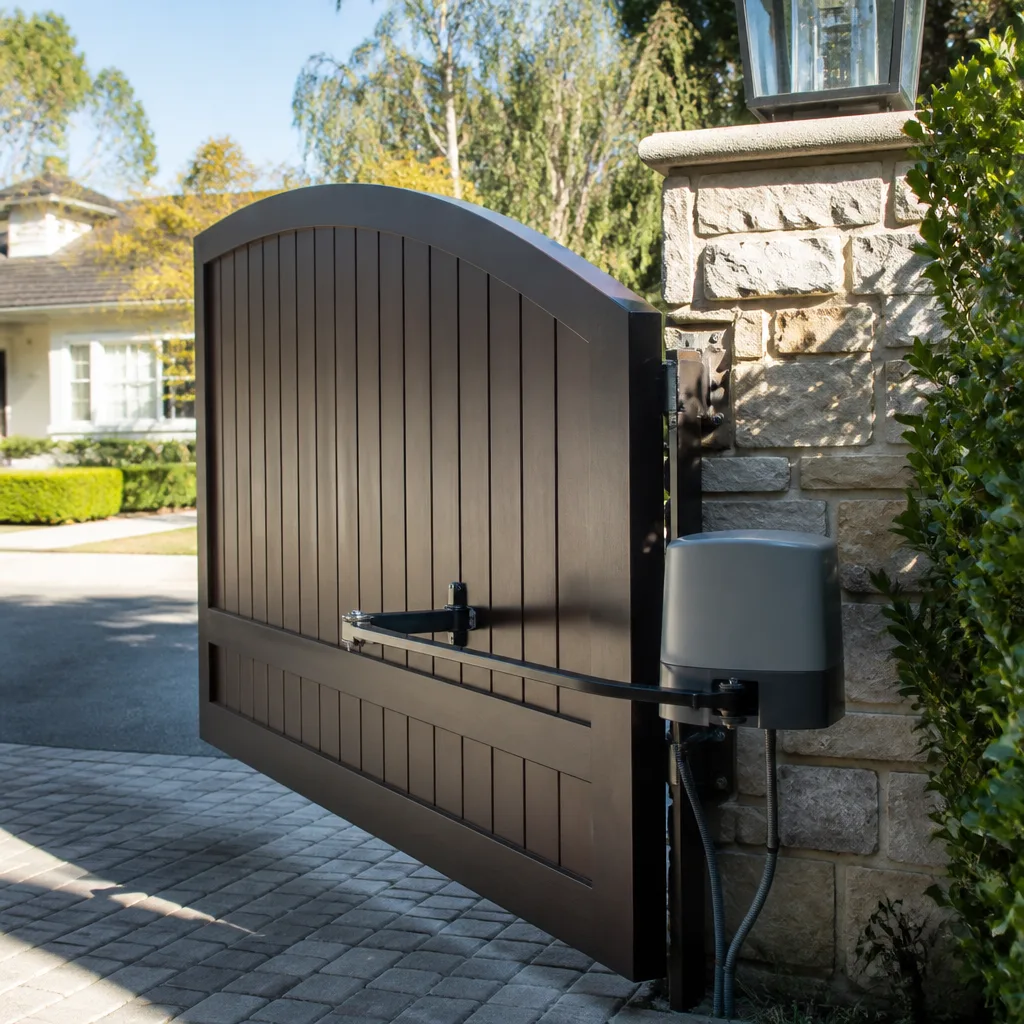
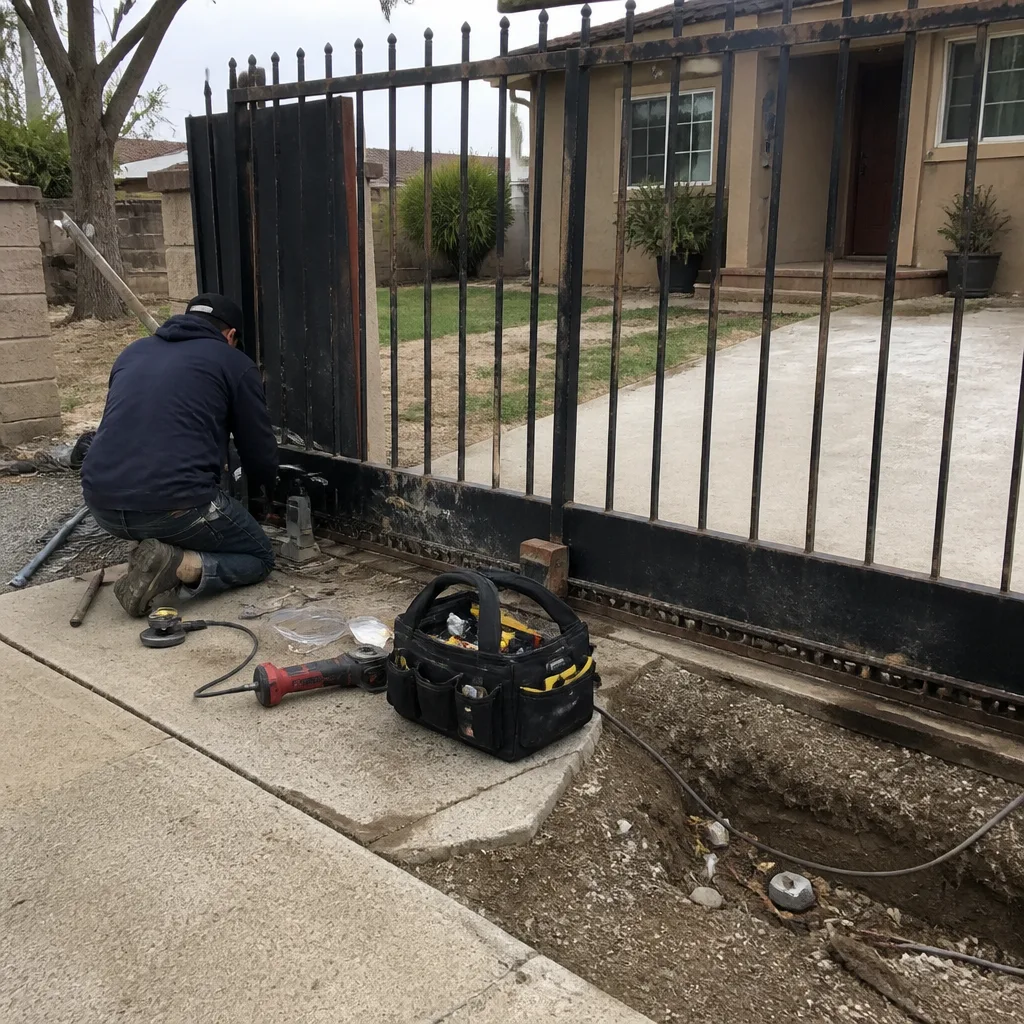 Before
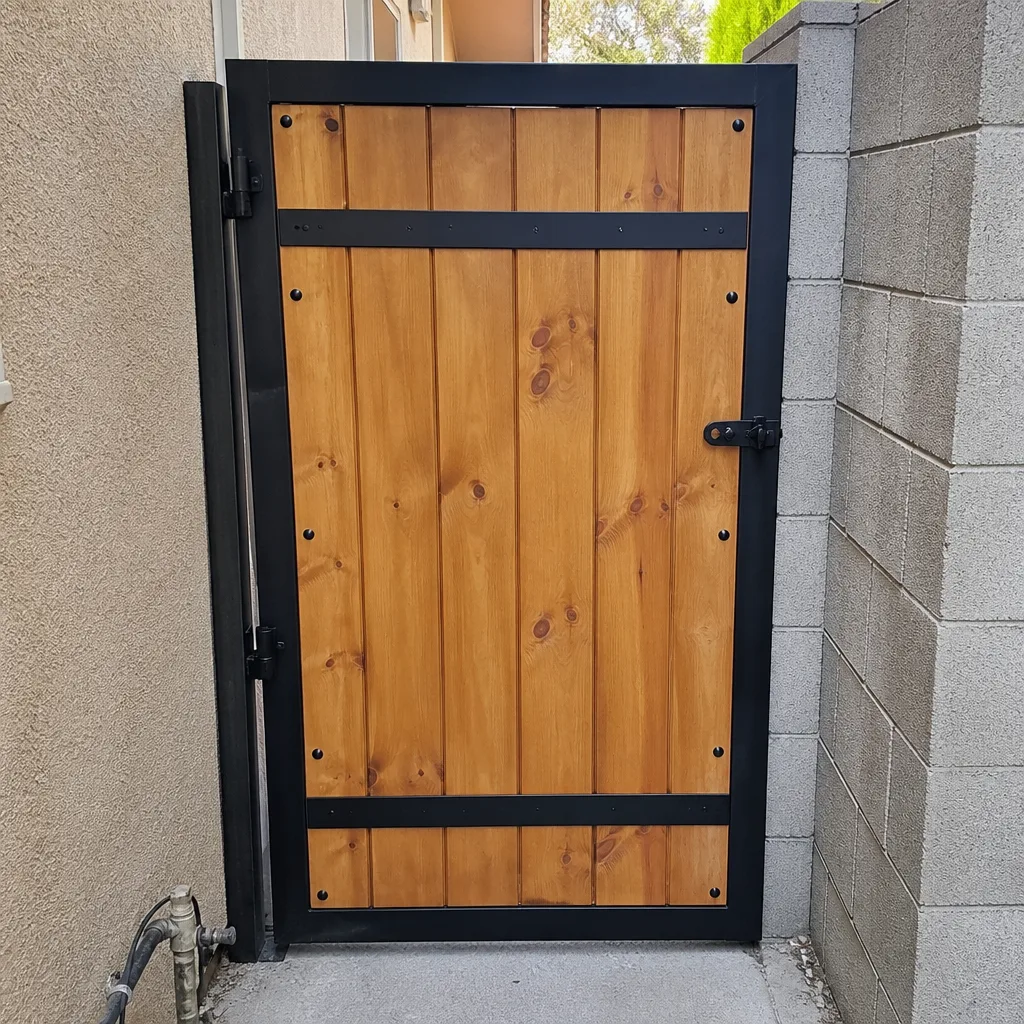 After
After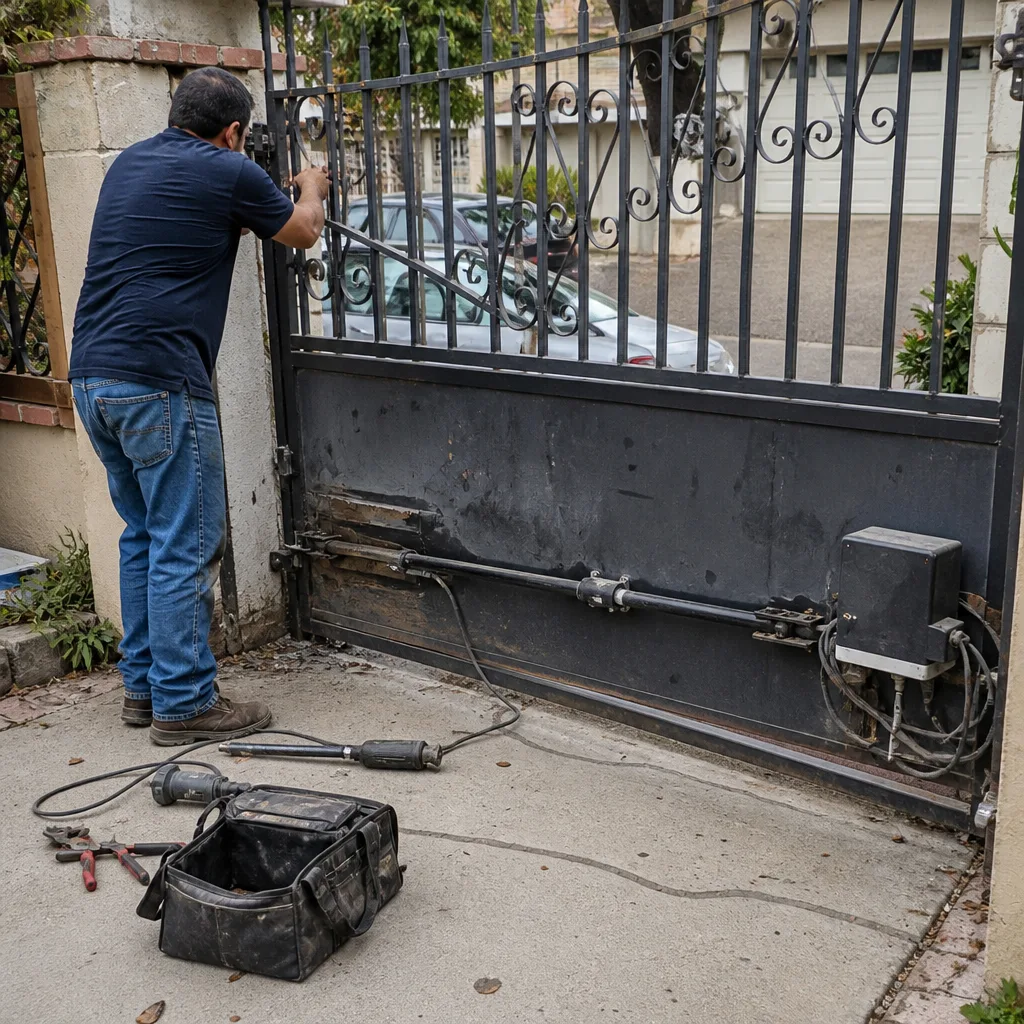 Before
 After
After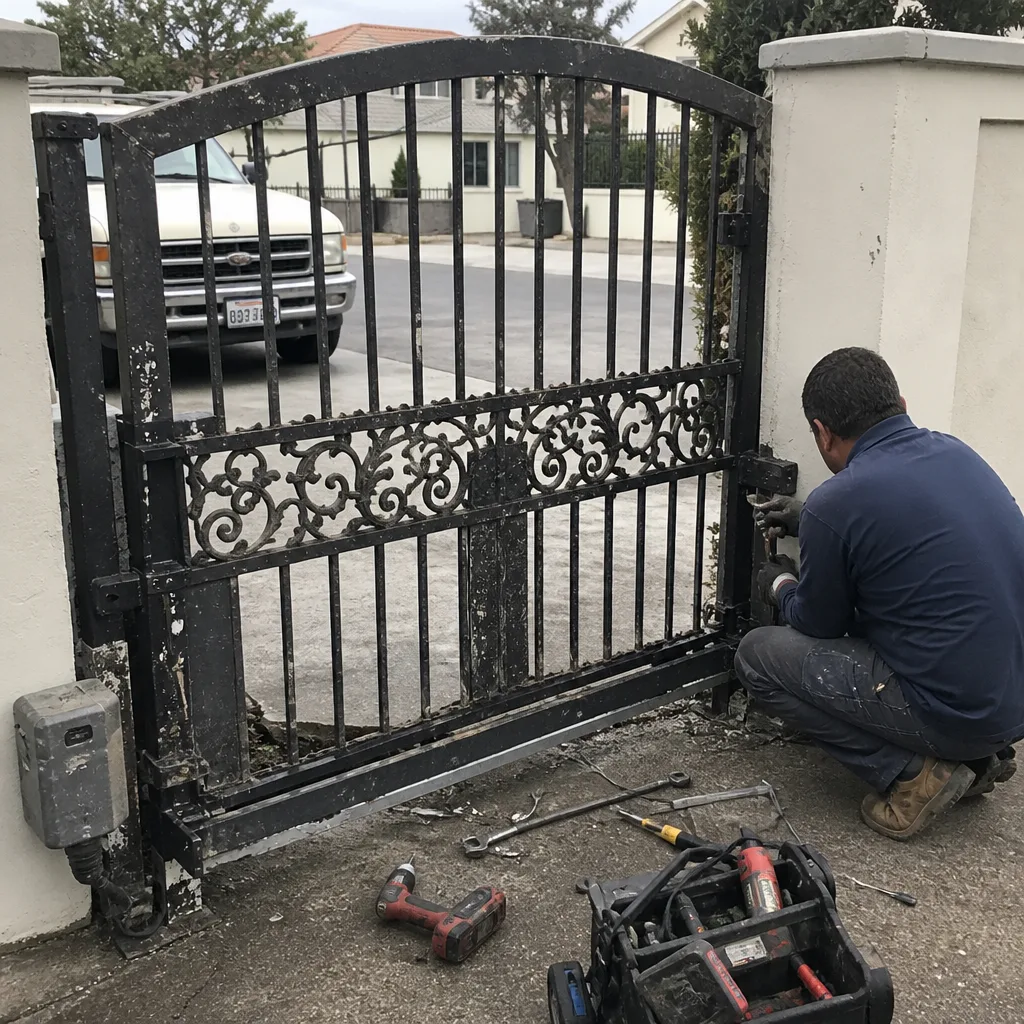 Before
 After
AfterHow Long Does Gate Installation Take? Timelines and What to Expect
Most homeowners in Los Angeles budget a single afternoon for Gate Installation services. The gate itself might take four hours to hang. But the concrete footing it depends on needs 48 – 72 hours to cure before any weight is applied – a fact many installers skip over until the day they show up. We’ve seen too many jobs where the crew arrives ready to work, only to discover the homeowner expected to use their new gate that evening. This guide maps the real schedule, phase by phase, so you can plan around the work instead of being surprised by it.
Quick Answer
A standard residential gate installation in Los Angeles takes 1 – 3 days of active work, but the full project timeline from contract to finished gate typically spans 1 – 4 weeks-read our guide on How Long Does Gate Repair Take? Timelines and What to Expect for related context. The gate and motor can often be hung in a single day, but concrete footing cure time, permit approvals, and motor programming add days or weeks that most homeowners don’t anticipate.
Table of Contents
- The Real Timeline: Phase by Phase
- How Existing Infrastructure Changes Everything
- Los Angeles Permits and HOA Delays
- Why Single-Day Jobs Run Long
- Questions to Ask Before You Book
- What Gate Installation Costs in Los Angeles
- Motor Brands and Programming Time
- Common Mistakes to Avoid
- When to Call a Professional
- Frequently Asked Questions
- The Bottom Line
The Real Timeline: Phase by Phase
Gate installation isn’t one task. It’s a sequence of dependent tasks, and each one has hard constraints that can’t be rushed. Here’s how the hours actually break down on a typical Los Angeles residential job.
Phase 1: Site Assessment and Measure (1 – 2 hours)
Before any material is ordered, a technician walks the property, checks grade, measures opening width and height, identifies underground utilities, and confirms power availability. In hillside neighborhoods like Silver Lake or the Hollywood Hills, grade changes can add complexity that flat lots in the San Fernando Valley don’t face. We document everything and deliver a written price before work starts. No exceptions.
Phase 2: Footing Excavation and Pour (4 – 6 hours active, 48 – 72 hours cure)
This is where timelines surprise people. A swing gate needs posts set in concrete. A slide gate needs a footing for the track or cantilever support. The pour itself is quick. The cure time is not. Standard concrete reaches sufficient strength for gate loading in 48 hours minimum; we prefer 72 hours, especially in cooler winter months when cure slows. Some crews will hang gates on green concrete. We don’t. The Garrison Standard requires full cure before load-bearing. That means your gate sits idle for two to three days even on a “fast” job.
Phase 3: Frame and Panel Installation (3 – 6 hours)
With cured footings, the crew hangs the gate frame, aligns it for level and swing clearance, and attaches panels or infill. Aluminum gates move faster than wrought iron, which may need field welding and touch-up. A basic 14-foot single swing in aluminum takes about three hours. A dual swing with custom scrollwork can take six.
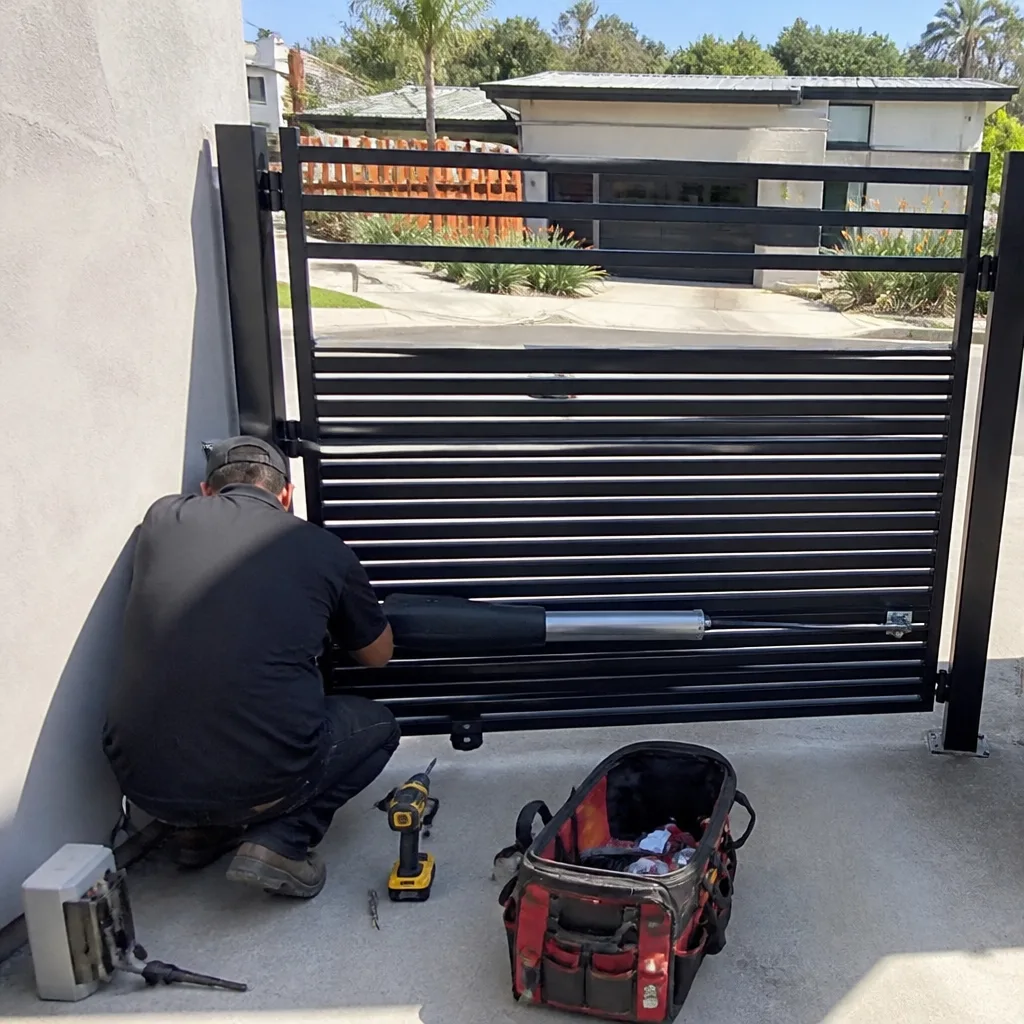
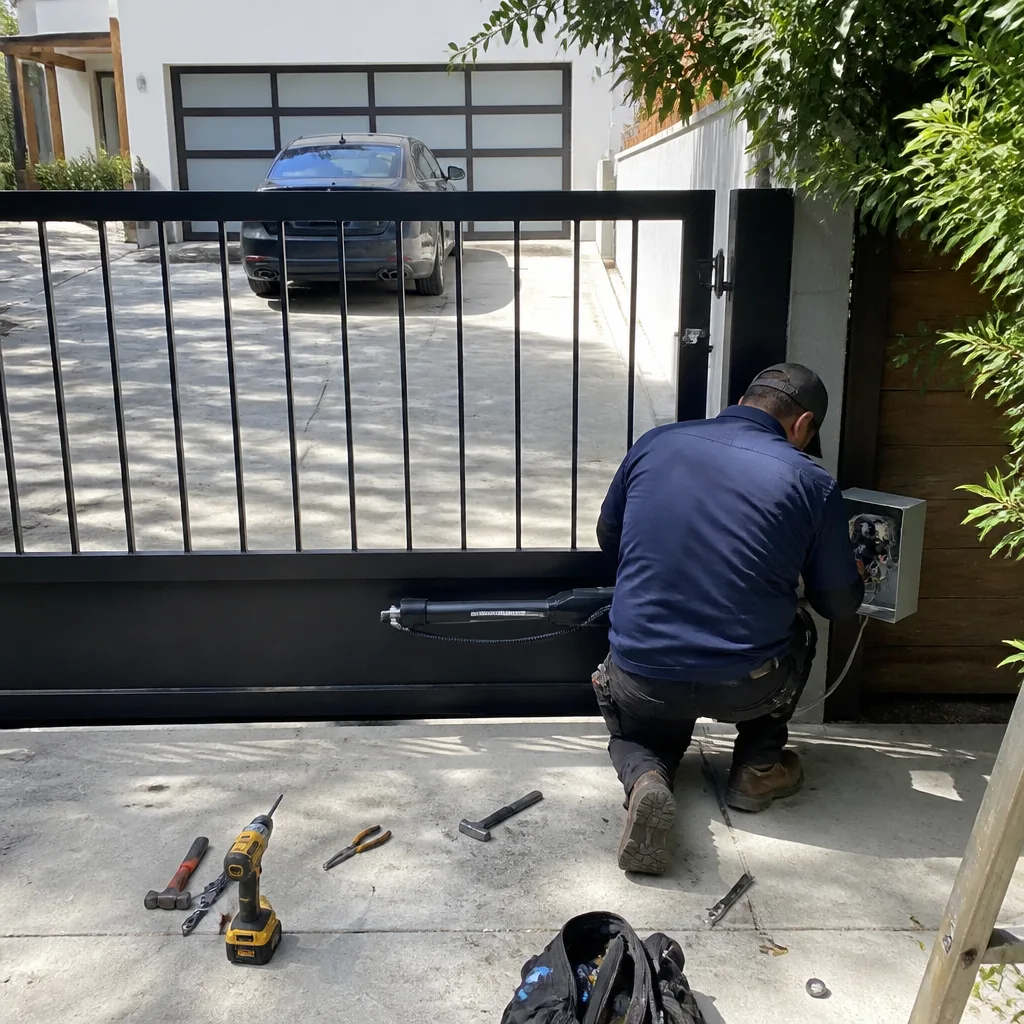
Phase 4: Motor Mounting and Mechanical Connection (2 – 4 hours)
The operator gets bolted to its pad or post, the articulating arm or linear actuator connects to the gate, and limit switches are positioned. This is where brand-specific training matters. A Viking or Linear operator mounts differently than a Ghost Controls system. Our technicians are trained on nine brands, so they don’t lose time reading manuals on your clock.
Phase 5: Electrical, Safety Edges, and Programming (2 – 3 hours)
Power run to the motor, loop detector installation if included, photo eye alignment, and safety edge testing. Then programming: force limits, auto-close timing, pedestrian mode, and any keypad or remote integration. This phase looks simple but eats time when the motor doesn’t play nice with existing access control. We’ve had gate motor repair calls in Los Angeles where the original installer skipped proper programming and the gate failed within a month.
Phase 6: Final Inspection and Cleanup (30 – 60 minutes)
Full cycle testing, safety reverse verification, written documentation of settings, and site cleanup. We leave the property squared away.
Total active labor: 12 – 20 hours across multiple days.
Total calendar time: 3 – 7 days minimum, assuming no permit delays and cured footings.
How Existing Infrastructure Changes Everything
Existing infrastructure is the single biggest variable in gate installation timelines. A property with ready infrastructure can cut days off the project. Starting from scratch adds them back.
What saves time:
- Existing steel or masonry posts with adequate embedment and no rot or corrosion
- Conduit already run from house to gate location with 110V power available
- Previous gate installation with compatible footprint – same swing radius, same post spacing
- Existing loop detector wire in the driveway (common in newer Los Angeles construction)
- Flat, stable grade with no drainage or erosion issues
What adds time:
- No power within 100 feet of the gate – requires trenching, conduit, and often a dedicated circuit from the panel
- Old posts set in shallow concrete that must be excavated and removed
- Existing concrete driveway that needs jackhammering for slide gate track or loop installation
- Sloped grade requiring retaining wall work or stepped footings
- Underground obstructions: tree roots, old irrigation, unmarked utilities
In the Hollywood Hills, we’ve encountered properties where the “simple” gate replacement became a three-day project because the original installer had poured posts in unreinforced concrete on a slope. The footings failed, and we had to start fresh. In contrast, a Pasadena job last year had existing DoorKing posts and power at the gate. We completed frame, panel, and motor in one day, with programming the following morning.
Los Angeles Permits and HOA Delays
This is where Los Angeles gate installations diverge from national averages. The city has specific requirements, and HOAs add another layer.
City of Los Angeles Building and Safety: Gate installations typically require a building permit if the gate is over 6 feet tall, if it’s part of a retaining wall, or if it includes electrical work beyond plug-in connection. The permit application requires plans, and plan check takes 2 – 10 business days depending on backlog. Inspection scheduling adds another 1 – 3 days. Some contractors skip permits to save time. We don’t. An unpermitted gate can block a home sale or trigger a forced removal order.
Los Angeles Department of Water and Power (LADWP): If trenching crosses sidewalk or street, a separate permit is required. Timeline: 1 – 3 weeks.
HOA Approval: Many Los Angeles neighborhoods – from Hancock Park to the hills above Studio City – have active HOAs with design review boards. Submission, review, and approval can take 1 – 3 weeks. Some HOAs meet monthly. Miss the meeting, wait a month. We’ve seen homeowners ready to start, only to learn their HOA requires a specific material or color not in the original spec.
Historical Preservation Overlay Zones (HPOZ): Properties in HPOZs like Angelino Heights or West Adams require additional review. Add 2 – 4 weeks minimum.
Before you sign a contract, ask your installer: “Who pulls the permit, and what’s the realistic timeline including plan check?” If they shrug or say “we’ll figure it out,” that’s a red flag. At Carver Gate Repair, we handle permit applications as part of our standard process and give you the realistic timeline in writing.
Why Single-Day Jobs Run Long
Even jobs scoped for one day of active work face common delays. Here’s what actually happens on Los Angeles job sites.
Unplanned Underground Obstructions
Old irrigation lines, undocumented electrical, and mature tree roots are everywhere in established neighborhoods. We hit a web of 40-year-old sprinkler PVC in Brentwood last spring that wasn’t on any utility map. Two hours of careful excavation to avoid rupturing the main line.
Existing Concrete That Needs Removal
A “replacement” job often reveals that the previous installer poured a thin slab over dirt, or that the footing is undersized for the new gate’s weight. Jackhammering and hauling concrete adds half a day.
Motor Compatibility Issues
The homeowner wants to reuse their existing operator to save money. We arrive and discover it’s a discontinued model with no available accessories, or it’s undersized for the new gate’s weight and wind load. Sourcing a replacement motor – even from our nine-brand inventory – can push programming to the next day; see How Long Does Gate Motor Repair Take? Timelines and What to Expect for motor-specific timelines.
Access Control Integration Failures
Intercom systems, telephone entry systems, and smart home integrations look simple on paper. In practice, legacy wiring, incompatible protocols, and manufacturer-specific quirks turn a 30-minute connection into a half-day troubleshooting session. We’ve learned to test every integration point before we commit to a same-day finish.
Weather
Los Angeles doesn’t have Midwest winters, but January rain and June gloom affect concrete cure and outdoor electrical work. We don’t pour footings in active rain. That means a weather delay, then the cure clock starts fresh.
Questions to Ask Before You Book
Hold any installer to a realistic timeline by asking these questions in writing. Their answers should be specific, not vague.
- “Will you provide a written timeline with each phase named, including concrete cure time?” If they say “we’ll knock it out in a day,” they haven’t accounted for cure time.
- “Who pulls the permit, and what’s your realistic estimate for plan check and inspection scheduling?” Vague answers here mean permit delays become your problem.
- “What existing infrastructure do you need me to confirm before you start?” Power location, post condition, underground utilities – a professional asks these before quoting.
- “What happens if you hit unexpected concrete or underground obstructions?” The answer should include a written change-order process, not a verbal “we’ll figure it out.”
- “What motor brands do you stock, and what’s your backup if my first choice is backordered?” We carry parts for Linear, Viking, Ghost Controls, DoorKing, and five other brands. A single-brand shop leaves you waiting.
- “Do you program the motor on-site and test all safety features before leaving?” Some crews mount the motor and hand you a manual. That’s not installation; that’s assembly.
- “What’s your guarantee, and is it in writing?” Ours is the 365-Day Done Right Promise, printed on every invoice. Ask to see theirs.
What Gate Installation Costs in Los Angeles
Timeline and cost are linked. Understanding typical pricing helps you evaluate whether a “fast” quote is cutting corners.
| Component | Typical Range in Los Angeles |
|---|---|
| Basic aluminum swing gate (single, 12 – 14 ft) | $2,800 – $4,500 |
| Wrought iron swing gate (single, custom design) | $4,500 – $8,000 |
| Dual swing gate (aluminum) | $4,200 – $6,500 |
| Slide gate (aluminum, residential) | $3,500 – $6,000 |
| Gate operator (motor only, installed) | $1,200 – $2,800 |
| Concrete footing and posts (if needed) | $800 – $1,800 |
| Electrical run (trenching, conduit, circuit) | $1,500 – $3,500 |
| Access control (keypad, intercom, remote) | $400 – $2,200 |
| Permit and plan check fees | $300 – $800 |
These are typical Los Angeles market ranges, not quotes. Every property is different. We provide a written price before any work starts, with every line item named. The number doesn’t move once the job is open.
Motor Brands and Programming Time
Motor selection affects installation timeline more than most homeowners expect. Different brands have different mounting hardware, control board interfaces, and programming sequences. A technician trained on your specific brand saves hours.
We work on nine gate-motor brands: LiftMaster, FAAC, BFT, Linear, Viking, Ghost Controls, DoorKing, Elite, and Mighty Mule. Here’s how brand choice affects timeline:
- Linear and Viking: Common in commercial and heavy residential applications. Straightforward mounting, but their control boards have detailed parameter menus that take 45 – 60 minutes to program correctly for force limits and safety sensitivity.
- Ghost Controls: Popular for DIY-friendly residential kits. The hardware is lighter-duty, which means faster mounting but more frequent compatibility issues with heavier custom gates. Programming is simpler, but we often spend extra time reinforcing the mounting to handle real-world wind loads in canyon neighborhoods.
- DoorKing: Telephone entry and access control integration is their strength. Programming the motor is quick; integrating with existing entry systems is where time adds up. We’ve completed DoorKing installs in two hours of active work, then spent three hours getting the intercom to communicate with a 1990s-era home phone system.
Brand availability also matters. Los Angeles supply chains for European brands like FAAC and BFT can run 2 – 3 weeks for specific accessories. We stock common parts for all nine brands to avoid delays.
Common Mistakes to Avoid
- Booking around a “one-day” promise that ignores concrete cure time. The gate gets hung, the concrete cracks, the posts lean within six months. Ask specifically about cure time and load-bearing schedule.
- Assuming a replacement gate reuses all existing infrastructure. Old posts, old wiring, and old motors often fail within a year of new gate installation. Budget for replacement of adjacent components.
- Skipping permit research to save time. Unpermitted gates in Los Angeles face fines, forced removal, and sale-blocking title issues. The “time saved” evaporates when the city red-tags the job.
- Choosing a motor based on price alone, without checking local parts availability. A cheap motor with no local support means weeks of downtime when it eventually needs service.
- Not confirming power availability before the crew arrives. We’ve had jobs stall because the homeowner assumed an outdoor outlet was sufficient. Gate operators need dedicated 110V circuits, often 20-amp.
- Accepting a verbal timeline without written backup. If it’s not in writing, it’s not real. The Garrison Standard requires written prices and written schedules.
When to Call a Professional
Gate installation involves concrete work, electrical connections, and high-tension mechanical systems. The gate itself is heavy – a 14-foot wrought iron gate can weigh 400 pounds or more. Incorrect installation risks property damage, personal injury, and code violations.
Call a professional when the job involves any of the following: new footing excavation, electrical circuit extension, motor programming with safety edge integration, permit-required work, or any gate over 200 pounds. In Los Angeles, the combination of hillside grades, clay-heavy soils in some areas, and strict building codes makes professional installation the practical choice for most homeowners.
Carver Gate Repair offers free estimates in Los Angeles. We’ll walk your property, assess infrastructure, identify permit requirements, and deliver a written timeline and price before any work starts. Call (469) 530-2485 to schedule.
Frequently Asked Questions
A standard residential gate installation takes 1 – 3 days of active work spread across 1 – 4 weeks total calendar time. Concrete footing cure time (48 – 72 hours) and permit approvals (up to 3 weeks in Los Angeles) are the most common reasons for extended timelines.
Only if existing posts and power are already in place, the motor is pre-programmed and compatible, and no concrete work is needed. Even then, we prefer to return the following day to verify programming and safety function after the gate has cycled overnight. Call (469) 530-2485 for a realistic assessment of your specific property.
Yes, if the gate exceeds 6 feet in height, is part of a retaining wall, or requires hardwired electrical work. The City of Los Angeles requires a building permit, and many neighborhoods have additional HOA design review. Plan check typically takes 2 – 10 business days, plus inspection scheduling.
Standard concrete needs 48 hours minimum before bearing load; we prefer 72 hours for gate posts that will experience dynamic stress from opening and closing. Cool or humid Los Angeles weather extends cure time. We never hang gates on green concrete.
Unplanned electrical work is the single biggest timeline extender. Trenching new conduit from the house to the gate, adding a dedicated circuit, and coordinating LADWP permits can add 1 – 3 weeks. Always confirm power availability before scheduling installation.
Sometimes, but compatibility depends on gate weight, swing geometry, and motor capacity. We’ve seen homeowners save money reusing an old motor, then pay more in service calls when it’s undersized for the new gate. We assess this during our free estimate and give you a written recommendation.
The Bottom Line
Gate installation timelines are driven by site conditions, not gate complexity alone. The active work might be two days, but concrete cure, permit approvals, and infrastructure gaps stretch the real calendar. The homeowners who plan successfully are the ones who ask about cure time, confirm power availability, and get their timeline in writing before work starts. For more guides & resources, visit our blog. At Carver Gate Repair, we operate to The Garrison Standard: written prices, background-checked technicians, and a 365-Day Done Right Promise on every job. No surprises, no moving numbers, no voicemail when you call.
Written by Lonnie Burke, Owner at Carver Gate Repair, serving Los Angeles since 2008.