
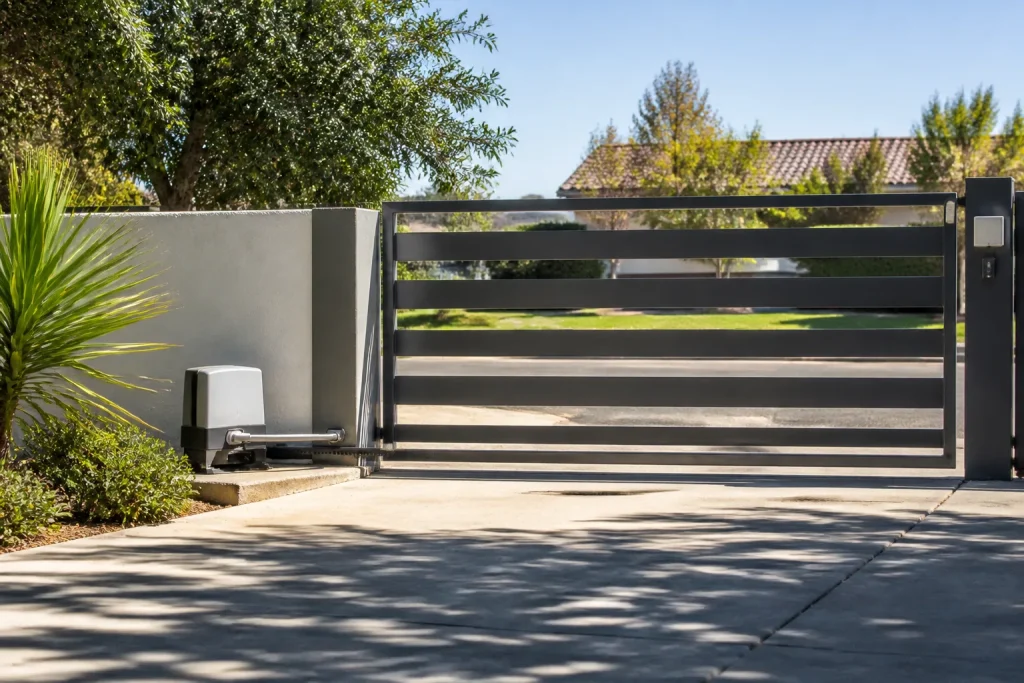
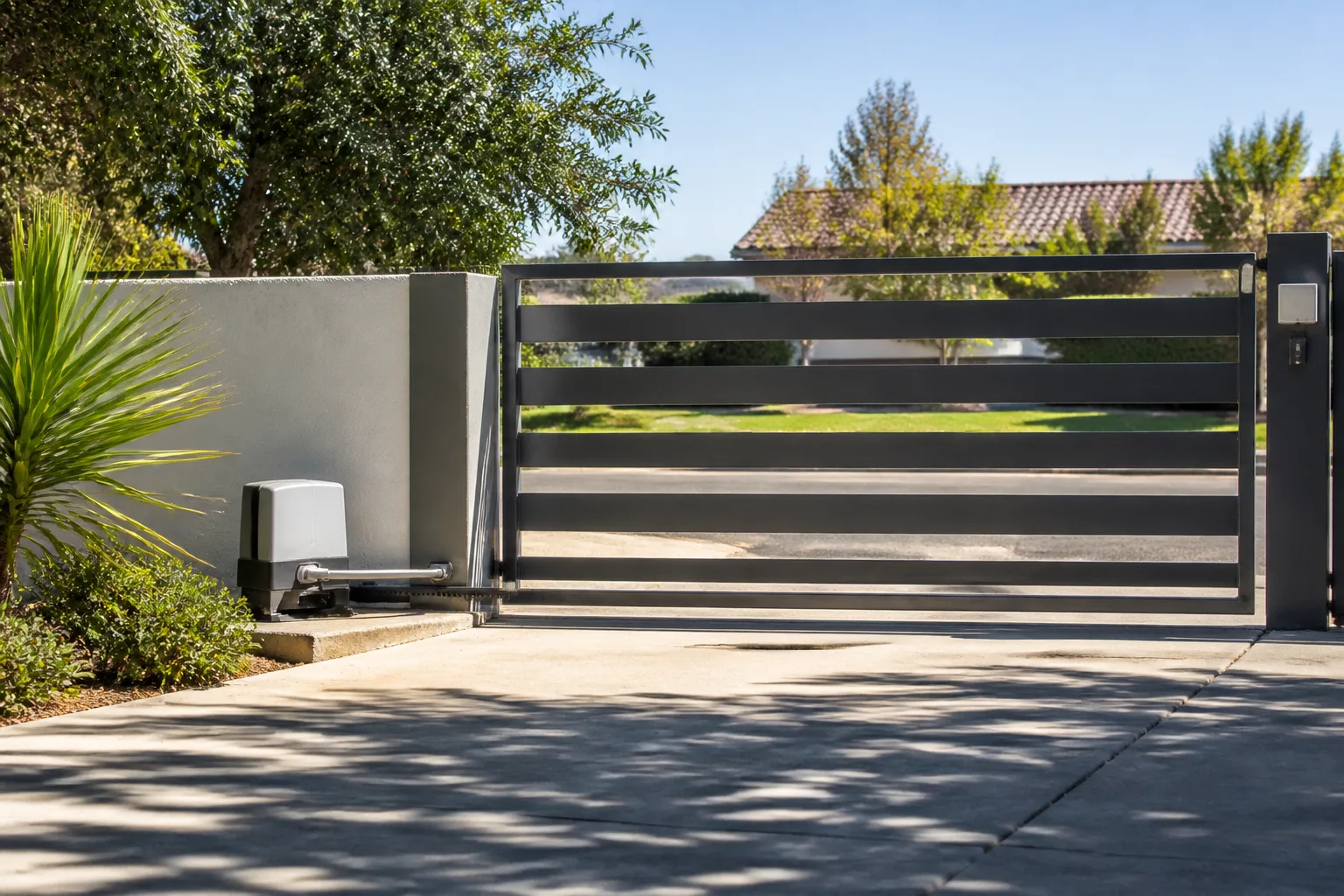
LiftMaster Gate Repair in Los Angeles: A Homeowner’s Guide
LiftMaster gate repair in Los Angeles typically runs $280 – $650 for standard control board or motor issues, with most service calls completed in a single visit when the technician arrives with proper diagnostic tools and OEM parts. The LA400 and SL3000 series have onboard diagnostic systems that display fault codes, but most homeowners who call us have never been told those codes exist, and some technicians prefer it that way. If you’d rather not troubleshoot this yourself, call us at (469) 530-2485 for a free estimate with a written price before any work starts.
We’ve been repairing gate operators across Los Angeles, and LiftMaster sits in more driveways and commercial entries here than any other brand. That market dominance means two things: parts are generally available, and there’s no shortage of people willing to swap those parts without understanding why they failed. The difference between a repair that holds and one that doesn’t usually comes down to whether someone read the fault codes first.
How LiftMaster’s Onboard Diagnostic System Actually Works
Every LiftMaster swing or slide operator from the last fifteen years carries a small LED diagnostic display on the control board. It’s not hidden, but it’s rarely pointed out during installation. The display flashes two-digit codes that correspond to specific failure modes. A technician who skips this step and starts replacing parts is working blind, and you’ll pay for that blindness.
Here are the codes we see most often on Los Angeles service calls:
- Code 01 – Main board processor fault. Usually requires board replacement, but we’ve traced this to voltage drops from undersized wiring in older Hollywood Hills installations where the run from house to gate exceeds 200 feet.
- Code 02 – Motor overload. Often misdiagnosed as a bad motor when it’s actually a binding gate mechanism. We see this in the hills above Los Feliz where gates sag on uneven grade.
- Code 04 – Entrapment protection fault. The safety sensors aren’t communicating. In coastal Los Angeles zip codes, we’ve found salt film on photo-eye lenses causing intermittent failures that don’t show up during a quick test.
- Code 06 – Loop detector issue. The vehicle detection loop embedded in your driveway is either broken or out of spec. This is the most common call we get in the San Fernando Valley during summer months when asphalt shifts.
- Code 08 – Low battery (battery backup systems). The LA400DC and similar models will throw this and refuse to operate if the backup battery drops below threshold, even on AC power.
Reading the code takes thirty seconds. Acting on it correctly takes training. We’ve followed behind other technicians in Pacific Palisades and Brentwood who replaced a $400 control board when the real problem was a $12 loop detector adjustment.
Three Failure Modes LA’s Climate Creates
Los Angeles weather isn’t harsh, but it’s specific. The combination of marine air, thermal cycling, and occasional Santa Ana wind events creates predictable failure patterns in LiftMaster equipment.
Loop detector sensitivity drift. The inductive loop in your driveway expands and contracts with temperature swings. In the Valley, where summer days hit 100°F and winter nights drop to 40°F, that movement changes the loop’s electrical signature. The detector was tuned for one temperature and now reads false positives or misses vehicles entirely. We recalibrate with a handheld loop analyzer, not by turning the sensitivity screw until it “seems better.”
Entrapment protection sensor misalignment. LiftMaster’s monitored photo-eye system requires a specific signal strength back to the board. Coastal fog in Marina del Rey or morning marine layer in Playa del Rey deposits microscopic salt crystals on the lens. The beam still passes, but the return signal degrades below the threshold. Cleaning helps; realigning with a meter helps more. We’ve had customers in Redondo Beach go through three “sensor replacements” before someone checked the actual voltage return.
Control board corrosion from marine air. This one is expensive. The board lives in a sealed housing, but no housing is perfect. In ocean-adjacent neighborhoods from Malibu to San Pedro, we’ve opened units where the board traces show green oxidation despite appearing sealed. The board functions intermittently until it doesn’t. Prevention means checking the housing seal during annual service, not waiting for the random failure.
Why OEM Programming Tools Matter
LiftMaster operators store their configuration in EEPROM memory. Travel limits, force settings, entrapment sensitivity, and accessory mappings all live there. When a board is replaced or a major update is needed, that EEPROM has to be programmed correctly.
There are aftermarket programmers that claim compatibility. We’ve seen the results in the field. A corrupted EEPROM can cause a gate to close with incorrect force settings, ignore safety inputs, or simply brick the board. In one case in Beverly Hills, a technician used a generic tool that wrote partial data. The gate appeared to work until a delivery truck triggered the loop, at which point it reversed direction unexpectedly and struck the vehicle.
We carry LiftMaster’s OEM programming interface. It costs more than the aftermarket alternatives. It also writes complete, verified configurations and won’t allow a partial write. For a gate that weighs several hundred pounds and moves under power, that’s not a place to save money.
Warranty Repair vs. Independent Repair: Know Before You Pay
LiftMaster commercial operators carry a limited warranty, typically five years on the motor and control board for the SL3000 series, shorter for residential models. The warranty is factory-backed, not dealer-backed, which means any authorized service center can perform it.
Here’s what most Los Angeles homeowners don’t know: you can check your warranty status directly with LiftMaster by calling their support line with the serial number from your operator. If you’re in warranty, the part is free and you pay only labor. Some companies won’t mention this because they’d rather sell you the part at markup.
We check warranty status as a matter of course. If your LA400 or SL3000 is covered, we’ll tell you before we order anything. Our labor rate doesn’t change either way. The gate motor repair page has more detail on how we handle manufacturer coordination.
Out of warranty, you’re paying parts and labor. That’s where our written price before work starts matters. You’ll know the full cost before we open the housing.
What a Complete Service Visit Looks Like
There’s a difference between a parts-swap visit and a proper service call. We’ve cleaned up after both in Los Angeles.
A parts-swap visit: technician arrives, diagnoses by guess or by reading one fault code in isolation, replaces the suspected part, tests the gate once, leaves. If the root cause was something else, the new part fails again in weeks.
A complete LiftMaster service visit from the local pro includes:
- Full diagnostic code read and history review. Some boards store multiple past faults.
- Voltage and amperage testing at the operator under load. A motor drawing high amps indicates mechanical binding, not motor failure.
- Loop detector calibration with proper test equipment, not screwdriver adjustment.
- Photo-eye alignment verification with a meter, not visual guesswork.
- Housing seal inspection and control board condition check.
- Travel limit verification and force setting confirmation per current UL 325 standards.
- Written documentation of all readings and settings for your records.
This takes longer than a parts swap. It also produces repairs that last. Our Done Right Promise covers a free second visit if anything fails inside that window, and we don’t see many callbacks on LiftMaster units we’ve fully serviced.
When to call a pro: If your LiftMaster is displaying any fault code, making unusual noise, or operating intermittently, stop using it and call. A gate that closes unpredictably is a liability. We answer live at (469) 530-2485, and we’ll give you a written price before any work starts.
Related services in Los Angeles: If your gate needs more than motor work, see our gate repair and gate installation pages.
The Bottom Line
LiftMaster builds reliable equipment, but reliability depends on correct diagnosis and proper service. The onboard diagnostic system exists to prevent guesswork. LA’s climate creates specific, predictable failure modes that a trained technician should recognize. OEM programming tools and warranty awareness protect you from unnecessary costs. And the distinction between swapping parts and actually servicing the system determines whether you’re calling again in three months.
At Carver Gate Repair, we work to The Garrison Standard: written prices before work starts, background-checked and uniformed technicians, and a full-year guarantee on every repair. We’ve been serving Los Angeles. If your LiftMaster gate operator needs attention, call (469) 530-2485 for a free estimate.
Frequently Asked Questions
Standard LiftMaster repairs in Los Angeles typically range from $280 for loop detector or sensor adjustments to $650 for control board replacement with OEM programming. Motor replacement on heavier commercial units runs higher. We provide a written price before any work starts, so the number you approve is the number on the invoice. Call (469) 530-2485 for a free estimate.
Yes, but interpreting them correctly requires understanding the full system. The LED display on the control board shows two-digit codes, and the owner’s manual lists basic meanings. However, the same code can indicate different root causes. Code 02 (motor overload) could mean a failing motor, a binding gate, low input voltage, or a damaged limit switch. Reading the code is step one; knowing what to test next is where training matters.
Call LiftMaster directly at their factory support number with your unit’s serial number, found on a label inside the operator housing. Residential units typically carry one to two years; commercial SL3000 series units carry up to five years on motor and board. If you’re in warranty, any authorized service center can perform the repair with factory-provided parts. We check this automatically on every call.
Temperature-related expansion is the most likely cause. In Los Angeles, afternoon heat causes gate frames to expand, track to shift slightly, and loop detector signatures to drift. The control board may also enter thermal protection if ventilation is blocked. We’ve traced this pattern to failing capacitors that test normal at room temperature but fail under load when warm. A metered test during the failure window confirms it.
Written by the team at Carver Gate Repair.
Need Gate Repair Help?
Call Carver Gate Repair - licensed & insured, here with fast after-hours help in Los Angeles.
(469) 530-2485