
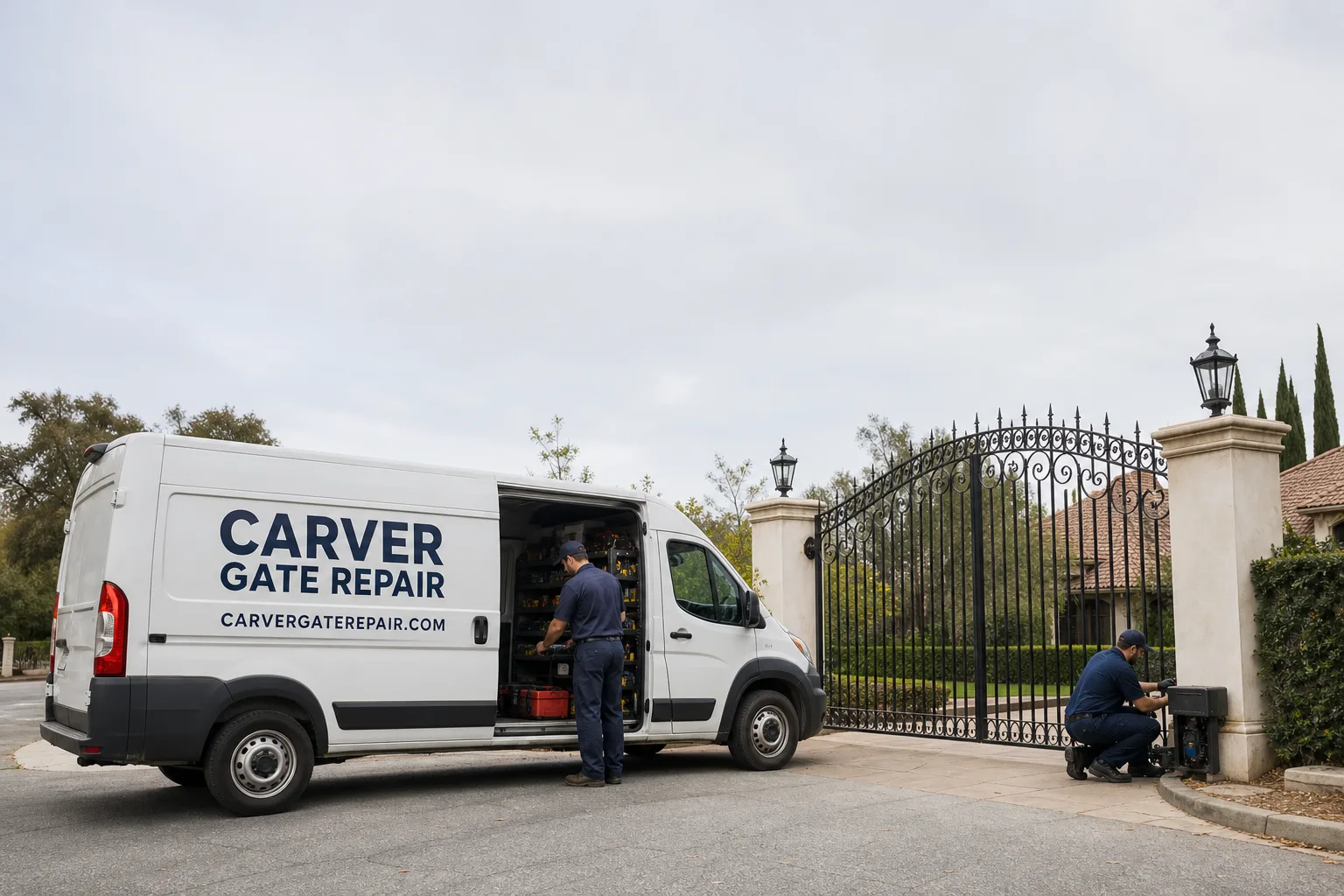
Free on-site gate assessment - hinges, posts, and your LiftMaster or Nice gate operator checked before anything is quoted
The assessment is free and the quote is the invoice.
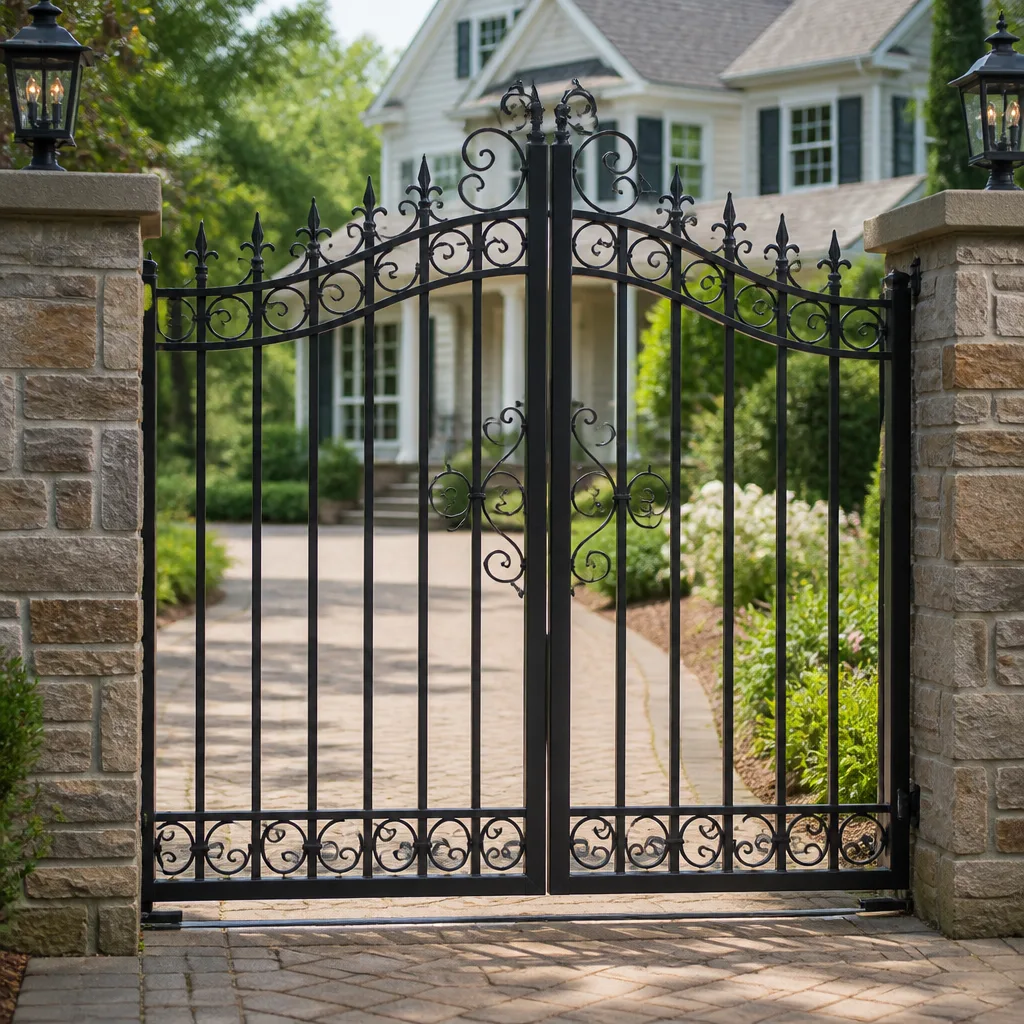
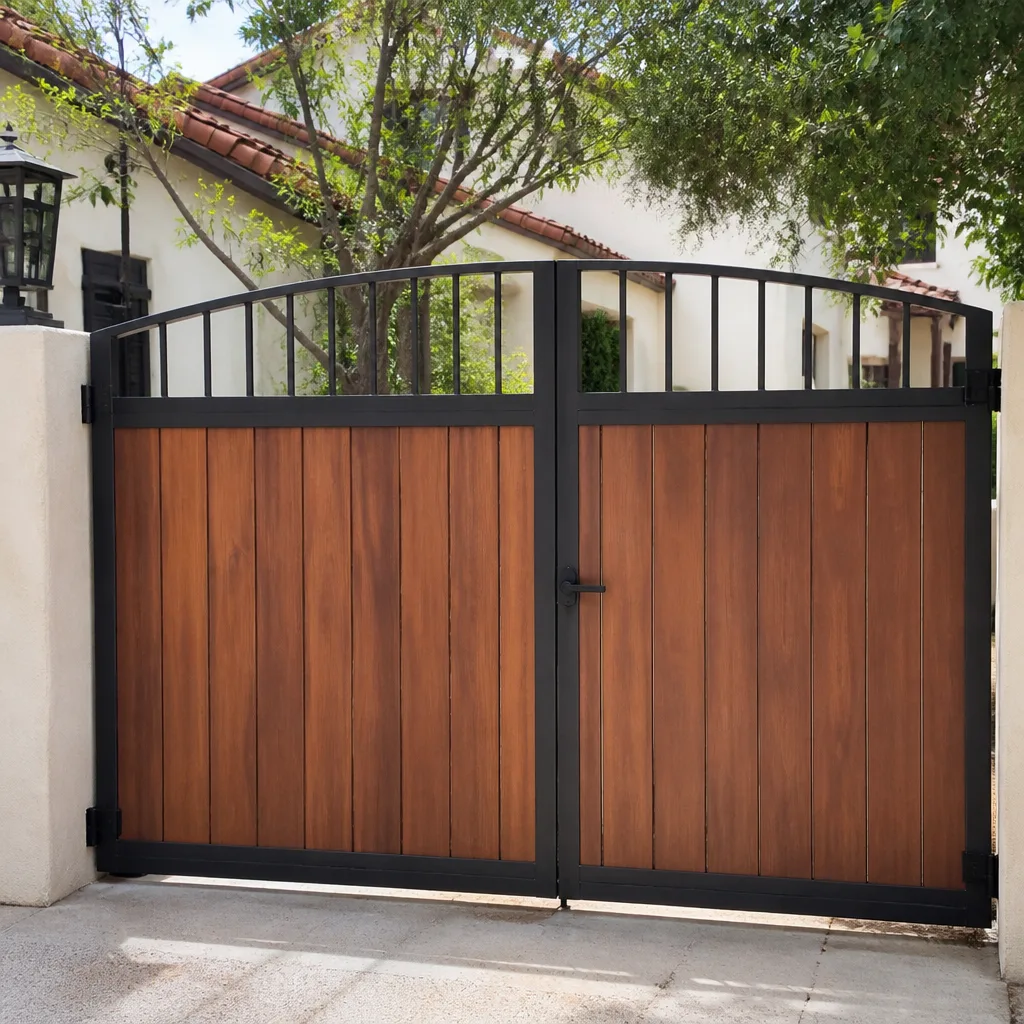
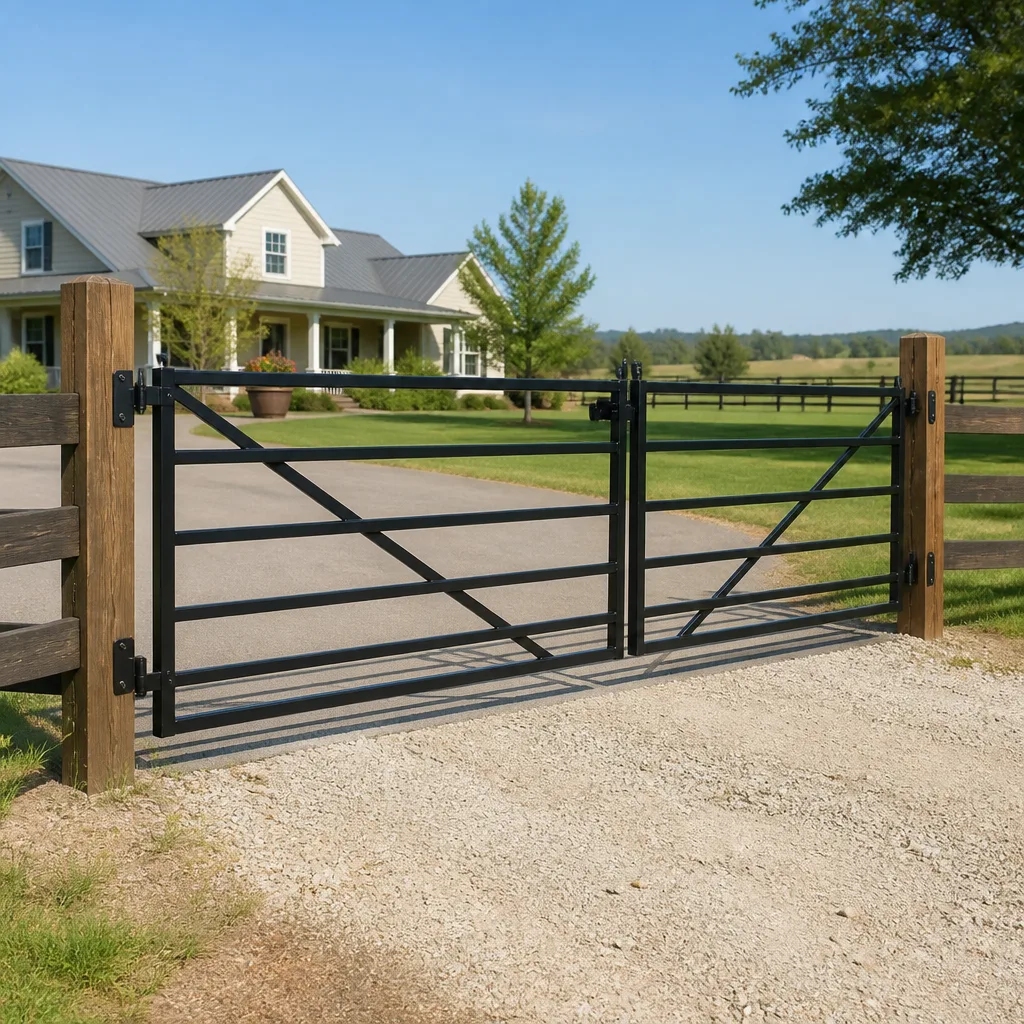
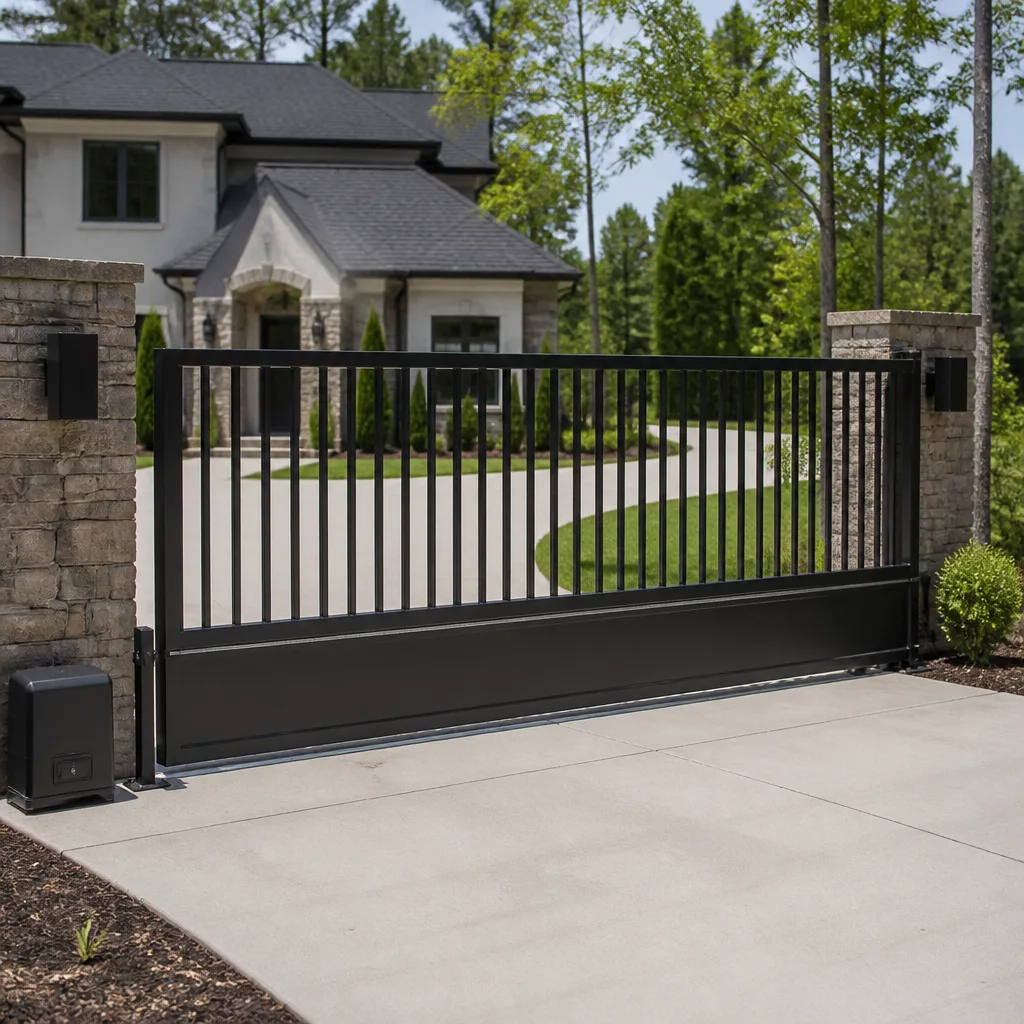
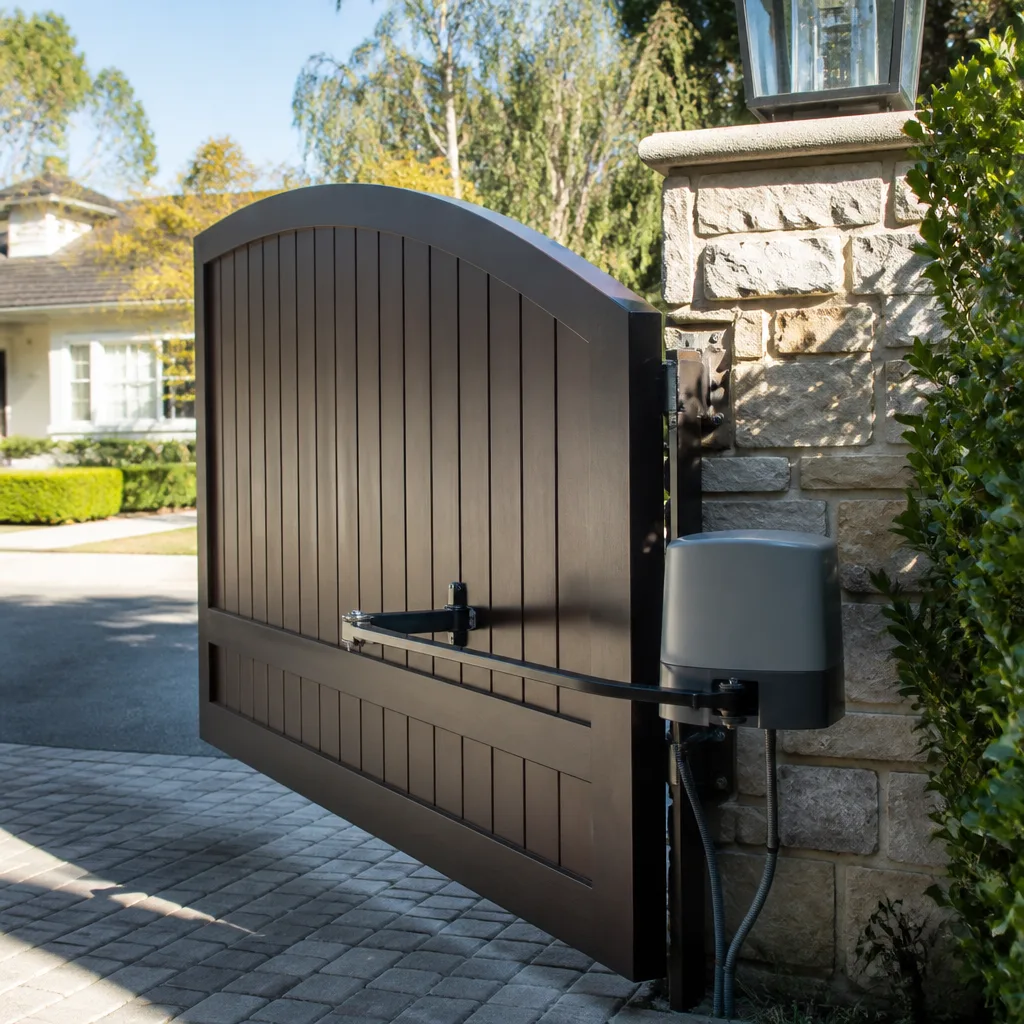
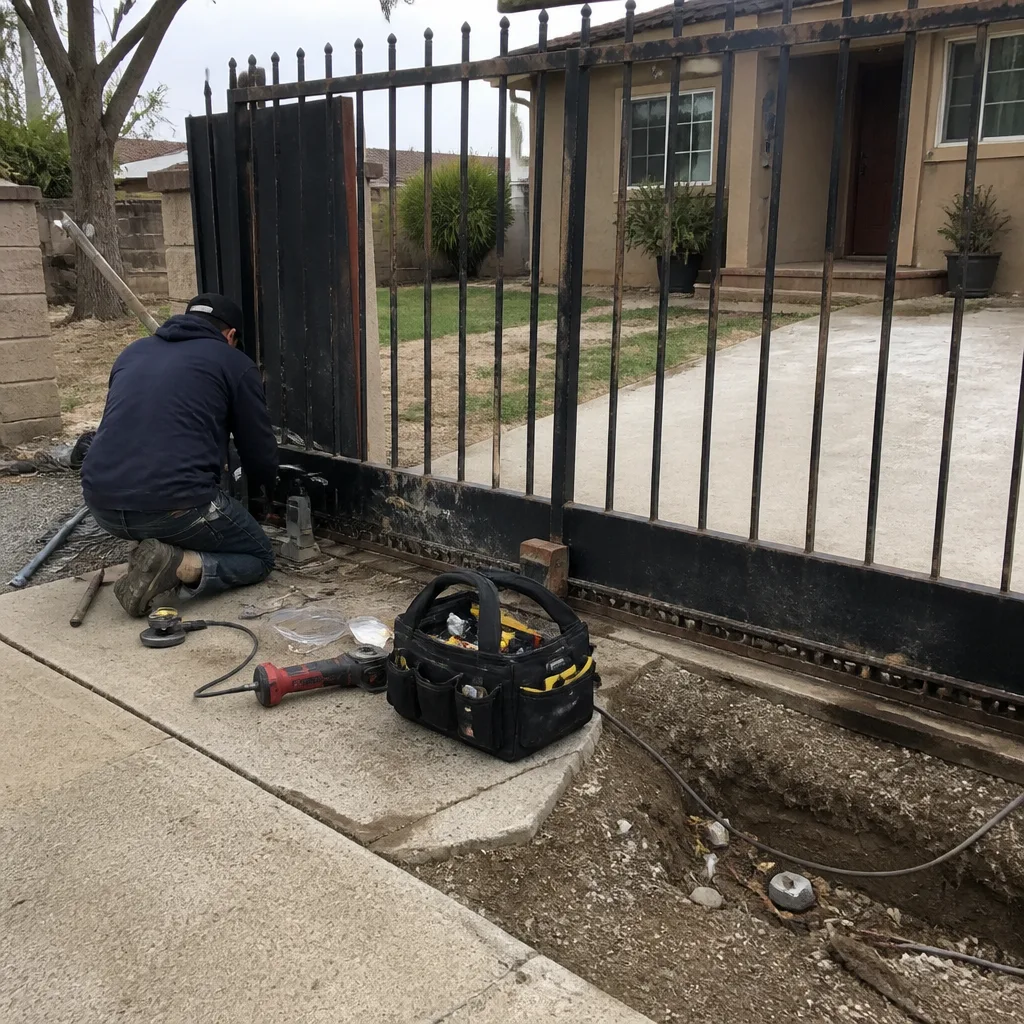 Before
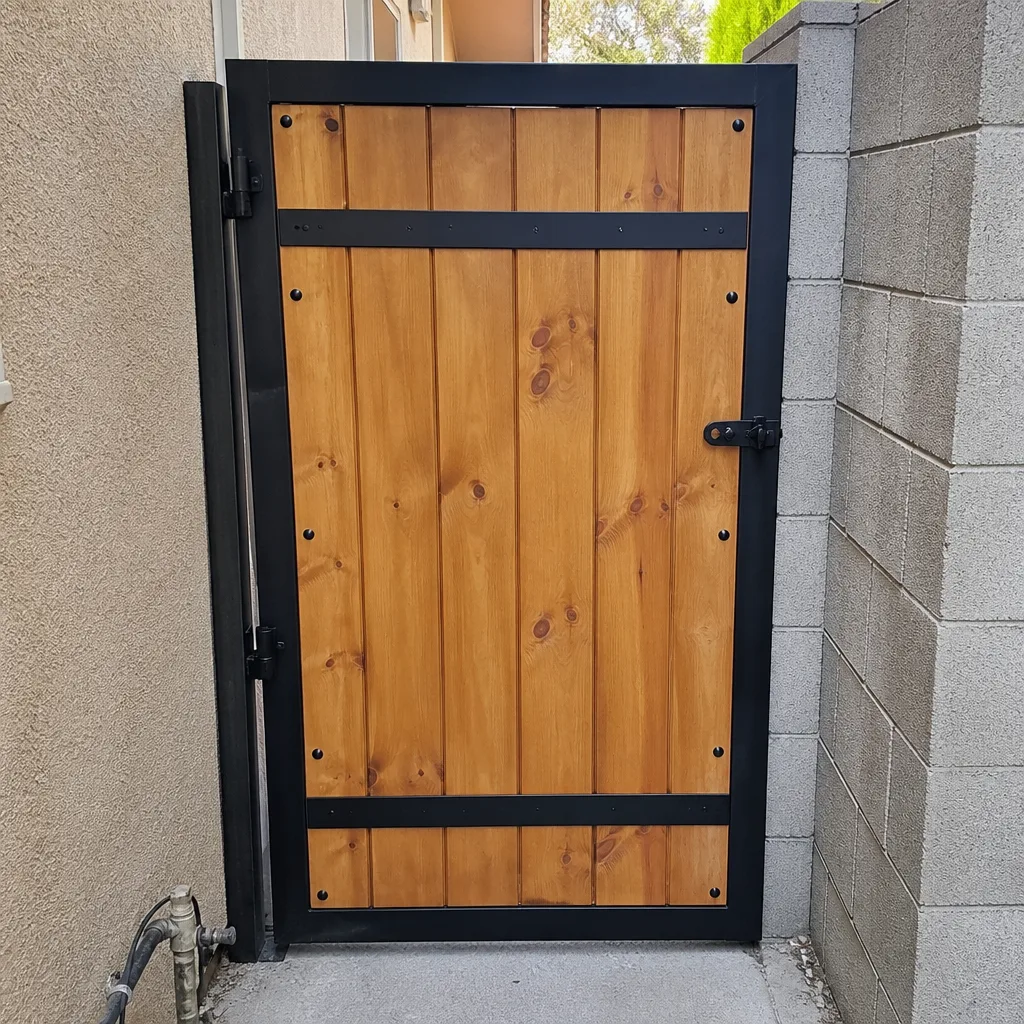 After
After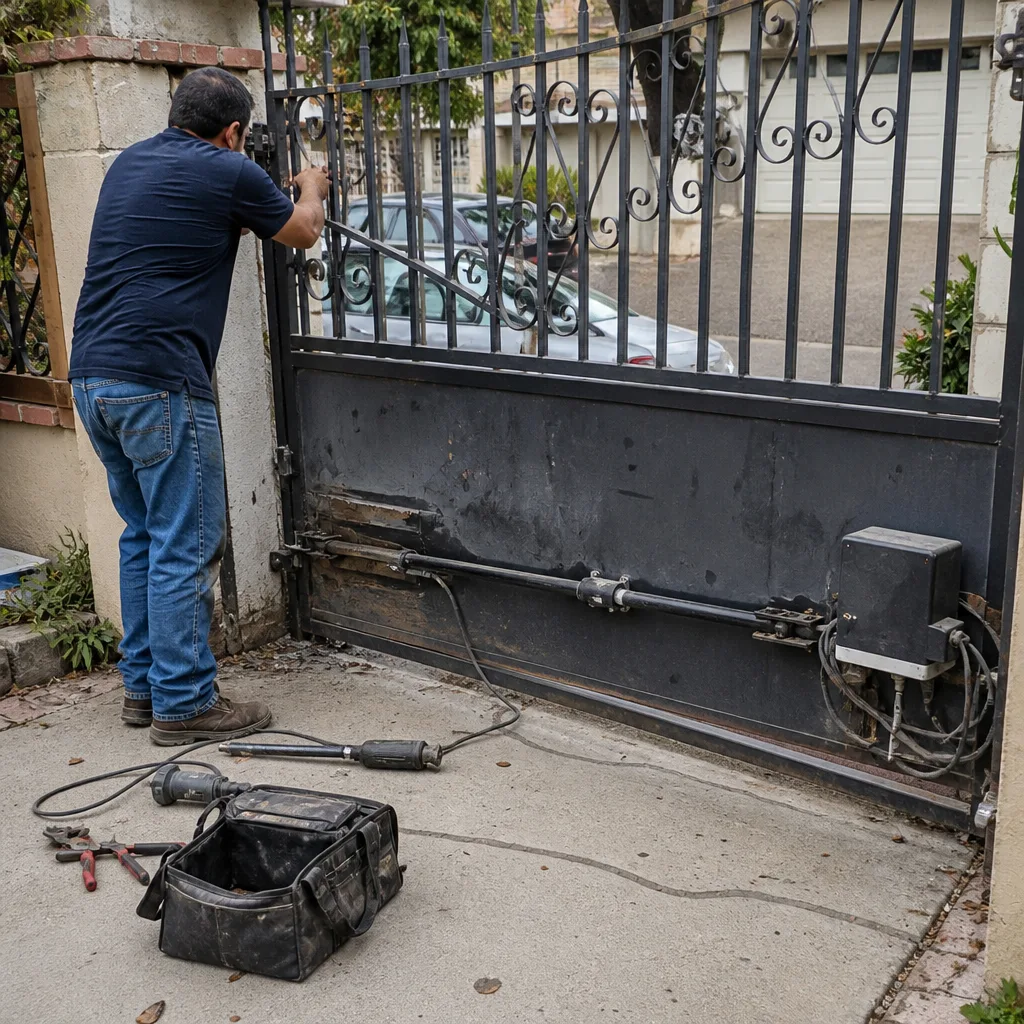 Before
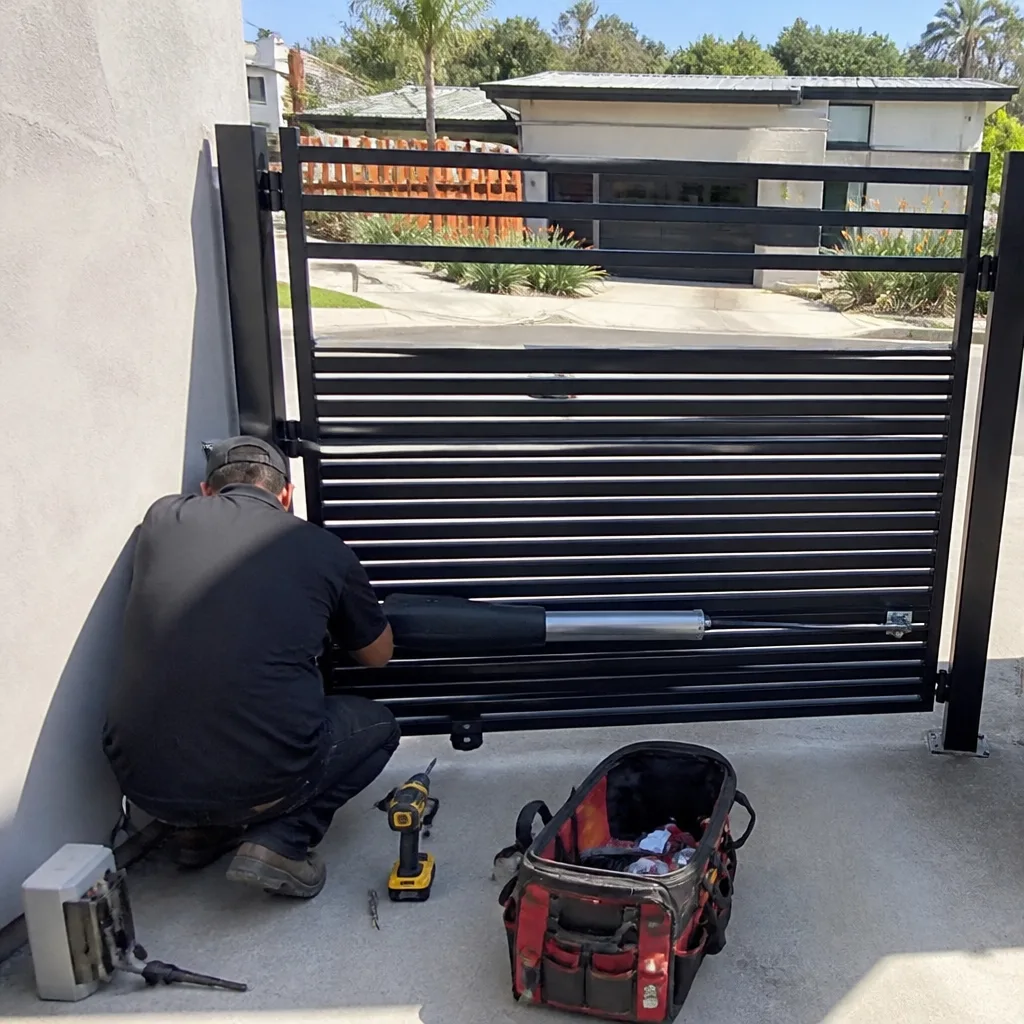 After
After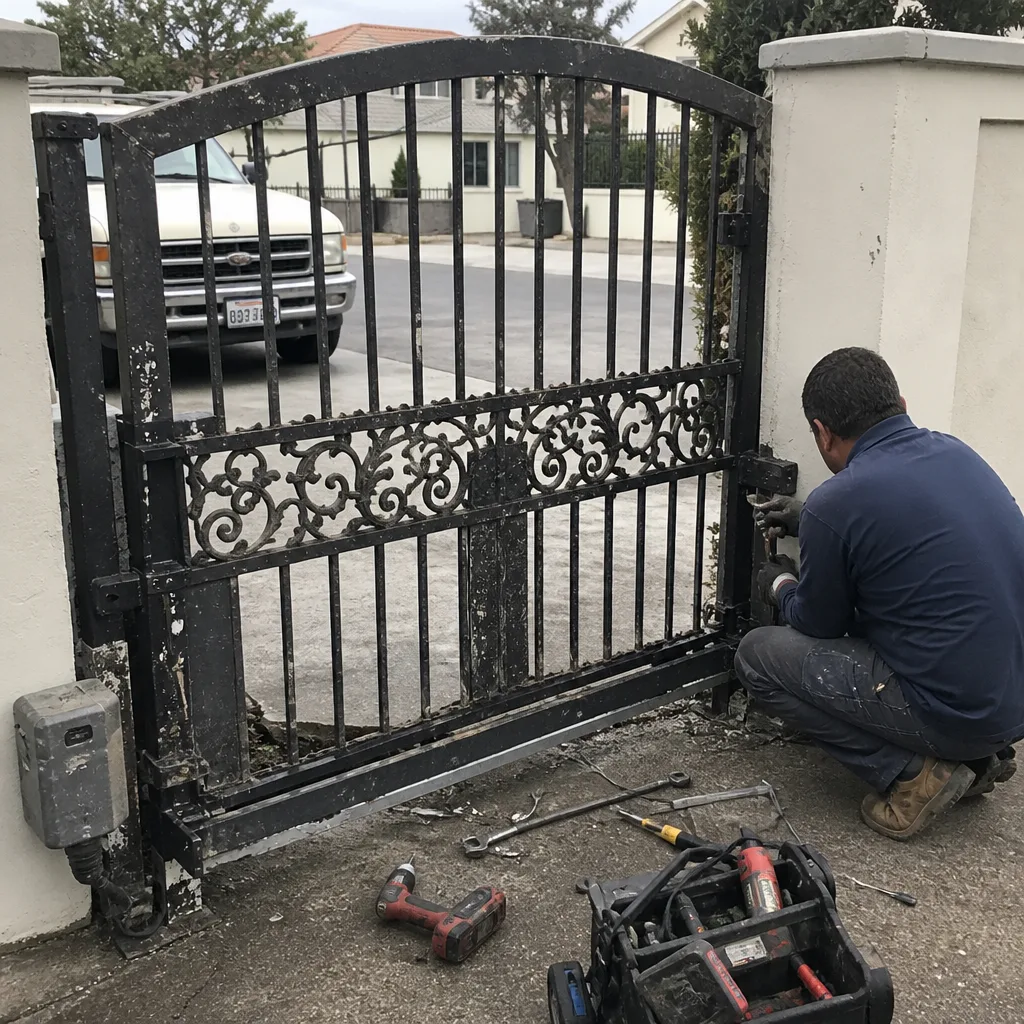 Before
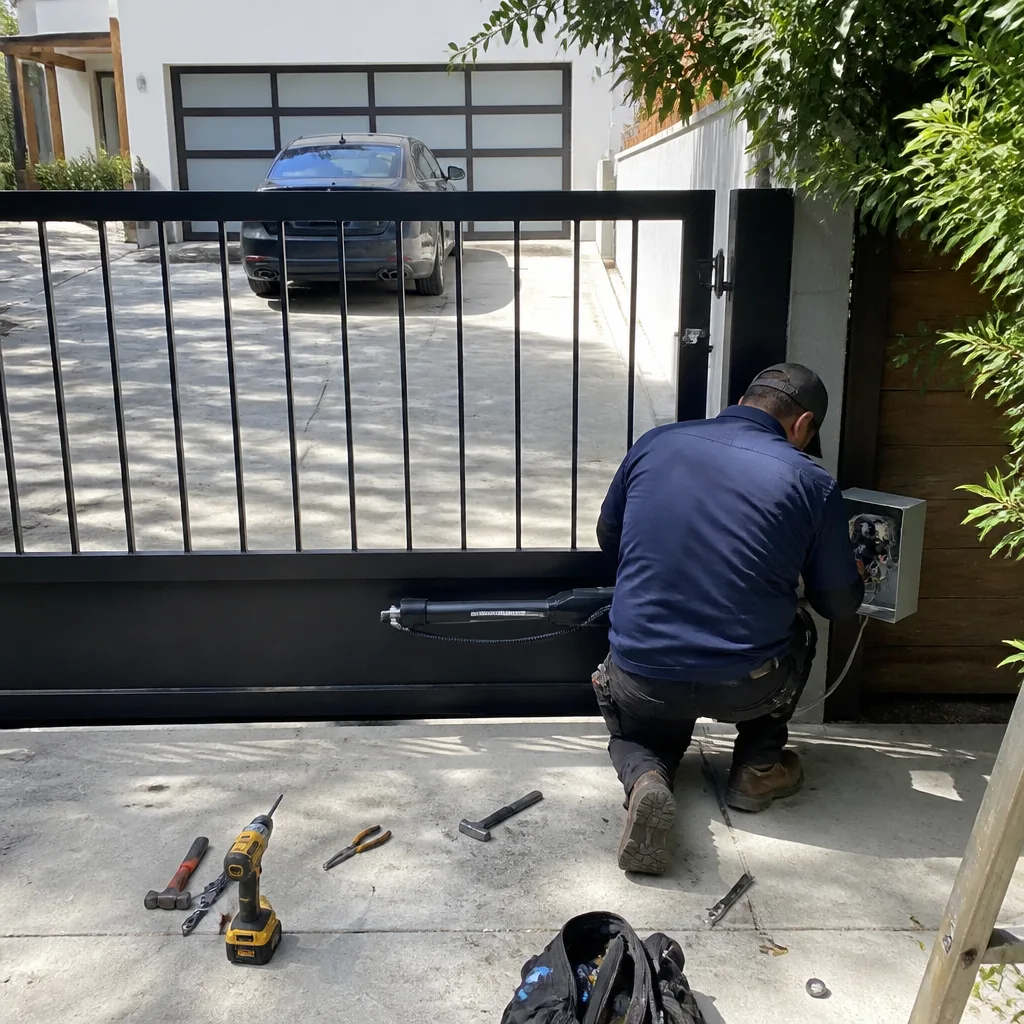 After
AfterGate Won’t Open or Close
What’s Happening
A gate that won’t open or close is almost always caused by one of four things: a failed motor or operator, a broken mechanical component like a hinge or rack, a power or control-board issue, or a misaligned or damaged sensor. In most cases, a trained technician can diagnose the root cause and complete the repair in a single visit.
The frustrating part is that the symptom – gate stuck, gate won’t move, gate stops halfway – looks the same from the outside no matter what caused it. The motor might be dead, or it might be perfectly fine and waiting on a signal that never arrives. The gate might be jammed by a broken hinge, or it might be held in place by a safety sensor that sees an obstruction that isn’t there. Getting the diagnosis right the first time is the whole job. That’s what separates a repair that holds from one that fails again in a week.
Why It Happens
Motor or Operator Failure
The motor is the most common culprit. Operators from brands like LiftMaster, FAAC, Viking, and Linear are built to last, but they have internal components – capacitors, drive gears, motor windings – that wear out after years of daily cycling. When the operator fails, you’ll usually hear nothing at all when you send a command, or you’ll hear a hum or click with no movement. Some units show a fault code on a small display panel; if yours does, photograph it before you touch anything.
Broken or Seized Mechanical Parts
On slide gates, the rack – the toothed strip the drive gear rolls along – can crack, corrode, or lose teeth. On swing gates, hinges seize or weld themselves with rust, and the arm linkages bend or break. The sign is a gate that starts to move, then stops, or a motor that runs but the gate doesn’t budge. You can sometimes see a cracked rack or a bent arm by walking the gate’s path. Don’t force the gate by hand if anything looks bent or under stress – you can make a bad situation worse and create a pinch-point hazard.
Power or Control Board Problems
No power to the operator means no movement, and the cause is rarely the operator itself. A tripped circuit breaker, a blown transformer, a corroded terminal connection, or a failed control board can all cut the gate dead. If the status light on your operator is off when it’s normally on, start at the breaker panel. A tripped breaker is a homeowner fix; a burned control board is not. Control boards carry line voltage even when the gate is sitting still – don’t probe them yourself.
Sensor or Safety-Edge Fault
Every code-compliant gate system has obstruction sensors, safety edges, or photoelectric beams that stop the gate if something is in the way. When one of those sensors fails, gets misaligned, or gets blocked by a spiderweb or a wasp nest (it happens), the gate reads a constant obstruction and refuses to move. The tell is a gate that tries to move and immediately reverses, or one that won’t move at all while the operator’s indicator light blinks a fault code. Sensor alignment is something a technician handles as part of diagnosis – the beam spacing and sensitivity settings are calibrated to the specific unit.
What to Do Right Now
- Stop cycling the gate. Sending repeated open/close commands to a jammed or faulted gate strains the motor and can turn a minor repair into a major one. Send the command once, note what happens – sound, movement, lights – and stop.
- Check the breaker. Go to your panel and look for a tripped breaker on the circuit that feeds the gate operator. If it’s tripped, reset it once. If it trips again immediately, stop and call – there is a wiring fault that needs a technician.
- Photograph what you see. A photo of the operator’s status light, any fault code on the display, the rack, the hinges, and the sensor positions takes about two minutes and gives the technician a head start before they arrive.
- Check the sensor path for debris. Look at both sensor heads (usually mounted low on each side of the gate opening) for dirt, leaves, or insect nests. Wipe them gently with a dry cloth. Do not move the mounting brackets – alignment is precise.
- Do not attempt to manually release a gate under spring tension without knowing the release procedure for your specific unit. Torsion springs and high-tension cables on counterbalanced gates store serious energy. If your gate uses a spring-assist counterbalance and it isn’t moving, leave it in place and call. This is a job for a trained technician with the right tools.
How We Fix It
When your local Carver Gate Repair technician arrives, the first thing that happens is a full diagnostic – operator, control board, mechanical components, sensors, power supply, and safety systems, all checked before any repair decision is made. You get a written price for the repair before any work starts. That number doesn’t move once the job is open.
Most gate-won’t-open calls resolve as a gate repair: a failed motor component replaced, a rack section swapped, a control board swapped out, or a sensor realigned and recalibrated. Our technicians carry parts for LiftMaster, FAAC, BFT, Linear, Viking, Ghost Controls, DoorKing, Elite, and Mighty Mule systems, which covers the majority of residential and light-commercial gate operators in the field.
A typical diagnostic and single-component repair takes one to three hours. The work is covered by our 365-Day Done Right Promise – a written guarantee on every repair. If the same repair fails inside that year, we come back and make it right at no charge, no argument.
Frequently Asked Questions
It can be. A gate stuck in the open position is a security problem – your property is unsecured until it’s fixed. A gate stuck closed can block vehicle access in an emergency. And a gate with a failed safety sensor may reverse unpredictably or not stop when it should, which creates a collision hazard. Don’t leave a failed gate running unattended. Call (469) 530-2485 and get it looked at the same day if you can.
It depends on what’s failed. A gate stuck open should not wait – every hour is an unsecured perimeter. A gate stuck closed is safer to leave temporarily, but forcing it or bypassing the operator to get vehicles through often causes secondary damage that costs more to fix. The sooner it’s diagnosed, the smaller the repair bill tends to be. Call (469) 530-2485 to talk it through with someone who can help you decide.
Our phones are answered by a live person 24 hours a day, every day of the year – weekends and holidays included. When you call, you’ll speak to someone immediately, not a voicemail box. Your local Carver Gate Repair team dispatches based on the schedule in your area; call (469) 530-2485 and we’ll tell you exactly when a technician can be there.
Every repair Carver Gate Repair performs is covered by the 365-Day Done Right Promise – a written guarantee, not a verbal one. If the same repair fails inside twelve months of the service date, we return and fix it at no charge. No arguing about whether it counts, no diagnostic fees, no second estimate. That’s what the guarantee says, and it’s in writing on every job.
Get It Fixed
Call (469) 530-2485 right now – a live person answers every call, around the clock. Your local Carver Gate Repair team will get a technician scheduled, arrive inside the window we give you, put the price in writing before any work starts, and back the repair for a full year. Gates that open and close every time. That’s the job.
Written by Lonnie Burke, Owner at Carver Gate Repair, operating to The Garrison Standard since 2008.
What Our Customers Say
"Gate hinge was bending under the weight. Welded a new bracket on and re-hung it. Solid now."
- Rudy A."Slide gate wasn't opening fully. Veteran tech found a worn drive chain and a misaligned limit. Fixed both in one visit."
- Don H."Good repair on a motor board. Waited a few days on the part, but they stayed in contact."
- Shelby T.