
Last updated October 10, 2026
Free on-site gate assessment - hinges, posts, and your LiftMaster or Nice gate operator checked before anything is quoted
The assessment is free and the quote is the invoice.
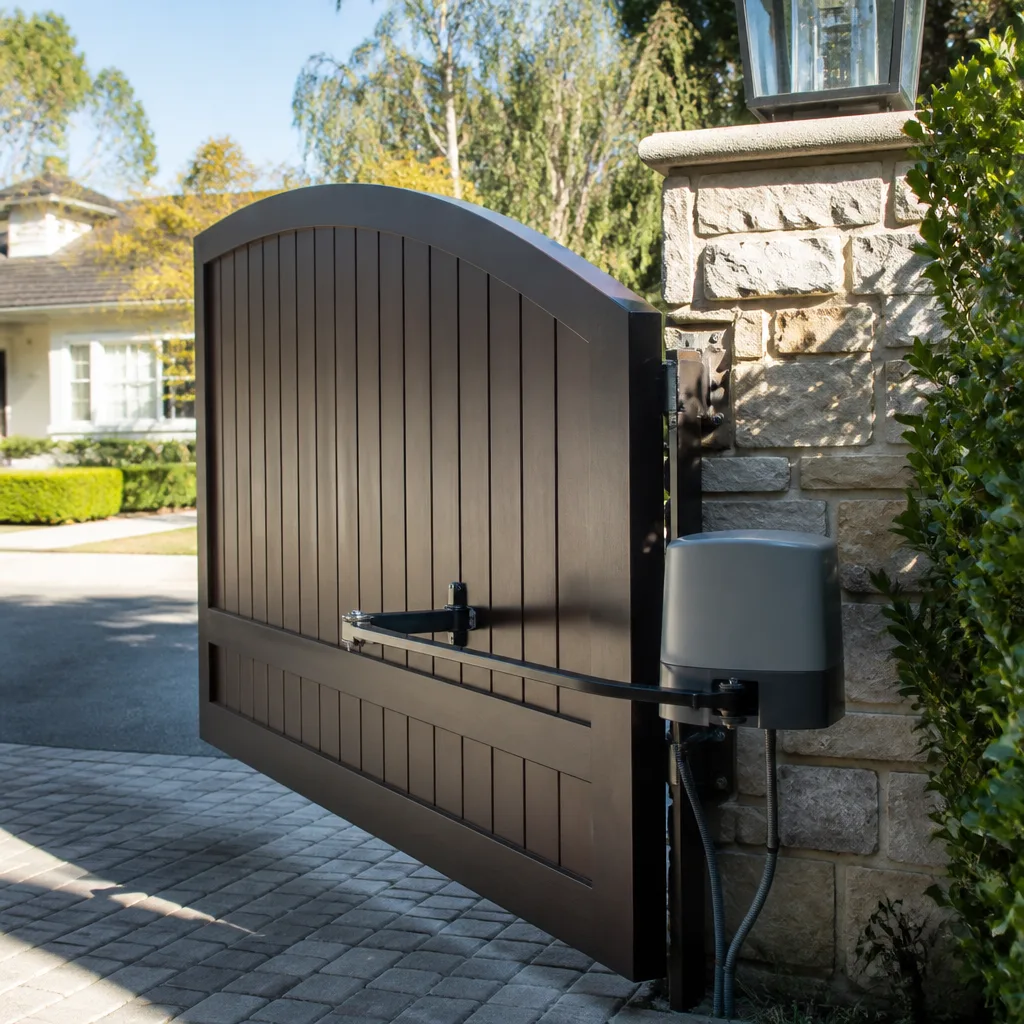
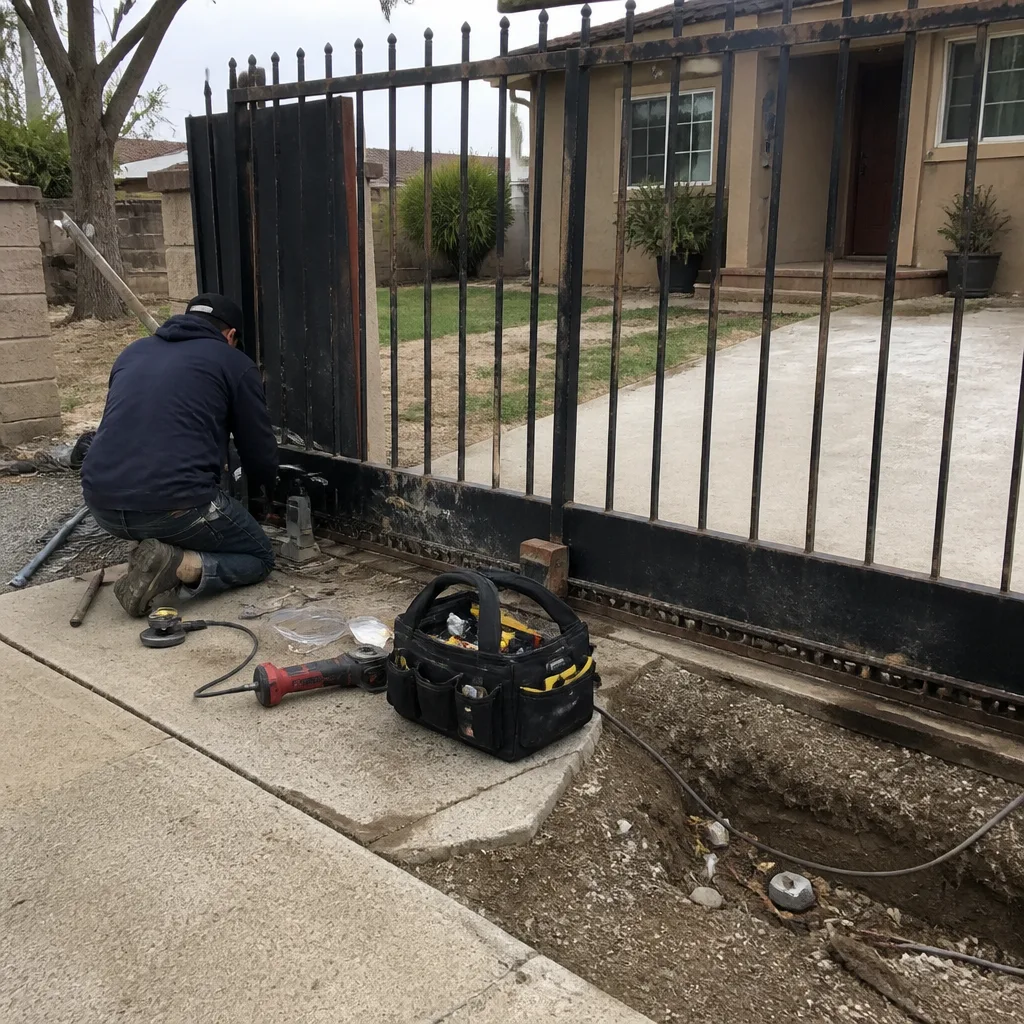 Before
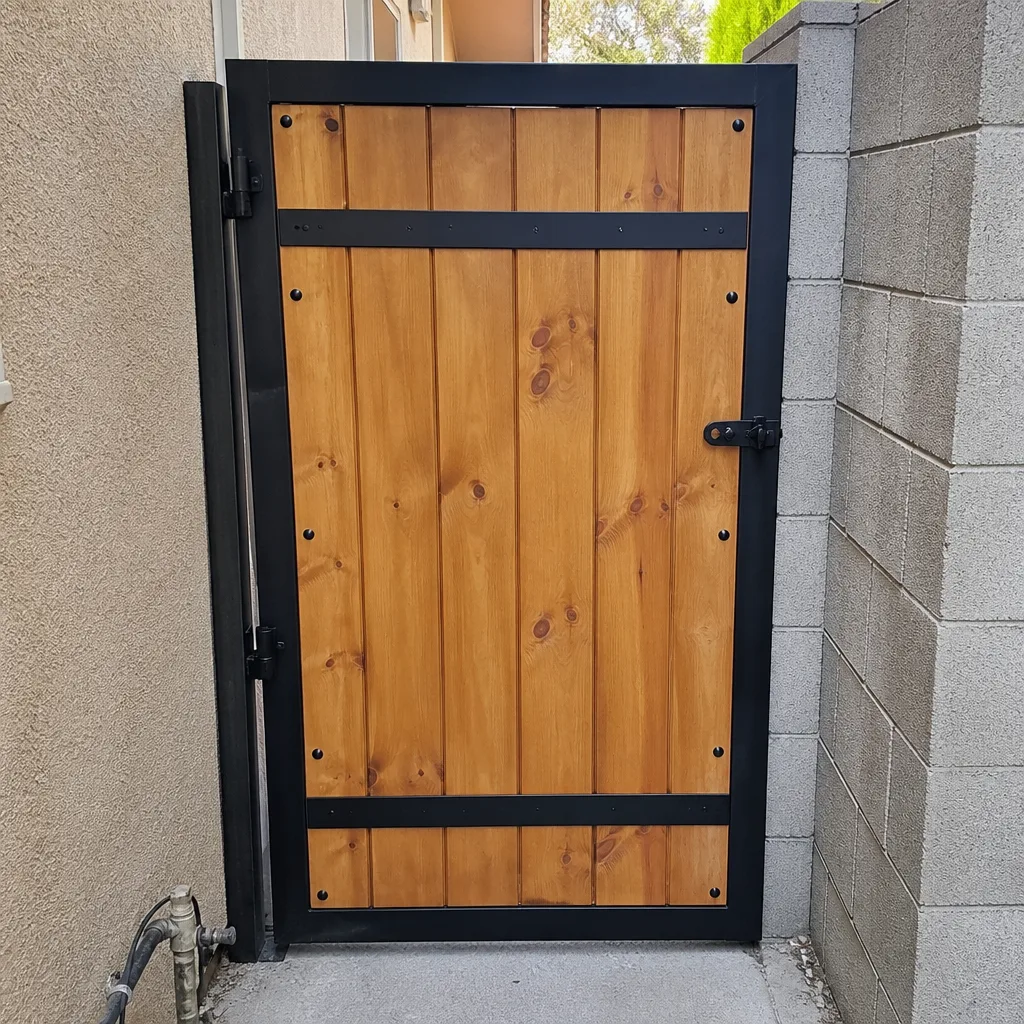 After
After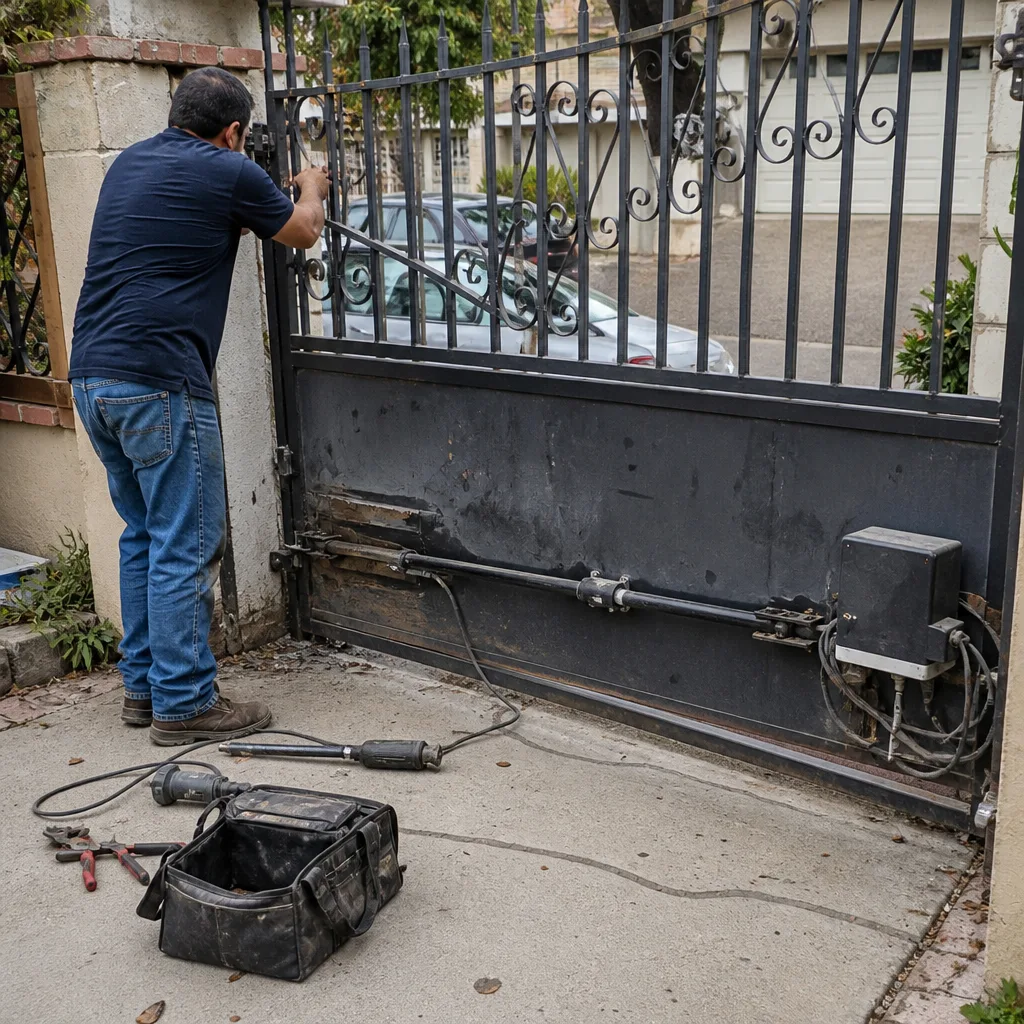 Before
 After
After Before
 After
AfterGate Repair Maintenance Schedule: What to Do and When
The hinge bolts on a daily-use driveway gate accumulate more fatigue cycles in one year than most homeowners complete in a lifetime of opening and closing interior doors. Yet most maintenance guides suggest checking them annually, the same interval recommended for a gate used twice a week. In Los Angeles, where coastal salt air meets inland heat expansion and seasonal Santa Ana winds stress hardware that was never designed for it, that mismatch costs property owners thousands in premature replacements. This guide builds a maintenance calendar around how gates actually age: by cycle count, component type, and local climate stress, not by copying the same monthly checklist from our more guides & resources to another.
Quick Answer
A gate maintenance schedule should match service intervals to your gate’s actual annual cycle count, not arbitrary calendar dates. Daily-use gates in Los Angeles need hinge and roller inspection every 4 months, lubrication every 6 months, and operator service annually; occasional-use gates can stretch to annual inspections. Pre-rainy-season checks in October and post-summer inspections in September address the specific heat and moisture damage patterns that shorten component life in Southern California.
Table of Contents
- How to Calculate Your Gate’s Actual Cycle Count
- Matching Lubricants to Components
- The Los Angeles Seasonal Calendar: October and September
- Gate Operator and Battery Backup Maintenance
- Documenting Maintenance for Warranty Protection
- Cycle-Based Maintenance Checklists
- Common Mistakes to Avoid
- When to Call a Professional
- Frequently Asked Questions
How to Calculate Your Gate’s Actual Cycle Count
Every gate component has a rated cycle life. Hinge pins, rollers, chain drives, and operator motors are engineered for a specific number of open-close cycles before metal fatigue or wear reaches critical thresholds. A “monthly” inspection makes no sense if your gate opens 16 times per day versus 3 times per week. The first step in building a useful maintenance schedule is calculating your real annual cycle count.
Here’s the method we use on every Gate Repair services call in Los Angeles:
- Count daily cycles for one week. Place a tally sheet near the gate or use a simple counter app. Count every open-close pair as one cycle. Include delivery drivers, dog walkers, and landscaping crews who use the gate while you’re at work. We’ve found most homeowners underestimate by 40%.
- Multiply by 52 for annual cycles. A gate that opens 8 times daily = 2,912 annual cycles. One that opens twice daily = 416 cycles.
- Classify your usage tier. Under 600 annual cycles = light residential. 600 – 2,000 = standard residential. Over 2,000 = heavy residential or light commercial. This classification determines every interval that follows.
In neighborhoods like Pacific Palisades or the Hollywood Hills, where steep driveways mean gates open for every vehicle, we’ve recorded gates exceeding 3,500 annual cycles. In contrast, a pedestrian-only garden gate in Pasadena might see 200. The maintenance schedule for these two gates should look nothing alike.
Operator manufacturers like LiftMaster and FAAC specify component life in cycles, not months. A chain drive rated for 15,000 cycles lasts 5 years at 3,000 annual cycles but over 25 years at 600 cycles. Your lubrication and inspection intervals should scale proportionally. We recommend dividing the component’s rated cycle life by 10 to set inspection frequency. A 15,000-cycle chain drive inspected every 1,500 cycles (roughly every 6 months at standard residential use) catches wear before it becomes failure.
Los Angeles adds a multiplier: coastal properties from Malibu to San Pedro see salt-air corrosion that accelerates hinge and fastener degradation by roughly 30%. Inland valleys like Encino or Woodland Hills experience wider temperature swings, increasing thermal expansion stress on welded joints. Adjust your intervals down by one category if you’re within 3 miles of the Pacific or experience daily temperature swings exceeding 35°F.
Matching Lubricants to Components
The wrong lubricant causes more gate damage than no lubricant at all. We’ve replaced screw drives in Brentwood that were destroyed by lithium grease, and rack-and-pinion systems in Silver Lake gummed up by WD-40 that collected dust into an abrasive paste. Each drive type and hardware component requires a specific lubricant formulation.
Chain drives (common on LiftMaster and Mighty Mule swing operators): Use a high-tack chain and cable fluid with PTFE. The lubricant needs to penetrate pin bushings, then resist sling-off at chain speed. Apply every 1,500 cycles or 6 months for standard residential use. Wipe the chain clean first; never layer new lubricant over old.
Screw drives (found on many Linear and Viking operators): Use manufacturer-specified grease only, typically a synthetic, non-separating lubricant with anti-wear additives. Lithium-based greases separate under the high contact pressure of acme screw threads, leaving dry metal-to-metal contact. In Los Angeles heat, separation happens faster. We see this failure pattern regularly in the San Fernando Valley.
Rack-and-pinion systems (common on sliding gates, including many DoorKing and Elite installations): Use a dry-film lubricant or light machine oil, never grease. The rack teeth mesh tightly with the pinion; thick lubricant traps grit from Santa Ana wind events and turns into grinding compound. Apply sparingly every 1,000 cycles.
Hinges and rollers (all gate types): Use a silicone-based spray with corrosion inhibitors for coastal properties, or a white lithium grease for inland. The key is working the lubricant into the pin bore, not just coating the exterior. For ball-bearing rollers, use a light oil on the seal edge; do not force grease past the seal, which damages it.
Limit switches and magnetic sensors: No lubricant. Clean with electrical contact cleaner only. We’ve seen operators in Redondo Beach fail because a well-meaning homeowner sprayed silicone on the limit switch cam, attracting salt residue that bridged contacts.
Store lubricants in a climate-stable location. Garage temperatures in the San Gabriel Valley can exceed 120°F in summer, breaking down grease formulations before they’re even applied. Check manufacture dates on lubricant containers; most have a 2-year shelf life unopened.
The Los Angeles Seasonal Calendar: October and September
Los Angeles has two maintenance seasons that matter for gates: pre-rainy season and post-summer. The city’s Mediterranean climate creates distinct stress patterns that generic national checklists miss entirely.
October: Pre-Rainy-Season Inspection
Los Angeles receives nearly all annual rainfall between November and March. October is the window to address water intrusion vulnerabilities before they become failures. We’ve learned this timing through years of emergency calls in December, when saturated control boards and corroded loop detectors fail simultaneously. For details on regulatory requirements, see our guide to Gate Repair Permits, Codes & Inspections in CA: What You Need to Know.
- Seal inspection on operator enclosures. Check gaskets on LiftMaster, FAAC, and BFT control boxes for hardening or gaps. Replace if compressed or cracked. Water entering in November sits for months; we’ve pulled boards with trace corrosion that took 18 months to cause failure.
- Drainage around gate posts and footing. Clear weep holes in masonry pillars. Regrade soil if water pools within 12 inches of post bases. In hillside areas like Laurel Canyon or Beachwood Canyon, check that drainage swales above the gate haven’t silted in during summer.
- Loop detector and conduit seals. The saw-cut loop in your driveway communicates with the operator through conduit that exits at ground level. If the sealant has dried or pulled away, winter water follows the conduit directly to the detector board. Re-seal with polyurethane joint compound.
- Wood gate sealing. For wood gates in Los Angeles, October is the last chance to re-stain or seal before wet season. South-facing gates in particular have taken UV damage all summer; water will penetrate cracks that formed in September heat.
September: Post-Summer Heat-Damage Assessment
Los Angeles summers produce sustained temperatures above 90°F inland, with surface temperatures on metal gates and operators exceeding 140°F. Thermal expansion and UV degradation peak in August. September is when damage becomes visible but before winter stress compounds it.
- Check welded joints for fresh cracking, particularly on steel swing gates where the top hinge bracket meets the frame. Thermal cycling stresses this joint more than any other.
- Inspect operator mounting bolts for loosening from expansion-contraction cycles. Re-torque to manufacturer specification; don’t just tighten until they feel tight.
- Test safety edges and photo eyes for UV degradation of housings. Brittle plastic cracks in winter, causing false positives or complete failure.
- Evaluate battery backup performance. High temperatures accelerate sulfation in sealed lead-acid batteries. September load testing identifies weakened batteries before winter power outages demand them.
The Santa Ana wind season, typically October through January, adds lateral load stress that gates in milder climates never experience. Check diagonal bracing on wood gates and weld integrity on steel frames as part of your October inspection. We’ve replaced gates in the Santa Monica Mountains that failed not from age but from a single 60-mph event that found a crack initiated by summer thermal fatigue.
Gate Operator and Battery Backup Maintenance
Gate operators are the most neglected component in residential maintenance schedules. Homeowners inspect hinges and lubricate chains but treat the operator as a black box that either works or doesn’t. In our experience across Los Angeles, 60% of emergency operator calls could have been prevented with scheduled service of components that have predictable wear curves.
Annual operator service (all usage tiers):
- Inspect and clean limit switch cams and contacts. Carbon buildup from arcing causes position drift, which manifests as incomplete opening or forceful closing that damages gate hardware.
- Test and adjust clutch or torque settings. Gates settle and hinge friction increases over time; an operator adjusted for a new gate will overwork itself on a 3-year-old installation. Check current draw under load; elevated draw indicates mechanical binding or motor degradation.
- Inspect capacitors for bulging or leakage. Capacitor failure is the most common cause of “dead” operators that show no symptoms beforehand. In Los Angeles heat, capacitor life is roughly 70% of manufacturer rating.
- Verify safety system function: photo eyes, safety edges, and loop detectors. Document response times. A photo eye that responds in 0.3 seconds today but 0.8 seconds in 12 months has degraded and will eventually fail to stop the gate.
- Update control board firmware if the manufacturer has released revisions. Ghost Controls and Mighty Mule have issued updates that improve battery management algorithms; older firmware overcharges batteries in warm climates.
Battery backup: the 18-month rule
Sealed lead-acid batteries in gate operators, including those in DoorKing and Elite systems, need a load test every 18 months regardless of whether the power has gone out. This surprises most homeowners. The battery isn’t tested by utility failure; it’s degraded by continuous float charging at elevated temperatures.
Los Angeles ambient temperatures in operator enclosures routinely exceed 100°F for months. At 77°F, a sealed lead-acid battery loses 50% capacity in 3 – 5 years. At 100°F, that drops to 18 – 24 months. The battery may still show 12.6 volts at rest, which a simple voltage check misses. A proper load test applies a known amperage draw and measures voltage drop under load. We perform this with a carbon pile tester on every scheduled service.
If the battery fails load testing, replace it. Don’t wait for a power outage to discover the backup doesn’t exist. Document the test date and result; this becomes critical if a warranty claim arises from storm damage or safety incident.
Documenting Maintenance for Warranty Protection
We’ve seen warranty claims denied because a homeowner couldn’t prove maintenance occurred. We’ve also seen claims approved because documentation was specific, dated, and matched the manufacturer’s required intervals. The difference is rarely the work performed; it’s the record kept.
Manufacturers including LiftMaster, FAAC, and BFT require proof of “regular maintenance” for operator warranty coverage, but they don’t define “regular.” Courts and arbitrators have interpreted this against homeowners who lack records. Protect yourself with documentation that technicians and adjusters actually respect.
The format that works:
- Dated log entries with cycle counts. “March 15, 2024, 1,847 cycles since last service” carries more weight than “serviced spring 2024.”
- Specific components serviced, with observations. “Hinge pin wear: 0.5mm lateral play, within spec. Lubricated with silicone spray. No replacement needed.” This shows you weren’t just spraying and praying.
- Photographs of wear points. Time-stamped photos of hinge condition, chain wear, or crack progression create objective evidence that verbal descriptions lack.
- Parts replaced, with serial numbers where applicable. Control boards, motors, and safety edges have serial numbers. Record them.
- Technician identification. For professional service, note company name, technician name, and license or certification held. For DIY maintenance, note your own qualification or reference to manufacturer procedure followed.
Store records in two formats: physical binder at the property (for technician reference during service calls) and cloud backup (for warranty submission). Email yourself after each maintenance event with photos attached; the email timestamp becomes part of the record.
In Los Angeles, where property transactions are common, maintenance documentation also supports disclosure requirements. A gate with 4 years of detailed service records commands higher value than one with vague assurances of “regular maintenance.”
Cycle-Based Maintenance Checklists
Use these checklists as starting points, then adjust based on your calculated cycle count and local conditions. All intervals assume standard residential use (600 – 2,000 annual cycles) in Los Angeles; scale proportionally for light or heavy use.
Every 500 cycles (approximately 2 – 3 months for daily-use gates):
- Visual inspection of hinges, rollers, and track for visible wear, cracking, or loosening
- Listen for operational noise changes; grinding, squealing, or clicking indicates specific failures developing
- Check gate balance on manual release; a gate that won’t stay put at mid-travel has spring or counterweight issues
- Clear debris from track and roller paths
- Test manual release function; lubricate release mechanism if stiff
Every 1,500 cycles (approximately 6 months for standard residential use):
- Full lubrication of appropriate components per section above
- Torque check on all fasteners: hinge bolts, operator mounting bolts, track brackets
- Photo eye alignment and response time test
- Safety edge function test; check for physical damage to edge housing
- Control board inspection for corrosion, insect intrusion, or capacitor degradation
- Battery voltage check (load test at 18 months regardless)
Every 3,000 cycles or annually (whichever comes first):
- Professional operator service including limit switch adjustment, clutch calibration, and safety system verification
- Structural inspection of gate frame: welds, diagonal bracing, post stability
- Loop detector sensitivity calibration
- Access control device testing: keypads, remotes, telephone entry systems
- Complete documentation update with photographs
For gates in coastal Los Angeles or high-wind exposure areas, perform the 1,500-cycle checklist every 1,000 cycles instead. The 30% environmental penalty is real and measurable in our service data.
Common Mistakes to Avoid
- Using WD-40 as a general lubricant. WD-40 is a water displacer and light solvent, not a lubricant. It evaporates within days, leaving components dry and attracting dust. We’ve replaced rack-and-pinion drives in Los Feliz that were destroyed by this single error.
- Ignoring the manual release. Homeowners test remotes and keypads but never verify they can open the gate manually during a power outage. When the battery backup fails simultaneously, they’re trapped. Test monthly.
- Over-tightening hinge bolts. Hinge pins need slight clearance to rotate; crushing them with excessive torque accelerates bore wear and causes binding. Use a torque wrench, not muscle memory.
- Skipping post-footing inspection. In Los Angeles, where expansive clay soils shift seasonally, gate posts can loosen in their footings without visible tilting. Rock the post by hand; any movement indicates footing degradation that will destroy alignment.
- Mixing old and new batteries in backup systems. When one battery in a series string fails, replace all. Mismatched capacity causes the new battery to overwork and fail prematurely. This is the most common cause of “my backup only lasted 6 months” complaints.
- Waiting for failure symptoms. By the time a chain drive squeals or a hinge binds, wear has progressed to damage. The maintenance schedule exists to catch conditions before they announce themselves.
When to Call a Professional
Some maintenance tasks require training and equipment that homeowners shouldn’t attempt. High-tension spring systems on slide gates can cause serious injury if released improperly. Electrical work on 240V operator circuits requires licensed expertise. Welding repairs demand structural engineering knowledge that YouTube tutorials don’t provide.
Call a technician when you observe: gate sag that shimming doesn’t correct (indicates structural failure), operator current draw exceeding nameplate rating by 15%, any crack in a welded joint, or safety system malfunction of any kind. A gate that closes with excessive force or fails to reverse on obstruction is a liability exposure, not a maintenance deferral.
Carver Gate Repair offers free estimates in Los Angeles. Our technicians are background-checked, uniformed, and trained on nine gate-motor brands. Every repair includes a written price before work starts and our 365-Day Done Right Promise. Call (469) 530-2485 to schedule.
Frequently Asked Questions
Annual professional maintenance for a standard residential gate operator and hardware typically runs $180 – $320 in the Los Angeles market. This includes operator service, safety system testing, lubrication, and written documentation. Structural repairs, part replacements, or access control calibration are quoted separately before any work begins. Call (469) 530-2485 for an exact quote on your system; estimates are free.
Homeowners can handle cycle counting, visual inspection, debris clearing, and basic lubrication if they use correct products. We do not recommend DIY work on high-tension spring systems, electrical components beyond low-voltage safety devices, or welding repairs. The Garrison Standard requires that our technicians perform operator calibration and safety system verification; these affect liability if an injury occurs.
Test photo eyes monthly using the manufacturer procedure: typically, interrupting the beam during closing should reverse the gate within 2 seconds. Test safety edges quarterly by applying resistance mid-closing. Document each test. In Los Angeles, where UV degradation accelerates housing brittleness, increase to monthly edge inspections for gates with more than 5 years of sun exposure.
The battery likely failed load testing months earlier but showed adequate voltage at rest. Sealed lead-acid batteries in Los Angeles heat degrade faster than national averages. Replace every 18 – 24 months regardless of outage history, and verify your operator’s charging algorithm matches the battery chemistry. Some older DoorKing and Elite boards overcharge AGM batteries installed as replacements.
Ignoring the October pre-rainy-season seal inspection. Water intrusion into operator enclosures and conduit systems causes control board corrosion that isn’t visible until failure. By December, when rains are consistent, the damage is done. A $12 gasket replacement in October prevents a $800 board replacement in January.
Our technicians are trained and carry parts for LiftMaster, FAAC, BFT, Linear, Viking, Ghost Controls, DoorKing, Elite, and Mighty Mule systems. If your operator is one of these brands, we have the specific know-how and components to service it correctly. For discontinued or specialty brands, we evaluate on inspection and advise honestly if replacement is more economical than repair.
The Bottom Line
A useful gate maintenance schedule starts with your actual cycle count, matches lubricants and inspection intervals to specific component wear curves, and adapts to Los Angeles climate stressors that generic checklists ignore. The October pre-rainy-season and September post-summer inspections address the moisture and thermal damage patterns we see most in emergency calls. Document everything in a format that protects warranty coverage. Prevention costs a fraction of emergency repair, and scheduled maintenance from a trained technician catches the conditions that visual inspection misses. The goal isn’t perfection; it’s matching effort to real wear, so your gate operates reliably for its full designed life.
Written by Lonnie Burke, Owner at Carver Gate Repair, serving Los Angeles since 2008.