
Last updated October 10, 2026
Free on-site gate assessment - hinges, posts, and your LiftMaster or Nice gate operator checked before anything is quoted
The assessment is free and the quote is the invoice.
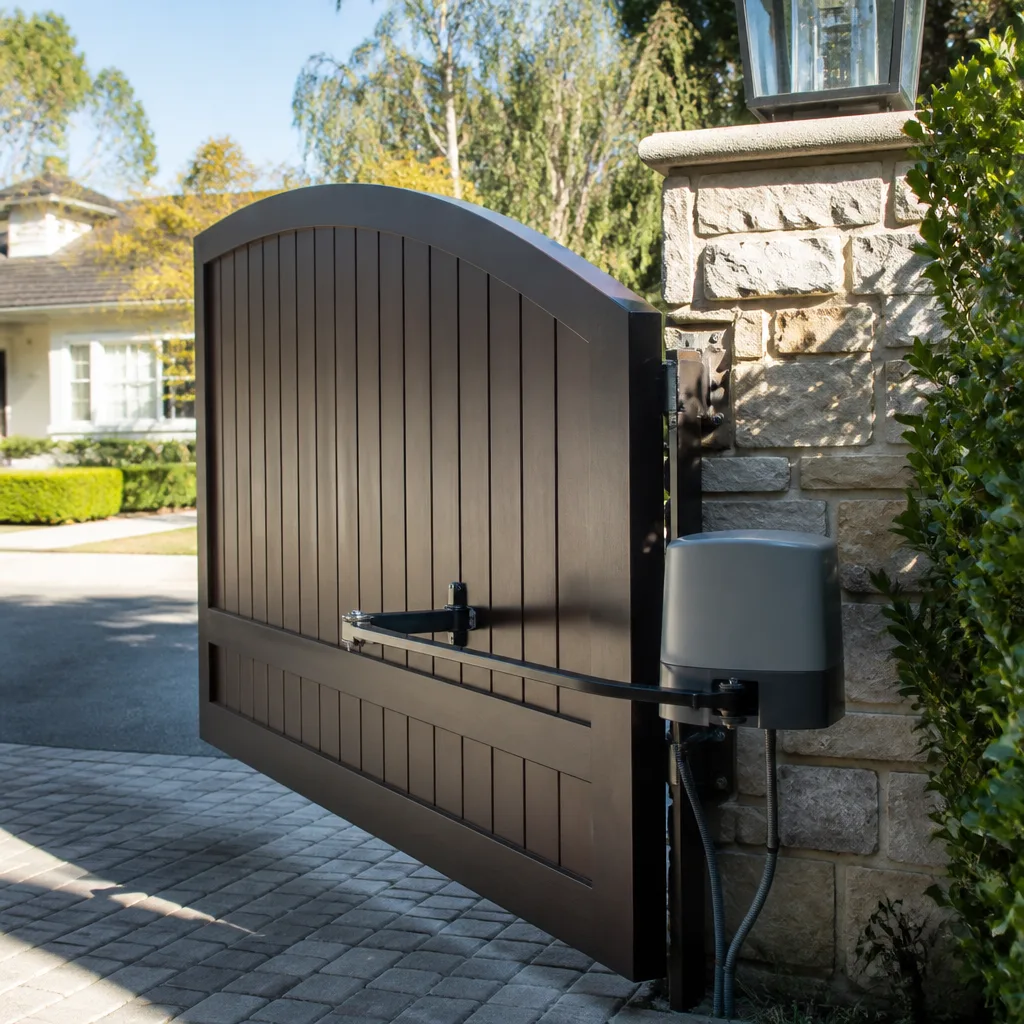
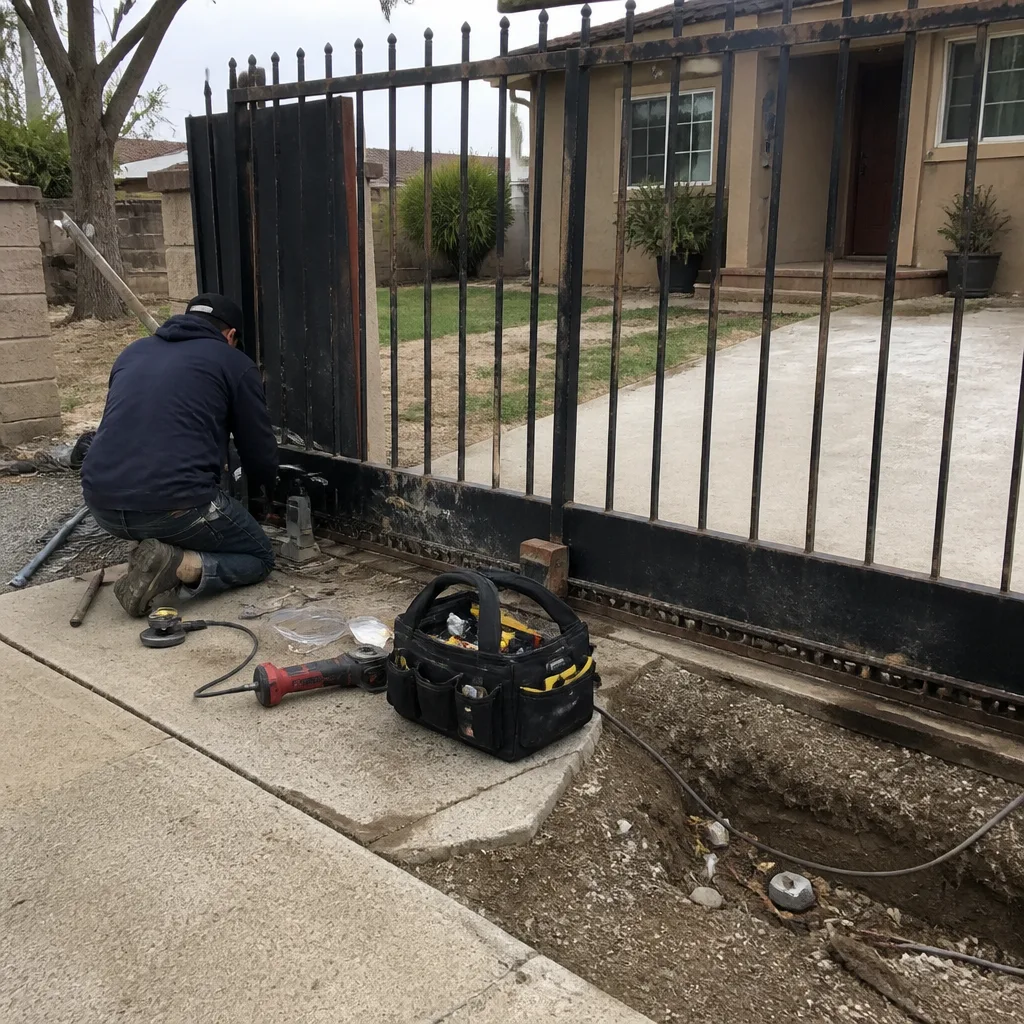 Before
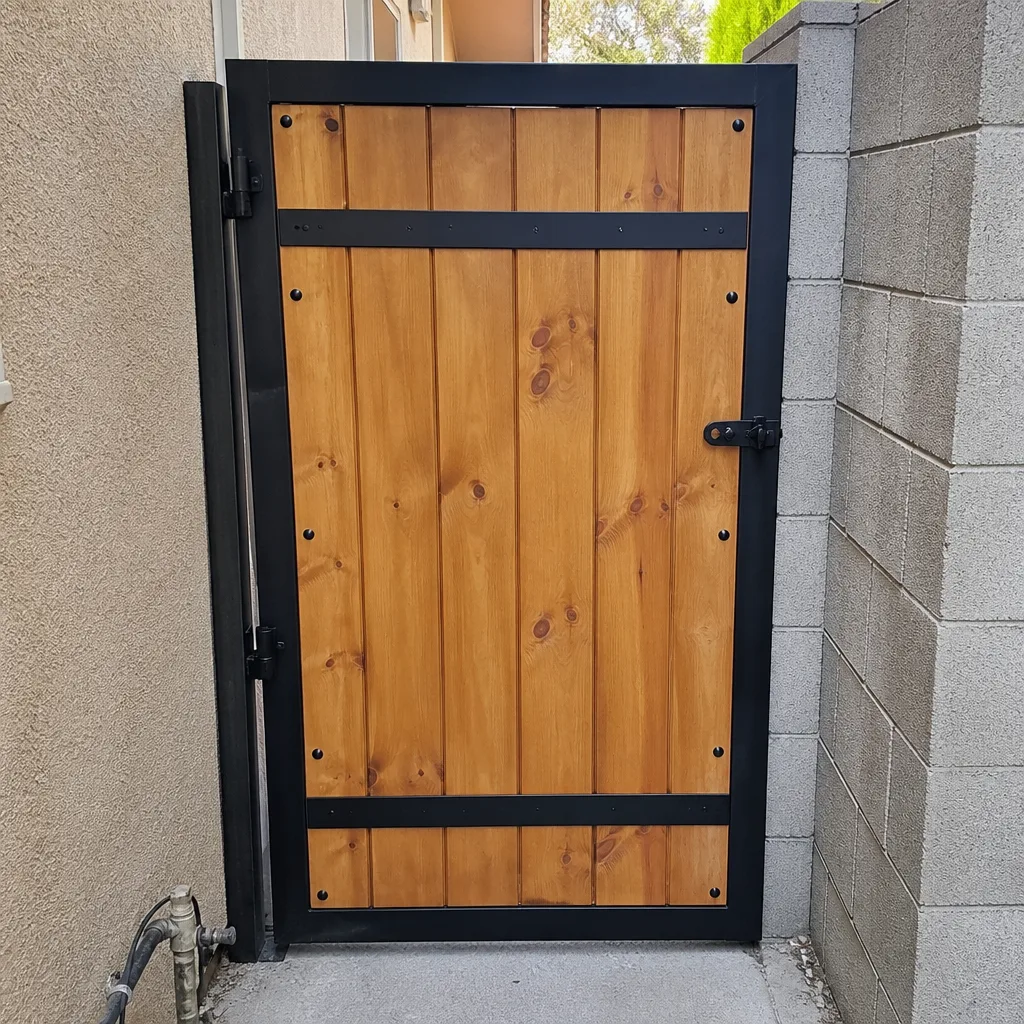 After
After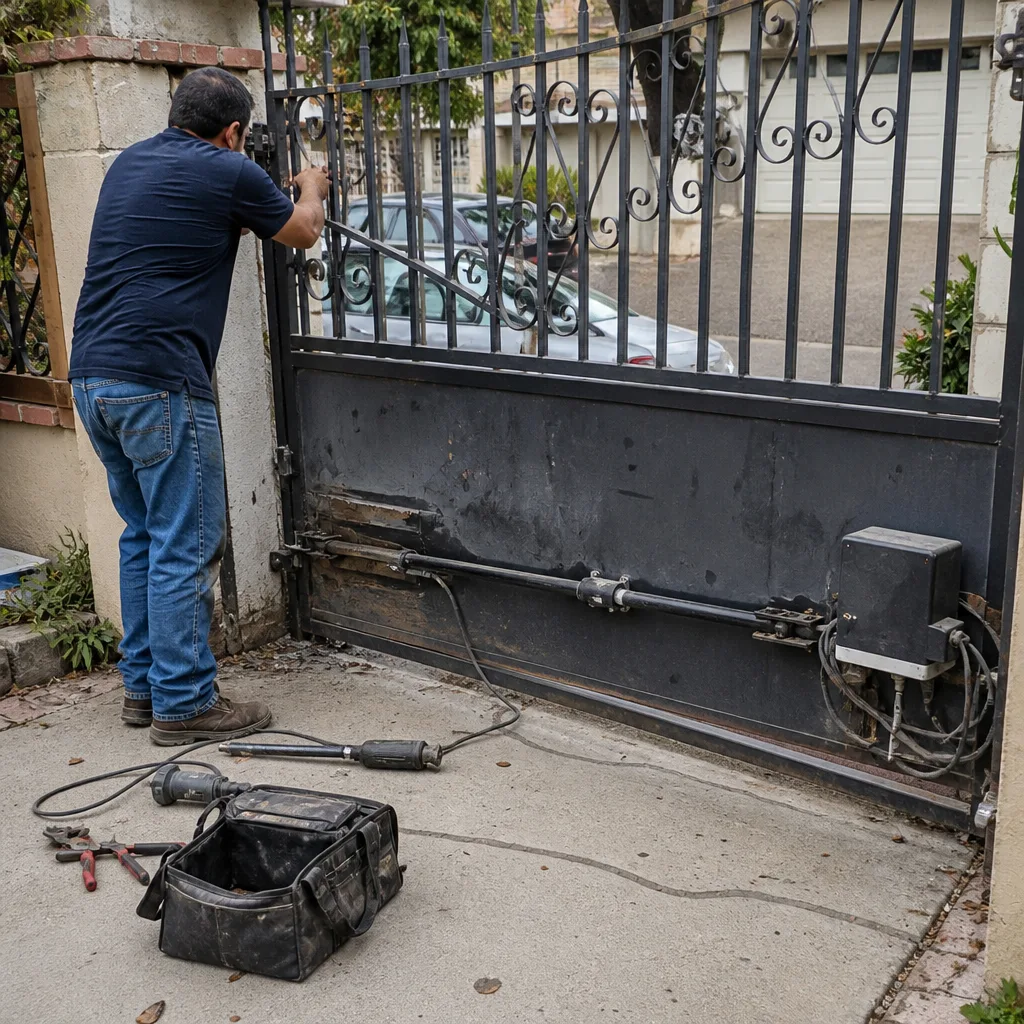 Before
 After
After Before
 After
AfterThe Complete Gate Motor Repair Guide for Los Angeles Homeowners
A gate motor in Venice Beach degrades differently than one in Burbank. Salt air accelerates terminal corrosion. Inland heat warps circuit boards. After seventeen years of running calls across Los Angeles County, we’ve learned that knowing which failure mode your neighborhood produces tells you what to inspect first. This guide maps LA’s distinct climate zones to the motor failure patterns most common in each, breaks down realistic repair costs with parts and labor separated, and explains why Southern California’s power grid delivers a specific kind of damage that standard manufacturer warranties don’t cover. For deeper context, see The Complete Gate Repair Guide for Los Angeles Homeowners.
Quick Answer
Gate motor repair in Los Angeles typically costs $280 – $650 for common fixes like control board replacement or limit switch adjustment, while full motor replacement runs $1,200 – $2,400 depending on brand and gate type. Most repairs can be diagnosed and quoted in a single visit, with coastal properties in Los Angeles showing corrosion-related failures twice as often as inland locations.
Table of Contents
- How Los Angeles Climate Zones Destroy Gate Motors
- Brand-Specific Failure Points That LA Conditions Accelerate
- How Southern California Power Fluctuations Fry Control Boards
- Wildfire Smoke Season and Post-Fire Motor Maintenance
- Step-by-Step Motor Diagnosis for LA Homeowners
- What Gate Motor Repair Costs in Los Angeles
- A Maintenance Calendar Built for Los Angeles Conditions
- Common Mistakes to Avoid
- When to Call a Professional
- Frequently Asked Questions
How Los Angeles Climate Zones Destroy Gate Motors
Los Angeles isn’t one climate. It’s three distinct zones packed into one metro, and each zone kills gate motors its own way.
Coastal Los Angeles: Venice, Santa Monica, Marina del Rey, Pacific Palisades. Salt air deposits chloride ions on every exposed terminal and circuit board trace. We’ve opened control boxes in Venice where the screw terminals had corroded to green powder in eighteen months. The salt doesn’t need direct spray; morning fog carries it inland half a mile. Motors here fail from connection resistance, not component wear. The board sends voltage, the corroded terminal drops it, and the motor stalls or behaves erratically.
Valley Los Angeles: Burbank, North Hollywood, Van Nuys, Encino, Woodland Hills. Summer temperatures hit 100°F for weeks straight. Gate motor housings are black metal or dark plastic, sitting in direct sun. Internal temperatures climb past 140°F. Capacitors dry out. Solder joints fatigue from thermal cycling. In our experience, a control board that lasts eight years in Santa Monica lasts five in Sherman Oaks. Heat also degrades lubricants in sliding gate racks and swing operator gearboxes, increasing motor load and accelerating wear.
Hillside Los Angeles: Hollywood Hills, Bel Air, Brentwood, Los Feliz. Steep grades mean motors work harder on every cycle. A swing gate on flat ground might draw 3 amps; the same gate on a 15-degree slope draws 5 – 6 amps. Add Santa Ana winds pushing against the gate leaf, and the motor overheats on consecutive cycles. Hillside properties also tend to have longer driveways, which means longer loop detector wire runs, more potential for insulation damage, and more phantom “obstruction detected” faults that cycle the motor unnecessarily.
Key takeaway: Before you diagnose a motor failure in Los Angeles, map your property to these zones. The fix for a Venice corrosion fault (dielectric grease on terminals, sealed enclosures) is different from the fix for a Valley heat fault (shade housing, thermal cutoff inspection, capacitor replacement).
Brand-Specific Failure Points That LA Conditions Accelerate
Carver Gate Repair works on nine gate motor brands: LiftMaster, FAAC, BFT, Linear, Viking, Ghost Controls, DoorKing, Elite, and Mighty Mule. Each has known weak points that Los Angeles conditions exploit.
LiftMaster: The LA standard for residential swing and slide operators. The CPS-U control board in older LA-City series units is vulnerable to power surge damage, which we’ll cover in the next section. In coastal Los Angeles, the external antenna connector corrodes, causing remote range to shrink from 100 feet to 20 feet before failing entirely. The fix is a $12 antenna assembly, but most homeowners replace the whole board first.
FAAC: Common in commercial and high-end residential installations across Beverly Hills and West Hollywood. The 740 and 844 hydraulic swing operators run hot by design. In Valley heat, the thermal relief valve opens prematurely, and gates stop mid-cycle until the fluid cools. We see this misdiagnosed as “motor failure” when it’s actually a $180 valve adjustment and fluid service.
BFT: Italian electromechanical systems popular in modern Los Angeles architecture for their clean lines. The limit switch cam assembly uses a plastic index wheel that fatigues in heat. In Burbank and Glendale, we’ve replaced these at four years instead of the expected ten. The symptom is a gate that over-travels by six inches, then reverses hard against the stop.
Mighty Mule: The DIY-installed favorite in hillside Los Angeles, where homeowners bought kits online. The armature bearings are undersized for continuous duty on sloped gates. In Hollywood Hills, we regularly see bearing failure at 2 – 3 years, with the motor running but the armature wobbling against the housing. The factory warranty covers defects, not misapplication, so these calls land with us.
Linear: Workhorse commercial operators in apartment complexes from Koreatown to Downtown LA. The access control integration boards fail from dust infiltration during Santa Ana wind events. The symptom is intermittent keypad response or failure to trigger from the telephone entry system.
Knowing your brand’s weak point lets you inspect the right component first. A homeowner in Pacific Palisades with a LiftMaster should check the antenna connector before calling for service. A homeowner in Studio City with a FAAC should verify thermal relief valve operation.
How Southern California Power Fluctuations Fry Control Boards
This is the failure mode most Los Angeles homeowners never see coming, and it’s not covered by manufacturer warranty.
Southern California Edison’s grid in Los Angeles experiences frequent voltage sags, not full outages. A sag to 90 volts for half a second, then recovery. Your lights don’t even flicker. But your gate motor’s switching power supply tries to maintain output, drawing excess current, heating components. Do this fifty times a summer, and the electrolytic capacitors in the control board degrade.
Worse are the rapid on-off-on sequences during grid switching events. The motor controller boots, sees line voltage, initializes relays, then loses power mid-sequence. On recovery, relays chatter, contacts arc, and the microcontroller locks in an undefined state. We’ve arrived to find gates running continuously into the stop, or completely dead with a warm control board and no visible damage.
Manufacturer warranties cover defects in materials and workmanship. They don’t cover “external electrical stress.” The fine print in every LiftMaster, FAAC, and BFT warranty excludes “damage from power line disturbances.” We’ve read them.
Protection that actually works in Los Angeles:
- A whole-panel surge protector at your main service, not a power-strip style device at the gate. The motor draws 5 – 15 amps; consumer surge strips are rated for 15 amps total and will fail closed, creating a fire risk.
- For high-value installations in Bel Air or Brentwood, a line conditioner with voltage regulation, not just surge protection. These maintain 120V ±5% regardless of input sag.
- Inspection of the control board’s DC bus capacitors every three years in high-sag areas. Bulging or leaking capacitors are a pre-failure indicator visible to the eye.
After a grid event, test your gate’s auto-close timer and safety reverse. Microcontroller lockups often corrupt the non-volatile memory that stores these settings.
Wildfire Smoke Season and Post-Fire Motor Maintenance
Los Angeles fire season runs August through November, with October peak. Smoke carries particulate matter that infiltrates motor housings, encoder discs, and optical sensors.
The specific damage pattern: smoke particles are oily carbon, not dry dust. They adhere to sensor lenses and encoder tracks. A sliding gate’s magnetic limit switch reads position from a toothed wheel. Smoke residue fills the gaps between teeth. The sensor misses counts, the gate over-travels, and the motor stalls against the mechanical stop.
Photoelectric safety beams, required by UL 325 on all automatic gates in Los Angeles, lose range when lenses are coated. A beam that normally reaches 40 feet might only reach 15 feet, causing nuisance reversals. The motor cycles more, works harder, fails sooner.
Post-fire-season inspection checklist:
- Remove the control board cover and inspect for ash accumulation on heatsinks. Compressed air, not vacuum, which can generate static.
- Clean photoelectric lenses with isopropyl alcohol and lint-free cloth. Paper towels scratch acrylic lenses.
- Check the loop detector housing. Ash finds its way into the terminal block, creating high-resistance connections that cause intermittent “vehicle detected” signals.
- Lubricate the rack or chain with dry graphite, not oil-based lubricants that attract particulate.
In Topanga and Malibu, where fire exposure is direct, we’ve seen motors require full internal cleaning after single events. In Pasadena and Altadena, 2025’s Eaton Fire deposited ash that continued causing sensor faults three months later as residual particulate settled.
Step-by-Step Motor Diagnosis for LA Homeowners
Before calling for service, these checks identify whether you have a motor problem, a control problem, or an environmental problem. Do not open the motor housing or attempt electrical repairs. Gate motors operate at lethal voltages and can start without warning.
- Verify power at the outlet or junction box. Use a non-contact voltage tester. In Los Angeles, we find 15% of “motor failures” are actually tripped GFCIs or breakers that nuisance-trip from heat.
- Listen to the motor attempt. A humming motor that doesn’t turn suggests a seized mechanical component or failed capacitor. A completely silent motor suggests control board or power supply failure. Clicking without hum suggests relay failure on the board.
- Check for obstruction signals. Safety beams with dirty lenses, loop detectors with corroded terminals, or edge sensors with damaged wiring all tell the control board “don’t move.” The motor is fine; it’s being prevented from running.
- Test manual release operation. Every gate motor has a manual release, usually a key or lever. If the gate moves freely by hand, the mechanical load is not the problem. If it’s binding, inspect the track, hinges, or wheels before blaming the motor.
- Note the failure pattern. Does it fail on the first cycle of the morning? That’s often a capacitor that loses charge overnight. Does it fail only in afternoon heat? Thermal protection or sagging voltage. Does it fail randomly? Connection resistance or board-level intermittency.
Document what you find. A technician who knows “hums but won’t turn, only after 2 PM in August” arrives with the right parts instead of making a diagnostic visit.
What Gate Motor Repair Costs in Los Angeles
These are the prices we quote in Los Angeles, with parts and labor separated so you can evaluate any bid. Every Carver Gate Repair quote is written and agreed before work starts.
| Repair Type | Parts Range | Labor Range | Total Typical |
|---|---|---|---|
| Control board replacement (residential) | $140 – $320 | $180 – $260 | $320 – $580 |
| Control board replacement (commercial) | $280 – $680 | $220 – $340 | $500 – $1,020 |
| Limit switch / encoder service | $35 – $85 | $140 – $200 | $175 – $285 |
| Capacitor replacement | $25 – $65 | $120 – $180 | $145 – $245 |
| Single motor replacement (swing, residential) | $680 – $1,400 | $340 – $520 | $1,020 – $1,920 |
| Single motor replacement (slide, heavy duty) | $1,200 – $2,200 | $420 – $680 | $1,620 – $2,880 |
| Full dual swing operator replacement | $1,800 – $3,400 | $580 – $920 | $2,380 – $4,320 |
Factors that move price within these ranges:
- Brand availability. FAAC and BFT parts ship from distribution centers with longer lead times than LiftMaster.
- Gate type and access. A hillside installation in Los Feliz with limited technician workspace takes longer than a flat driveway in Studio City.
- Electrical run condition. If the original conduit is damaged or undersized, replacement adds $200 – $400 in materials and labor.
We separate parts and labor on every written quote. If another bid is significantly lower, ask whether they’re using rebuilt boards, omitting permit-related work, or planning to bill hourly without a cap.
A Maintenance Calendar Built for Los Angeles Conditions
Generic maintenance schedules assume moderate climates. This one is specific to Los Angeles failure modes.
Monthly (all zones): Visual inspection of the gate path. Clear debris before the Santa Ana winds do it for you. Test the safety reverse with a 2×4 placed in the gate’s path.
Quarterly (coastal Los Angeles): Open the control box. Inspect terminal screws for white or green corrosion. If present, power down, remove the terminal, clean with electrical contact cleaner, and apply dielectric grease on reassembly. Check the antenna connector for corrosion.
Quarterly (valley Los Angeles, May – October): Check the motor housing temperature after three consecutive cycles. Too hot to touch for more than two seconds indicates thermal overload or excessive mechanical load. Verify the cooling vents are clear of dust.
Annually (all zones, October): Professional inspection before fire season and winter rains. This includes loop detector calibration, safety beam alignment and range test, mechanical wear inspection, and control board capacitor check. The Garrison Standard requires our technicians to document findings in writing, with photos, so you have a baseline for comparison year to year.
Post-event (all zones): After any power outage lasting more than one hour, after Santa Ana wind events above 40 mph, and after wildfire smoke exposure within 10 miles, run the full diagnostic sequence above and schedule service if any anomaly appears.
Common Mistakes to Avoid
- Buying a “universal” replacement board online. The $89 control board from an electronics marketplace will run your motor for three months, then fail from underspec’d components. We’ve replaced dozens of these in Los Angeles, always at higher total cost than doing it right the first time.
- Ignoring the mechanical system and blaming the motor. A gate with binding hinges, damaged rollers, or a bent track draws 40% more current. The motor overheats and fails, but the root cause is mechanical. Replacing the motor without fixing the gate buys you two years, not ten.
- Using standard grease in coastal Los Angeles. Lithium-based greases emulsify with salt moisture and wash out. We’ve found gates in Marina del Rey with dry racks after eighteen months. Use marine-grade or dry graphite lubricants within five miles of the coast.
- Resetting the breaker repeatedly without finding the cause. A tripping breaker indicates a ground fault or overload. Resetting it three times without diagnosis risks fire. In Los Angeles, we trace these to water intrusion in underground conduit, common in hillside properties with irrigation runoff.
- Skipping the post-installation safety inspection. UL 325 requires specific force and entrapment testing after any motor replacement. A properly installed motor without this documentation is a liability exposure, and your homeowner’s insurance may deny a claim.
- Assuming all technicians are equivalent. Generalist contractors in Los Angeles often install gate motors as a sideline. They may not carry the specific brand training, the correct torque settings, or the safety test equipment. The Garrison Standard exists because we’ve cleaned up these jobs.
When to Call a Professional
Call for service when the motor hums but won’t turn, when there’s visible damage to the control board or wiring, when the gate reverses unpredictably, or when any electrical component has been exposed to water. These conditions involve lethal voltages and require proper lockout procedures.
Also call when you’ve performed the diagnostic steps above and the pattern doesn’t match any described failure mode. Intermittent faults are often the hardest to isolate and may require oscilloscope-level analysis of the control signals.
Carver Gate Repair offers free estimates in Los Angeles. A technician arrives with background check verification, in uniform, provides a written price before any work starts, and every repair carries our 365-Day Done Right Promise. Call (469) 530-2485 to schedule.
Frequently Asked Questions
Common repairs like control board replacement or limit switch service typically run $280 – $650 total, while full motor replacement ranges from $1,200 – $2,400 depending on brand and gate type. Coastal properties may need additional corrosion-related parts, and hillside installations take more labor time. Call (469) 530-2485 for a written quote specific to your system – estimates are free.
You can perform visual inspection, cleaning, and lubrication safely. Do not open the motor housing or attempt electrical repairs. Gate motors operate at 120V with lethal current capacity, and the capacitor in many units stores charge even when unplugged. The mechanical spring tension in swing operators can cause sudden uncontrolled gate movement. We recommend professional service for any internal repair. For more guides & resources, visit our blog.
Southern California’s grid often delivers voltage sags and rapid on-off sequences rather than clean outages. These corrupt the control board’s microcontroller state and degrade capacitors over time. After any outage, test all functions including auto-close and safety reverse. If behavior is erratic, the board likely needs inspection even if it appears to work.
In moderate inland conditions with proper maintenance, seven to twelve years is typical. In coastal Los Angeles, corrosion can reduce this to five to eight years without sealed enclosures and quarterly terminal maintenance. In valley heat, capacitor and thermal stress may limit life to six to nine years. Hillside installations with steep grades and wind load see mechanical wear faster than electrical failure.
We service nine major brands: LiftMaster, FAAC, BFT, Linear, Viking, Ghost Controls, DoorKing, Elite, and Mighty Mule. Our technicians carry brand-specific training and common parts inventory for each. If you have a less common brand, we can typically source parts within 48 hours and will tell you upfront if the lead time extends.
Every call includes a background-checked, uniformed technician; full diagnostic with written findings; a written price before any work starts; and our 365-Day Done Right Promise on every repair. If the same repair fails within that year, we return free of charge. No estimate fees, no trip charges, no price changes after authorization.
The Bottom Line
Gate motor failure in Los Angeles is predictable once you map your property’s climate zone. Coastal corrosion, valley heat, hillside mechanical load, and grid power instability are the four killers, and each demands different inspection priorities and maintenance timing. Know your brand’s weak points. Separate parts and labor when evaluating quotes. And schedule professional inspection annually, in October, before the combined stress of fire season and winter rains.
For gate motor repair backed by written prices, trained technicians, and a full-year guarantee, Gate Motor Repair in Los Angeles from Carver Gate Repair follows The Garrison Standard on every call. We also handle Gate Repair in Los Angeles and Gate Installation in Los Angeles when replacement makes more sense than repair. Visit Carver Gate Repair home to learn more about The Garrison Standard and The Garrison Code.
Written by Lonnie Burke, Owner at Carver Gate Repair, serving Los Angeles since 2008.