
Last updated October 10, 2026
Free on-site gate assessment - hinges, posts, and your LiftMaster or Nice gate operator checked before anything is quoted
The assessment is free and the quote is the invoice.
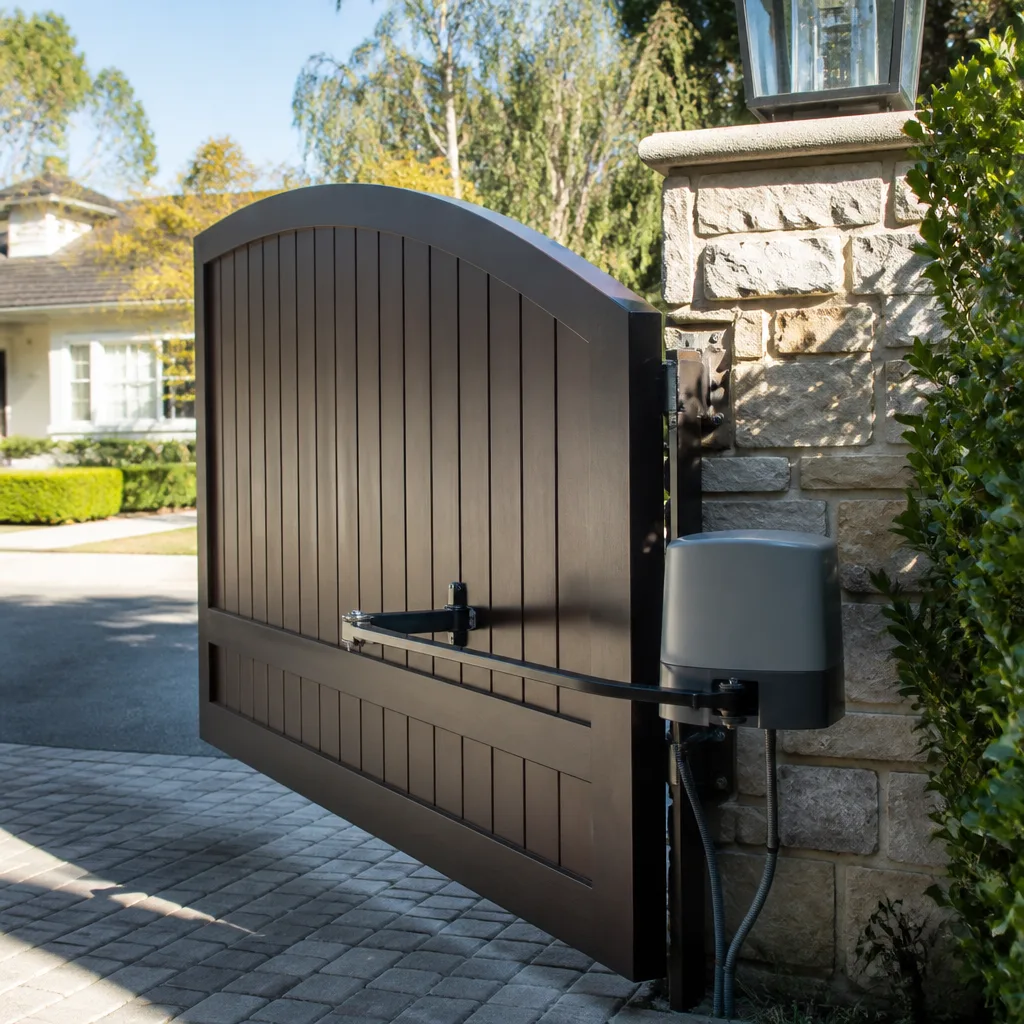
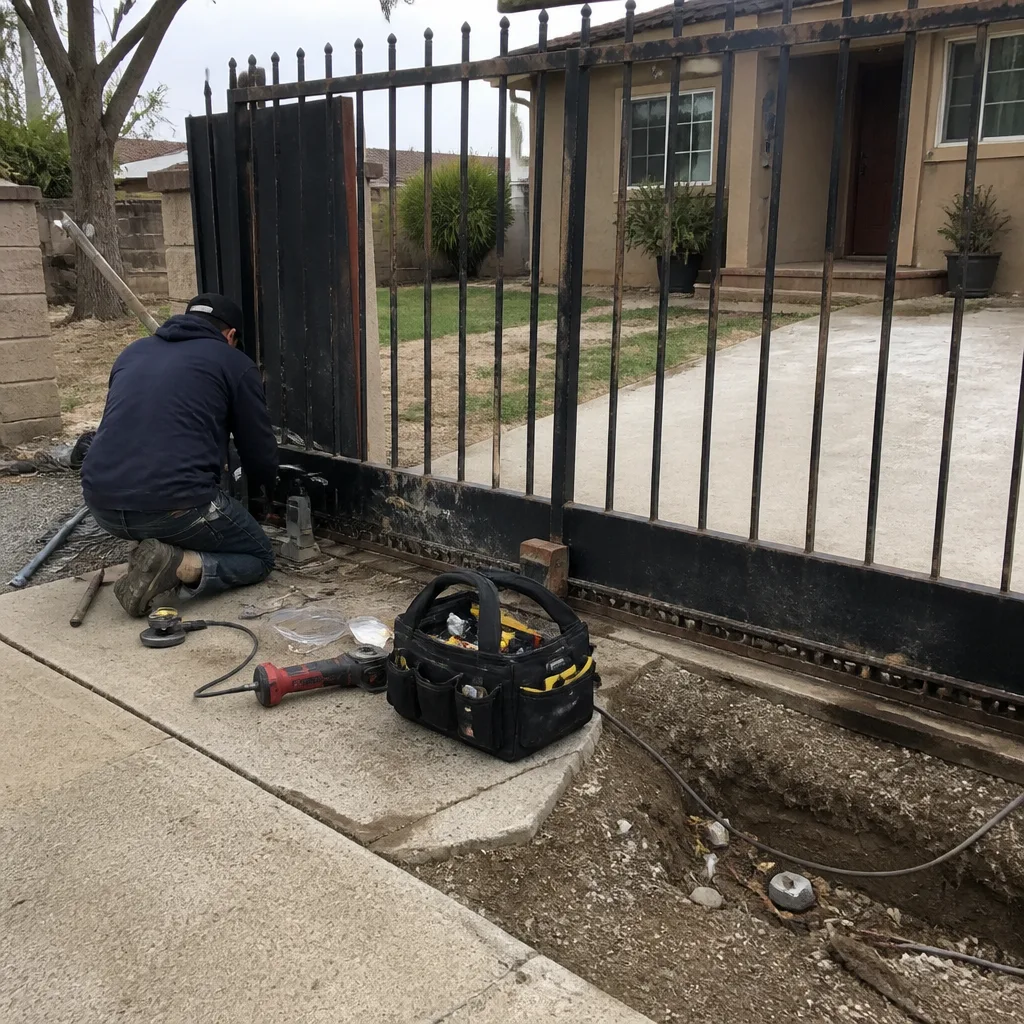 Before
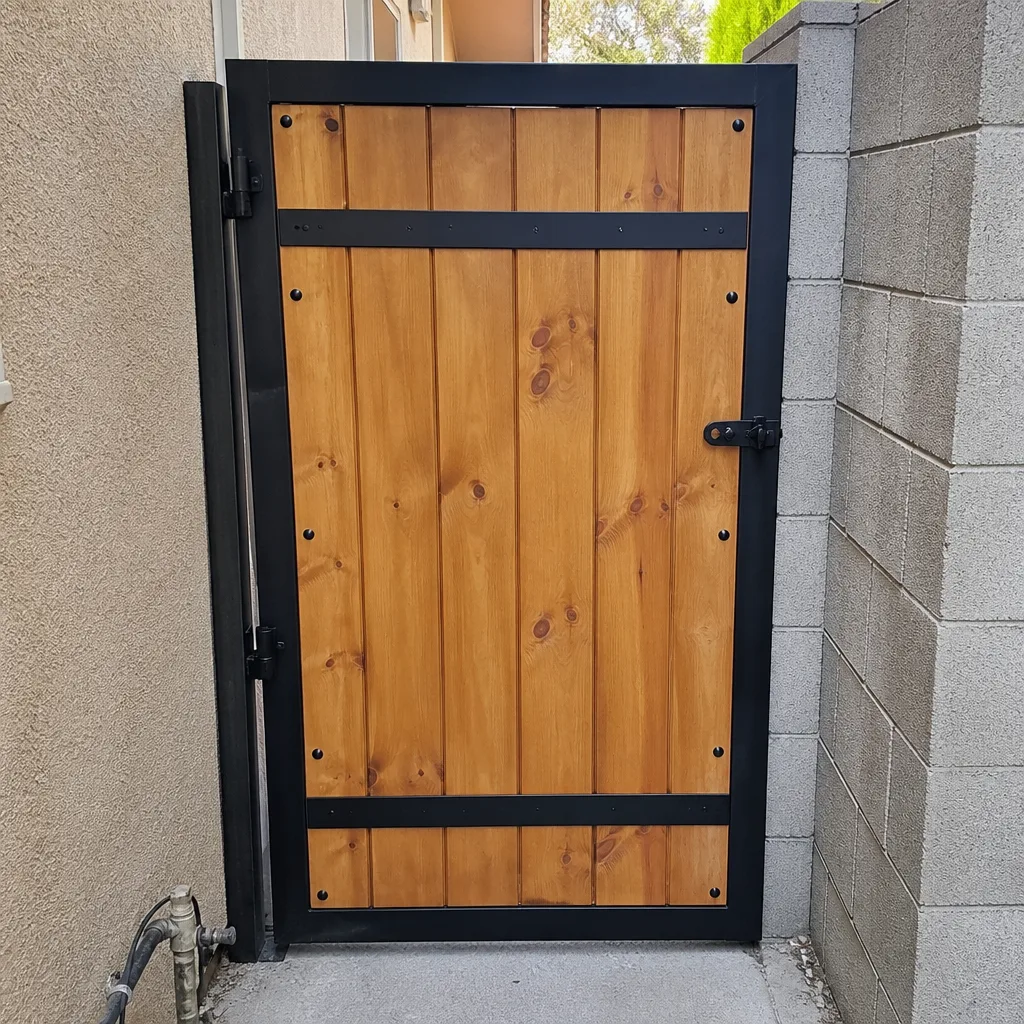 After
After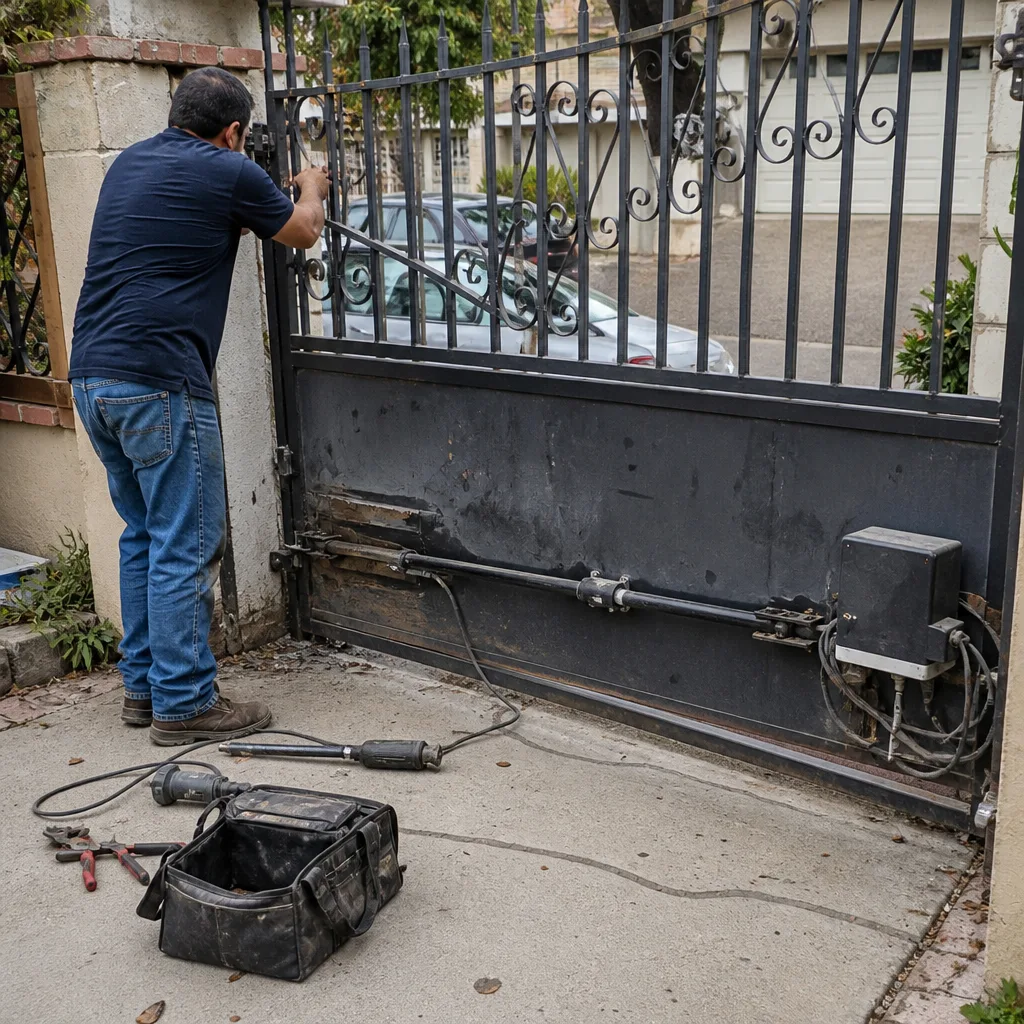 Before
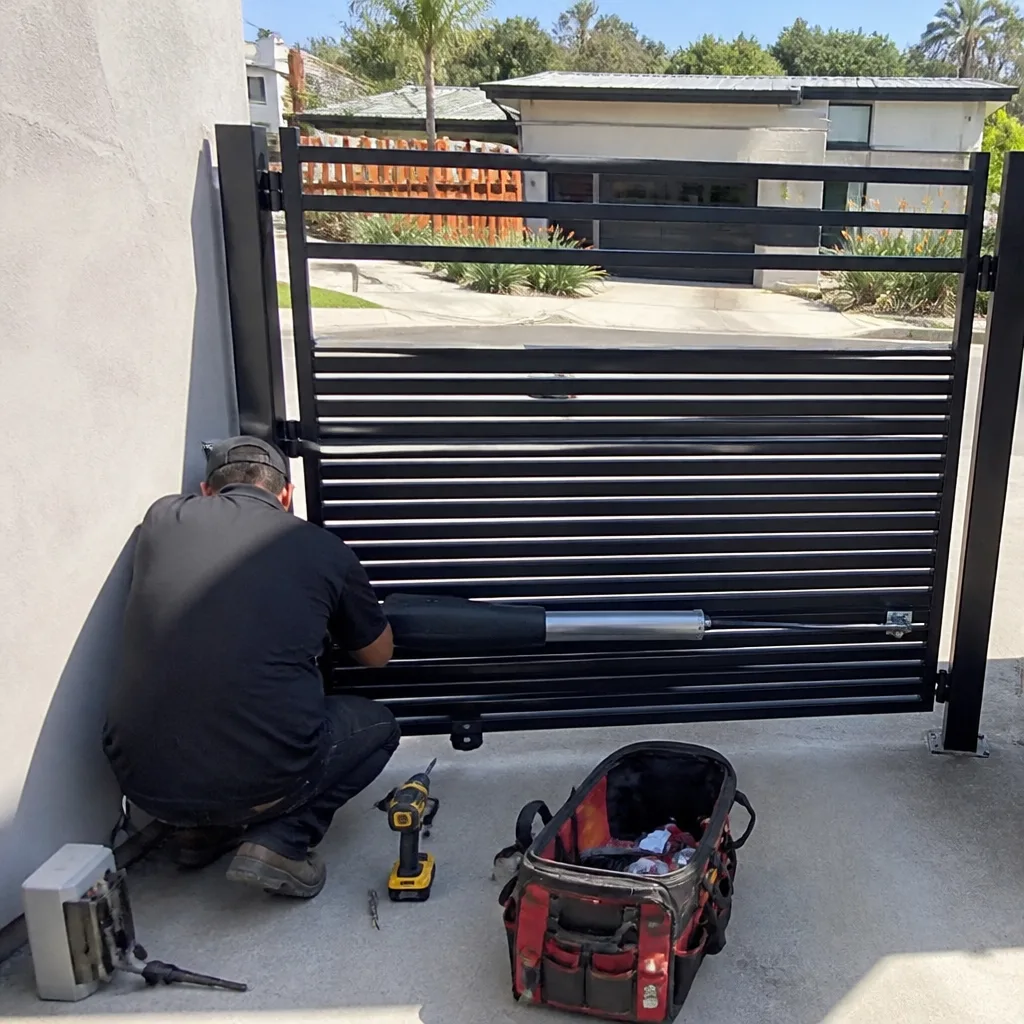 After
After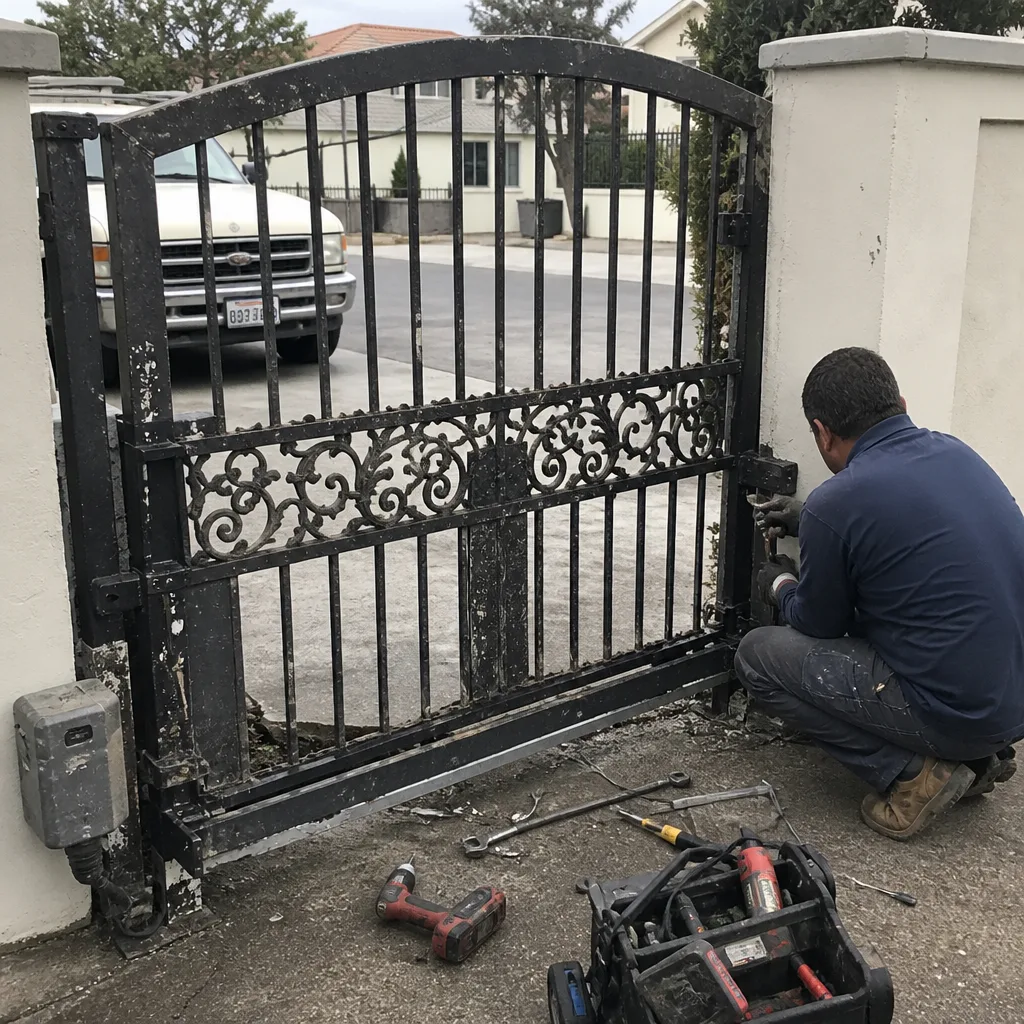 Before
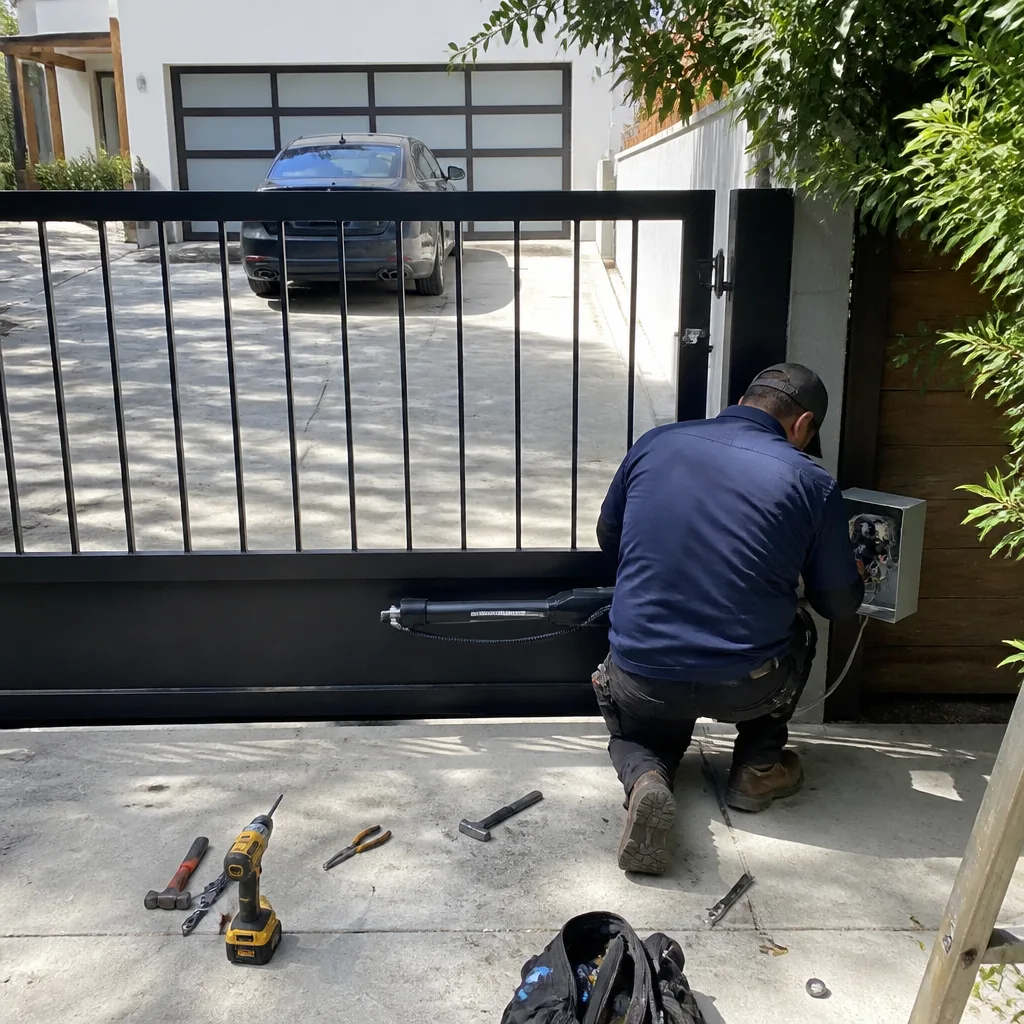 After
AfterGate Repair Emergency Preparedness Guide for Los Angeles Homes
During the 2025 Palisades Fire evacuation, residents in Pacific Palisades and Topanga reported automatic gates that wouldn’t open after power lines went down. Some sat in their driveways for critical minutes because they didn’t know where their operator’s manual release was located. In Los Angeles, where wildfire season now stretches from June through December and the next significant earthquake is a matter of when, not if, a gate failure isn’t a maintenance headache. It’s a potential evacuation bottleneck. This guide covers the specific failure modes LA homeowners face, the exact steps to get out when your gate won’t cooperate, and how to secure your property when the gate won’t close. For professional help, see our Gate Repair services.
Quick Answer
Emergency gate preparedness in Los Angeles means knowing your operator’s manual release location before you need it, testing it twice yearly, and having a backup power plan that accounts for multi-day outages during wildfire season. For most residential gates in LA, this takes 15 minutes to set up and can be the difference between evacuation and entrapment.
Table of Contents
- How to Manually Release Any Gate Operator in an Emergency
- What to Do When Your Gate Is Stuck Open
- Power Outage Protocol: Battery Backups and When They Fail
- Los Angeles Emergency Scenarios: Wildfire, Earthquake, and Flood
- What to Check Before Calling Emergency Gate Service
- Emergency Service Costs and Response Times in Los Angeles
- A Simple Preventive Maintenance Schedule
How to Manually Release Any Gate Operator in an Emergency
Every automatic gate operator sold in the United States includes a manual release mechanism. The problem is that most homeowners in Los Angeles install the gate, use the remote for years, and never touch the release until the power dies at 2 a.m. during a Santa Ana wind event. Here’s where to find it and how to use it for the brands we see most often in LA County.
Sliding Gate Operators
Sliding gates run on a chain or rack-and-pinion drive. The manual release disengages the motor from the drive mechanism so you can push the gate by hand.
- Locate the release. On LiftMaster slide operators (models SL3000, CSW200), the release is a red pull cord hanging from the motor head or a lever on the side of the gearbox housing. On FAAC 746 and 844 models, it’s a keyed release on the motor cover or a pull handle under a protective cap. Elite CSW and Robus series use a twist-release knob on the gearbox. Mighty Mule slide operators have a red lever on the motor side.
- Secure the gate first. If the gate is partially open, block it with a wheel chock or heavy object before releasing. A sliding gate on a slope can run free.
- Pull or twist the release firmly. You’ll feel a mechanical clunk as the motor disengages. The gate should now move with moderate hand pressure.
- Push the gate fully open or closed. For evacuation, open it fully and wedge it. For security after a power outage, close it and use a temporary physical lock (see next section).
- Re-engage before power returns. Most releases must be pushed back or twisted to re-engage. If power comes back with the release open, the motor will run but won’t move the gate, potentially damaging the gearbox.
Swing Gate Operators
Swing operators are more complex because they come in two types: linear (ram) arms and articulating (folding) arms. The release location varies significantly.
- Linear arm operators (LiftMaster LA500, FAAC 415, Elite Miracle-One): The release is typically on the motor housing near where the arm connects. On LiftMaster, it’s a red key or lever. On FAAC, a small hex key inserts into the arm base. Elite uses a twist-knob on the cylinder body.
- Articulating arm operators (LiftMaster LA500UL, some Mighty Mule systems): These have releases at the elbow joint or motor head. The joint may need to be unlocked with a pin removal.
- Underground operators (FAAC 770, some LiftMaster CSW): These bury the motor below the gate hinge. The release is a special key inserted into a ground-level socket near the operator casing. If you have an underground system and don’t know where your release key is, find it this weekend. These are the most common “trapped homeowner” calls we get in the Hollywood Hills and Brentwood.
- Release both leaves independently. Dual swing gates have separate operators. Releasing only one leaves the other locked, and the gate won’t swing properly.
Critical safety note: A released swing gate on a slope can accelerate rapidly. Stand clear of the swing path, and never release a gate with children or pets nearby. The gate weighs 300 to 800 pounds and has no brakes when disengaged.
We recommend taping a small laminated card inside your electrical panel or gate control box with your operator brand, model, and release type. In an emergency, you won’t remember whether you have a FAAC 746 or a LiftMaster SL3000.
What to Do When Your Gate Is Stuck Open
A gate that won’t close is a security exposure, especially in Los Angeles neighborhoods where property crime rates vary block by block. The temptation is to force it, wedge it, or disconnect power and hope. Here’s what actually works without damaging your operator or creating a bigger repair bill.
Immediate Temporary Security Measures
- Don’t force the gate closed against the motor. If the operator is trying to open or close and meeting resistance, forcing it manually can strip the gearbox or bend the arm. We’ve replaced $1,200 FAAC operators in Bel Air because a homeowner pushed a stuck gate by hand.
- Block the opening with your vehicle. If you have a two-car driveway, park across the gap. This is crude but effective for overnight security.
- Use a chain and padlock through the gate frame. Run the chain around a fixed post or the gate’s own frame so it can’t swing or slide. Don’t attach to the operator arm or motor housing, these aren’t structural and will bend.
- For sliding gates: A 4×4 timber wedged in the track behind the gate prevents rollback. In the Hollywood Hills, where driveways slope, this is essential. A sliding gate with a failed brake can roll downhill with surprising force.
- For swing gates: A temporary drop bolt through the gate leaf into a hole in the driveway works if you have a masonry bit and time. Otherwise, rope the gate to a fixed fence post.
What Causes “Stuck Open” Failures
In our experience across Los Angeles, from Santa Monica to Pasadena, the most common causes are:
- Obstruction in the path. Photo eyes misaligned by wind, debris, or a bumped bracket. The gate opens but won’t close because the safety circuit reads an obstruction. Check for spider webs across the beam, especially after Santa Ana winds.
- Limit switch failure. The operator doesn’t know where “closed” is. It runs the open cycle fine, then hunts for the close limit and stops mid-travel. This requires technician adjustment or replacement.
- Control board relay stuck. The board commands “open” continuously. Power cycling sometimes helps, but the board usually needs replacement.
- Mechanical binding. Hinge seized, track debris, or gate frame warped by heat or impact. In the San Fernando Valley, we’ve seen aluminum gates warp after days of 110-degree heat, then bind in the track.
Once the gate is secured, call for service. Don’t leave it open overnight in Los Angeles. We’ve responded to 11 p.m. calls in Venice and Silver Lake where a stuck-open gate led to a burglary the same evening.
Power Outage Protocol: Battery Backups and When They Fail
Los Angeles has three distinct outage patterns: planned PSPS (Public Safety Power Shutoff) events during high fire risk, unplanned outages from equipment failure or vehicle strikes, and earthquake-related grid damage. Each affects your gate differently, and most homeowners misunderstand what their battery backup actually does.
What Battery Backups Actually Provide
A typical gate operator battery backup, whether factory-installed or aftermarket, is a 12V deep-cycle battery connected to a charging circuit. Here are the real numbers:
- Standard capacity: 20 to 40 full open/close cycles, depending on gate weight and slope.
- Actual runtime: In standby with occasional use, 24 to 72 hours. In active use during an evacuation, perhaps 2 to 4 hours of continuous cycling.
- Degradation: After 3 to 4 years in LA heat, battery capacity drops 30 to 50 percent. A battery that tested fine in March may fail in August.
- What it won’t do: Run the gate at full speed. Battery mode is slower and weaker. A heavy iron gate on a slope may not move at all on battery.
Power Outage Checklist Before Calling Service
- Check your home power. If the house has power and the gate doesn’t, the problem is likely the gate’s dedicated circuit or transformer, not a general outage.
- Listen to the operator. A faint clicking or humming means the battery is engaged but too weak to move the gate. Silence means no battery or a failed control board.
- Try the keypad or remote from close range. Intermittent radio signal can mimic a power problem.
- Check the photocell LED. If the safety beam has power, the operator has some power. No LED means total power loss.
- Test the manual release. If the gate moves freely by hand, the mechanical system is fine and the problem is electrical.
When a Battery Swap Is DIY vs. When It Needs a Technician
A battery swap is straightforward on most LiftMaster and Mighty Mule systems: open the control box, disconnect two terminals, swap the battery, reconnect. Cost: $40 to $80 for the battery, 10 minutes.
Call a technician if: the battery is swollen or leaking (sulfuric acid hazard), the charging circuit shows no voltage output, the control board throws an error code, or the system is FAAC or Elite with proprietary battery enclosures. We’ve seen homeowners force aftermarket batteries into FAAC housings and damage the charging board, turning a $150 call into a $900 control board replacement.
In Los Angeles, we recommend testing your battery backup twice yearly: once before fire season (May) and once before the winter storm window (November). Mark it on your calendar. A 5-minute test cycle tells you if the battery will hold when the next PSPS hits.
Los Angeles Emergency Scenarios: Wildfire, Earthquake, and Flood
Generic gate advice doesn’t account for the specific risks LA homeowners face. Here’s what to do in the three scenarios that actually happen here.
Wildfire Evacuation: Gate Won’t Open
Priority: Exit the property. Everything else is secondary.
- Attempt normal operation once. If the gate has battery backup and responds, drive through immediately. Don’t wait for it to close behind you.
- If no response, go straight to manual release. Don’t spend time troubleshooting. The release location should be muscle memory.
- Open the gate fully and wedge it. Use a rock, log, or wheel chock. Don’t rely on the operator to hold it; power may return and cycle unexpectedly.
- Leave the gate open when evacuating. Firefighters may need access. A closed gate with a melted operator helps no one.
- After evacuation, call from safety. Don’t delay departure to call for service. We can’t reach you if the road is closed anyway.
In the 2025 Palisades Fire, some Topanga Canyon residents reported gates that opened on battery but closed too slowly, trapping vehicles behind them. If your gate has an adjustable close timer, set it to minimum during fire season. A 3-second close is better than a 15-second close when ash is falling.
Post-Earthquake: Gate Damage Assessment
The 1994 Northridge earthquake damaged thousands of gates in the San Fernando Valley, mostly from ground displacement warping tracks and posts. After any significant shaking:
- Visually inspect before operating. Look for: cracked or shifted gate posts, bent track, detached hinges, or visible damage to the operator mounting.
- Check for gas leaks nearby. If you smell gas, don’t operate any electrical equipment, including the gate. The motor could spark.
- Test manual release before powered operation. If the gate binds when moved by hand, the motor will strain and potentially fail.
- Check the foundation. In hillside areas like the Hollywood Hills or Pacific Palisades, gate posts are often set on retaining walls. Wall failure is common in quakes and may not be obvious until the gate is operated.
- Document damage for insurance. Photograph everything before cleanup or repair. Most earthquake policies cover gate damage if it’s structural.
After a major quake, expect delayed service. In 1994, gate repair companies had two-week backlogs. Having your manual release procedure down means you can secure your property while waiting. Follow our Gate Repair Maintenance Schedule: What to Do and When to stay prepared year-round.
Post-Flood: Water Damage to Control Systems
While less common, flash flooding in the Los Angeles basin does occur, particularly in areas near the LA River or in canyon communities with inadequate drainage. Water damage to gate systems follows a pattern:
- Control boards: Even brief submersion destroys them. Corrosion begins within hours.
- Loop detectors: Buried vehicle detection loops are often the first component flooded. They may work intermittently before failing completely.
- Photo eyes: Water in the housing causes false obstruction readings. The gate opens but won’t close.
- Motor housings: Most are weather-resistant, not submersible. Water in the gearbox ruins the oil and seizes bearings.
Critical: Do not power on a gate system that has been submerged until a technician inspects it. Energizing wet components causes cascading damage. We see this in Sun Valley and parts of the San Fernando Valley after heavy winter storms. The homeowner turns the breaker back on, the board shorts, and a $400 control board becomes an $1,800 full system replacement.
What to Check Before Calling Emergency Gate Service
Not every gate failure is an emergency, and not every emergency requires after-hours rates. Here’s how to triage.
Information to Gather Before Calling
- Operator brand and model. Found on a label on the motor housing. If you can’t find it, describe the color and shape. “Red motor, about the size of a shoebox” tells us it’s likely a LiftMaster or Mighty Mule.
- Gate type and material. Single swing, dual swing, or sliding? Wrought iron, aluminum, or wood? This affects parts availability and repair approach.
- Symptoms in sequence. “Worked this morning, now clicks but doesn’t move” is different from “Stopped mid-cycle and reversed.”
- Recent events. Power outage, landscaping work, vehicle impact, or recent rain? These point to specific failure modes.
- Your manual release result. Does the gate move freely by hand? This single test eliminates half the diagnostic possibilities.
Emergency vs. Next-Day Service
Call for same-day emergency service if: the gate is stuck open and you cannot secure it, the gate is blocking vehicle access and you have a medical or safety need, or the gate is making burning/electrical smells or visible sparks.
Schedule next-day service if: the gate is stuck closed but you have pedestrian access, the gate is secured in the open position and your property has other security measures, or the issue is intermittent and you’ve documented the pattern.
At Carver Gate Repair, we answer calls with a live person 24 hours a day. We’ll help you determine whether you need a technician tonight or if a next-day appointment protects your property and your budget. The Garrison Standard means we don’t upsell emergency rates for situations that can wait.
Emergency Service Costs and Response Times in Los Angeles
LA’s geography and traffic patterns make gate service response times highly variable. Here’s what to realistically expect.
Response Time by Area
- Westside (Santa Monica, Pacific Palisades, Brentwood): 45 to 90 minutes during business hours, 90 minutes to 2 hours after 8 p.m. The 10 and PCH are unpredictable; we dispatch from West LA for this zone.
- San Fernando Valley (Studio City, Encino, Woodland Hills): 30 to 60 minutes. Our Valley coverage is dense, and the 101/405 grid is manageable outside rush hour.
- Downtown and Eastside (Silver Lake, Los Feliz, Pasadena): 45 to 75 minutes. The 5 and 110 are the variables.
- South Bay and Beach Cities: 60 to 90 minutes. We maintain limited after-hours coverage; severe delays may occur.
- Malibu and Topanga: 60 to 120 minutes. PCH closures and fire-related access restrictions can extend this significantly during incident season.
Pricing Expectations
We don’t publish fixed emergency rates because every situation differs, but here’s the Los Angeles market reality:
- Standard service call (business hours): Typically includes diagnosis and first hour of labor. Most common repairs (limit switch, photo eye alignment, control board reset) are completed within this window.
- After-hours/emergency dispatch: Adds a premium for technician overtime and reduced crew availability. The premium is quoted upfront, before we dispatch.
- Parts: Control boards range $200 to $600 depending on brand. Motors and gearboxes run $400 to $1,200. Batteries are $40 to $80.
- Full operator replacement: $1,200 to $2,800 for residential systems, including removal, disposal, and programming.
Every Carver Gate Repair customer receives a written price before any work starts. The number doesn’t move once the job is open. If we diagnose a $400 repair and you expected $200, you can decline with no charge for the diagnosis. That’s The Garrison Standard.
Our 365-Day Done Right Promise covers every repair. If the same component fails within a year, we return free of charge. No argument, no pro-rating.
A Simple Preventive Maintenance Schedule
Emergency preparedness is mostly prevention. A gate that receives basic maintenance fails less often and fails less dramatically. Download our Gate Repair Maintenance Checklist for Los Angeles Homeowners to stay on track.
Monthly (5 Minutes)
- Cycle the gate fully open and closed. Listen for grinding, squealing, or irregular speed.
- Check photo eye alignment. The LED should be solid, not blinking.
- Test the keypad and one remote. Weak response means low battery or failing receiver.
Quarterly (15 Minutes)
- Clean track or hinge area of debris, leaves, and spider webs.
- Lubricate hinges or rollers with a silicone-based product. Avoid WD-40, it attracts dust.
- Inspect the gate frame for cracks, especially at weld points on iron gates.
Semi-Annually (30 Minutes)
- Test the manual release. You should be able to locate and operate it in under 30 seconds, in the dark, without reading glasses.
- Test battery backup. Disconnect AC power and cycle the gate 5 times. If it slows significantly by cycle 3, replace the battery.
- Inspect control box for moisture, insect nests, or corrosion. In coastal Los Angeles, salt air corrodes terminals faster than inland.
Annually (Professional Service)
Schedule a technician visit for: limit switch calibration, safety force testing, gear oil check, and full electrical inspection. This typically costs $150 to $250 in Los Angeles and catches the failures that cause 2 a.m. emergencies.
For new gate installations or motor replacements, we specify battery backup capacity for your specific gate weight and slope, not generic specs. A 400-pound iron gate on a 15-degree slope in the Hollywood Hills needs a different backup than a 150-pound aluminum gate in flat Pasadena.
Common Mistakes to Avoid
- Never forcing a gate closed against a straining motor. We’ve replaced gearboxes in Beverly Hills and Encino because homeowners treated gate operators like manual doors. The motor will destroy itself before it wins against an obstruction.
- Ignoring the “click but no move” symptom. This usually means a failed capacitor or seized motor. Continuing to press the button burns out the control board relay, doubling the repair cost.
- Using the gate as a doorbell. Repeatedly pressing the remote when the gate doesn’t respond immediately confuses the control board and can lock it in a fault state. Wait 10 seconds between attempts.
- Skipping battery replacement on schedule. In Los Angeles heat, a 4-year-old battery is a dead battery waiting for a PSPS event. The replacement cost is trivial compared to an after-hours emergency call.
- Blocking photo eyes with landscaping. That bougainvillea you planted for privacy will grow across the beam and cause random reversals. Trim a clear path, or install a hooded photo eye mount.
- Assuming all technicians know all brands. A general handyman who “does gates” may never have seen a FAAC 770 underground or an Elite CSW. We work on nine brands specifically so the right expertise matches your system.
When to Call a Professional
Call a technician immediately if your gate shows burning smells, visible electrical arcing, or structural damage after impact or earthquake. These are safety hazards, not maintenance items. Call same-day if the gate is stuck open and you cannot secure it, or if you’re unable to locate or operate the manual release. For intermittent issues or performance degradation, schedule within the week before a minor problem becomes a weekend emergency.
Carver Gate Repair offers free estimates in Los Angeles. Our phones are answered by a live person 24 hours a day, including weekends and holidays. Call (469) 530-2485 for a written price before any work starts, backed by our 365-Day Done Right Promise.
Frequently Asked Questions
Emergency gate repair in Los Angeles typically adds an after-hours premium to standard service rates, with most common repairs like limit switch replacement, photo eye realignment, or control board reset falling between $250 and $600 total including the emergency dispatch fee. We quote every price in writing before dispatching a technician, and you can decline with no charge if the estimate exceeds your expectation. Call (469) 530-2485 for an exact quote, estimates are free.
Same-day service is available throughout most of Los Angeles for true emergencies, gate stuck open with no security alternative, or complete access blockage, with typical response times of 30 to 90 minutes depending on your neighborhood and traffic conditions. Non-emergency repairs are scheduled within 24 to 48 hours. Call (469) 530-2485 to discuss your situation and we’ll tell you honestly whether you need a technician tonight or if a next-day appointment serves you better.
Locate your operator’s manual release immediately, disengage the motor, push the gate fully open by hand, wedge it with any available object, and evacuate without waiting for the gate to close behind you. Never spend more than 60 seconds attempting normal operation before switching to manual release. After you’re safe, call from your destination, not from the driveway.
Gate operator batteries in Los Angeles typically degrade to 50 percent capacity within 3 to 4 years due to summer heat cycling, even if the battery tests functional in mild weather. We recommend replacement at year 3 for coastal areas and year 2 to 3 for inland valleys where temperatures exceed 100 degrees regularly. Test capacity twice yearly by disconnecting AC power and cycling the gate repeatedly.
Our technicians are trained and carry parts for nine major brands: LiftMaster, FAAC, BFT, Linear, Viking, Ghost Controls, DoorKing, Elite, and Mighty Mule. If your operator is a different brand or an older discontinued model, we can often source compatible components or advise on replacement options with a written price for either approach.
Every Carver Gate Repair job includes our 365-Day Done Right Promise in writing: if the same repaired component fails within one year of service, we return and fix it at no charge, no argument, no pro-rating. This is not an extended warranty or upsell, it’s included on every repair we perform in Los Angeles.
The Bottom Line
Emergency gate preparedness in Los Angeles comes down to three actions: know your manual release location and test it twice yearly, maintain your battery backup on a replacement schedule that accounts for local heat, and have a plan for the specific scenarios, wildfire, earthquake, flood, that actually occur here. A 15-minute investment in preparation can eliminate the 2 a.m. panic call and the evacuation delay that costs far more than any repair bill. For more guides & resources, explore our blog. For everything else, a technician who knows your brand, quotes upfront, and guarantees the work is the backup plan that actually works.
Written by Lonnie Burke, Owner at Carver Gate Repair, serving Los Angeles since 2008.