
Last updated October 10, 2026
Free on-site gate assessment - hinges, posts, and your LiftMaster or Nice gate operator checked before anything is quoted
The assessment is free and the quote is the invoice.
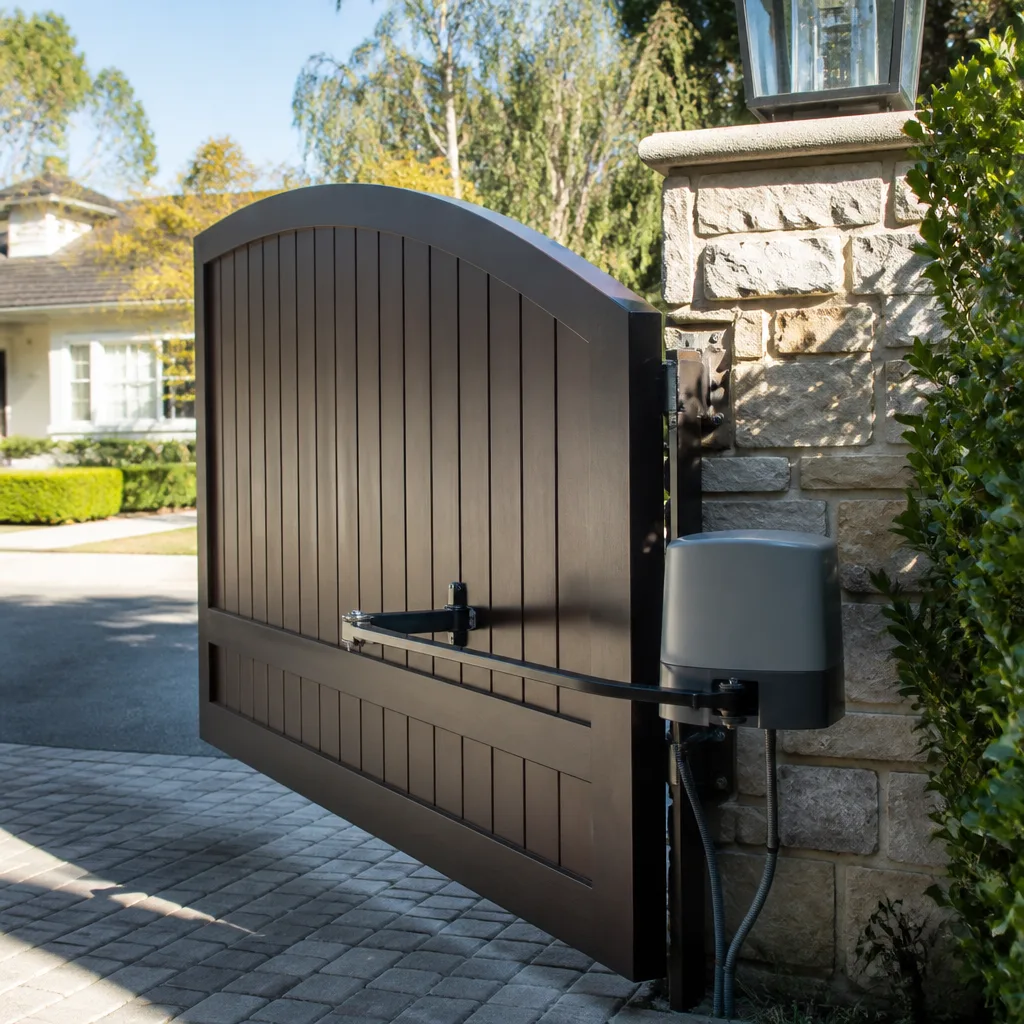
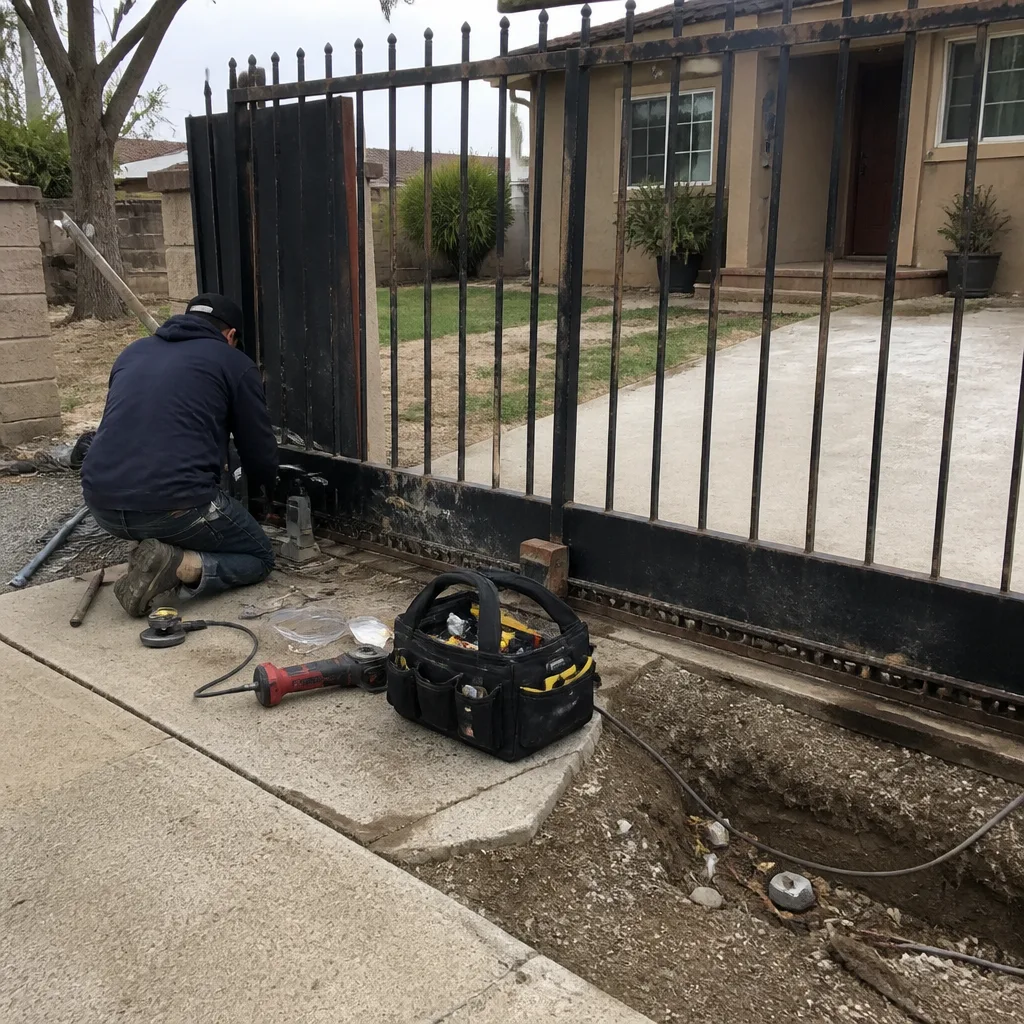 Before
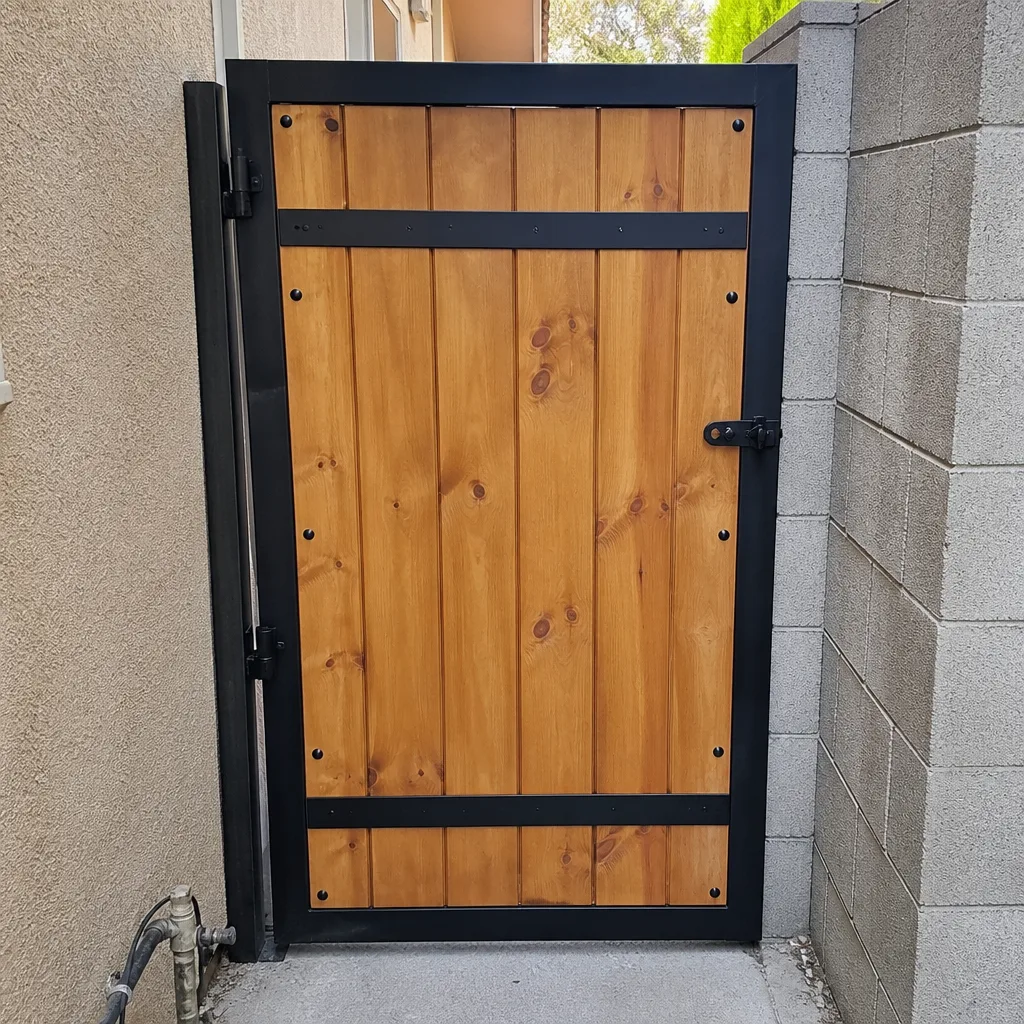 After
After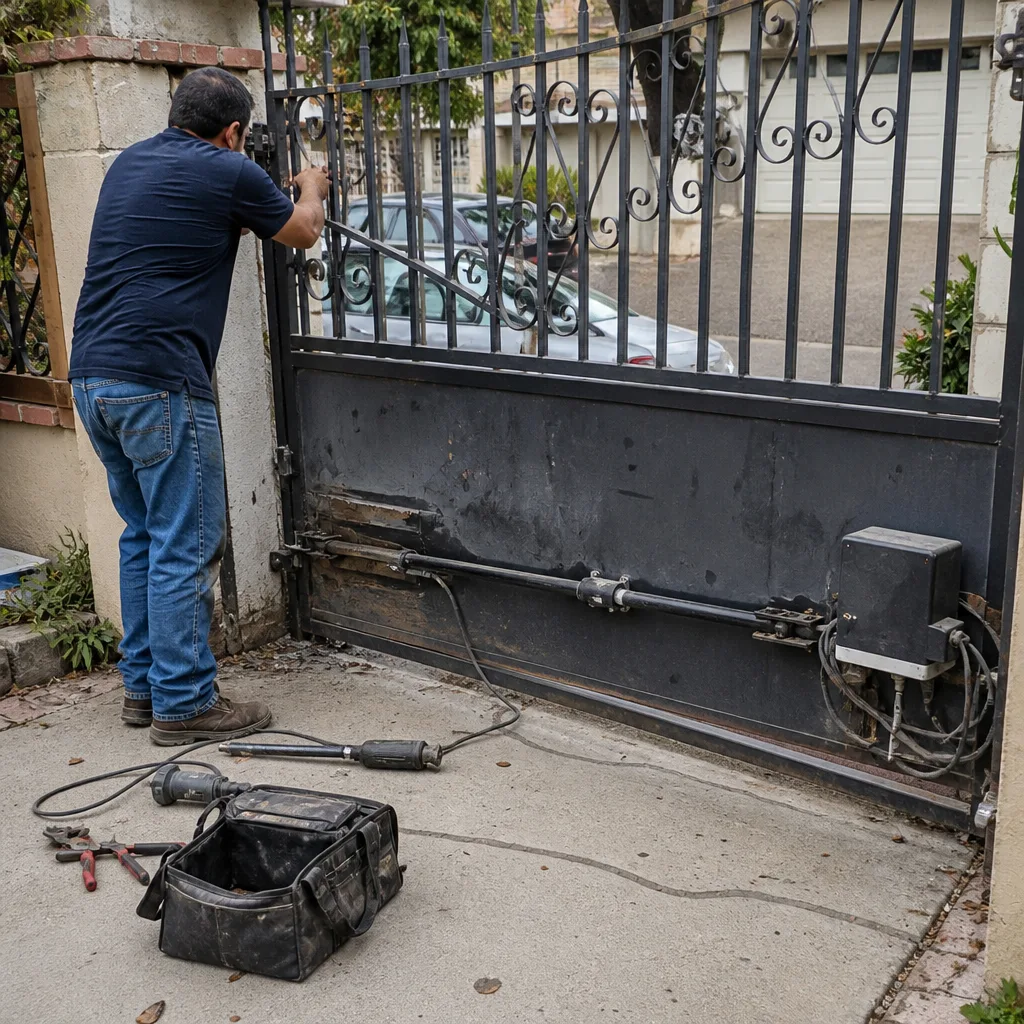 Before
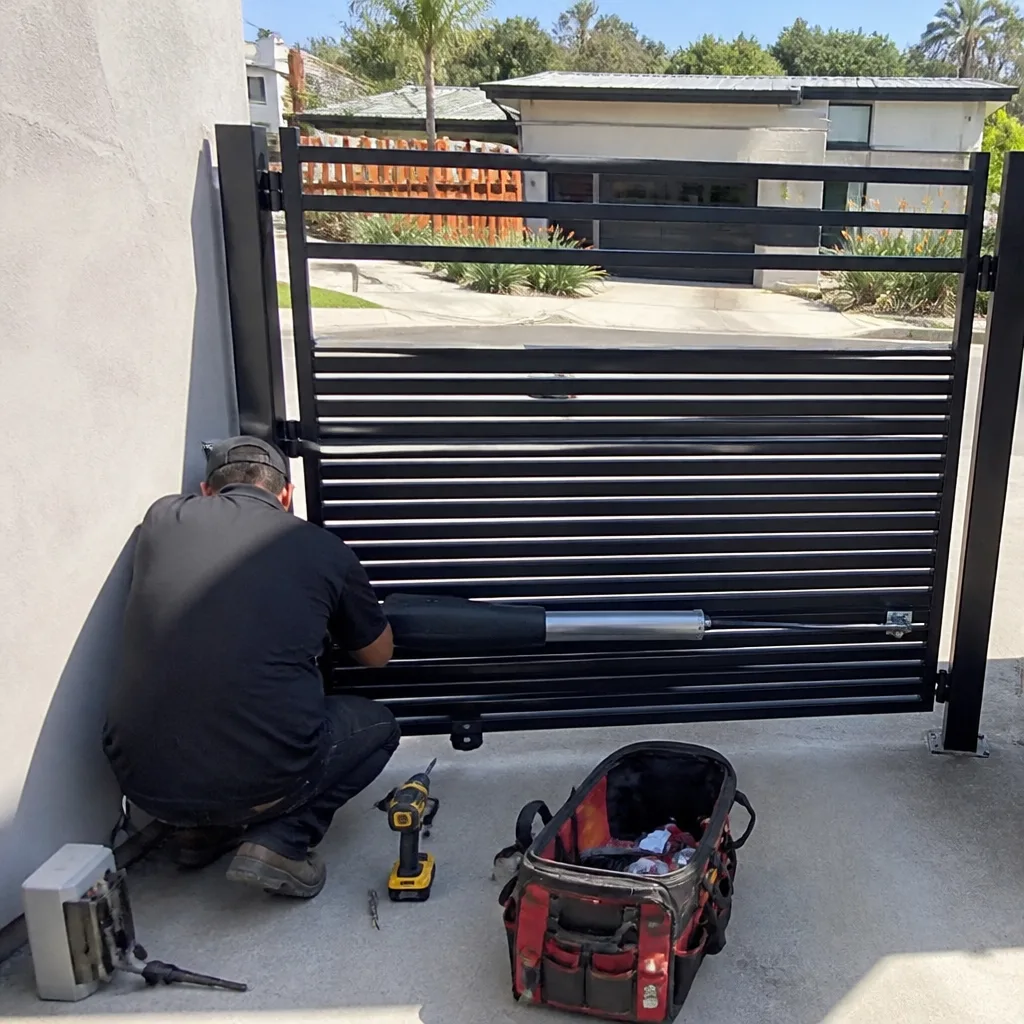 After
After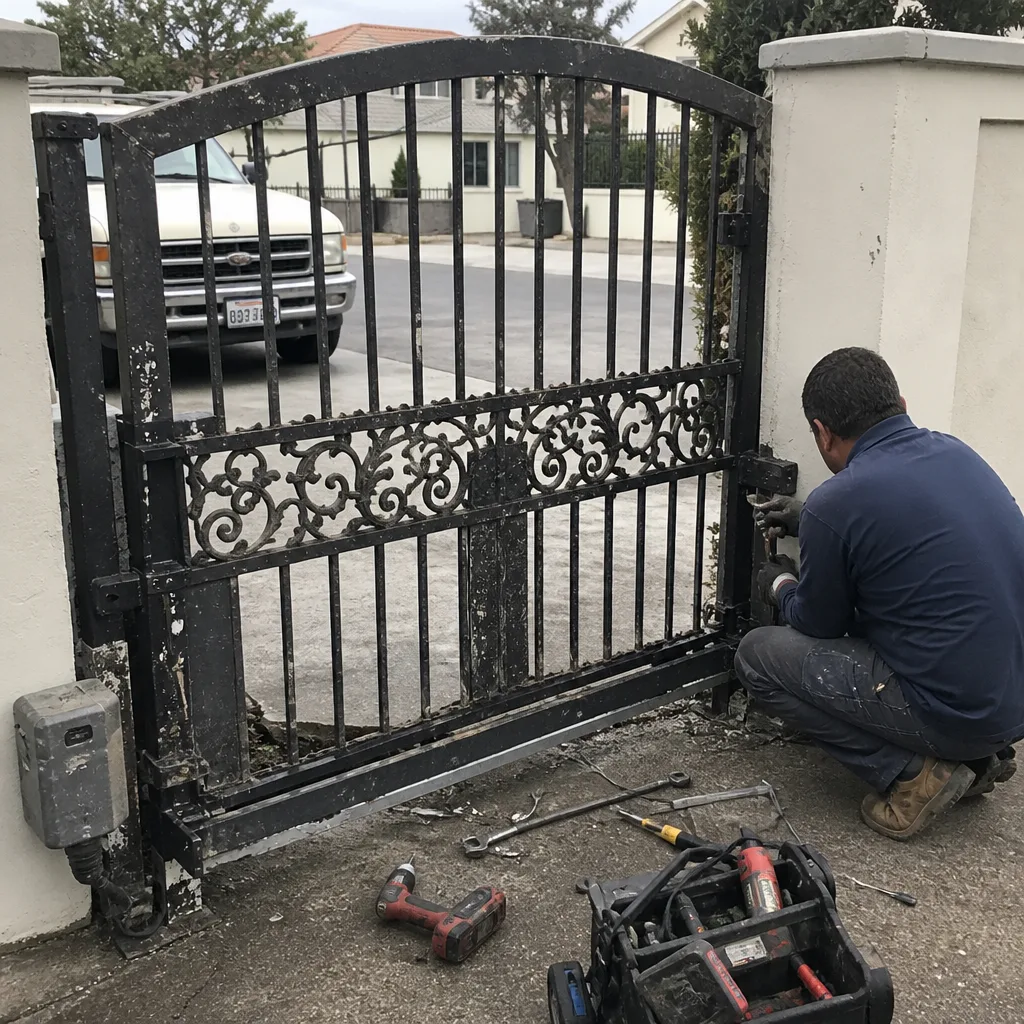 Before
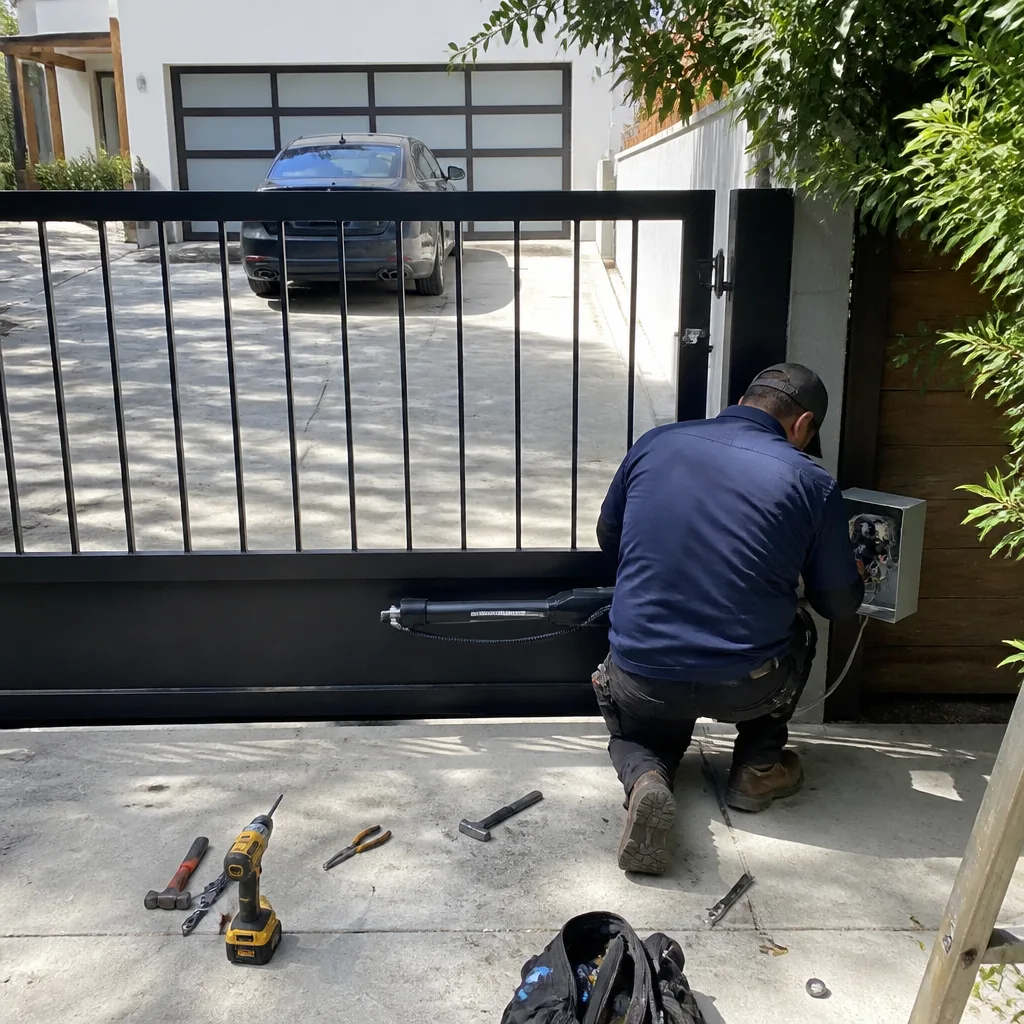 After
AfterGate Repair Permits, Codes & Inspections in CA: What You Need to Know
If an unpermitted gate operator is involved in an entrapment injury on your property, your homeowner’s insurance has legal grounds to deny the claim. This is the detail that contractors who skip permits conveniently omit. Most gate repairs in Los Angeles don’t require permits, but the specific work types that do – motor replacement, new electrical runs, and UL325 safety compliance upgrades – are exactly where unpermitted work creates liability exposure and resale headaches. For professional help with these complex jobs, see our Gate Repair services. In this guide, we’ll break down which jobs trigger permits in Los Angeles city and county jurisdictions, how to verify past work was done legally, what UL325 actually requires, and how HOA rules can layer on top of municipal code.
Quick Answer
Most gate repairs in California – hinge replacement, track alignment, welding, and control board troubleshooting – do not require permits. Permits are typically triggered when the work involves new electrical circuits, motor replacement with altered voltage or amperage, or any modification to safety systems. In Los Angeles, permitted gate operator work must pass inspection for UL325 entrapment protection compliance, and unpermitted installations can void homeowner’s insurance coverage for injury claims.
Table of Contents
- Which Gate Work Requires Permits in Los Angeles?
- Repair Exemptions: What You Can Do Without a Permit
- UL325 Explained: The Safety Standard That Determines Compliance
- How to Check Whether Past Work Was Permitted
- The HOA Overlay: When CC&Rs Add Rules Beyond City Code
- What the Inspection Process Looks Like for Permitted Gate Work
- The Real Risks of Unpermitted Gate Work
- Common Mistakes to Avoid
- When to Call a Professional
- Frequently Asked Questions
Which Gate Work Requires Permits in Los Angeles?
Permit requirements split along a clear line: mechanical repairs versus electrical and structural modifications. In Los Angeles, the Department of Building and Safety (LADBS) and Los Angeles County Public Works draw this line based on whether the work alters the building’s electrical system, changes the gate’s structural load path, or modifies safety equipment governed by state law.
Work that typically requires a permit:
- Installing a new gate operator or replacing an existing unit with a different voltage, amperage, or horsepower rating
- Running new electrical conduit or circuits from the main panel to the gate location
- Modifying or installing loop detectors, safety edges, photo eyes, or other entrapment protection devices when integrated with new electrical work
- Structural modifications to masonry or concrete pillars that support the gate
- Installing a gate where none existed previously, including driveway slide gates and pedestrian access gates in new locations
- Any work in a designated hillside or coastal zone where geological or environmental review applies
Work that typically does not require a permit:
- Hinge replacement or adjustment on existing gates
- Track cleaning, alignment, or roller replacement for slide gates
- Control board diagnostics and replacement of like-for-like components
- Limit switch recalibration on existing operators
- Welding repairs to gates or fences that do not alter structural support
- Remote programming and keypad code changes
Los Angeles presents a specific complication: the city straddles multiple seismic zones, and hillside properties in areas like the Hollywood Hills, Pacific Palisades, and Laurel Canyon often trigger additional geotechnical review for any structural work. A gate installation that requires new footings on a slope may need both a standard building permit and a hillside development permit. We’ve seen jobs in Beachwood Canyon where the gate itself was straightforward but the retaining wall modification added six weeks to the permit timeline.
The county unincorporated areas – places like Altadena, East Los Angeles, and parts of the San Fernando Valley – follow Los Angeles County Public Works guidelines, which mirror LADBS in most respects but can differ on setback requirements and fire department access clearances. If your property sits near a county island or unincorporated pocket, confirming jurisdiction before starting work saves significant trouble.
Repair Exemptions: What You Can Do Without a Permit
California Building Code Section 105.2 provides exemptions for “ordinary repairs” that do not affect structural integrity, electrical systems, or life safety equipment. For gates, this creates a practical safe harbor for most maintenance and component-level fixes.
The repair exemption covers:
- Like-for-like component swaps. Replacing a failed FAAC 770 swing operator with an identical FAAC 770 unit, using the existing power supply and safety devices, generally qualifies as repair. Upgrading to a higher-torque model or switching from FAAC to Linear would not.
- Safety device replacement on existing circuits. Swapping a damaged photo eye for a new one of the same type, without running new wire or changing the control logic, falls under repair. Adding photo eyes where none existed previously does not.
- Mechanical adjustments. Realigning a sagging gate, adjusting articulating arm geometry, or resetting limit switches to compensate for wear are all exempt activities.
- Cosmetic restoration. Sanding and repainting, decorative welding, or replacing pickets and infill panels does not trigger permit requirements.
The key test is whether the work leaves the system in the same configuration or improves it within the original design parameters. A Viking slide operator that has lost its encoder can be repaired with a new encoder board. Converting that same gate from a Viking system to a BFT subterranean operator with new hydraulic lines and a different safety edge configuration crosses into permit territory.
Los Angeles homeowners should keep documentation. Photos of the pre-repair condition, invoices specifying “like-for-like replacement,” and manufacturer spec sheets for the original and replacement components create a paper trail if questions arise during a future sale or insurance claim. We’ve encountered properties in Silver Lake and Los Feliz where buyers’ inspectors flagged gate work that appeared permitted but lacked documentation; the absence of records delayed closings even when the work was legally exempt.
UL325 Explained: The Safety Standard That Determines Compliance
UL325 is the Underwriters Laboratories standard for door, drapery, gate, louver, and window operators and systems. For residential and commercial gate operators, it specifies the entrapment protection requirements that determine whether an installation is legally compliant in California and insurable under standard homeowner’s policies.
What UL325 requires for gate operators:
- Primary entrapment protection. Each operator must have at least one external entrapment protection device – typically photo eyes, safety edges, or contact sensors – that stops or reverses gate motion when activated.
- Secondary entrapment protection. A second, independent protection method is required for most applications. A common configuration pairs photo eyes (primary) with a monitored safety edge (secondary).
- Force limitation. The operator must not exert more than specified force during the last 12 inches of travel, tested with a calibrated force gauge.
- Warning signage. Permanent, visible signs must be installed on both sides of the gate.
- Monitored safety circuit. The control system must detect and respond to faults in the safety device wiring; a cut wire or failed sensor must prevent automatic operation.
Operators manufactured before 2000 often predate current UL325 editions. Many early LiftMaster, Elite, and Mighty Mule units lack monitored safety circuits and cannot be retrofitted to comply. In Los Angeles, we’ve replaced operators in Hancock Park and Windsor Square that were functional but legally non-compliant – the homeowner only discovered the issue when their insurance carrier required a home inspection after a neighbor’s child was injured by an automated gate elsewhere in the neighborhood.
The liability exposure is concrete. If a non-UL325-compliant operator entraps someone and the installation was unpermitted, insurance carriers have successfully denied claims based on both the lack of permit (evidence of unlicensed or uninspected work) and the failure to meet recognized safety standards. The contractor who installed it may be long gone. The homeowner holds the property and the policy.
Permitted installations in Los Angeles are inspected for UL325 compliance as part of the electrical and mechanical sign-off. Inspectors test force limitation with a gauge, verify safety device function by interrupting the beam and pressing the edge, and confirm that warning signage is present and legible. This inspection creates a record that protects the homeowner if an incident occurs later.
How to Check Whether Past Work Was Permitted
Los Angeles maintains permit records across multiple systems, and finding them requires knowing where to look. For properties within the City of Los Angeles, the LADBS online permit system allows address-based searches back to the mid-1990s for most records. County properties use the Los Angeles County Public Works Permit and Inspection System.
Step-by-step permit lookup:
- Confirm jurisdiction. Enter the address at the Carver Gate Repair home page resources or check directly with LADBS and county systems. Some addresses in places like Studio City or Encino sit in county pockets surrounded by city territory.
- Search the LADBS Permit and Inspection Report system. Use the property address exactly as it appears on tax records. Search variations: “123 Main St,” “123 Main Street,” “123 W Main St” may return different results.
- Review permit types. Gate operator work typically appears as “Electrical,” “Mechanical,” or “Combination” permits. Look for descriptions mentioning “gate operator,” “automatic gate,” or “access control.”
- Check final inspection status. A permit without a final inspection is incomplete and offers no protection. The system shows inspection dates, results (pass/fail/correction), and any notes from the inspector.
- Request a Certificate of Occupancy or final sign-off letter. For older work, the online record may be incomplete. LADBS maintains microfilm records for work predating digital systems; these can be requested in person at the Metro or Van Nuys offices.
- For county properties, use the LA County PIP system. The interface is less user-friendly than LADBS, and older records may require a phone call to the district office serving your area.
If you discover unpermitted work, your options depend on when it was done and what it involves. Work completed within the last few years can often be brought into compliance through a “permit retroactive” process, though this triggers inspection and may require exposing work that was covered. Older work may qualify for legal nonconforming status if it predates current code requirements, though this does not apply to safety standards like UL325, which are enforced retroactively in many insurance contexts.
In Los Angeles, the practical reality is that many gate operators installed during the 2003-2008 construction boom were never permitted. Contractors faced extreme schedule pressure, and gate operators were frequently treated as final punch-list items with no permit pulled. Properties in neighborhoods like Mar Vista, Palms, and West Adams that saw heavy flipping activity during this period are particularly likely to have undocumented gate work.
The HOA Overlay: When CC&Rs Add Rules Beyond City Code
Homeowners associations in Los Angeles often impose gate standards that exceed municipal requirements. These rules are enforceable through CC&Rs (Covenants, Conditions, and Restrictions) and can block installations that are perfectly legal under city or county code.
Common HOA gate restrictions in Los Angeles:
- Material and color matching. Many HOAs require gates to match community fencing or use specified materials – wrought iron with particular finial styles, cedar with specific stain colors, or stucco-clad pillars matching adjacent walls.
- Height limitations. City code may allow 6-foot side yard gates, but an HOA might cap at 4 feet for sight-line preservation.
- Hardware finish requirements. Visible hinges, handles, and operators may need to match a specified palette, typically black, bronze, or brushed nickel.
- Operator enclosure rules. Some HOAs require subterranean or concealed operators rather than surface-mounted units, which significantly affects equipment selection and cost.
- Prohibition of certain styles. Chain-link, corrugated metal, or industrial-style gates are frequently banned in residential associations even when structurally sound.
The enforcement mechanism is real. HOAs can levy fines, place liens, and in extreme cases initiate foreclosure proceedings for uncured violations. More commonly, they block the final inspection sign-off for permitted work that doesn’t meet CC&Rs, leaving the homeowner with a legal installation that cannot be completed until the gate is modified.
We’ve handled Gate Installation in Los Angeles projects where the city permit was straightforward but the HOA architectural review added four weeks. In one case in Playa Vista, the HOA required a specific BFT subterranean operator that was not the homeowner’s first choice, but was necessary to meet aesthetic guidelines. Getting HOA approval before pulling the city permit prevents this sequencing problem.
The practical sequence for gated communities or properties with active HOAs: submit to the HOA architectural committee first, obtain written approval with material and equipment specifications, then use that approval as part of the permit application package. Some LADBS inspectors will ask to see HOA approval letters for work in known association territories.
What the Inspection Process Looks Like for Permitted Gate Work
A permitted gate operator installation in Los Angeles typically involves two or three inspection touchpoints, depending on the scope. Understanding what each inspection covers helps homeowners prepare and reduces callback rates.
Inspection sequence:
- Rough electrical inspection. If new conduit or circuits are run, an inspector verifies wire gauge, grounding, GFCI protection where required, and proper burial depth for underground runs. In Los Angeles, underground feeders to gate operators typically need 18-inch minimum cover in conduit, or 24 inches for direct burial cable. Hillside properties with expansive soil may require deeper burial or concrete encasement.
- Mechanical/structural inspection. For new gate installations or pillar modifications, inspectors check post depth, concrete footing size, gate clearance from grade, and structural attachment. Slide gates need verified track level and proper drainage to prevent water pooling in the track path.
- Final inspection. The comprehensive review covers UL325 compliance testing, force measurement, safety device function, signage placement, and operational verification. The inspector will cycle the gate multiple times, test each safety device independently, and measure stopping force with a calibrated gauge.
Timeline expectations in Los Angeles: rough inspections typically schedule within 3-5 business days of request, final inspections within 2-4 days. However, the total project timeline stretches because work must stop between rough and final, and corrections flagged at rough must be completed and re-inspected before proceeding. A typical permitted gate operator replacement with new electrical takes 2-3 weeks from permit pull to final sign-off, compared to 1-2 days for unpermitted work.
What inspectors actually check at final: they want to see that the gate stops when the photo eye beam breaks, reverses when the safety edge contacts an obstacle, and exerts no more than 40 pounds of force during the last foot of travel. They verify that warning signs are permanently affixed, legible, and visible from both sides. They confirm that manual release mechanisms function and are accessible. They do not evaluate cosmetic quality, noise level, or speed of operation unless these affect safety.
Failed inspections require correction and re-inspection, typically with a 24-48 hour rescheduling window. Each re-inspection may carry a fee. Contractors who quote “one-day installation” for permitted work are either misinformed or planning to skip inspections.
The Real Risks of Unpermitted Gate Work
The risks of unpermitted gate work extend beyond code enforcement. They surface at the moments when protection matters most: injury, property sale, and insurance claims.
Liability exposure: California premises liability law holds property owners responsible for injuries caused by dangerous conditions they knew or should have known about. An unpermitted, non-UL325-compliant gate operator is arguably a known dangerous condition, particularly if the owner participated in skipping the permit. In entrapment cases, plaintiffs’ attorneys routinely request permit records; the absence of a permit becomes evidence of negligent installation.
Insurance denial: Standard homeowner’s policies contain exclusions for losses arising from illegal or unpermitted work. While enforcement varies by carrier, documented cases exist where insurers denied bodily injury claims related to unpermitted electrical work, with courts upholding the denial. Gate operators, as motor-driven electrical equipment with known entrapment hazards, fall squarely in this risk category.
Resale complications: Los Angeles real estate transactions increasingly include seller disclosures about permitted improvements. Title companies and buyer inspectors flag unpermitted structures and equipment. A gate operator without permit history may trigger a demand for retrofit permitting, price reduction, or removal at seller expense. In competitive markets, this can kill deals.
Code enforcement: While less common for gate operators than for ADUs or structural additions, LADBS can issue correction notices and penalties for unpermitted electrical work. Neighbor complaints, often triggered by noisy or visibly improper installations, are the typical enforcement pathway.
The cost differential between permitted and unpermitted work is real – permits, inspections, and compliance-grade equipment add 15-30% to project cost. But this is insurance, not waste. The Garrison Standard requires that we quote permitted work with permit costs included and explain the trade-off explicitly. We’ve never had a Los Angeles homeowner regret the permitted path after understanding the liability exposure.
Common Mistakes to Avoid
- Assuming repair exemptions cover motor replacement. Swapping a failed operator for a different model, even a “comparable” one, often triggers permit requirements. Homeowners in Los Angeles have been cited when inspectors noticed new equipment during unrelated property inspections.
- Trusting a contractor who says “permits aren’t needed for this.” The contractor won’t own the property when the problem surfaces. Verify independently through LADBS or county resources.
- Ignoring HOA approval until after work starts. We’ve seen $8,000 gate installations torn out in Brentwood and Bel Air because the HOA rejected the design after completion. HOA first, permit second, construction third.
- Buying UL325-compliant equipment but installing it without monitored safety circuits. The operator model may be compliant, but the installation isn’t if the safety edge isn’t wired to the monitored input. Inspectors test the circuit, not just the device.
- Failing to obtain final inspection sign-off. A permit with no final is worse than no permit at all – it signals work was started but abandoned or failed, creating a red flag for future buyers.
- Assuming previous owner permits transfer cleanly. Permits are tied to property, but expired permits with no final inspection may need renewal or re-permitting before new related work can proceed.
- Using non-rated equipment for coastal or fire zones. Malibu, Pacific Palisades, and Topanga properties face additional requirements for corrosion resistance and fire department access that standard equipment doesn’t meet.
When to Call a Professional
Call a licensed gate specialist when the work involves electrical modification, motor replacement, or any uncertainty about permit status. The cost of professional evaluation is negligible against the liability of guessing wrong. Gate Repair in Los Angeles and Gate Motor Repair in Los Angeles both require expertise that generalist contractors rarely provide.
Specific scenarios that warrant professional involvement: you’re buying a property with an existing automated gate and no permit records; your gate operator was installed before 2010 and lacks visible UL325 marking; your HOA has flagged your gate for noncompliance; you’ve received an insurance notice requiring safety inspection; or you’re planning to sell and want clean documentation. Learn about Gate Repair Warning Signs Every Homeowner Should Know to identify problems early.
Carver Gate Repair offers free estimates in Los Angeles. Our technicians are background-checked and uniformed, and every repair carries our written 365-Day Done Right Promise. Call (469) 530-2485 to schedule evaluation. We’ll assess permit status, UL325 compliance, and HOA alignment, then provide a written price before any work starts.
Frequently Asked Questions
No, most gate repairs do not require permits in Los Angeles. Hinge replacement, track alignment, roller swaps, control board diagnostics, and limit switch adjustments all fall under ordinary repair exemptions. You need a permit when the work involves new electrical circuits, motor replacement with different specifications, or structural modifications to supporting pillars. Call (469) 530-2485 if you’re unsure whether your specific job triggers permit requirements.
Permitted gate operator installation in Los Angeles typically ranges from $2,800 to $6,500 for residential slide or swing systems, including permit fees, inspection scheduling, UL325-compliant equipment, and professional installation. The range reflects operator horsepower, access control features, and whether new electrical runs are needed. Every Carver Gate Repair estimate is written and agreed before work starts.
Non-compliant operators create liability exposure for entrapment injuries and may void insurance coverage. If your operator lacks monitored safety circuits, force limitation, or required warning signage, it should be evaluated for replacement or upgrade. Our Gate Repair Troubleshooting: Common Problems and How to Fix Them covers diagnostic steps. In Los Angeles, permitted installations are inspected for UL325 compliance, creating documentation that protects you if an incident occurs.
Yes. Search the LADBS online permit system for city properties or the LA County PIP system for county properties using your exact address. Look for permits describing “gate operator,” “automatic gate,” or “access control,” and verify that any permit shows a final inspection pass. If records are incomplete or missing, a professional evaluation can assess compliance status. Call (469) 530-2485 for assistance with permit history research.
No. HOAs in Los Angeles commonly restrict gate materials, colors, heights, hardware finishes, and operator types through CC&Rs. These rules are legally enforceable and can override personal preference even when city code allows your chosen design. Always obtain written HOA architectural approval before purchasing equipment or pulling permits.
A typical permitted gate operator replacement takes 2-3 weeks from permit application to final sign-off. This includes 3-5 days for permit issuance, 1-2 days for rough electrical inspection, completion of finish work, and 2-4 days for final inspection scheduling. Hillside properties or those requiring geotechnical review may add several weeks. Unpermitted work is faster but carries the risks detailed in this guide.
The Bottom Line
Most gate repairs in Los Angeles need no permit. The exceptions – motor replacement, new electrical runs, and safety system modifications – are exactly where unpermitted work creates the worst liability. UL325 compliance isn’t optional decoration; it’s the standard that determines whether your insurance covers an injury claim. Checking permit history, securing HOA approval before starting, and using licensed professionals who pull proper permits protects your property value and your legal exposure. The modest cost and time of doing it right is insurance against problems that surface at the worst possible moment. For more guides & resources on gate maintenance and compliance, visit our blog.
Written by Lonnie Burke, Owner at Carver Gate Repair, serving Los Angeles since 2008.