
Last updated October 10, 2026
Free on-site gate assessment - hinges, posts, and your LiftMaster or Nice gate operator checked before anything is quoted
The assessment is free and the quote is the invoice.

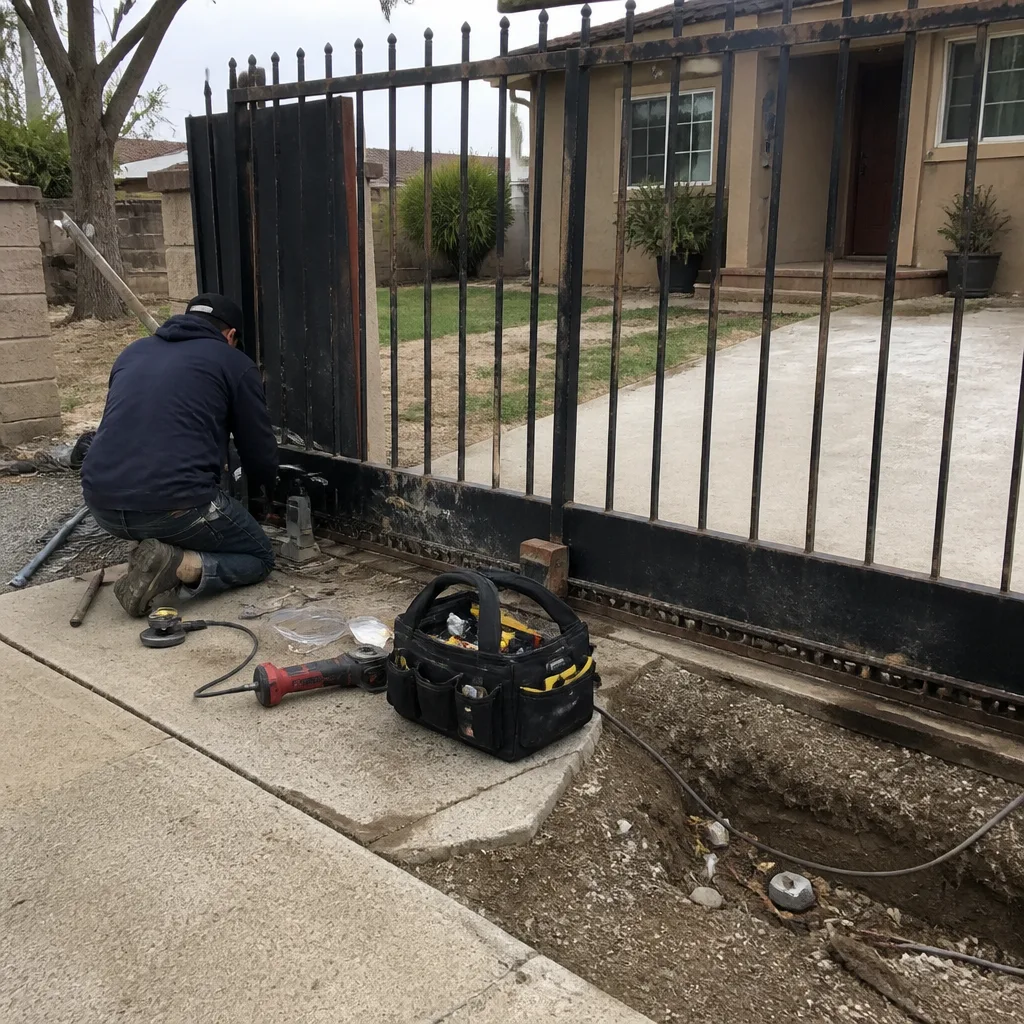 Before
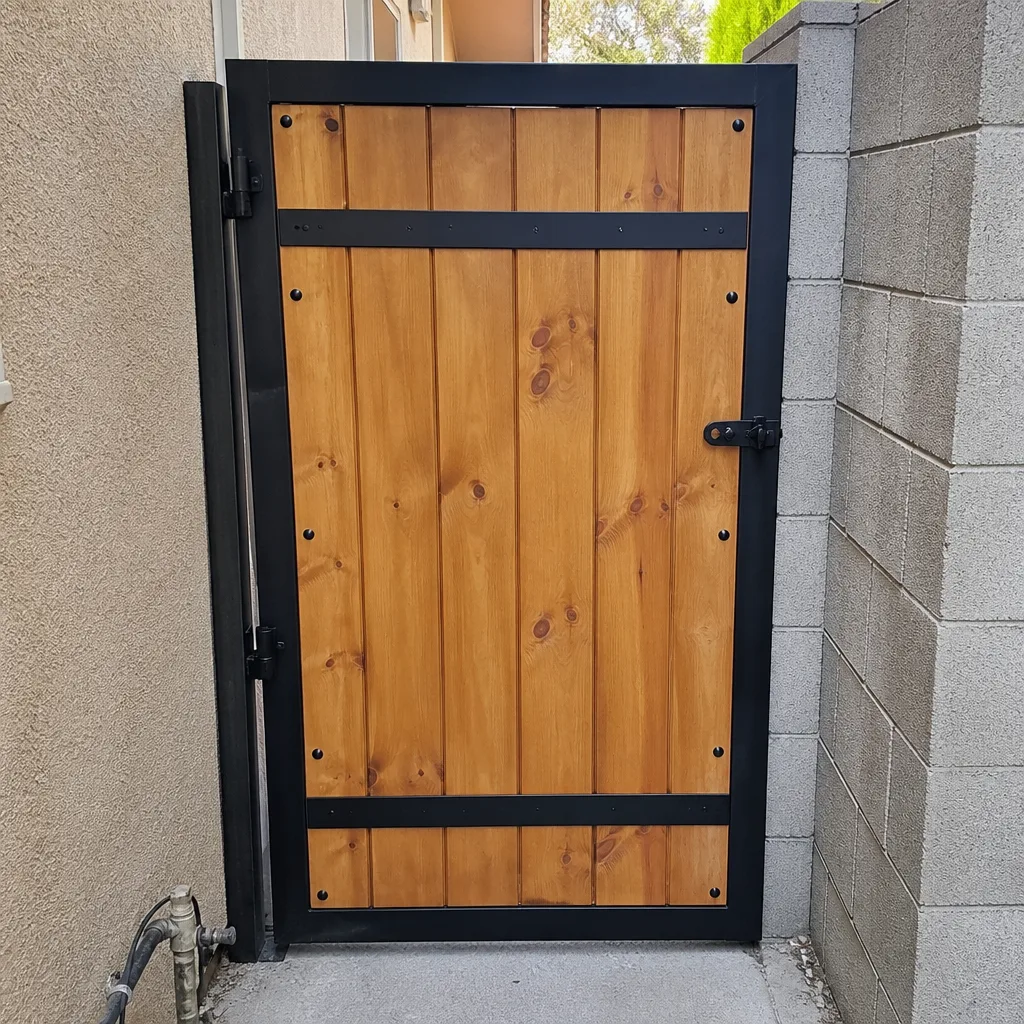 After
After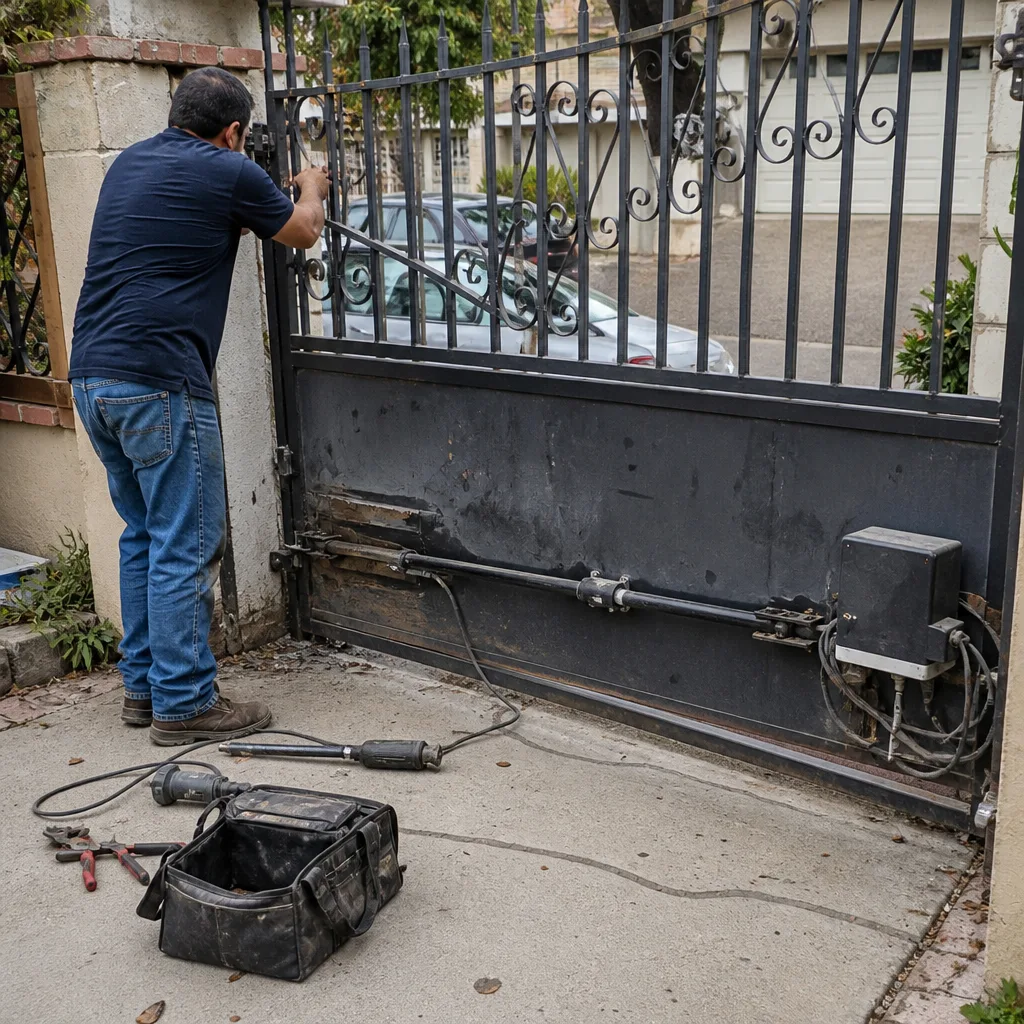 Before
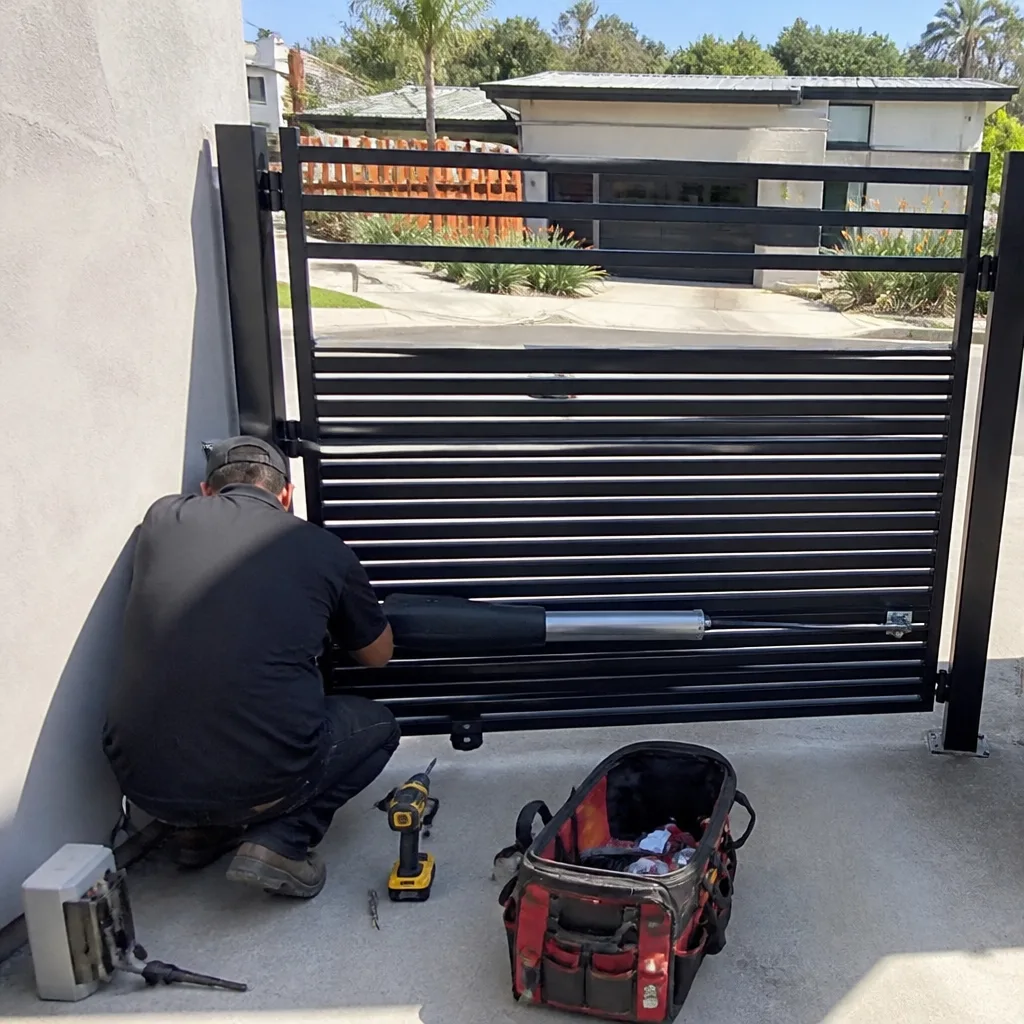 After
After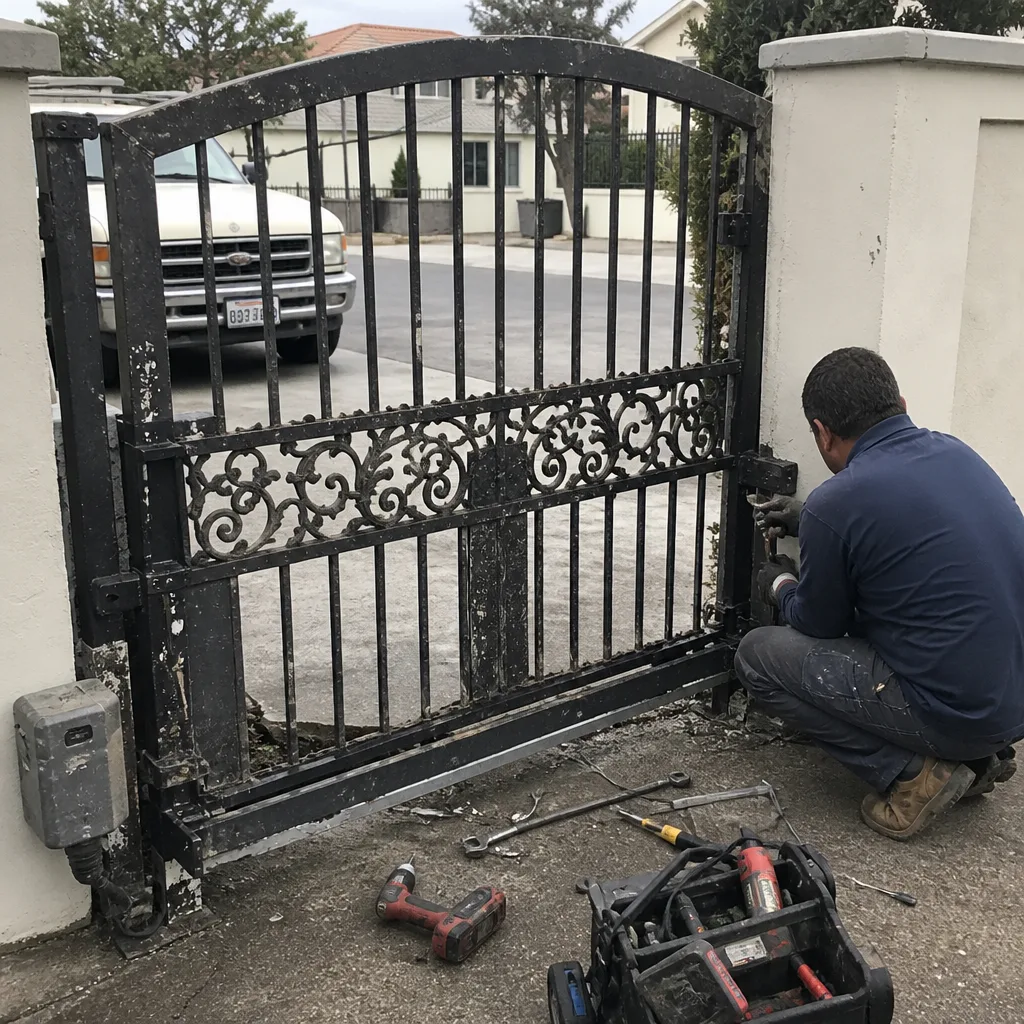 Before
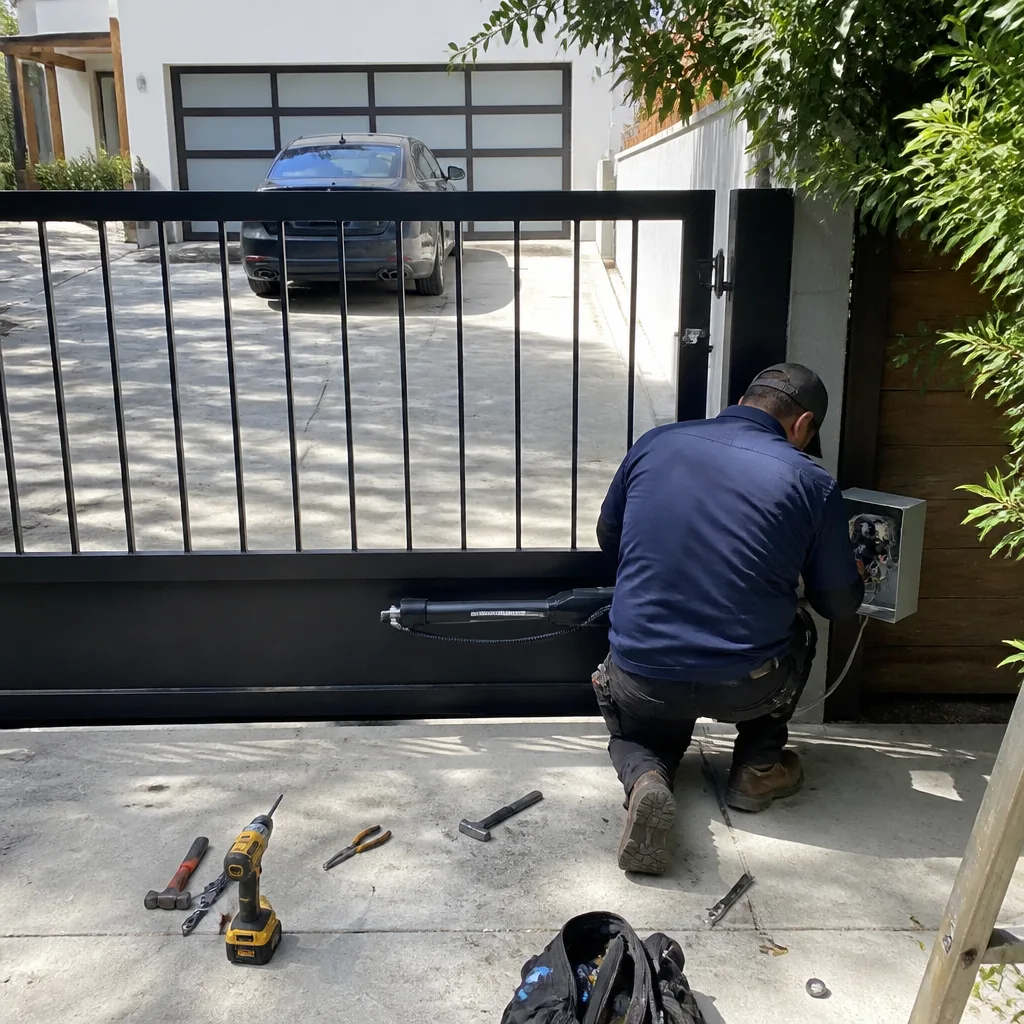 After
AfterGate Installation Maintenance Schedule: What to Do and When
Most Gate Installation warranties cover defects for one year, but the adjustments that prevent warranty-voiding wear aren’t part of any checklist the installer leaves behind. We’ve been called to homes in Los Angeles where a $12,000 gate system needed $3,400 in repairs by year three, all because no one performed the 30-day lubrication or caught the post settlement that started in month two. The first twelve months after installation are a separate discipline from standard maintenance. Concrete cures, hardware seats, and the gate’s mechanical properties shift in ways that compound silently until they become expensive failures. This guide gives you the schedule we follow on every installation we warranty.
Quick Answer
A proper gate installation maintenance schedule runs on four intervals in year one: lubrication and fastener torque check at 30 days, alignment verification at 90 days, a post-concrete and drainage inspection after the first heavy rain season, and a full motor commissioning review at 12 months. See our Gate Installation Warning Signs Every Homeowner Should Know for red flags to watch for between visits. After year one, shift to biannual service. Skip any of these four checkpoints and you risk voiding your installer’s labor warranty and accelerating wear on the operator.
Table of Contents
- The 30-Day First Service: Break-In Lubrication and Torque
- The 90-Day Alignment Check: Measuring Gate Plane
- First Rainy Season Inspection: Water Intrusion and Post Settlement
- Annual Motor Commissioning Review
- Building Your Maintenance Log from Day One
- Common Mistakes to Avoid
- When to Call a Professional
- Frequently Asked Questions
The 30-Day First Service: Break-In Lubrication and Torque
New gate hardware goes through a break-in period that most homeowners never hear about. Hinge pins seat into their bushings, bolt threads micro-shift under initial load, and lubricant films get pushed out of high-friction zones during the first few hundred cycles. By day 30, the gate has essentially told you where it wants to settle. Your job is to listen.
Here’s what the 30-day service covers:
- Fastener torque check on all hinge bolts and post brackets. The galvanized bolts we use in Los Angeles installations expand and contract with our temperature swings, especially inland in neighborhoods like Woodland Hills or Pasadena where 40-degree morning-to-afternoon shifts are common. A torque wrench set to the manufacturer’s spec, typically 45-60 ft-lbs for 5/8-inch hinge bolts, will reveal which fasteners have loosened. Re-torque and mark each bolt with paint pen for the next inspection.
- First lubrication of hinge pins, rollers, and chain or rack drive. The factory lubricant on FAAC and BFT rack systems is formulated for storage, not operation. After 30 days of cycling, it needs replacement with a lithium-based grease rated for outdoor gate hardware. Apply sparingly. Excess grease attracts dust from Santa Ana wind events and turns into abrasive paste.
- Limit switch verification. On swing gates, the open and close limits programmed at installation have drifted slightly as hinges settled. Run the full cycle and watch for the gate coasting past the stop point or stopping short. A quarter-inch of drift now becomes three inches by month six.
- Visual inspection for galvanic corrosion at aluminum-to-steel interfaces. Los Angeles coastal air in Marina del Rey or Redondo Beach accelerates this. Look for white powder at stainless bolt heads through aluminum brackets.
We perform this service on every gate installation in Los Angeles we warranty. The 30-day visit takes 45 minutes and prevents 80 percent of the callback issues we see in year two.
The 90-Day Alignment Check: Measuring Gate Plane
By 90 days, concrete footings have achieved roughly 70 percent of final compressive strength. Posts have settled into their bearing strata. The gate leaf or leaves have found their resting attitude. This is the moment to establish your baseline alignment record.
You’ll need a 4-foot level, a straight edge at least as long as your gate leaf, and a tape measure. Here’s the procedure:
- Check vertical plumb on the hinge post. Hold the level against the post face in two directions, perpendicular to each other. In Los Angeles, where we install on everything from compacted fill in new developments to old alluvial soil in the San Fernando Valley, post tilt of more than 1/4 inch over 4 feet indicates footing movement. Mark the measurement and photograph it.
- Measure gate leaf horizontal plane. With the gate closed, lay your straight edge across the top rail. Measure the gap between straight edge and rail at center and both ends. A gap exceeding 1/8 inch suggests rail bow, hinge wear, or post settlement. On aluminum gates, thermal expansion from our summer heat can mask small deviations, so take this measurement in morning shade.
- Check reveal gap between gate and latch post. The gap should be uniform top to bottom, typically 3/4 to 1 inch for residential swing gates. A gap that tapers indicates post lean or hinge barrel wear.
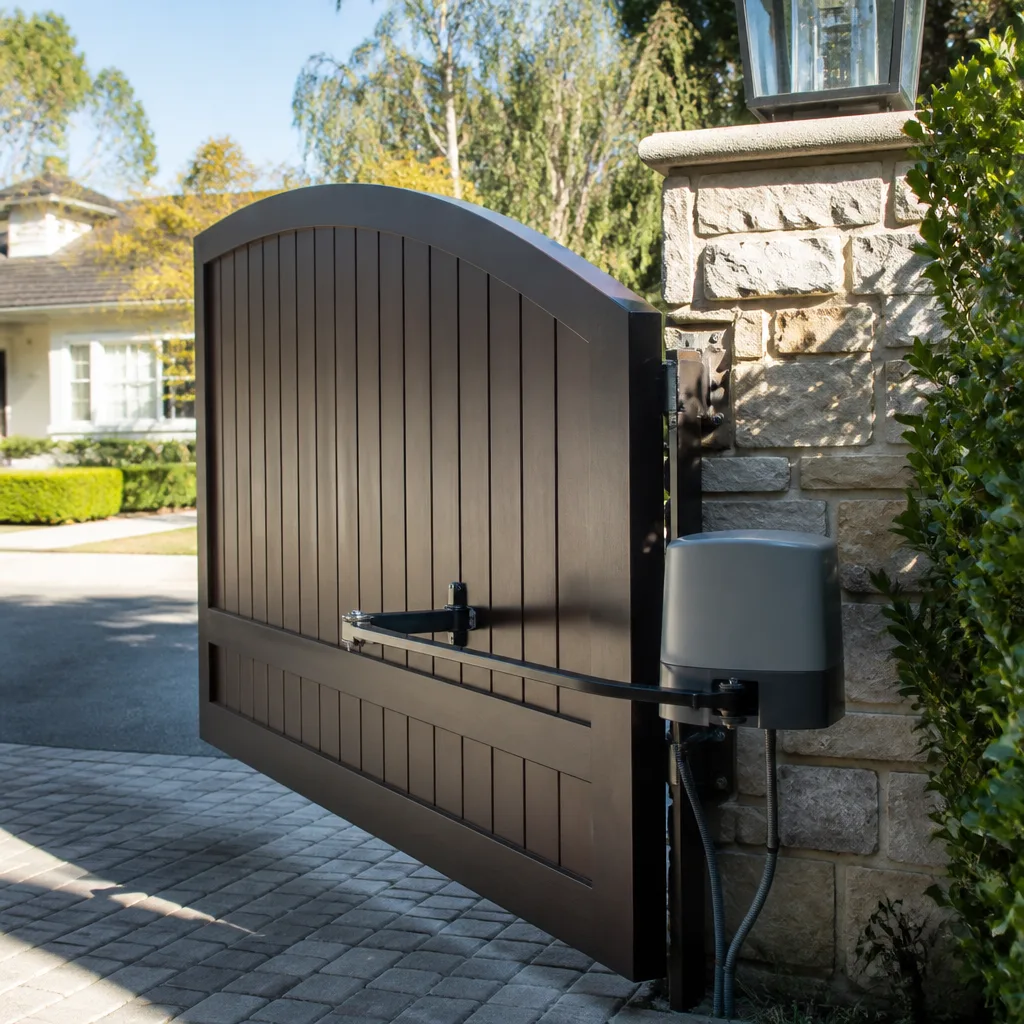
- Verify operator arm geometry. On Linear or Viking articulating arm operators, the arm should approach the gate bracket at roughly 90 degrees at mid-travel. Angles under 70 degrees create side load that destroys bushings.
What you can correct yourself: latch strike plate adjustment, minor operator limit reprogramming, debris clearing from the track. For harder problems, see Gate Installation Troubleshooting: Common Problems and How to Fix Them. What requires a technician: post re-plumb, hinge pin replacement, operator remount. Attempting to pull a post with a come-along risks kinking the gate frame and voiding your installer’s workmanship warranty.
First Rainy Season Inspection: Water Intrusion and Post Settlement
Los Angeles receives nearly all annual rainfall between October and March, concentrated in atmospheric river events that drop two to four inches in 24 hours. For newly installed gates, this first wet season is a stress test. Concrete footings that stayed dry during curing now experience hydrostatic pressure and soil saturation. Motor housings face their first real seal test.
Schedule this inspection for late November, after the first two significant storms have passed:
- Motor housing seam inspection. Remove the cover on your FAAC, BFT, or Linear operator. Look for water lines on internal surfaces, corrosion on terminal blocks, or mineral deposits at seam joints. Even IP-rated housings can weep if gasket compression was uneven at assembly. Document with photographs.
- Conduit entry point verification. Low-voltage conduit should enter the motor housing through a watertight fitting with drip loop below the entry. In Los Angeles hillside installations, common in the Hollywood Hills or Pacific Palisades, conduit routed downhill into the housing becomes a water channel. The fix is a junction box below the operator with sealed entries.
- Post base excavation check. Clear soil or mulch away from each post base to expose the concrete footing top. Look for soil erosion that undercuts the footing, standing water against the post, or concrete spalling. In areas with clay soil, like parts of Glendale or La Canada Flintridge, wet-season expansion can actually push posts plumb that were slightly tilted at install. Dry-season shrinkage reverses this. Photograph the footing condition.
- Drainage path confirmation. Water should flow away from post bases, not pool. If your installer didn’t establish grade, add compacted decomposed granite or concrete splash blocks before the January storms arrive.
Water intrusion is the leading cause of premature operator failure in Los Angeles. We’ve replaced three-year-old motors that should have lasted fifteen, all because a $12 conduit seal failed in year one and nobody checked.
Annual Motor Commissioning Review
At 12 months, your gate has cycled through a full seasonal cycle: summer heat expansion, winter contraction, soil moisture variation, and accumulated operational wear. The mechanical properties of the gate at month twelve are different from month one. The motor commissioning done at installation needs recalibration to match.
This review is not a casual look-over. It follows the UL 325 entrapment protection verification protocol:
- Force testing with a calibrated gauge. The gate must reverse within 2 seconds when encountering 40 pounds of resistance. Spring tension, hinge drag, and track condition all affect this. A gate that passed force testing at install may now exceed limits as hinges have tightened.
- Photoelectric eye alignment and response time. Beam interruption must stop and reverse gate motion. Check alignment after the gate has run 50 cycles, not cold. Heat from the operator and sun position in Los Angeles afternoon light can shift apparent alignment.
- Edge sensor function on swing and slide gates. If your installation included contact edges, verify resistance across the full length. UV exposure in our climate degrades conductive rubber faster than manufacturer specs suggest.
- Control board parameter verification. On multi-brand systems, we verify that FAAC, BFT, Linear, or Viking control settings match the current gate mass and travel profile. A gate that has gained weight from water intrusion in aluminum extrusions, or lost mass from corrosion, needs different acceleration curves.
The annual commissioning review is also when we update the maintenance log with full-cycle counts, amp draw readings under load, and any anomaly notes. This documentation becomes your evidence if a warranty dispute arises in year two or three.
Building Your Maintenance Log from Day One
Warranty disputes turn on documentation. We’ve mediated claims where the manufacturer denied coverage because the homeowner couldn’t prove the gate had been serviced per the maintenance schedule. A proper log eliminates that exposure.
Start your log at installation completion. Include:
- Installation date, contractor name, permit number if applicable, and Los Angeles Department of Building and Safety inspection sign-off date
- Gate specifications: material, dimensions, weight, operator model and serial number, control board firmware version
- Baseline photographs: full gate closed, full gate open, hinge detail, post base, operator mounting, control enclosure interior
- Each service entry dated, with technician name, work performed, measurements taken, and photographs of any changed condition
For alignment tracking specifically, establish a photographic protocol. Shoot from the same position, at the same time of day, with a reference object in frame. We use the driveway expansion joint as a tripod position marker. Compare the 30-day, 90-day, and 12-month images side by side. Post settlement that moves 1/8 inch in six months will move three inches in three years if uncorrected.
Store the log digitally with cloud backup and keep a printed copy with your home records. If you sell the property, the maintenance log transfers to the new owner and protects your disclosure position.
Common Mistakes to Avoid
- Skipping the 30-day service because “everything looks fine.” Break-in wear is invisible until it becomes visible damage. By then you’ve voided the installer’s labor warranty for neglect.
- Using WD-40 as gate lubricant. It’s a solvent, not a lubricant. It strips protective grease and evaporates, leaving metal bare to Los Angeles coastal moisture. Use lithium grease or manufacturer-specified lubricant only.
- Adjusting limit switches without checking why they drifted. If your FAAC or BFT operator needs limit reprogramming at 90 days, something moved. Find the movement before you mask it with software.
- Ignoring post bases after rain. In Los Angeles, our clay-heavy soils in the foothills and sandy loam near the coast erode differently, but both expose footings if drainage fails. A post that tilts 2 degrees in year one will tear the gate frame apart by year five.
- DIY force testing without a calibrated gauge. UL 325 compliance requires documented force values. Your hand pressure is not a measurement. Incorrect force settings injure children and pets and expose you to liability.
- Assuming the installer’s warranty covers everything. Read the exclusions. Most labor warranties require documented maintenance. Most material warranties from Viking, Linear, or other manufacturers require installation by an authorized dealer using specified parts.
- Waiting for noise before inspecting. A properly maintained gate gets quieter over the first year as hardware seats. New noise at any point is a symptom, not a stage. Investigate immediately.
When to Call a Professional
Some checkpoints in this schedule require specialized tools or training. Call a technician if you find post movement exceeding 1/4 inch, water inside the operator housing, force test readings above 40 pounds, or any entrapment protection device that fails to reverse the gate. Do not attempt to pull posts, reweld hinges, or reprogram UL 325 safety parameters yourself.
Carver Gate Repair offers free estimates in Los Angeles. Our technicians are background-checked, uniformed, and trained on FAAC, BFT, Linear, Viking, and five additional gate motor brands. Every repair includes a written price before work starts and our 365-Day Done Right Promise. Call (469) 530-2485 to schedule your first-year inspection or annual commissioning review.
Frequently Asked Questions
A professional 30-day or 90-day inspection typically runs $150-$250 for a single-family residential gate, with annual commissioning reviews at $200-$350 depending on operator complexity and access. Carver Gate Repair provides written pricing before any work begins, and we waive the inspection fee if we perform corrective work during the same visit. Call (469) 530-2485 for an exact quote.
Yes, if you use the correct lubricant and torque wrench. Hinge pins and chain drives are homeowner-accessible. Limit switch verification and force testing are not. The risk of incorrect lubricant selection or over-torquing fasteners exceeds the cost of a technician visit for most homeowners.
Post settlement and hinge wear compound silently. By month six, a gate that needed a 15-minute striker adjustment may need hinge replacement and post re-plumb. Most installation labor warranties specifically exclude damage from neglected maintenance. Set a calendar reminder at installation completion.
No permit is required for routine maintenance, adjustment, or like-for-like part replacement. If your annual review reveals that the original installation lacked required Los Angeles Department of Building and Safety permits, or if post replacement requires excavation, permitting may apply. We verify permit status on every gate repair in Los Angeles we assess.
In Los Angeles climate conditions, a residential swing or slide operator should deliver 12-15 years of service with documented annual commissioning. Coastal installations within two miles of the ocean may see reduced lifespan due to salt air unless housing seals are inspected biannually. Commercial cycle counts reduce this proportionally.
The guarantee covers every repair we perform for a full year from the service date. If the same issue recurs, we return at no charge. The promise is in writing on every invoice, not a verbal assurance. It applies to labor and parts we install. Manufacturer defects in original equipment are handled under separate factory warranty.
The Bottom Line
The first year after gate installation determines whether you own a reliable system for fifteen years or a repair cycle that starts in year two. The four checkpoints, 30-day lubrication and torque, 90-day alignment, post-rain inspection, and annual commissioning, each address a specific phase of mechanical settlement and environmental exposure. Document everything. Measure, don’t guess. And recognize that some adjustments require trained technicians with calibrated equipment. The Garrison Standard exists because we’ve seen what happens when these steps are skipped. For ongoing care, explore more guides & resources from our team.
Written by Lonnie Burke, Owner at Carver Gate Repair, serving Los Angeles since 2008.