
Last updated October 10, 2026
Free on-site gate assessment - hinges, posts, and your LiftMaster or Nice gate operator checked before anything is quoted
The assessment is free and the quote is the invoice.
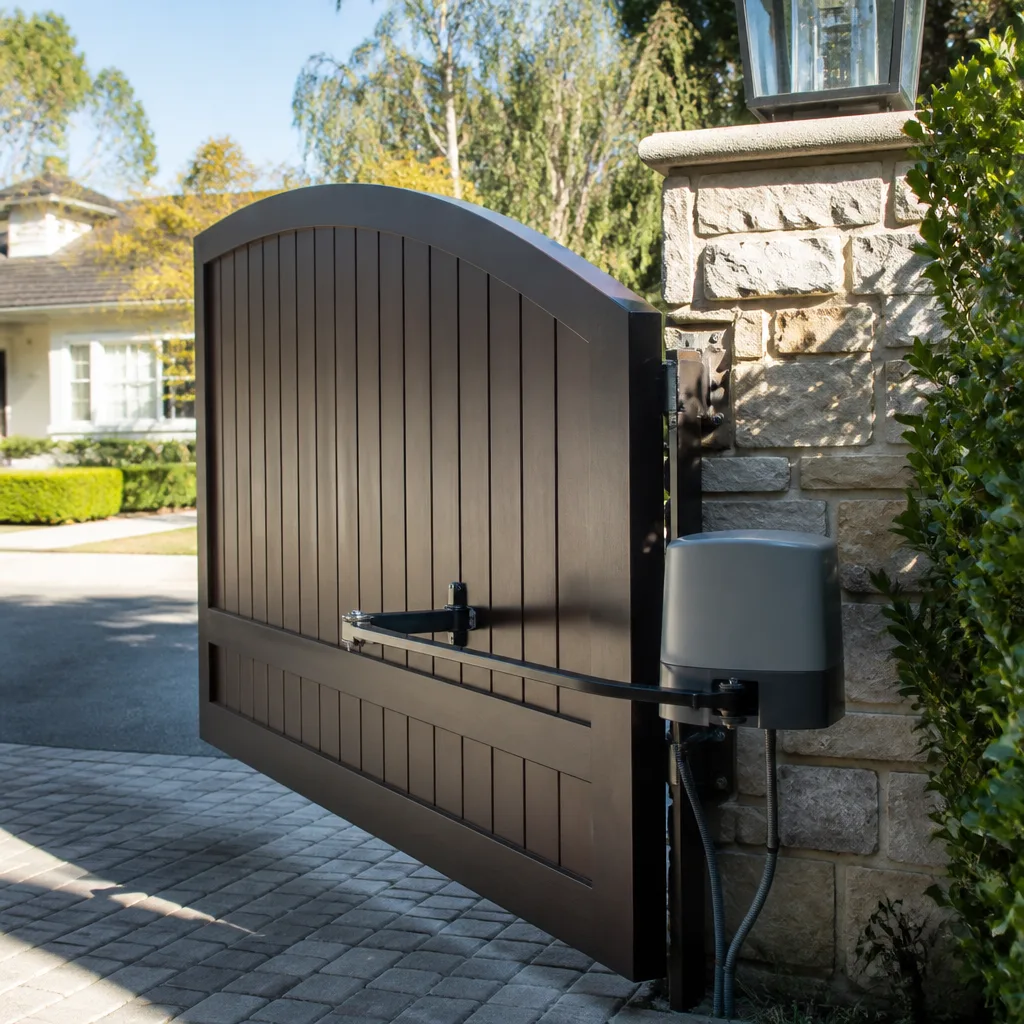
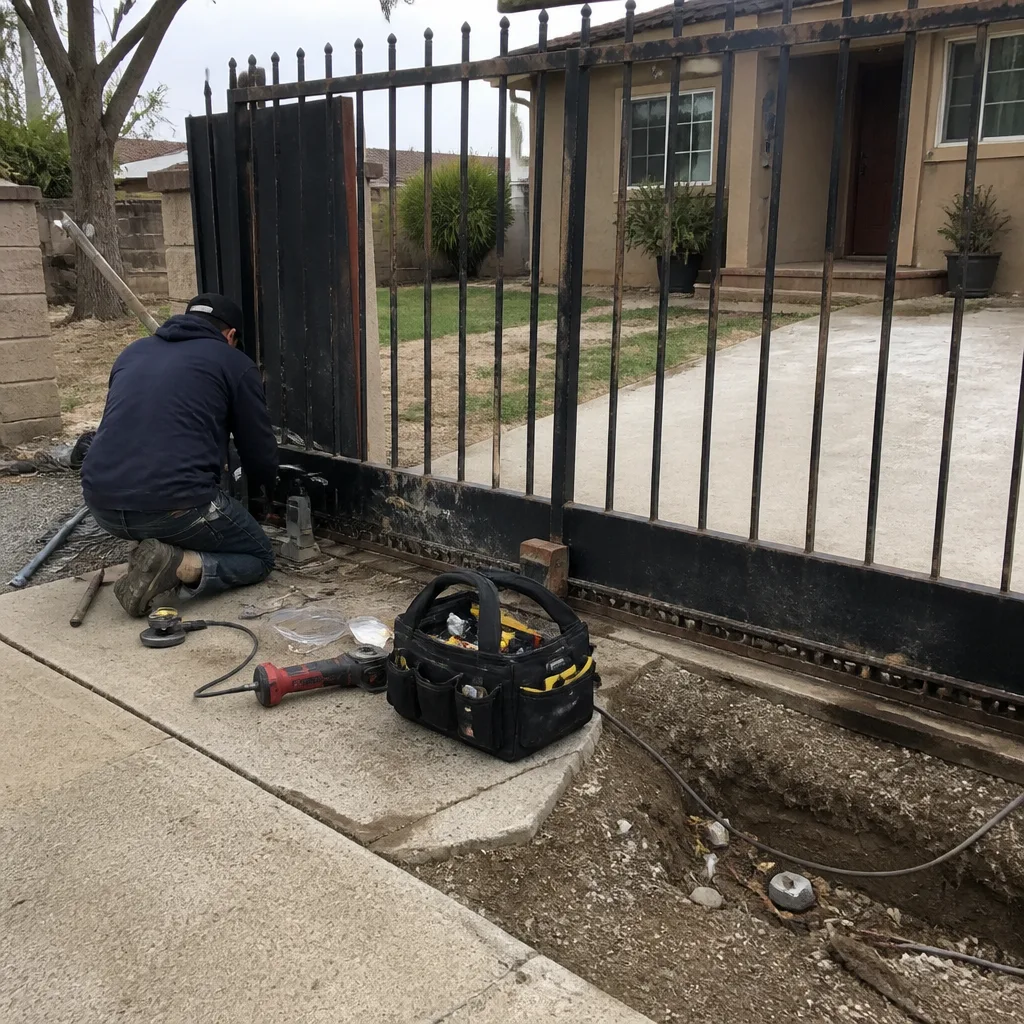 Before
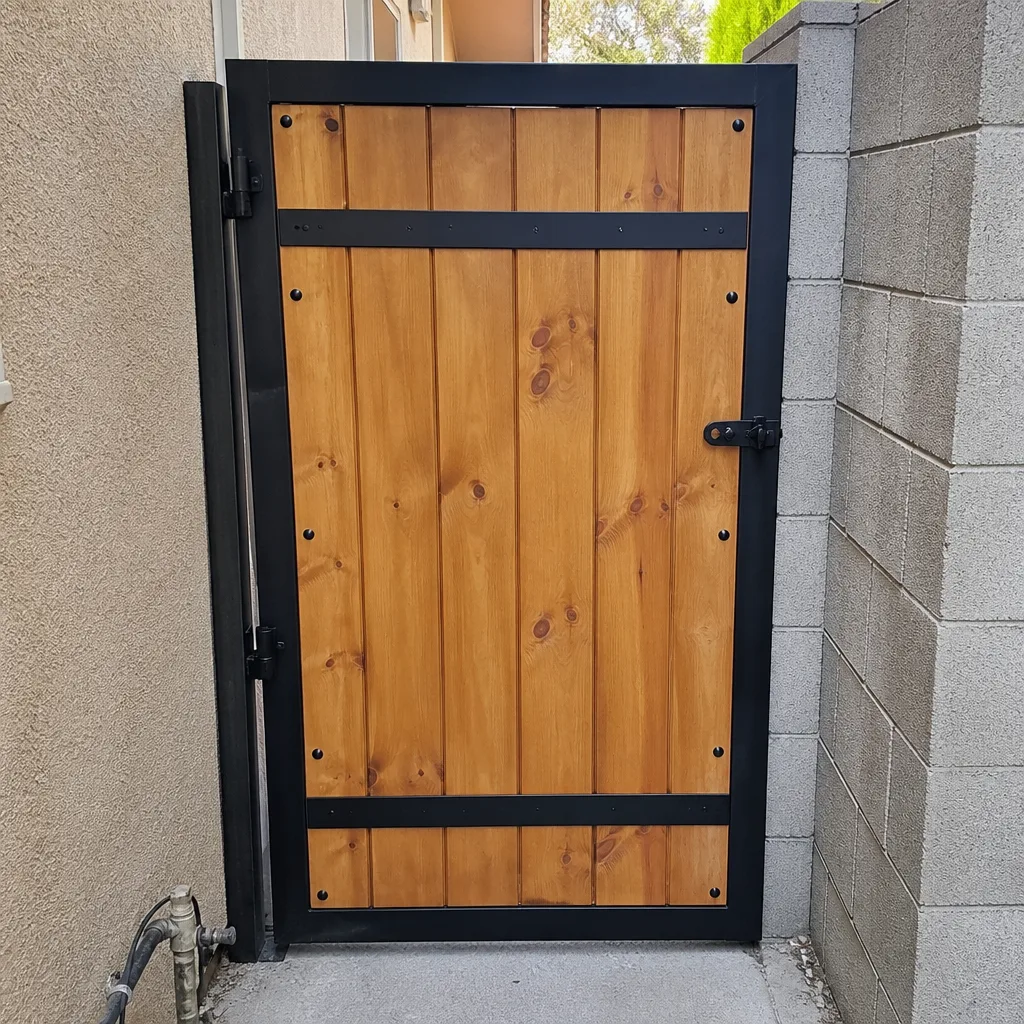 After
After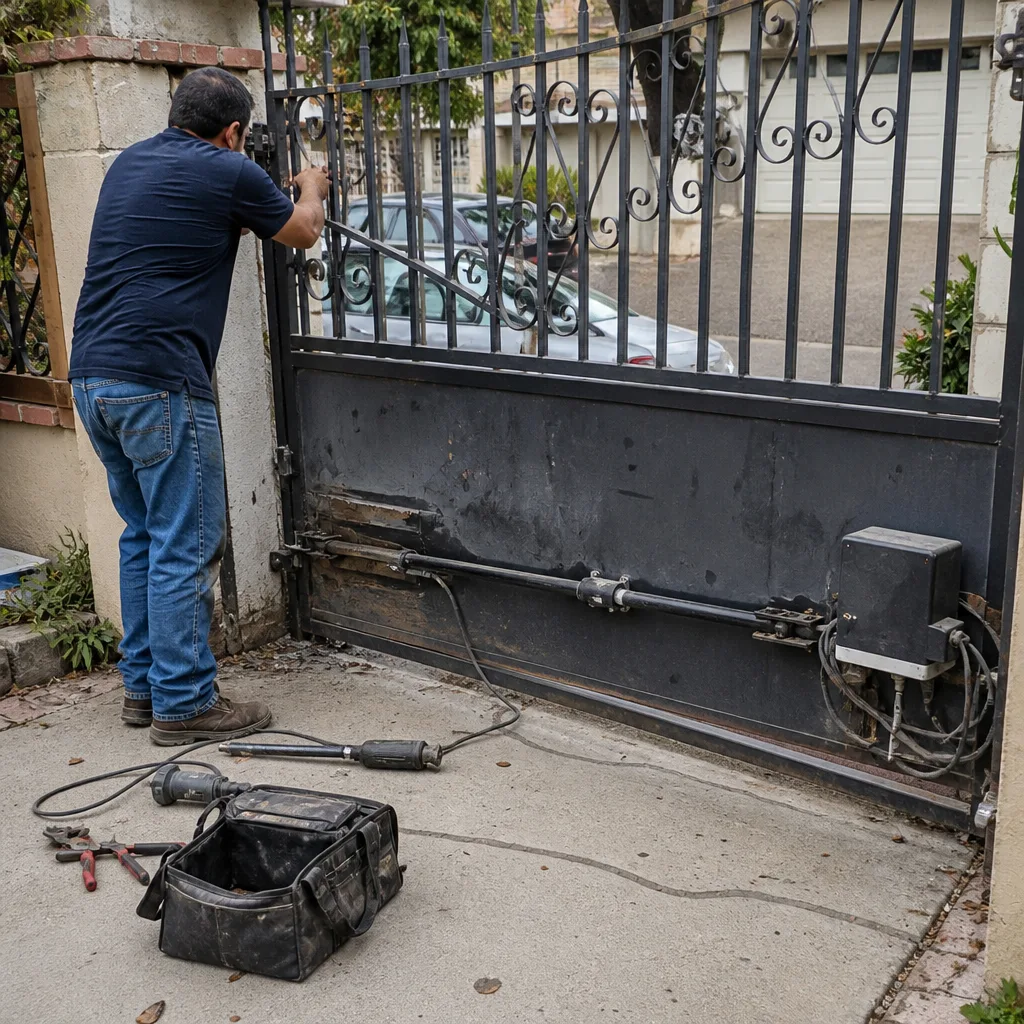 Before
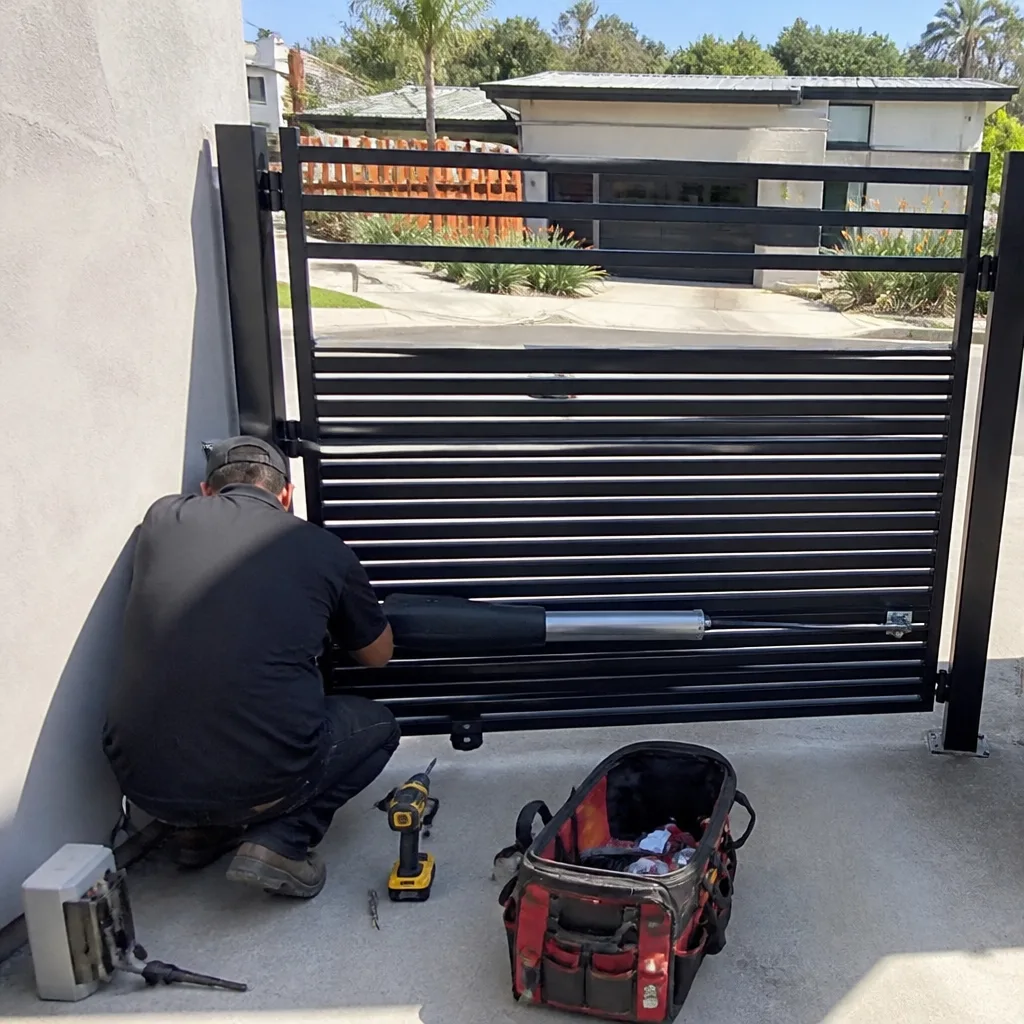 After
After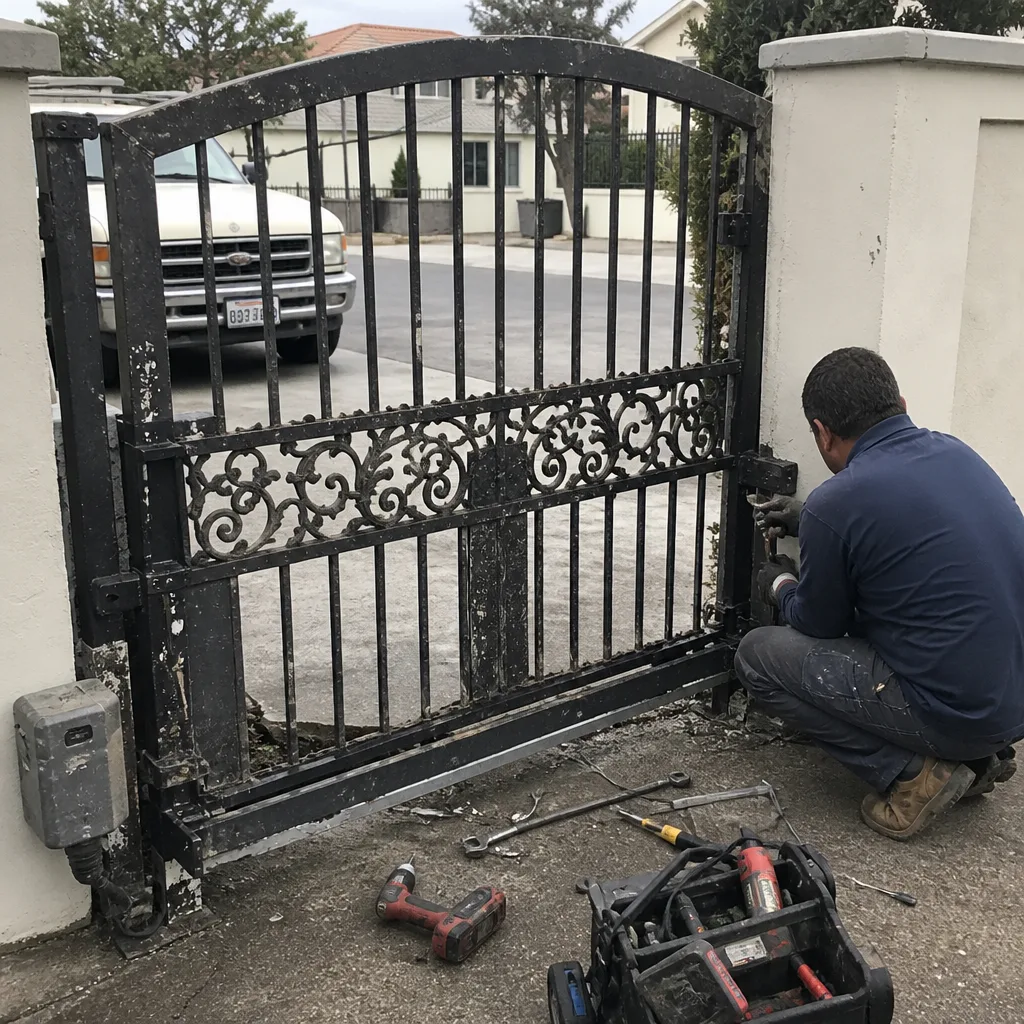 Before
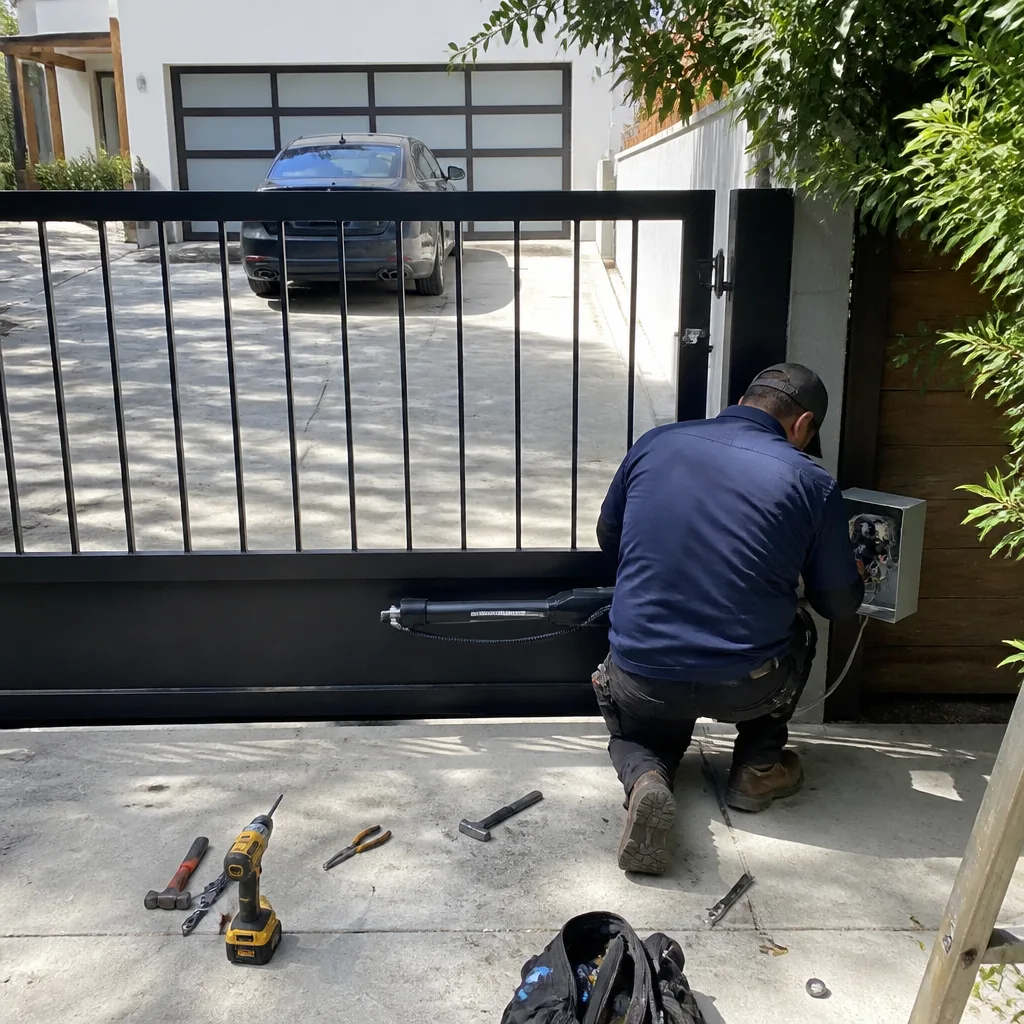 After
AfterGate Installation Warning Signs Every Homeowner Should Know
A gate that swings and latches correctly on our Gate Installation services day can still be installed wrong. The tell is in the footing depth, the post plumb, and the hinge gap – details you can check in ten minutes if you know what you’re looking at. In Los Angeles, we’ve seen too many homeowners discover these problems three months later, when the frame sags, the motor strains, and the warranty claim gets denied for improper installation. This guide teaches you to inspect the work before you sign off, not after something breaks.
Quick Answer
The warning signs of a bad gate installation fall into two categories: physical defects visible on day one, and operational problems that appear within the first 90 days. Before the crew leaves, check that posts are plumb, footings are flush with grade, hinges have proper clearance, latches align without forcing, and motor torque settings match the gate weight. In the weeks after, listen for unusual motor sounds, watch for inconsistent open/close cycles, and verify the gate remains level through temperature swings.
Table of Contents
- The Five Physical Checks to Perform Before the Crew Leaves
- What Shallow or Undersized Concrete Footing Looks Like From Ground Level
- Red Flags in Contractor Behavior Before Installation Begins
- Improper Motor Mounting Stress: Early Signs Versus Normal Break-In
- Why an Unlevel Gate Accelerates Motor Wear and Voids Warranties
- Los Angeles-Specific Installation Risks: Soil, Climate, and Code
- Common Mistakes to Avoid
- When to Call a Professional
- Frequently Asked Questions
The Five Physical Checks to Perform Before the Crew Leaves
Most homeowners do one test: they press the remote and watch the gate open. That’s necessary but not sufficient. A gate can operate while carrying hidden defects that will cost you later. Here are the five checks we recommend every Los Angeles homeowner perform before signing the completion paperwork.
- Post plumb. Hold a level against each post vertically. The bubble should center. A post that’s even 1/4 inch out of plumb at ground level will lean further as soil settles, especially in Los Angeles hillside areas like the Hollywood Hills or Pacific Palisades where lateral soil pressure is real. Check both faces of the post, not just one.
- Footing flush. The concrete footing should finish at or slightly below grade level, never forming a mound above ground. A mound creates a water trap that accelerates post-base corrosion. In our experience across Los Angeles, from the flat lots of the San Fernando Valley to the sloped properties of Silver Lake, footings that sit above grade fail first.
- Hinge clearance. With the gate closed, measure the gap between hinge leaf and post. It should be consistent top to bottom, typically 1/8 to 3/16 inch. Uneven clearance means the gate is racked or the hinges are misaligned. Either condition puts twisting load on the motor or latch every cycle.
- Latch alignment. The latch should engage without you pushing, pulling, or lifting the gate. If you need to manipulate the gate to make contact, the installation is out of square. This is the most common day-one defect we see on service calls in the Los Angeles area, and it’s 100% preventable.
- Motor torque settings. Ask the technician to show you the torque or force setting on the operator, and what it was set to. For a typical residential swing gate in Los Angeles, 300-400 pounds of force is common, but the number matters less than the fact that it was measured and recorded. If the technician can’t tell you, they didn’t set it properly.
These checks take under ten minutes. The crew may be impatient. That’s their problem, not yours. A professional working to The Garrison Standard expects this scrutiny and documents the results.
What Shallow or Undersized Concrete Footing Looks Like From Ground Level
You don’t need to excavate to spot a bad footing. You need to know what the finished surface should and shouldn’t look like.
A proper footing for a residential gate post in Los Angeles typically runs 24 to 36 inches deep and 12 inches in diameter, depending on gate weight and soil type. The concrete should be continuous from that depth up to grade, with no visible cold joints or gravel pockets at the surface.
From ground level, warning signs include:
- A footing that tapers to a narrow point at grade, suggesting a shallow pour that was scraped to look deeper
- Visible aggregate or honeycombing at the surface, indicating weak concrete or insufficient vibration during pour
- Cracking that radiates from the post base within the first 30 days, typical of footings poured too dry or too shallow to resist soil movement
- A post that moves when you lean on it, even slightly, which means the footing mass is inadequate or the concrete never bonded to the post
In Los Angeles, the clay-heavy soils in areas like Baldwin Hills and the saturated pockets near the Ballona Wetlands make footing depth especially critical. Clay expands and contracts with moisture. A shallow footing rides that movement instead of anchoring below it. We’ve replaced posts in these neighborhoods where the original footing was barely 18 inches deep, and the failure was predictable from day one.
The footing also needs to be wide enough. A common shortcut is using a standard 8-inch diameter post hole for a heavy steel gate that needs 12 inches. The concrete looks present, but the bearing area is insufficient. If your gate weighs over 400 pounds and the footing diameter looks narrower than a five-gallon bucket, ask questions.
Red Flags in Contractor Behavior Before Installation Begins
The physical defects show up later. The behavioral red flags show up now, and they’re your signal to hire someone else.
No written scope. A verbal description of “install a gate with a motor” is not a scope. You need a document that specifies gate dimensions, material gauge, motor brand and model, accessory list (safety edges, loop detectors, keypads), and exactly what existing work is included or excluded. At Carver Gate Repair home, we provide this before any deposit is taken. If your contractor won’t, the price will move later.
Vague timeline. “Should be done this week” means nothing. A proper installation schedule in Los Angeles accounts for permit turnaround, concrete cure time, and inspection scheduling. Without dates attached to each phase, you’re not managing a project, you’re hoping.
No permit discussion. Los Angeles requires permits for many gate installations, particularly when new electrical circuits are run or when the gate exceeds certain height limits in front yard setbacks. A contractor who says “permits are just a hassle” or “we never pull them” is exposing you to code violations, insurance problems, and forced removal. The City of Los Angeles Department of Building and Safety enforces these rules, and neighbor complaints trigger inspections.
Pressure to decide today. This is a construction project, not a time-share presentation. A technician who needs an immediate signature is typically avoiding comparison shopping or hiding a variable they don’t want you to research.
No warranty in writing. Verbal guarantees evaporate when the technician changes companies or the phone stops being answered. Our 365-Day Done Right Promise is printed on every repair invoice. If your contractor’s guarantee isn’t on paper, it doesn’t exist.
Improper Motor Mounting Stress: Early Signs Versus Normal Break-In
Every new gate motor makes some noise. The question is which noises matter.
Normal break-in behavior includes:
- A brief mechanical hum during the first 20-30 cycles as gear faces seat
- Slight variation in speed during the first week as the control board learns the gate’s weight and friction profile
- A single soft click at open and close limits as limit switches engage
Signs of improper mounting stress, by contrast, include:
- A grinding or chattering sound that persists past cycle 50, suggesting the motor bracket is flexing or the drive arm is misaligned
- Inconsistent open/close cycles where the gate slows unpredictably or stalls mid-travel, indicating the motor is fighting binding in the gate frame
- Visible vibration in the motor housing during operation, which transfers to the mounting bracket and eventually cracks the welds or loosens the bolts
- A motor that runs hot to the touch after 10 cycles, meaning it’s working harder than designed because the gate load exceeds the mounting geometry
We’ve serviced Linear and Viking operators in Los Angeles where the motor failed at 14 months because the mounting bracket was shimmed with washers instead of being squared to the gate. The motor itself was fine. The installation killed it. Manufacturers like BFT and Ghost Controls document proper mounting geometry in their manuals, and warranty claims are denied when that geometry wasn’t followed.
If you hear grinding or feel vibration in the first two weeks, call the installer back. Don’t wait for failure. The longer improper mounting stress continues, the more components it damages beyond the motor itself.
Why an Unlevel Gate Accelerates Motor Wear and Voids Warranties
A gate that “works fine” but sits unlevel is a gate that’s borrowing trouble. The motor compensates for the imbalance every cycle, and compensation becomes premature failure.
Here’s the mechanism. A swing gate that’s out of level puts uneven load on the hinges. The low side drags, adding friction. The motor’s torque setting, properly calibrated for a level gate, now runs at the high end of its range continuously. The control board senses the additional current draw and may fault intermittently. Over months, the gear reduction unit overheats, the brake wears asymmetrically, and the motor windings degrade.
We’ve replaced FAAC and Elite operators in Los Angeles where the root cause was a gate that sagged 3/4 inch over two years. The motor warranty was void because the manufacturer documented that the gate structure was out of specification. The homeowner paid for a motor that should have lasted 10 years, because the original installer didn’t level the gate or didn’t address the sag when it first appeared.
The warranty language matters. Most gate motor warranties, including those from LiftMaster and DoorKing, exclude damage caused by “improper installation or gate structure not in compliance with manufacturer specifications.” An unlevel gate is a structure out of compliance. The installer who set it that way, or who ignored your call when it sagged, has cost you your warranty protection.
Check level at installation, and check it again at 30 days, 90 days, and 6 months. Soil settles, posts shift, and Los Angeles earthquakes, even minor ones, move structures. A gate that’s level at day one and unlevel at day 90 has a footing or hinge problem that needs correction before the motor pays the price.
Los Angeles-Specific Installation Risks: Soil, Climate, and Code
Gate installation in Los Angeles faces conditions that don’t exist in every market. Ignoring them produces the failures this guide warns against.
Expansive clay soils. The Los Angeles basin includes significant clay deposits, particularly in the Mid-City area, parts of Koreatown, and the eastern San Fernando Valley. Clay expands when wet and contracts when dry. Footings in clay need to extend below the active zone, typically 24 inches minimum, and often need to be wider than standard to distribute load. We’ve replaced posts in Mid-City where the original footing was adequate for sandy soil but inadequate for the clay it actually sat in.
Seismic considerations. Los Angeles is earthquake country. Gate posts need adequate footing mass to resist lateral loads, and masonry walls that carry gate loads need proper reinforcement. A post that survives static loading may fail in a moderate quake if the footing is too shallow or the wall isn’t tied properly. The California Building Code, adopted by Los Angeles with local amendments, addresses these loads. Installations that skip permit and inspection skip this verification.
Coastal corrosion. Properties within a few miles of the Pacific, from Malibu to San Pedro, face salt air corrosion that accelerates steel degradation. Galvanized posts and stainless hardware are not upgrades here, they’re requirements. We’ve seen ungalvanized steel posts fail structurally in Pacific Palisades within four years. The motor bracket rusted through first, then the post itself.
Temperature cycling. Los Angeles temperature swings, particularly in inland valleys like Woodland Hills and Granada Hills, stress gate materials. Aluminum expands and contracts significantly. A gate installed with tight clearances in July may bind in January. Proper installation accounts for this with hinge gaps and latch clearances at the midpoint of the expected range, not at one extreme.
Gate Installation in Los Angeles requires matching the work to these conditions, not applying a generic specification.
Common Mistakes to Avoid
- Accepting “it works” as the completion standard. A gate that opens and closes is the minimum, not the goal. Insist on the five physical checks before signing off.
- Ignoring permit requirements for electrical work. In Los Angeles, running a new 240V circuit to a gate operator requires an electrical permit. Unpermitted work can void your homeowner’s insurance if there’s a fire, and the city can require removal.
- Choosing a motor based on price alone. A budget operator on a heavy gate is a mismatch that shows up as premature failure. The motor should be sized to 1.5x the actual gate weight, minimum, to account for wind load and friction.
- Skipping the 30-day check. Soil settles, fasteners loosen, and gates sag. Schedule a specific walkthrough at 30 days to catch these issues inside the installer’s callback window.
- Not getting torque settings in writing. If the technician can’t tell you the force setting, they didn’t measure it. If they measured it but won’t document it, they don’t stand behind it.
- Hiring a generalist for specialized gate work. Fence companies install fences. Gate motor work requires understanding of limit switches, loop detectors, and articulating arm geometry. A company that treats gate automation as an add-on to fencing is not the right choice for motor-driven gates.
- Paying in full before final inspection. The Garrison Standard holds final payment until the work is verified. Any contractor demanding full payment before you’ll test the system is signaling that they don’t expect to return.
When to Call a Professional
Call a gate specialist when you observe any of the warning signs in this guide and the original installer is unresponsive or dismissive. Call when the gate makes new noises, moves differently, or shows visible changes in level or clearance. Call before the motor fails completely, because post-failure diagnosis is harder and more expensive than catching the problem early.
Gate Repair in Los Angeles is our core work. Gate Motor Repair in Los Angeles covers the operators we service across nine brands. Carver Gate Repair offers free estimates in Los Angeles – call (469) 530-2485. Every estimate includes a written price before any work starts, and every repair carries our 365-Day Done Right Promise in writing.
Frequently Asked Questions
Residential gate installation in Los Angeles generally ranges from $2,800 for a basic single swing gate with manual operation to $8,500 or more for a dual swing with automation, access control, and safety systems. The variable factors are gate material (aluminum, steel, wrought iron), motor brand and features, and whether new electrical service is required. Call (469) 530-2485 for an exact quote – estimates are free.
You can, but we don’t recommend it for automated gates. The gate structure and the motor system are interdependent. A gate that’s square and level makes motor calibration straightforward. A gate that’s even slightly out of spec causes the motor problems we’ve described. If you do your own framing, have a gate motor specialist verify the structure before mounting the operator.
A properly installed residential gate motor in Los Angeles should last 10 to 15 years with Gate Motor Repair Maintenance Schedule: What to Do and When basic maintenance. Coastal exposure shortens this by accelerating corrosion of external components. Inland valley installations with heavy dust exposure need more frequent cleaning of ventilation screens. The motor that fails at 3 years almost always has an installation or sizing problem, not a manufacturing defect.
Yes, if the installation includes new electrical circuits, if the gate exceeds height limits in required front yard setbacks, or if the gate is part of a retaining wall or other structural work. The Los Angeles Department of Building and Safety issues these permits. A contractor who avoids permit discussion is exposing you to code violations and potential removal orders.
The Garrison Standard means written prices before work starts, background-checked and uniformed technicians, and a 365-Day Done Right Promise on every repair. It’s the operating protocol for every Carver Gate Repair location, including Los Angeles. The standard exists because we’ve seen what happens when gate work is treated as an afterthought by generalist contractors.
A single soft click as the gate reaches its open or close limit is normal – it’s the limit switch engaging. Repeated clicking, grinding, or chattering is not normal and indicates the motor is hunting for its limit position or the mechanical stop is misaligned. Call the installer back if the sound changes or persists beyond the first two weeks.
The Bottom Line
A proper gate installation in Los Angeles holds up for years, not months. The difference is in details most homeowners don’t know to check: post plumb, footing depth, hinge clearance, latch alignment, and motor torque settings verified in writing. Inspect these before the crew leaves. Monitor for new sounds and movement in the first 90 days. For ongoing care, see our more guides & resources. Address problems early, while they’re still the installer’s responsibility, not yours. And choose a specialist who works to a documented standard, not a verbal promise that evaporates when the truck leaves your driveway.
Written by Lonnie Burke, Owner at Carver Gate Repair, serving Los Angeles since 2008.