
Last updated October 10, 2026
Free on-site gate assessment - hinges, posts, and your LiftMaster or Nice gate operator checked before anything is quoted
The assessment is free and the quote is the invoice.
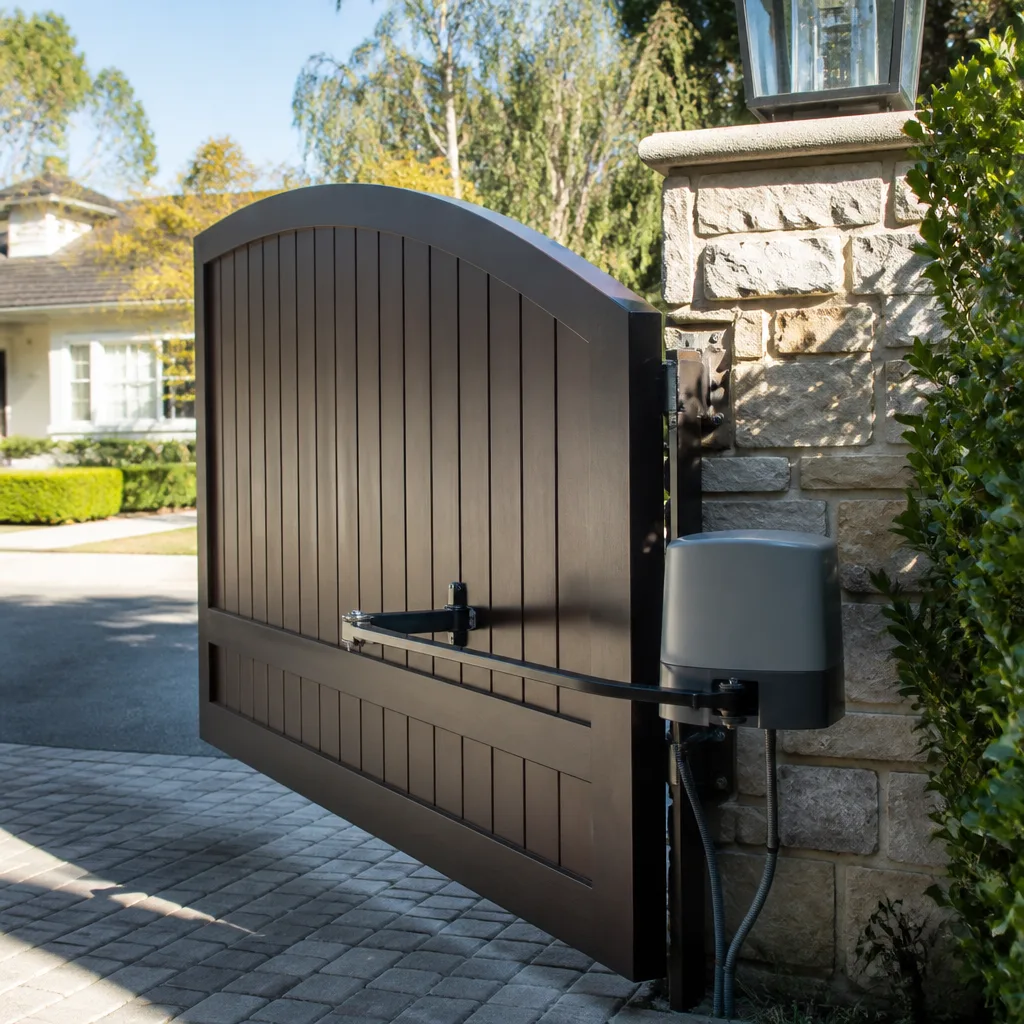
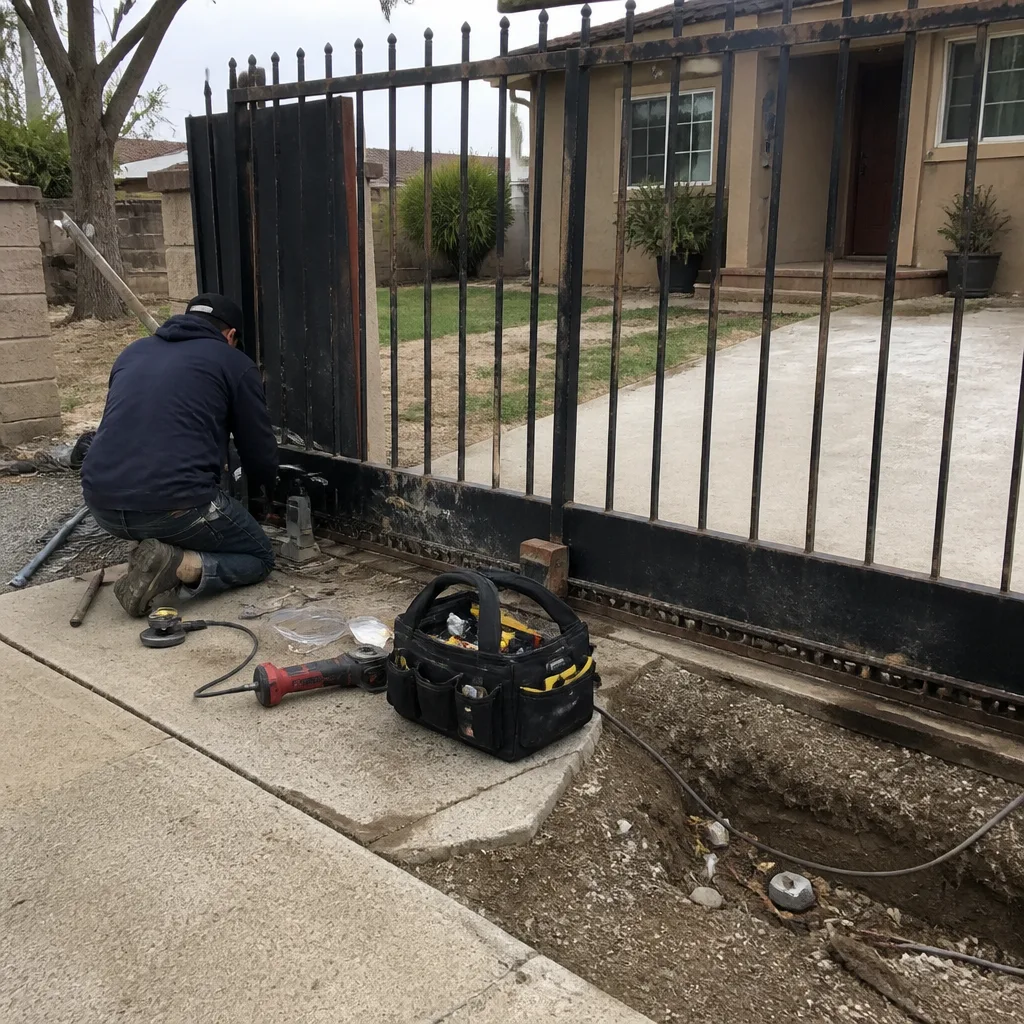 Before
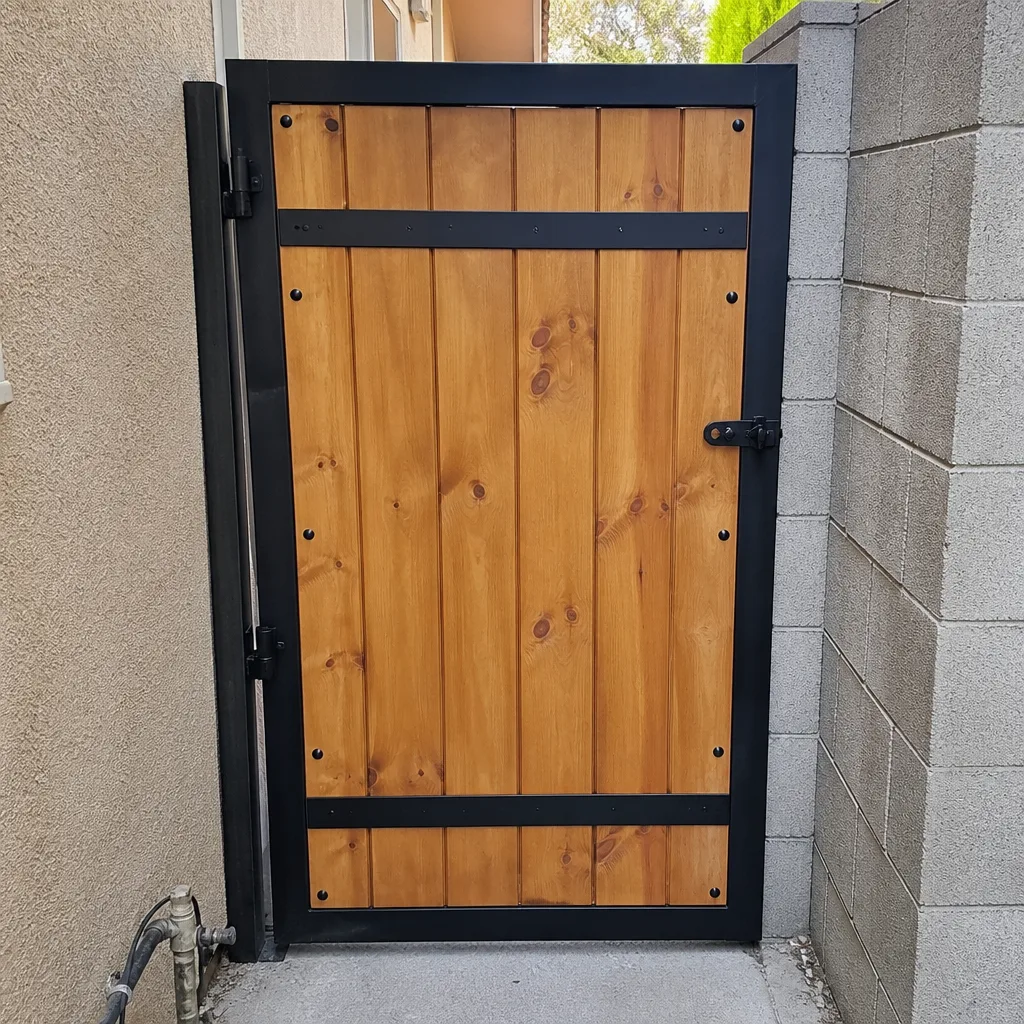 After
After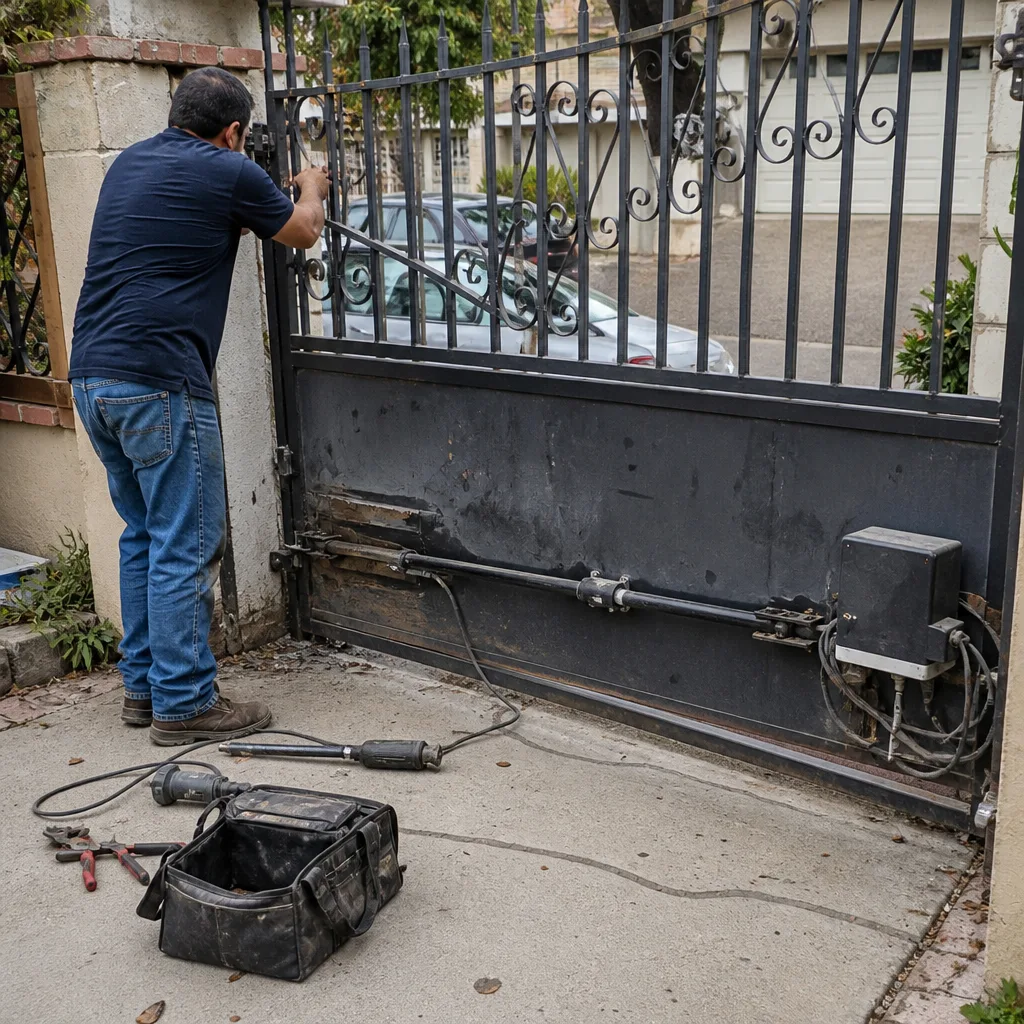 Before
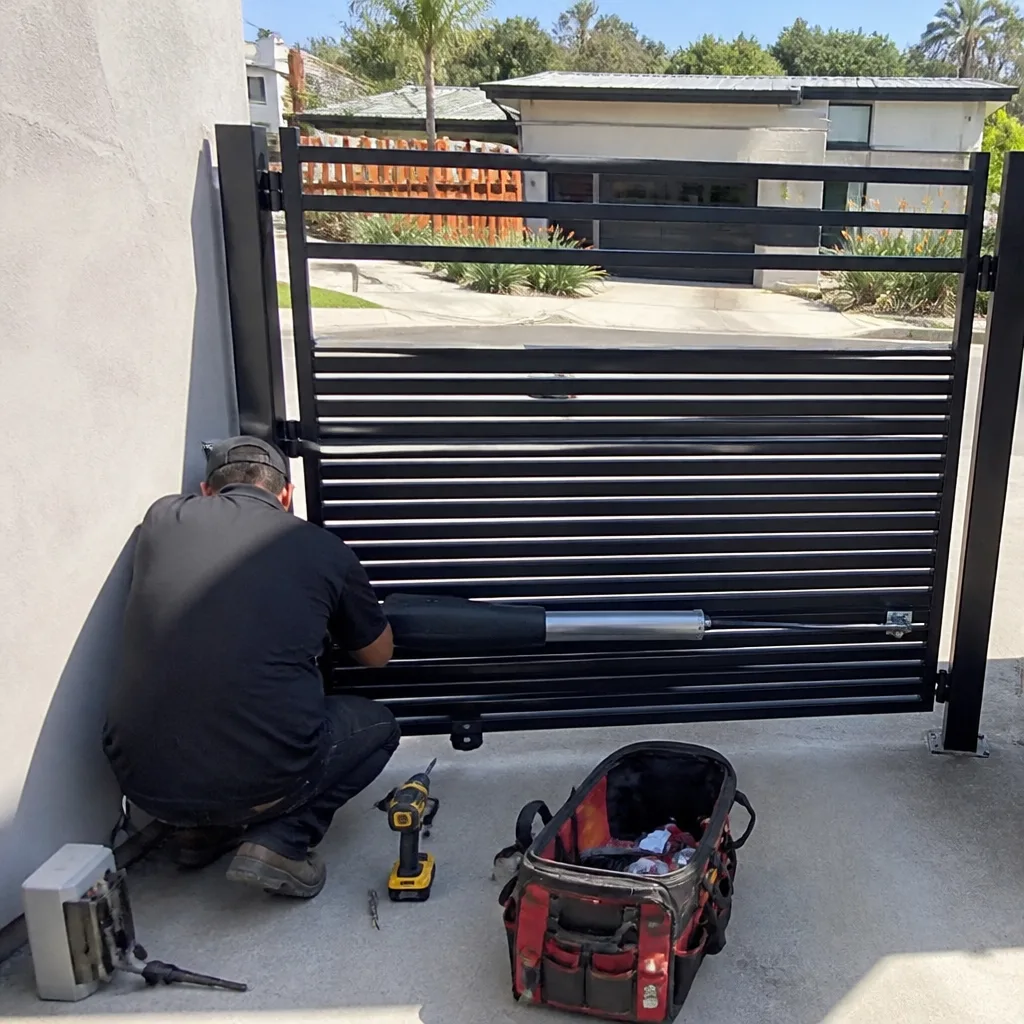 After
After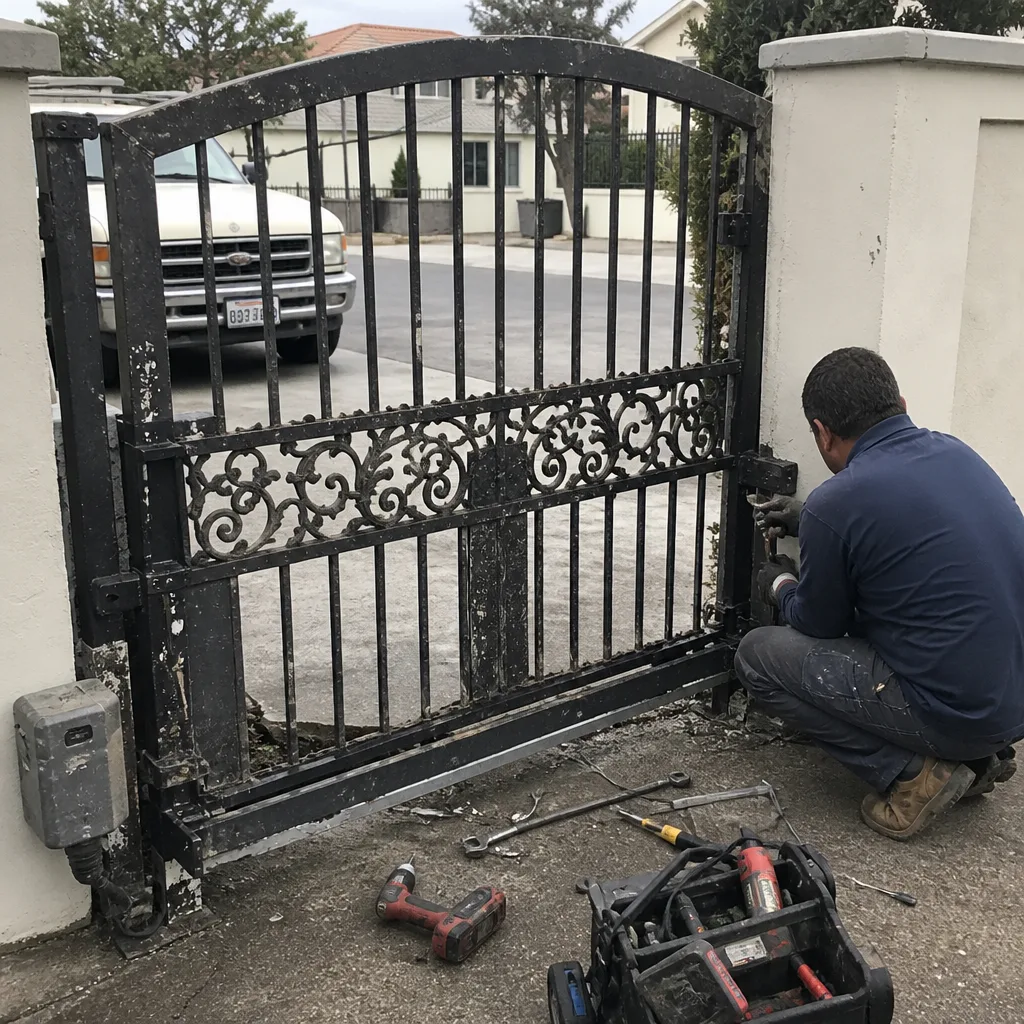 Before
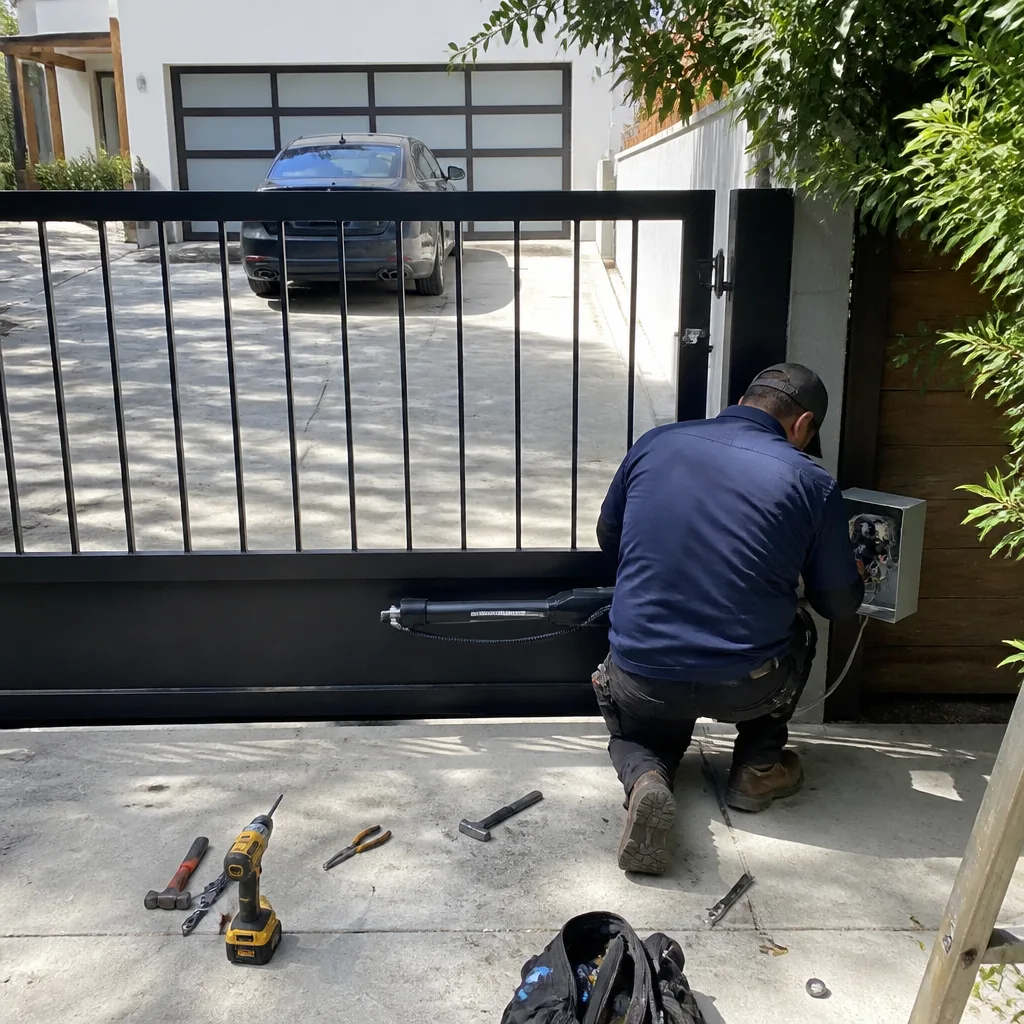 After
AfterGate Motor Repair Troubleshooting: Common Problems and How to Fix Them
Replacing a control board on a motor that actually has a bad capacitor costs four times as much and fixes nothing. We’ve seen it in Los Angeles more times than we can count – a homeowner swaps a $400 board when a $12 fuse was the real culprit, or replaces an entire Ghost Controls operator when dried leaves had simply jammed the limit switch cam. The diagnostic sequence matters more than the repair itself. This guide gives you a five-minute triage method to sort gate motor problems into their true source categories – power, mechanical, or logic – so you stop throwing parts at symptoms you haven’t identified. For professional help, see our Gate Motor Repair services.
Quick Answer
Most gate motor failures in Los Angeles fall into three categories: power supply issues (dead outlet, tripped breaker, corroded transformer), mechanical problems (obstruction, binding hinges, debris in the track), or logic/control failures (bad limit switch, failed capacitor, damaged circuit board). The fastest fix is usually the right one – check power first, then mechanical freedom, then board-level symptoms in that exact order. Misdiagnosing the category leads to unnecessary parts and doubled labor.
Table of Contents
- The Three-Minute Triage: Power, Mechanical, or Logic
- The Four Common Symptoms and What They Point To
- Using the Manual Release to Isolate Motor vs. Gate Problems
- Limit Switch Failure vs. Sensor Obstruction
- What You Can Safely Check Yourself
- What Gate Motor Repair Costs in Los Angeles
- Common Mistakes to Avoid
- When to Call a Professional
- Frequently Asked Questions
- The Bottom Line
The Three-Minute Triage: Power, Mechanical, or Logic
Every gate motor problem starts in one of three places. Skip this order and you’ll replace parts that were never broken.
Step 1: Power
Gate operators draw significant current on startup – 8 to 15 amps for a typical residential swing gate, more for heavy iron driveway gates common in Hancock Park or the Hollywood Hills. That surge can trip a breaker that otherwise holds fine. Check the dedicated breaker first. Then test the outlet or hardwired junction with a multimeter if you have one. Look for 110V on residential units, or 220V on larger commercial-grade systems. In Los Angeles, we see a lot of underground conduit runs that have taken water during rare heavy rains; corrosion at the junction box kills power without tripping anything. If the motor’s LED panel is completely dark, you’re almost certainly in the power category.
Step 2: Mechanical
Disconnect power and try to move the gate by hand after engaging the manual release (detailed in the next section). If it binds, grinds, or requires more force than you expect, the motor isn’t your problem yet. The motor is protecting itself by refusing to run against excessive load. Common mechanical culprits in Los Angeles include: sand and grit from Santa Ana winds packing into v-track rollers, hinge pins seizing from coastal salt air in Marina del Rey or San Pedro, and vegetation growth from our long growing season wedging into slide gate chain channels.
Step 3: Logic
If power is clean and the gate moves freely by hand, the problem lives in the control system. This is where you find failed capacitors, burnt relays, corrupted limit switch cams, or damaged circuit boards from power surges. Los Angeles sees more than its share of board damage from grid fluctuations during heat waves when A/C load spikes across the basin.
Here’s the critical point: a mechanical problem can look like a logic problem. A gate that opens six inches and stops might have a bad limit switch – or it might have a bent track that triggers the obstruction sensor. The triage order prevents this misdiagnosis.
The Four Common Symptoms and What They Point To
Gate motors fail in predictable patterns. The symptom tells you where to look first.
Symptom 1: Won’t Open at All
Check power first – breaker, outlet, transformer output. If the motor clicks but doesn’t turn, test the start capacitor. A failed capacitor is common on single-phase motors older than five years. The motor hums or clicks because the start winding can’t engage without the capacitor’s phase shift. On Mighty Mule and Elite residential operators, this is a $15 – $30 part that takes ten minutes to swap if you’ve confirmed it’s the issue. Learn about Gate Motor Repair Warning Signs Every Homeowner Should Know to catch failures early. Don’t guess – test with a capacitor meter or swap in a known-good unit of matching microfarad rating.
If there’s no click, no hum, no LED, trace power from the panel backward. We’ve found rodent-chewed low-voltage wiring in crawl spaces from Los Feliz to Encino more often than you’d expect.
Symptom 2: Opens Partway and Stops
This is the most misdiagnosed symptom because three different failures produce it. Work through this list in order:
- Obstruction sensor triggered falsely: Check photo eyes for misalignment, spider webs, or direct sun striking the receiver. In Los Angeles, afternoon sun from the west can blind a photo eye on an east-west gate orientation. A simple cardboard hood fixes this.
- Limit switch not counting properly: The motor’s internal cam or magnetic sensor isn’t tracking position. The board thinks the gate has reached full travel when it hasn’t. Common on DoorKing and FAAC operators after years of vibration.
- Mechanical binding that only appears under motor load: The gate moves freely by hand because you apply steady pressure. The motor’s intermittent torque catches a tight spot. Check v-track alignment and roller condition.
Symptom 3: Reverses Immediately After Starting
This almost always means the obstruction circuit is active. The motor starts, the current spike from mechanical load or a programmed sensitivity threshold triggers the safety logic, and the board reverses direction. Before adjusting sensitivity settings, verify the gate actually moves freely. Increasing sensitivity to override a mechanical problem burns out the motor. We’ve replaced operators in Pasadena because a previous “technician” cranked the force setting instead of fixing a $20 hinge.
Symptom 4: Motor Runs Continuously
The limit switch has failed to register the end of travel, or the relay on the control board is stuck closed. This is genuinely dangerous – the motor can overheat, damage the gate hardware, or in extreme cases start a fire. Cut power at the breaker immediately. The fix is almost always a limit switch replacement or board relay repair. On older Ghost Controls units, we’ve seen the magnetic hall sensor detach from its mount and simply stop reading the magnet passage.
Using the Manual Release to Isolate Motor vs. Gate Problems
This step separates real technicians from parts-changers, and it’s the single most useful test a homeowner can perform.
Every gate operator has a manual release mechanism – typically a key-turned lever, a pull handle, or a release bolt. Engage it according to your manufacturer’s procedure. This mechanically disconnects the motor from the gate drive, whether that’s a rack-and-pinion, chain, or articulating arm.
Now try to move the gate by hand.
- Gate moves smoothly, full travel, both directions: The problem is in the motor, control board, or wiring. The mechanical system is sound.
- Gate binds, catches, or requires excessive force: Fix the mechanical problem first. Lubricate hinges, clear debris, adjust track alignment, or replace seized rollers. Running the motor against this load will destroy it.
- Gate moves freely one direction but not the other: Look for a damaged hinge, bent track section, or obstruction that only affects that travel direction. We’ve found this specifically on uphill driveway gates in the Hollywood Hills where the downhill hinge takes all the load.
In Los Angeles, slide gates on v-track are particularly prone to debris accumulation in the lower track channel. Leaves from our abundant street trees, combined with dry summer dust, form a packed abrasive layer that rollers climb over with difficulty. The motor feels this as increased load and may fault out. Clean the track with a wire brush and shop vacuum before any electrical diagnosis.
After mechanical freedom is confirmed, re-engage the motor and test. If the problem persists, you’ve isolated it to power or logic.
Limit Switch Failure vs. Sensor Obstruction
These two failures produce nearly identical symptoms: gate stops short, reverses unexpectedly, or runs past its stop point. The repair cost differs by a factor of three, so distinguishing them matters.
Limit Switch Failure
The limit switch tells the control board where the gate is in its travel. Older systems use mechanical cam switches; newer units use magnetic hall sensors or optical encoders. When the switch fails, the board loses position reference.
Signs of limit switch failure:
- Gate stops at slightly different positions each cycle
- Gate runs past the mechanical stop and strains against it
- LED display shows an error code specific to limit or position (varies by brand – consult your manual)
- Problem occurs consistently, regardless of time of day or lighting conditions
On DoorKing 9100 series operators, the limit switch assembly is a replaceable module. On some FAAC units, it’s integrated into the motor housing and requires partial disassembly. The part runs $40 – $120; labor adds 45 – 90 minutes.
Sensor Obstruction
Photo eyes and safety edges are external devices that tell the board to stop or reverse when they detect an obstacle. When they’re misaligned, dirty, or falsely triggered, the gate behaves as if it has hit something.
Signs of sensor obstruction:
- Problem varies with time of day (sun angle affects photo eyes)
- Problem improves after cleaning lenses or removing visible debris
- Gate reverses from a consistent position where a sensor is located, not from random positions
- Disconnecting the safety loop temporarily allows normal operation (test only – reconnect immediately)
In Los Angeles, we see a lot of photo eye problems from two sources: direct afternoon sun on west-facing receivers, and landscaping overgrowth from our year-round growing season. A bougainvillea that was two feet from the sensor in January will block it by June. Trim vegetation back 18 inches from all safety devices.
The test that separates them: temporarily bypass the safety loop at the terminal strip (document your wiring first, and reconnect immediately after test). If the gate runs normally with safeties bypassed, the problem is external sensor or wiring. If it still faults, the problem is limit switch or board logic.
What You Can Safely Check Yourself
Some troubleshooting steps are genuinely safe for homeowners. Others involve live electrical work that can kill you or damage equipment worth thousands of dollars. Here’s the line.
Safe to Do Yourself
- Breaker and outlet check: No tools required. Reset breakers firmly. Test outlet with a lamp or phone charger.
- Visual inspection of photo eyes: Clean lenses with glass cleaner and a soft cloth. Check alignment – both units should show steady LEDs, not blinking. Adjust mounting brackets by hand.
- Manual release and hand-move test: Described above. No electrical exposure.
- Track and debris clearing: Brush out v-track, remove leaves from chain channel, trim back vegetation. Power off at breaker first.
- Fuse check on control board: Many boards have a visible automotive-style fuse. Pull and inspect for broken element. Replace only with identical amperage.
Stop and Call a Technician
Do not proceed past this point without training and proper equipment. Capacitors store lethal charge even with power disconnected. Control boards operate at line voltage with exposed terminals. The start capacitor on a residential gate operator can deliver a shock that stops your heart. The wiring between transformer, board, and motor must be tested live to isolate certain faults. Board-level diagnosis requires understanding of relay logic, motor winding resistance, and firmware error codes specific to each manufacturer.
We work on nine gate motor brands – LiftMaster, FAAC, BFT, Linear, Viking, Ghost Controls, DoorKing, Elite, and Mighty Mule – and each has proprietary diagnostic procedures. A “universal” approach will miss brand-specific failure modes.
What Gate Motor Repair Costs in Los Angeles
Price transparency is part of The Garrison Standard. Here’s what gate motor repair typically runs in the Los Angeles market, based on our service data. See our full Gate Repair Cost Breakdown: The Los Angeles Homeowner’s Reference for 2026 for detailed pricing.
| Repair Type | Typical Range | Notes |
|---|---|---|
| Capacitor replacement | $120 – $180 | Part + labor, most brands |
| Limit switch repair/replacement | $200 – $350 | Varies by access and brand |
| Photo eye alignment or replacement | $150 – $280 | Wiring runs add cost |
| Control board replacement | $450 – $850 | Includes programming; OEM boards only |
| Full operator replacement (residential) | $1,400 – $2,800 | Slide or swing, single or dual |
| Emergency service call (after hours) | $195 – $295 | Base trip charge, Los Angeles metro |
Every gate motor repair in Los Angeles we perform starts with a written price before any work begins. The number doesn’t move once the job is open. If we diagnose a failed capacitor and quote $145, that’s the invoice. No “while we’re in there” additions, no parts markup surprises.
Our 365-Day Done Right Promise covers every repair. If the same symptom returns within a year, we come back free. No argument, no charge. That’s in writing on every ticket.
Common Mistakes to Avoid
- Replacing the board before testing power: A $600 board swap that needed a $4 fuse teaches an expensive lesson. We see this aftermath regularly in Brentwood and Bel Air, where previous service companies threw parts at symptoms.
- Adjusting force settings to overcome mechanical binding: This burns out the motor and creates a safety hazard. The gate should move freely before any sensitivity adjustment.
- Ignoring the manual release test: Skipping this five-minute step leads to misdiagnosing a binding hinge as a bad limit switch. The repair costs triple.
- Using aftermarket control boards: Generic boards often lack the firmware for specific safety features. We’ve replaced failed aftermarket units in Los Angeles that lasted eight months. We use OEM parts matched to your brand.
- DIY capacitor replacement without discharge procedure: Start capacitors hold lethal voltage. Even with power off, a charged capacitor can kill. This is not a YouTube tutorial job.
- Neglecting seasonal maintenance: Los Angeles dust, Santa Ana grit, and occasional rain corrosion accelerate wear. A $180 annual service call prevents $800 failures.
- Calling a general handyman for gate motor work: Generalists lack brand-specific training and often don’t carry the right parts. The gate sits half-fixed for weeks. Gate repair in Los Angeles requires gate-specific expertise.
When to Call a Professional
Call a technician when you’ve completed the safe checks – breaker, visual inspection, manual release test – and the problem persists. Specifically: any work inside the operator housing with power present, capacitor testing or replacement, board-level diagnosis, motor winding resistance testing, or programming new limit positions after repair.
Also call if the gate is a security-critical access point for a multi-unit property, if the motor is under manufacturer warranty (DIY work voids it), or if you’ve already replaced one part and the symptom remains. Sequential parts-swapping without diagnosis gets expensive fast.
Carver Gate Repair offers free estimates in Los Angeles. A uniformed, background-checked technician arrives in a marked vehicle, diagnoses the system, and delivers a written price before any work starts. Call (469) 530-2485. Phones are answered by a live person 24 hours a day, including weekends and holidays.
Frequently Asked Questions
Most residential gate motor repairs in Los Angeles range from $150 for simple fixes like photo eye realignment to $850 for control board replacement. Capacitor and limit switch repairs typically fall in the $120 – $350 range. We provide a written price before any work begins, so you know the exact cost. Call (469) 530-2485 for a free estimate.
This usually means either a falsely triggered safety sensor or a failing limit switch. Check photo eyes for alignment and debris first – this is the most common cause and the easiest fix. If the gate stops at slightly different positions each time, the limit switch is likely not tracking position properly. A technician can distinguish these with a brief on-site test.
You can safely check breakers, clean photo eyes, clear track debris, and perform the manual release test. Do not attempt capacitor replacement, board work, or live voltage testing – these carry electrocution risk and can damage expensive components. When in doubt, call a trained technician.
A quality residential gate operator typically lasts 10 – 15 years with proper maintenance. Los Angeles climate factors – dust, salt air near the coast, and intense UV exposure on control enclosures – can shorten this if maintenance is neglected. Annual service including lubrication, safety device testing, and enclosure seal inspection extends service life significantly.
The limit switch has failed to signal the end of travel, or a relay on the control board is stuck closed. This is a genuine safety hazard – cut power at the breaker immediately to prevent motor burnout or fire risk. The repair requires limit switch replacement or board-level repair by a qualified technician.
Our technicians are trained on nine major brands: LiftMaster, FAAC, BFT, Linear, Viking, Ghost Controls, DoorKing, Elite, and Mighty Mule. We carry common parts for each and can source same-day for less common failures. If you’re considering new gate installation in Los Angeles, we can also recommend the right operator for your specific gate type and usage pattern.
The Bottom Line
Gate motor troubleshooting succeeds when you respect the sequence: power first, mechanical second, logic last. The manual release test isolates motor from gate problems in under two minutes. Limit switch failures and sensor obstructions look alike but repair differently – test, don’t guess. Capacitor and board work belongs to trained technicians with proper equipment. In Los Angeles, where gate security matters for property access and safety, a methodical diagnostic approach saves money and prevents repeat failures. The right fix, done once, beats three wrong fixes every time.
Written by Lonnie Burke, Owner at Carver Gate Repair, serving Los Angeles since 2008.