
Last updated October 10, 2026
Free on-site gate assessment - hinges, posts, and your LiftMaster or Nice gate operator checked before anything is quoted
The assessment is free and the quote is the invoice.
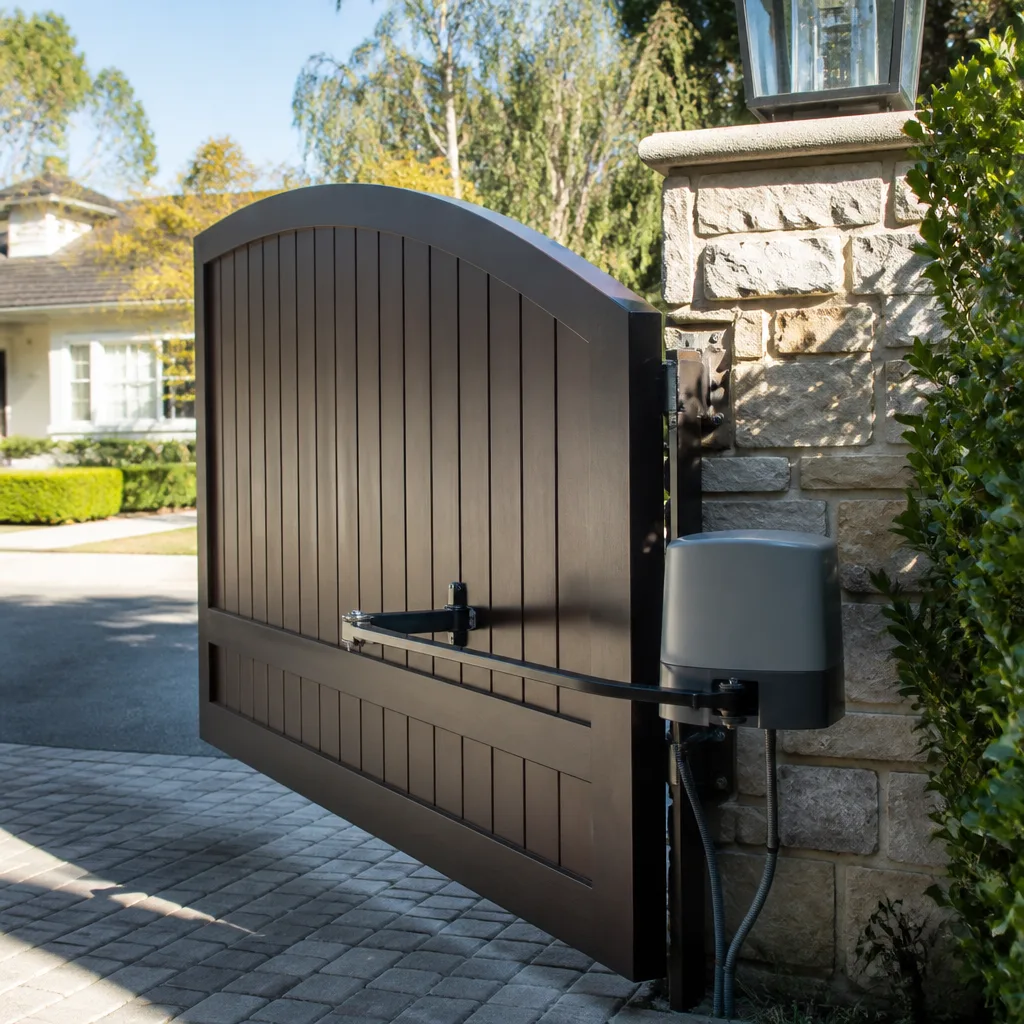
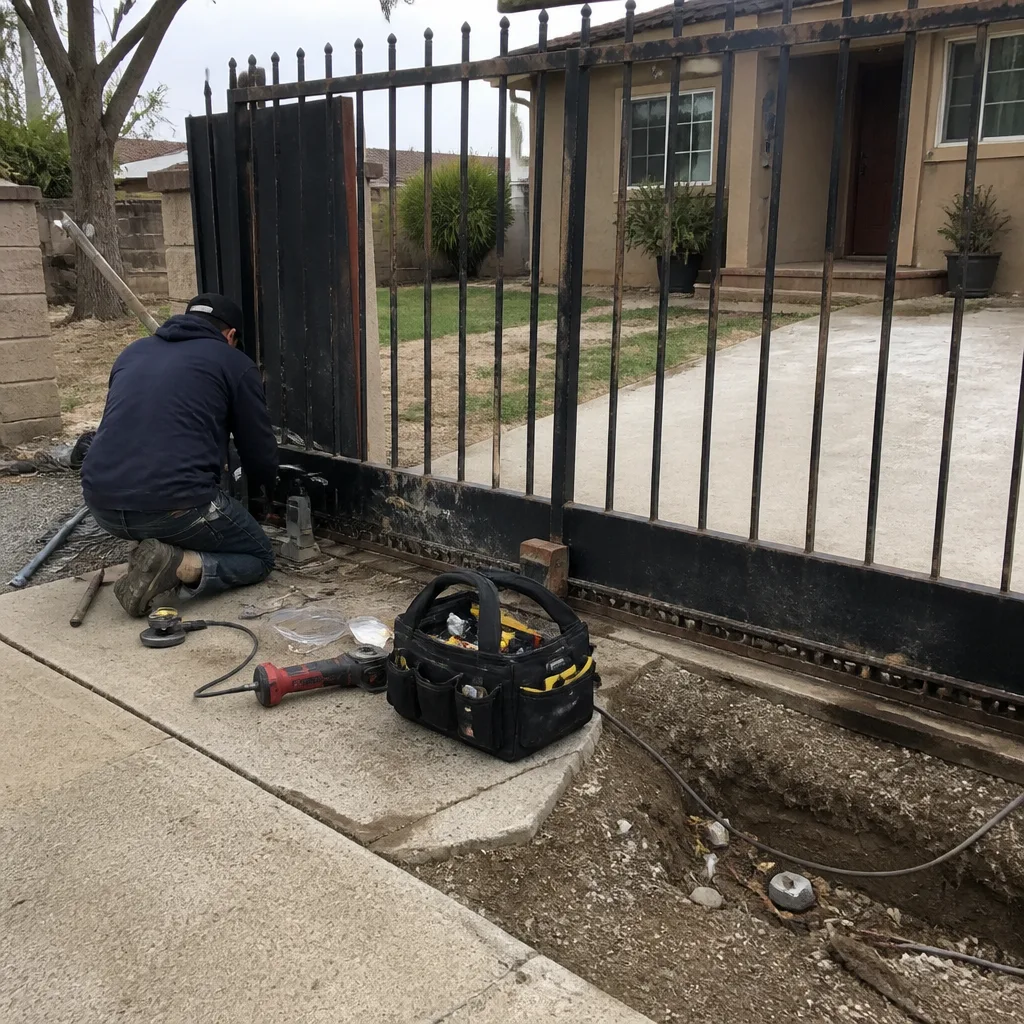 Before
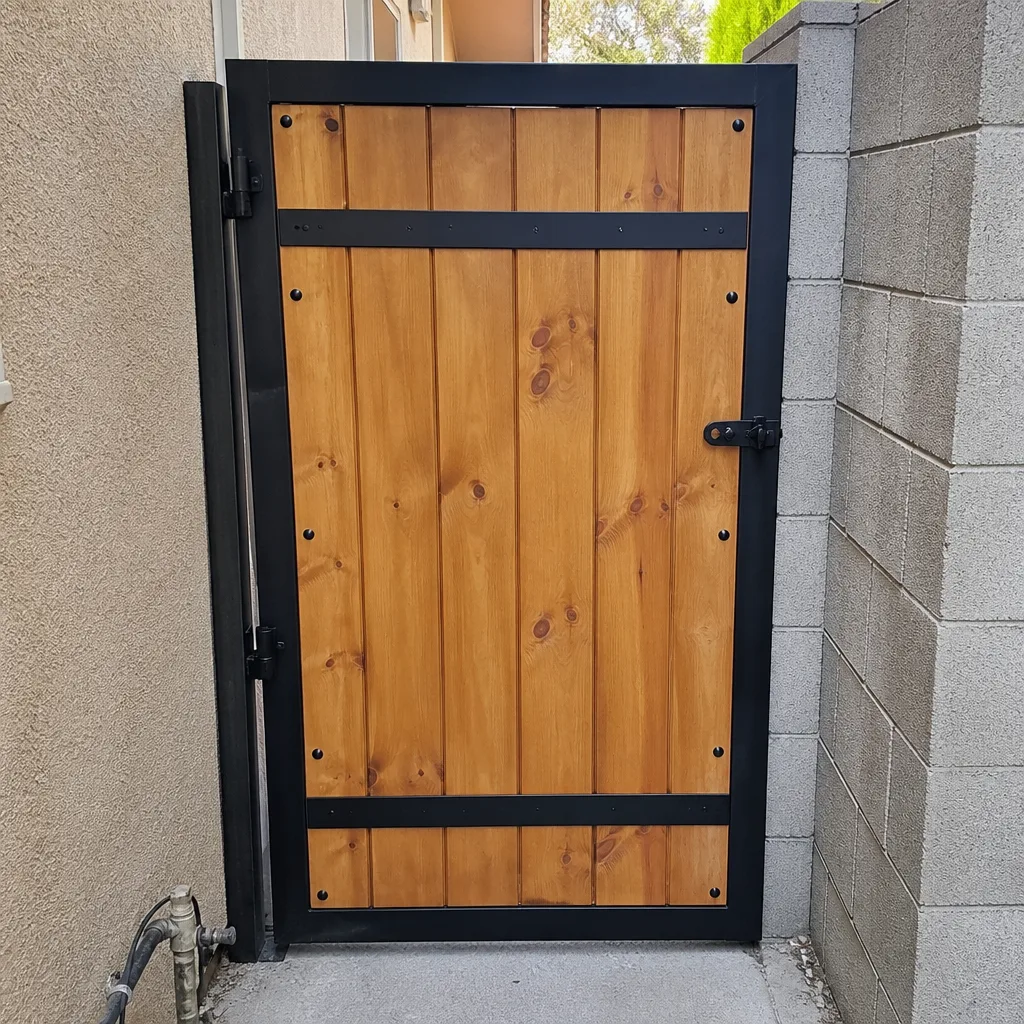 After
After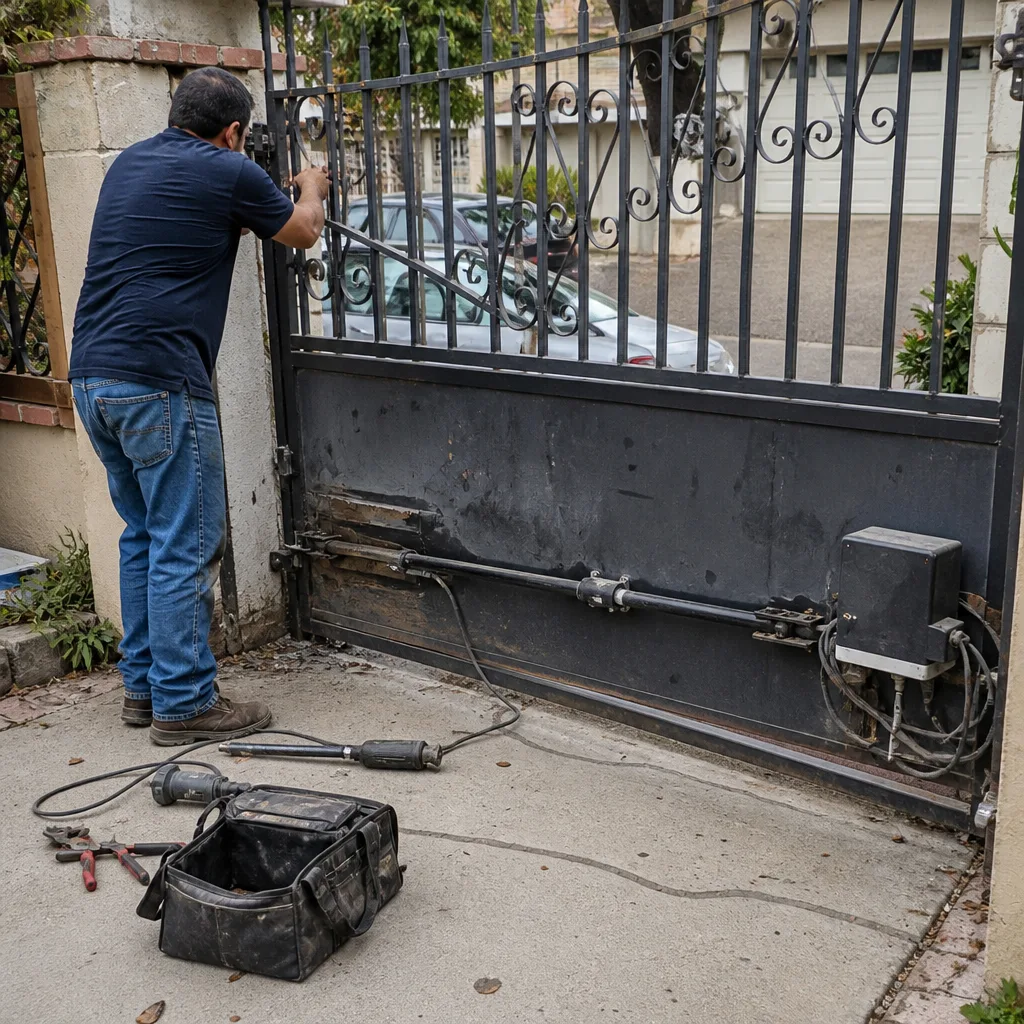 Before
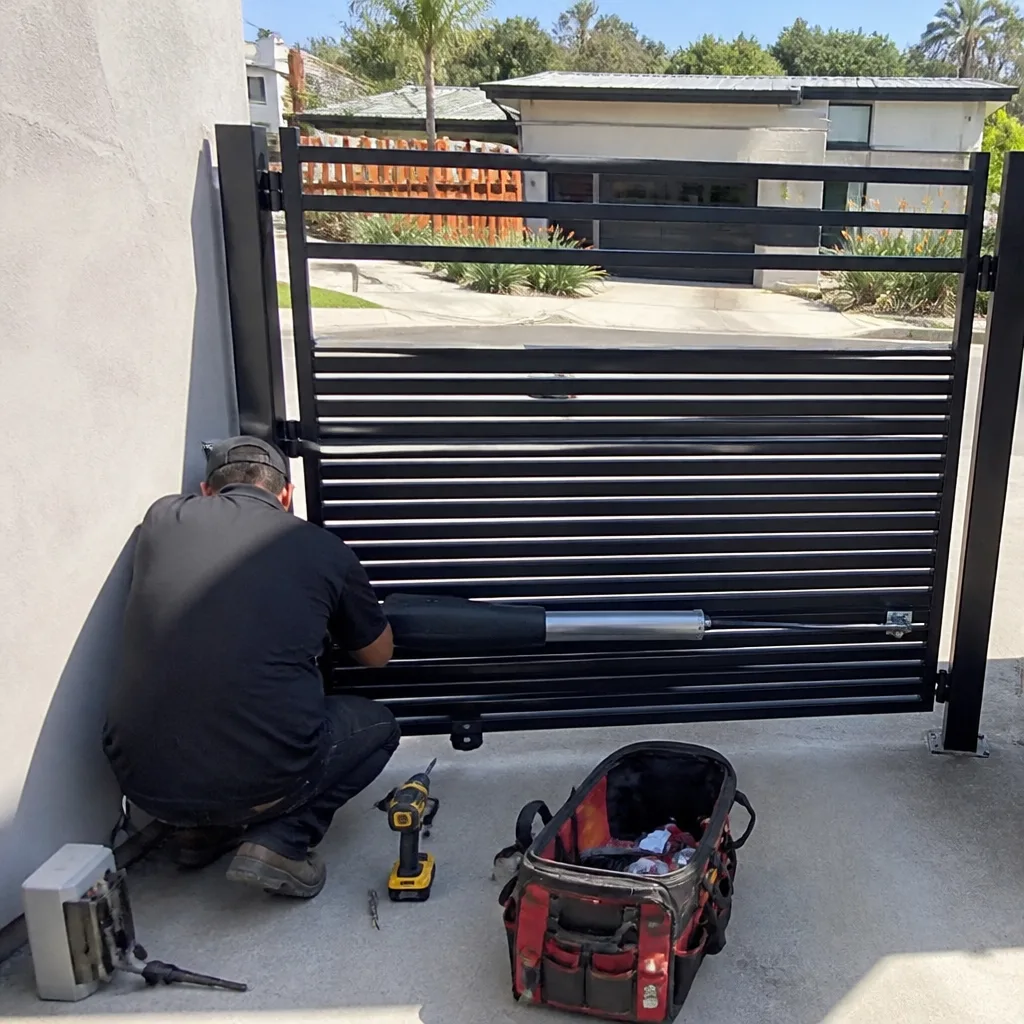 After
After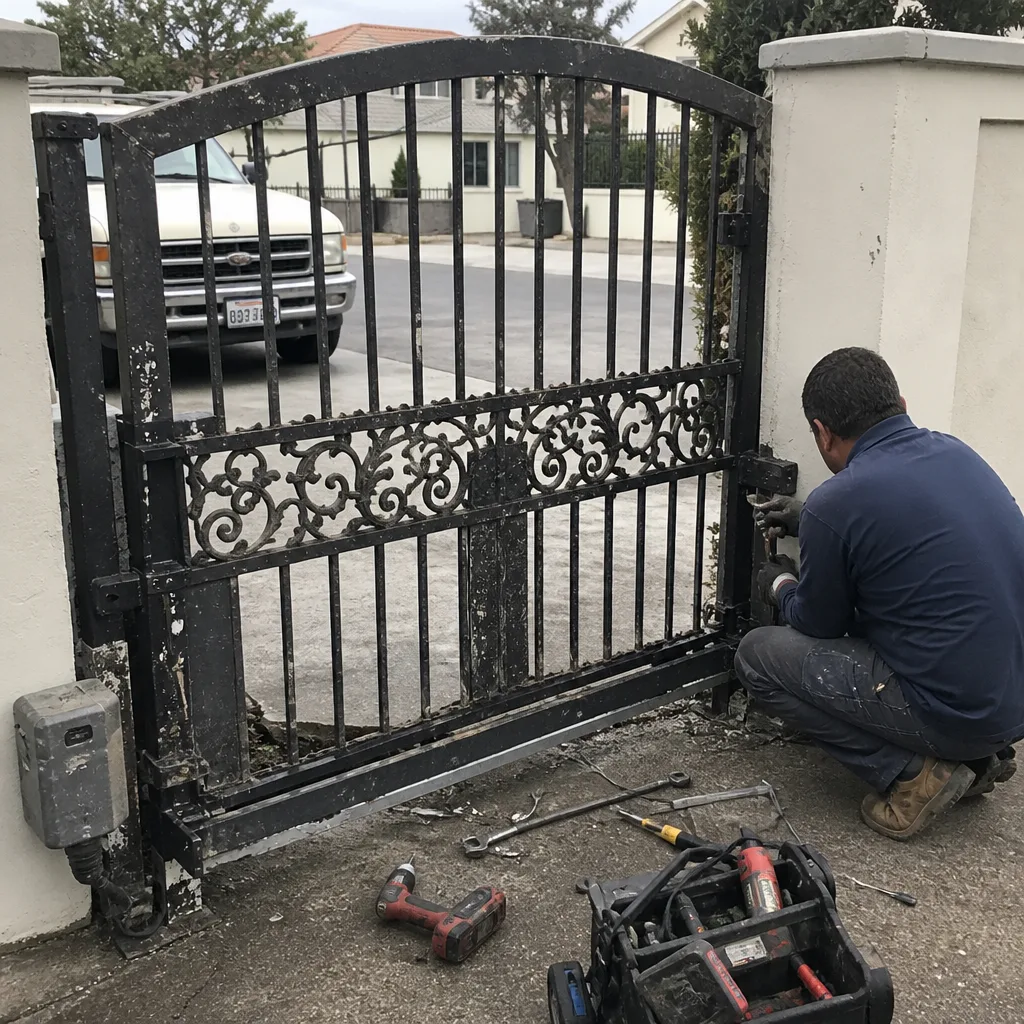 Before
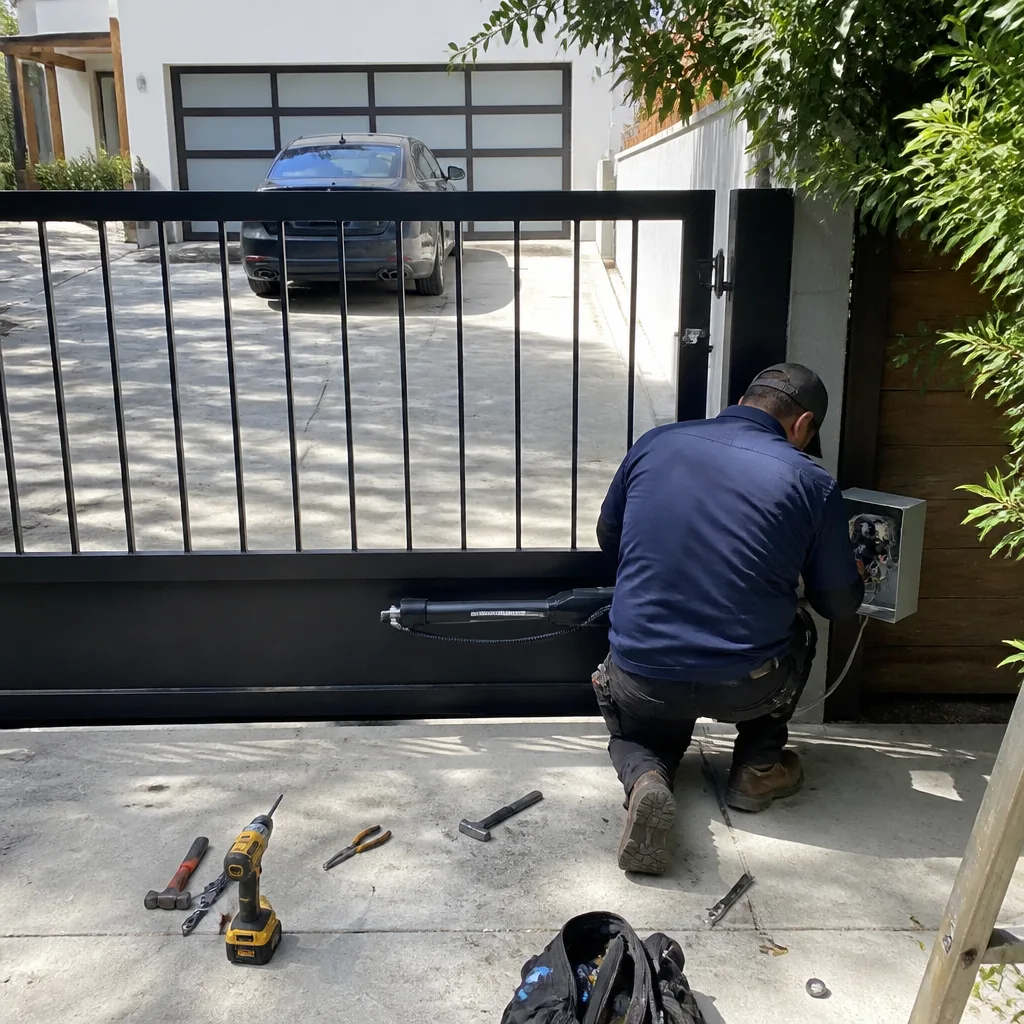 After
AfterThe Complete Guide to Gate Repair in Los Angeles
Most gate service calls in Los Angeles are repeat visits, not because the first technician was dishonest, but because they fixed the symptom without diagnosing the cause. A dead motor gets replaced while the misaligned track that ground it to failure goes untouched. Sixty days later, the new motor fails too. This guide maps the full chain of gate system failures, from the concrete footing to the control board, so you know what you’re actually paying for when you call for our Gate Repair services in Los Angeles.
Quick Answer
Gate repair in Los Angeles typically costs between $180 and $650 for mechanical fixes, and $450 to $1,400 for motor or control board replacement, with most residential repairs completed in one visit. A proper repair diagnoses all five system components – post, panel, hardware, operator, and control board – because fixing one without checking the others creates a failure chain that brings the technician back within months, as we explore in our guide to DIY vs Professional Gate Installation: What’s Safe to Do Yourself. In Los Angeles, coastal salt air, hillside clay soil expansion, and wildfire ash infiltration accelerate specific failure types that generalist contractors often miss.
Table of Contents
- The Five-Component Failure Chain
- How Los Angeles Conditions Destroy Gates
- What a Proper Diagnosis Looks Like
- Repair vs. Adjustment: Know What You’re Buying
- How to Read a Gate Repair Invoice
- What Gate Repair Costs in Los Angeles
- Motor Brands and Parts Availability
- Common Mistakes to Avoid
- When to Call a Professional
- Frequently Asked Questions
- The Bottom Line
The Five-Component Failure Chain
A gate is not a door. It’s a mechanical system with five interdependent components, and a failure in any one of them loads stress onto the others. Generalist contractors treat gate repair like fixing a stuck door: they address what’s obviously broken and leave. At Carver Gate Repair home, we’ve learned that approach guarantees a callback.
Here’s how the chain works, and why skipping steps creates repeat failures:
- Post and footing. The concrete pier that anchors your gate must be plumb and deep enough to resist lateral load. In Los Angeles hillside neighborhoods like Laurel Canyon or the Hollywood Hills, clay soil expansion during winter rains and contraction during dry summers tilts posts fractionally. That tilt transfers to the gate panel, binding the hardware, overloading the motor. A technician who replaces your motor without checking post plumb with a level is setting you up for failure.
- Panel or frame. Steel gates in coastal Los Angeles neighborhoods like Venice or Playa del Rey corrode from salt air at weld points and bottom rails. Aluminum gates crack at stress risers. Wood gates in the San Fernando Valley dry-rot where sprinklers hit them daily. A twisted or corroded panel doesn’t move true, so the motor strains against the misalignment every cycle.
- Hardware (hinges, rollers, track, chain/belt). This is where most “repairs” should actually be adjustments. Hinge pins wear oval. V-groove rollers flat-spot. Slide gate track accumulates debris that the operator fights through. In our experience across Los Angeles, hardware problems cause roughly 40% of motor failures that get misdiagnosed as bad operators.
- Operator (motor). The motor doesn’t exist in isolation. It’s sized to the gate’s weight and duty cycle. A 1/2-horsepower residential swing operator pushing a 600-pound gate with binding hinges will burn out its capacitor or overheat its thermal cutoff. The motor is often the victim, not the criminal.
- Control board and safety devices. The board interprets inputs from loop detectors, photo eyes, limit switches, and keypad commands. In Los Angeles, wildfire ash infiltration during fire season coats photo eye lenses and contaminates board connections. A technician who cleans the lens without checking board error codes hasn’t finished the job.
The Garrison Standard requires our technicians to inspect all five components on every service call, even when the customer only reported one symptom. That discipline is why our 365-Day Done Right Promise holds up.
How Los Angeles Conditions Destroy Gates
Los Angeles presents a stacked deck of environmental stressors that gate systems in milder climates never face. Understanding which conditions affect your specific neighborhood helps you anticipate failures and evaluate whether a technician’s diagnosis makes sense.
Coastal salt air. Within three miles of the Pacific, airborne salt accelerates galvanic corrosion between dissimilar metals. Stainless steel hinges against mild steel frames create battery-like corrosion cells. Aluminum operators develop white oxidation on castings. In Manhattan Beach, Redondo Beach, and Malibu, we’ve replaced hinge pins that were structurally sound inland but pitted through in five years coastally. If your technician doesn’t ask how close you are to the ocean, they’re not building environmental factors into their repair plan.
Hillside clay soil expansion. The Los Angeles area sits on expansive clay soils, particularly in the Hollywood Hills, Bel Air, and Pacific Palisades. These soils swell when saturated and shrink during drought. A gate post set in a shallow footing heaves and tilts cyclically. The movement is slow enough that homeowners don’t notice until the gate starts binding or the motor fails. Proper repair requires either a deeper pier or an adjustable hinge setup, not just a new motor.
Wildfire ash and dust infiltration. Santa Ana wind events and wildfire seasons drive fine particulate into operator housings, control board enclosures, and photo eye housings. Ash is electrically conductive when moist. We’ve traced intermittent gate operation in Topanga and Calabasas to ash bridging relay contacts on control boards. Cleaning requires compressed air and contact cleaner, not just wiping the lens.
Intense UV exposure. Los Angeles averages 284 sunny days annually. UV degrades plastic gears in operators, embrittles vinyl gate components, and fades photo eye lenses until they can’t reliably detect interruption. A technician working to The Garrison Standard checks lens clarity with a meter, not just a visual glance.
Earthquake stress. Even minor seismic events shift gate posts and rack slide gates out of alignment. After significant quakes, we see clusters of service calls in the San Fernando Valley where structures settled but gates weren’t rechecked.
What a Proper Diagnosis Looks Like
A surface-level gate service visit takes 10 minutes: the technician looks, quotes a motor replacement, and leaves. A proper diagnosis following The Garrison Standard takes 30 to 45 minutes and produces documented findings you can review.
Here’s what that process looks like:
- Operational test. The technician runs the gate through full open and close cycles, listening for binding, observing speed consistency, and noting any auto-reverse behavior. In Los Angeles, we pay attention to whether the gate slows at the same point every cycle, which indicates a mechanical issue, not a motor issue.
- Post and footing inspection. Plumb checked with a 4-foot level. Footing examined for cracking or soil separation. In hillside areas, we note any recent landscaping or drainage changes that could affect soil moisture.
- Panel integrity check. Weld points, corrosion, and twist are documented. For wood gates, we probe for rot at the bottom rail and post connection.
- Hardware measurement. Hinge pin wear is checked with a dial indicator where possible. Roller condition, track alignment, and chain/belt tension are measured against manufacturer spec. For Gate Repair in Los Angeles, this step catches the misdiagnoses that lead to repeat calls.
- Operator analysis. Amp draw tested under load. Manufacturer error codes read. Thermal history checked if the unit logs it. We match our findings to the specific brand, because a LiftMaster error code means something different from a FAAC or Elite code.
- Control board and safety device verification. Photo eyes tested with an opaque object, not just a hand. Loop detector sensitivity verified. Keypad and remote signal strength checked. Board connections inspected for corrosion or ash contamination.
The output is a written finding with photographs, a written price for each recommended repair, and a clear statement of what will happen if you defer any item. No verbal quotes. No pressure. That’s The Garrison Standard.
Repair vs. Adjustment: Know What You’re Buying
This distinction accounts for a large share of homeowner complaints in the Los Angeles gate repair market. An adjustment corrects alignment, tension, or settings without replacing parts. A repair replaces failed components. The problem: adjustments are often sold as repairs at repair prices, or repairs are sold when adjustments would suffice.
Common adjustments that get billed as repairs:
- Hinge pin realignment. A binding gate often needs hinge shims or pin lubrication, not new hinges. We’ve seen Los Angeles homeowners charged $300 for hinge replacement when a $45 adjustment solved the problem.
- Track cleaning and alignment. Slide gates accumulate gravel, construction debris, and even rodent nests in the track. Cleaning and realigning the track is maintenance, not repair, unless the track itself is damaged.
- Limit switch recalibration. When a gate stops short of full open or close, the limit switches often need recalibration, not replacement. This is a 10-minute procedure with the manufacturer’s programming tool.
- Chain or belt tensioning. Operators stretch their drive trains over the first year of operation. Retensioning is normal maintenance.
Actual repairs that require parts:
- Motor capacitor or thermal overload failure
- Control board relay or processor failure
- Cracked or seized gearbox
- Broken weld on gate frame or hinge mount
- Corroded through hinge pin or roller axle
- Photo eye or loop detector replacement after physical damage
A written invoice should specify which items are adjustments and which are parts replacements. At Carver Gate Repair, we itemize both separately. If you’re comparing quotes in Los Angeles, ask specifically: “How much of this is adjustment versus parts replacement?” The answer reveals whether the technician diagnosed the system or guessed at the symptom.
How to Read a Gate Repair Invoice
Gate repair invoices in Los Angeles vary wildly in clarity. Some list a single lump sum with no breakdown. Others itemize parts you can’t verify. Here’s how to read what you’re actually paying for.
Labor line items. Should specify diagnostic time separate from repair time. A 15-minute visit with no diagnosis shouldn’t bill an hour. The Garrison Standard bills actual time, rounded to the quarter-hour, with the diagnostic period clearly noted.
Parts specification. Every part should list manufacturer, model number, and warranty term. “Control board” is not enough. “LiftMaster K001A7967 logic board, 1-year manufacturer warranty” is what you need. This matters because generic boards fail faster and void remaining operator warranty.
Adjustment vs. repair categorization. As covered above, these should be separate line items with different rates. Adjustments typically run lower because no parts are consumed.
Travel or trip charge. Common in Los Angeles due to traffic and distance between calls. Should be stated upfront, not added after the fact. Our written price includes all charges before work starts.
Warranty terms. Should specify duration, what triggers it, and who honors it. “1-year warranty” means nothing without defining whether it covers parts, labor, or both, and whether a callback incurs a trip charge. Our 365-Day Done Right Promise covers parts and labor with no trip charge for a return visit, and it’s in writing on every invoice.
Deferred work notation. A proper invoice notes what was found but not repaired, with the risk explained. This protects both parties and documents the system’s actual condition.
What Gate Repair Costs in Los Angeles
Gate repair pricing in Los Angeles reflects labor rates, parts availability for nine major brands, and the complexity of hillside or coastal installations. Below are typical ranges we see in the market. Our written price falls within these bands, agreed before any work starts.
| Service Category | Typical Range | What Affects Price |
|---|---|---|
| Diagnostic service call | $85 – $150 | Distance, after-hours, hillside access |
| Hardware adjustment (hinges, track, chain) | $120 – $280 | Number of adjustment points, rusted fasteners |
| Hinge or roller replacement | $180 – $340 | Material (steel vs. stainless), coastal corrosion |
| Operator repair (capacitor, gear set, limit switch) | $220 – $450 | Brand parts availability, amp draw testing needed |
| Operator replacement | $650 – $1,400 | HP rating, slide vs. swing, battery backup, solar |
| Control board replacement | $450 – $890 | Brand-specific board, programming complexity |
| Safety device replacement (photo eye, loop detector) | $180 – $420 | Wired vs. wireless, conduit run needed |
| Post reset or footing repair | $400 – $1,200 | Depth, concrete volume, hillside access |
These are market ranges, not our exact prices. We provide a written, itemized price after diagnosis, before any repair begins. The number does not move once the job is open. If we find additional issues during repair, we stop, explain, and get written authorization before proceeding.
For Gate Installation in Los Angeles, pricing follows a different model based on measured specifications and material selection, with a free measure and written quote.
Motor Brands and Parts Availability
Not every gate repair company in Los Angeles stocks parts for every motor brand. Many generalists carry LiftMaster and maybe one other brand, forcing them to order parts or substitute incorrectly. That delay costs you a second visit or a mismatched component.
Carver Gate Repair technicians are trained on nine brands: LiftMaster, FAAC, BFT, Linear, Viking, Ghost Controls, DoorKing, Elite, and Mighty Mule. We stock common failure parts for each, which means most repairs in Los Angeles are completed in one visit.
Brand-specific failure patterns we’ve observed:
- LiftMaster. Widespread in Los Angeles residential installations. Common issues: capacitor swelling in hot garage-mounted enclosures, and gear set wear on heavy gates where the operator was undersized. We verify HP rating against gate weight before replacing parts.
- FAAC. Italian hydraulics common in high-end Hollywood Hills and Bel Air installations. Hydraulic fluid leaks from temperature-cycled seals, and control boards are sensitive to power fluctuations. Requires specific FAAC programming tools that many generalists don’t carry.
- Mighty Mule. Popular DIY brand in suburban Los Angeles. Control boards fail more frequently than commercial brands, and the 12-month warranty is shorter than professional-grade alternatives. We discuss upgrade paths when replacement cost approaches a better unit.
- Elite. Common in commercial and multi-family Los Angeles properties. Slide gate operators work hard in these applications; we check duty cycle ratings against actual use patterns, which many technicians skip.
Using the right part for the brand matters. A generic board in a FAAC operator will function briefly, then fail when the hydraulic pressure feedback loop behaves differently than the generic board expects. For Gate Motor Repair in Los Angeles, brand-matched diagnosis and parts are non-negotiable.
Common Mistakes to Avoid
- Accepting a phone quote without inspection. No technician can diagnose a five-component system over the phone. A quote given without seeing the gate is a guess, and guesses tend to rise once the truck arrives. Insist on a diagnostic visit with a written price before work starts.
- Ignoring the post and footing. In Los Angeles hillside neighborhoods, post movement is the root cause of many motor failures. A technician who doesn’t check plumb is not doing the job. Ask specifically: “Did you check the post with a level?”
- Deferring hardware maintenance. Hinge lubrication and track cleaning prevent motor overload. Homeowners who skip annual maintenance in dusty Los Angeles neighborhoods like the San Fernando Valley replace motors twice as often.
- Hiring a general handyman for gate motor work. Gate operators involve 110V or 220V electrical connections, high-tension springs on some swing gates, and safety device integration. Los Angeles building code requires low-voltage and electrical permits for certain modifications. A handyman without gate-specific training and proper licensing creates liability and safety risks.
- Not asking about warranty terms. “It’s guaranteed” means nothing. Ask: For how long? Parts, labor, or both? Is there a trip charge for warranty callbacks? Our 365-Day Done Right Promise specifies all three in writing.
- Buying the cheapest operator replacement. A $400 internet special often lacks the torque for your gate weight, has no local parts support, and carries a 12-month warranty. Over a 10-year lifespan, the cheap unit costs more in replacements and callbacks than a properly sized professional unit installed once.
- Neglecting after wildfire season. If you live in Topanga, Calabasas, or the Santa Monica Mountains, inspect photo eyes and control board enclosures after significant ash events. Conductive ash residue causes failures months later, often diagnosed incorrectly as board defects.
When to Call a Professional
Call a gate repair professional when the gate shows intermittent operation, unusual noise, auto-reverse behavior without obstruction, or complete failure to respond. In Los Angeles, also call after any seismic event, after wildfire ash exposure, or if the gate has not been serviced in over two years.
Do not attempt to adjust high-tension spring-assisted hinges or modify electrical connections yourself, as covered in our guide to DIY vs Professional Gate Motor Repair: What’s Safe to Do Yourself. These present genuine injury and electrocution hazards. A trained technician has the tools and safety protocols to handle them.
Carver Gate Repair offers free estimates in Los Angeles. Our phones are answered by a live person 24 hours a day, including weekends and holidays. Call (469) 530-2485 to schedule a diagnostic visit with a written price before any work starts.
Frequently Asked Questions
Most residential gate repairs in Los Angeles fall between $180 and $650 for mechanical issues, and $450 to $1,400 for motor or control board replacement. The exact price depends on which of the five system components failed, your motor brand, and whether environmental factors like coastal corrosion or hillside soil movement contributed. Call (469) 530-2485 for a free diagnostic and written price before any work starts.
We complete most repairs in one visit because we stock parts for nine major brands and our technicians carry diagnostic tools for all five system components. Same-day service depends on call volume and your location within Los Angeles. Emergency calls for security-compromised gates get priority scheduling. Call (469) 530-2485 to check current availability.
Repeat motor failure usually means the root cause was never addressed. A motor burns out because it’s working against binding hinges, a misaligned track, a tilting post, or an undersized specification for your gate weight. The first technician replaced the victim, not the criminal. Our diagnostic checks all five components to break the failure chain.
Simple repairs to existing gates generally do not require permits. However, electrical modifications to the operator supply, new low-voltage safety device installations, and structural changes to the post or footing may trigger Los Angeles building code requirements. We note permit requirements in our written price when they apply, and we do not perform work that violates code.
Our 365-Day Done Right Promise covers parts and labor for a full year from the date of service, with no trip charge for return visits if the repair fails. Standard manufacturer warranties typically cover parts only, for 12 to 24 months, and do not include labor or travel. Our guarantee is in writing on every invoice, not implied or verbal.
Ask which brands they service, whether they stock parts for your specific model, and if they have the manufacturer’s programming tools. Many Los Angeles technicians work primarily on LiftMaster and will order parts or guess at settings for FAAC, BFT, or other brands. We train on nine brands and stock common failure parts for each.
The Bottom Line
Gate repair in Los Angeles is a system diagnosis, not a part swap. The five components – post, panel, hardware, operator, and control board – create a failure chain that generalist contractors misdiagnose by fixing only what’s obviously broken. Coastal salt air, hillside clay soil, wildfire ash, and intense UV accelerate specific failures that require environmental awareness, not just mechanical skill. A proper repair produces written findings, a written price before work starts, and a guarantee that covers the full system. For more guides & resources, visit our blog. Anything less is a patch that buys you 60 days.
Written by Lonnie Burke, Owner at Carver Gate Repair, serving Los Angeles since 2008.