
Last updated October 10, 2026
Free on-site gate assessment - hinges, posts, and your LiftMaster or Nice gate operator checked before anything is quoted
The assessment is free and the quote is the invoice.
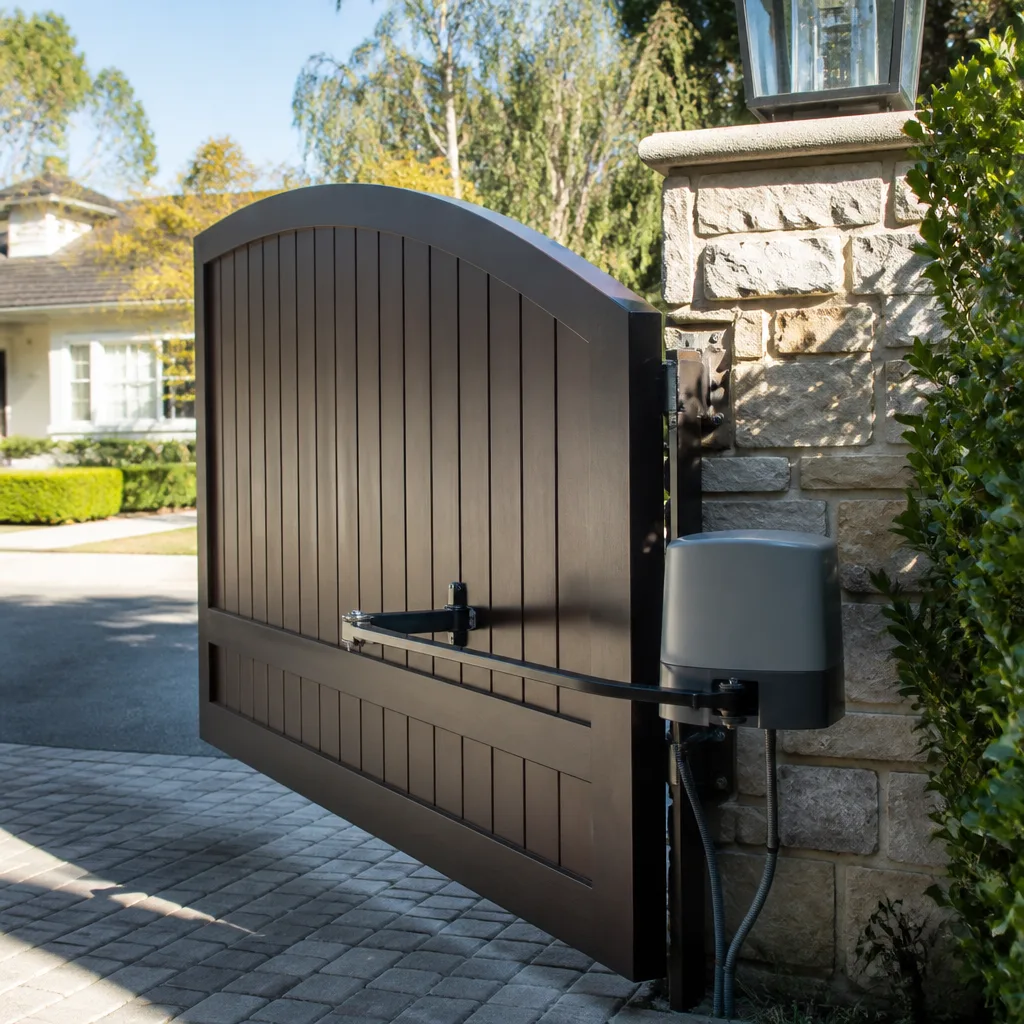
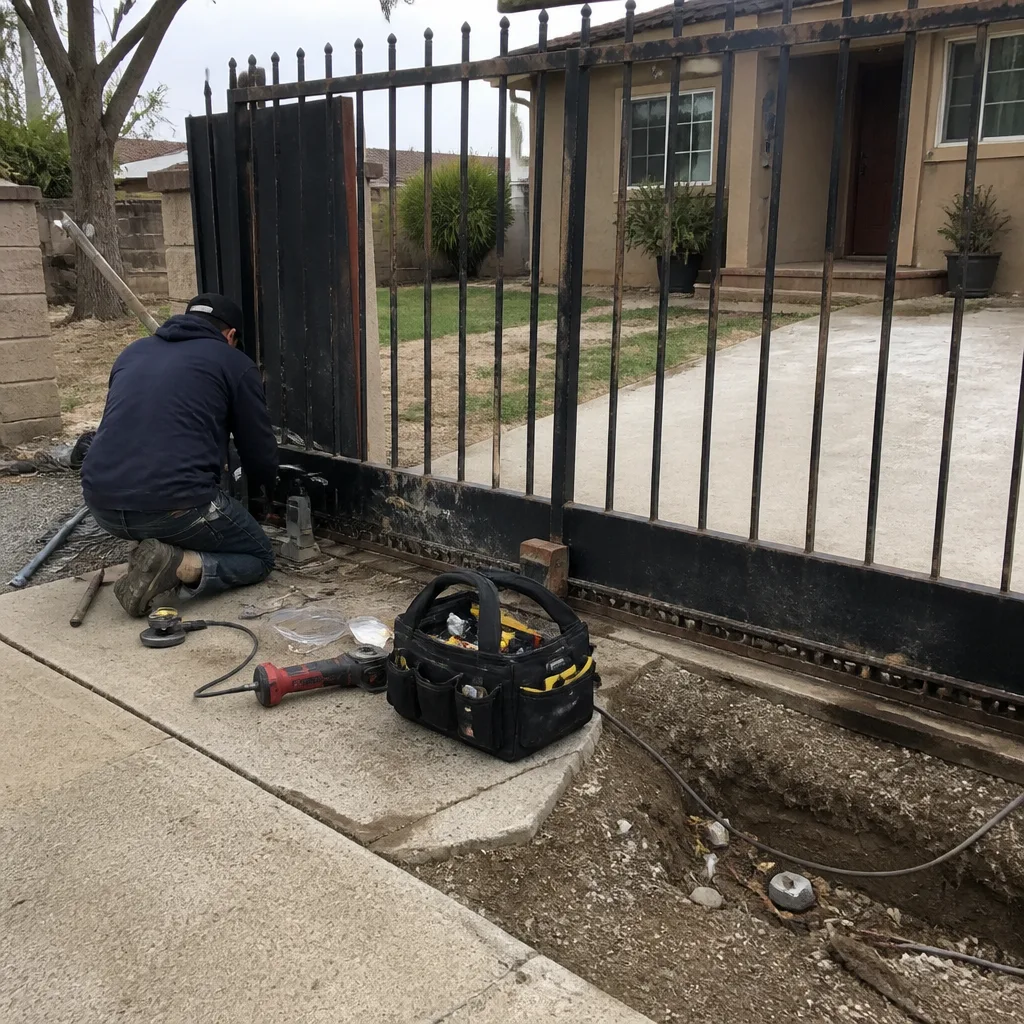 Before
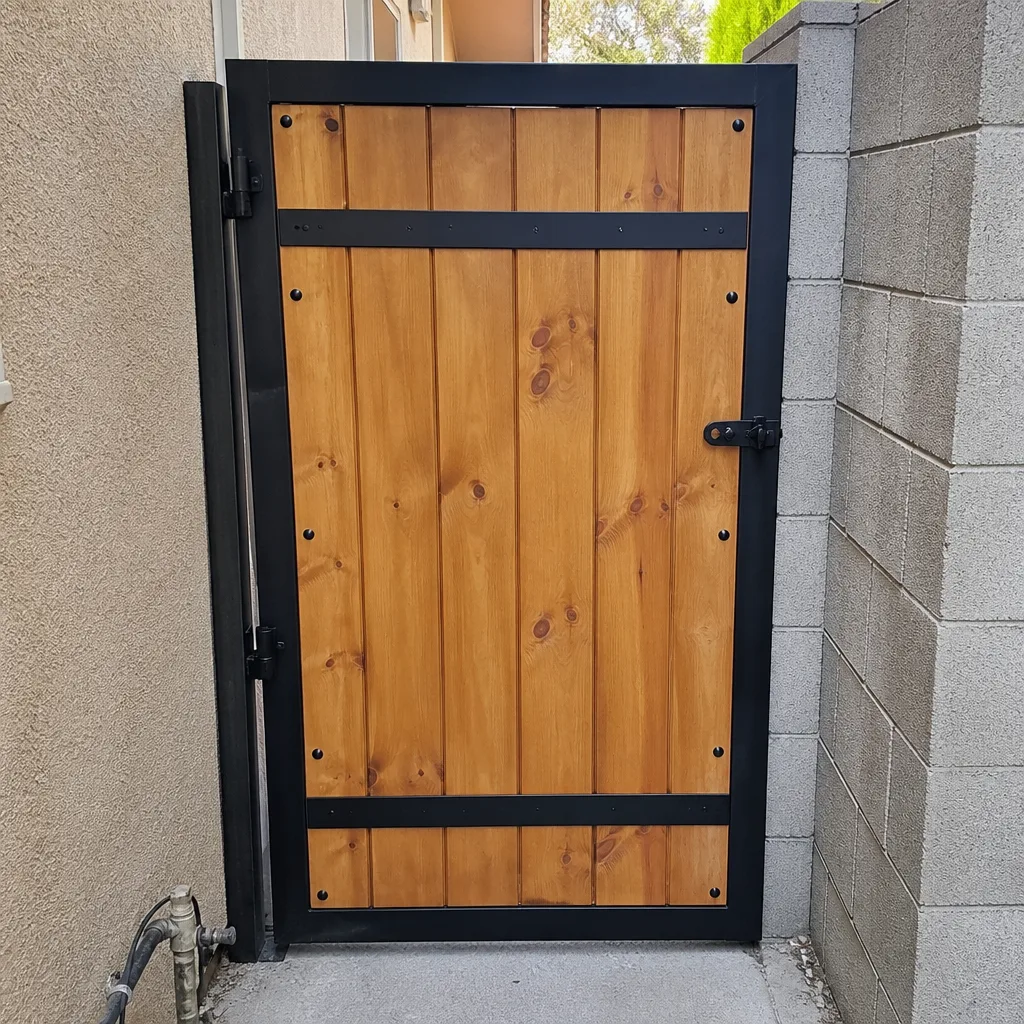 After
After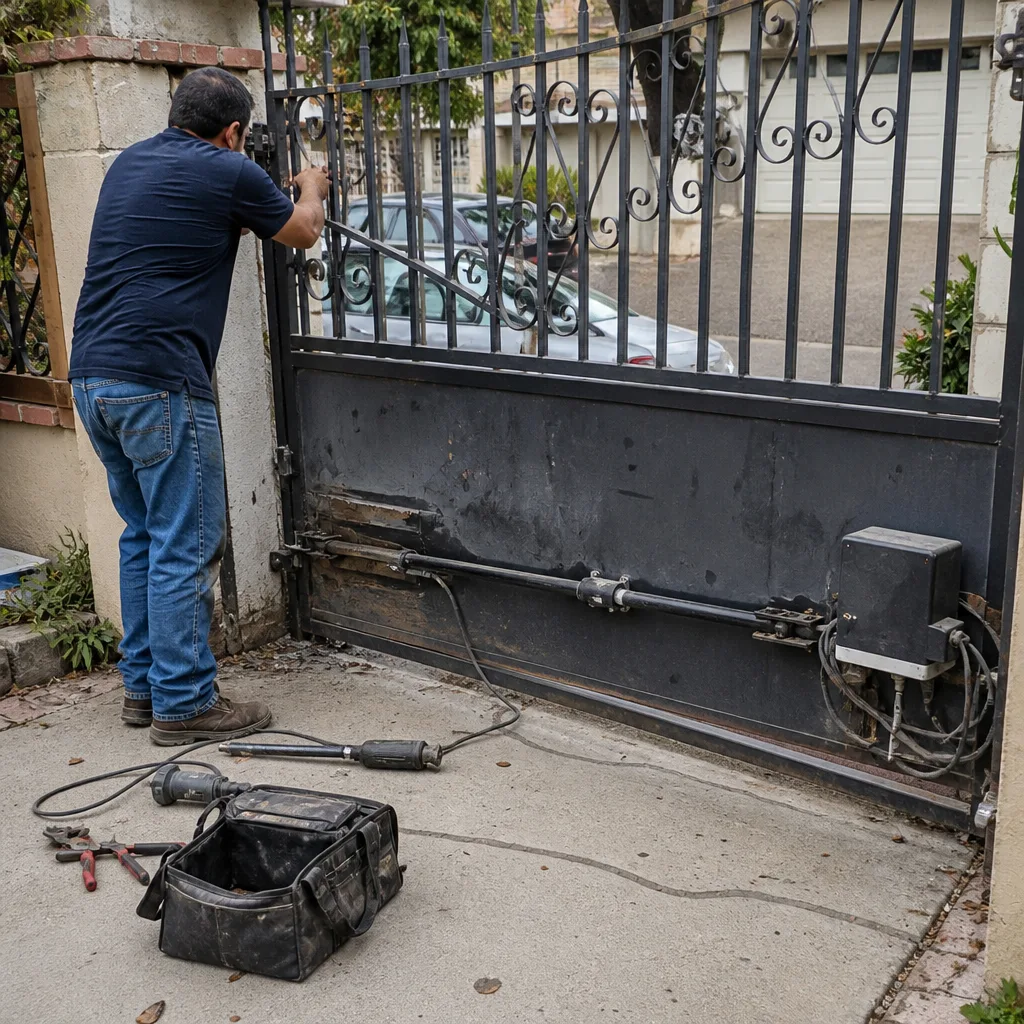 Before
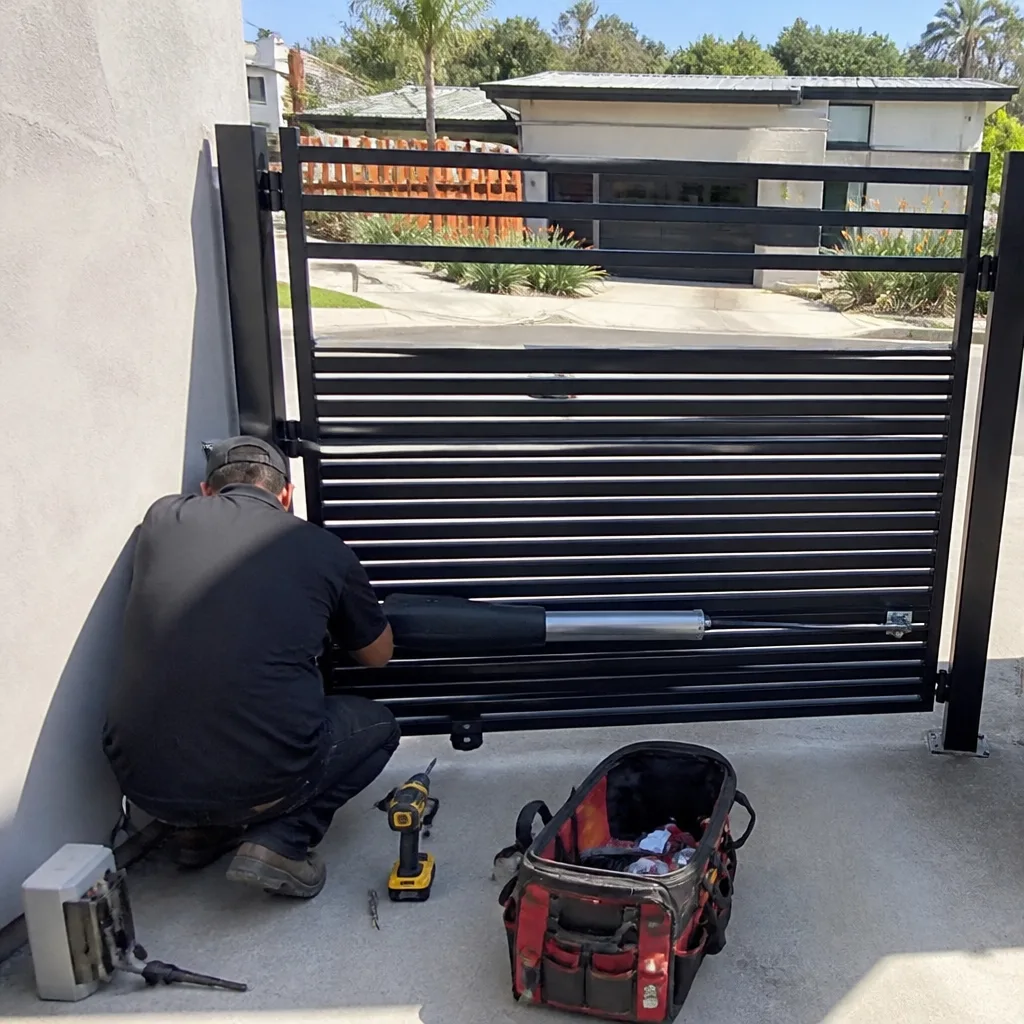 After
After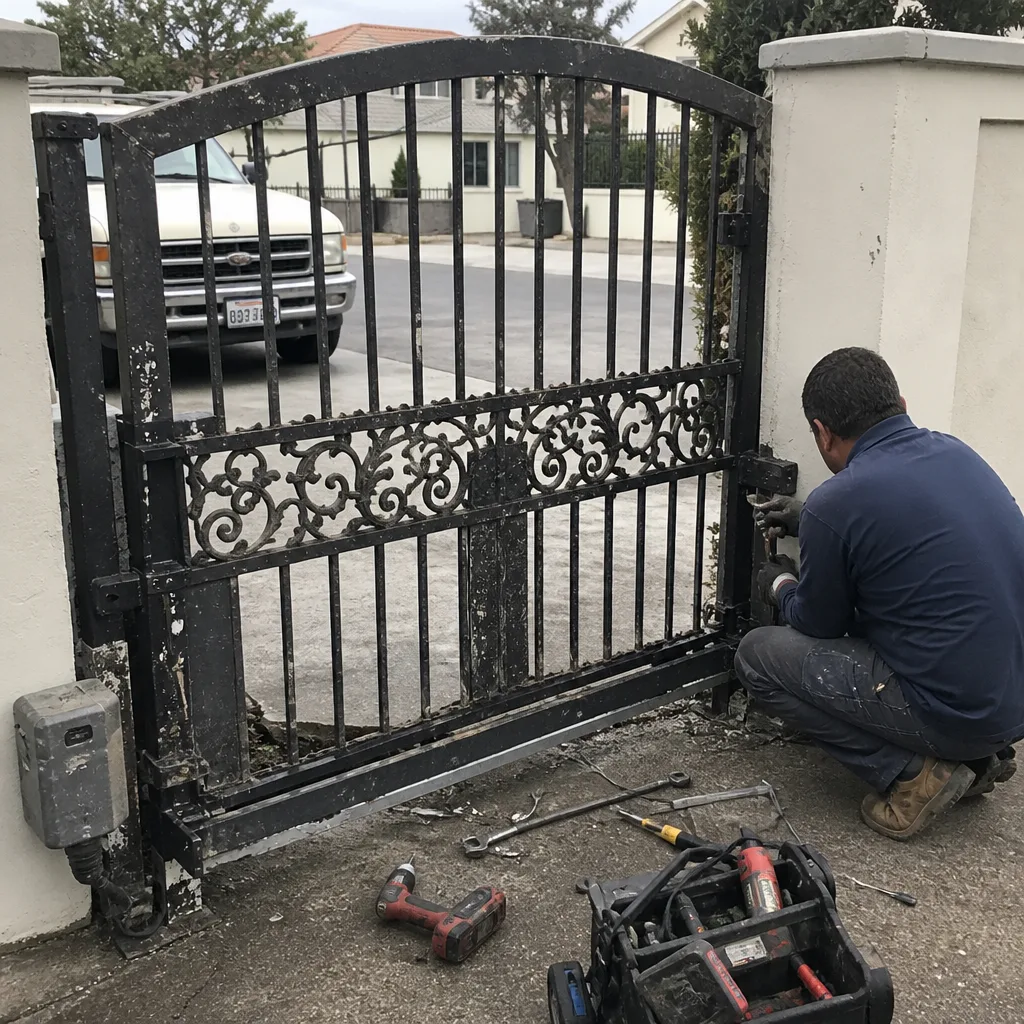 Before
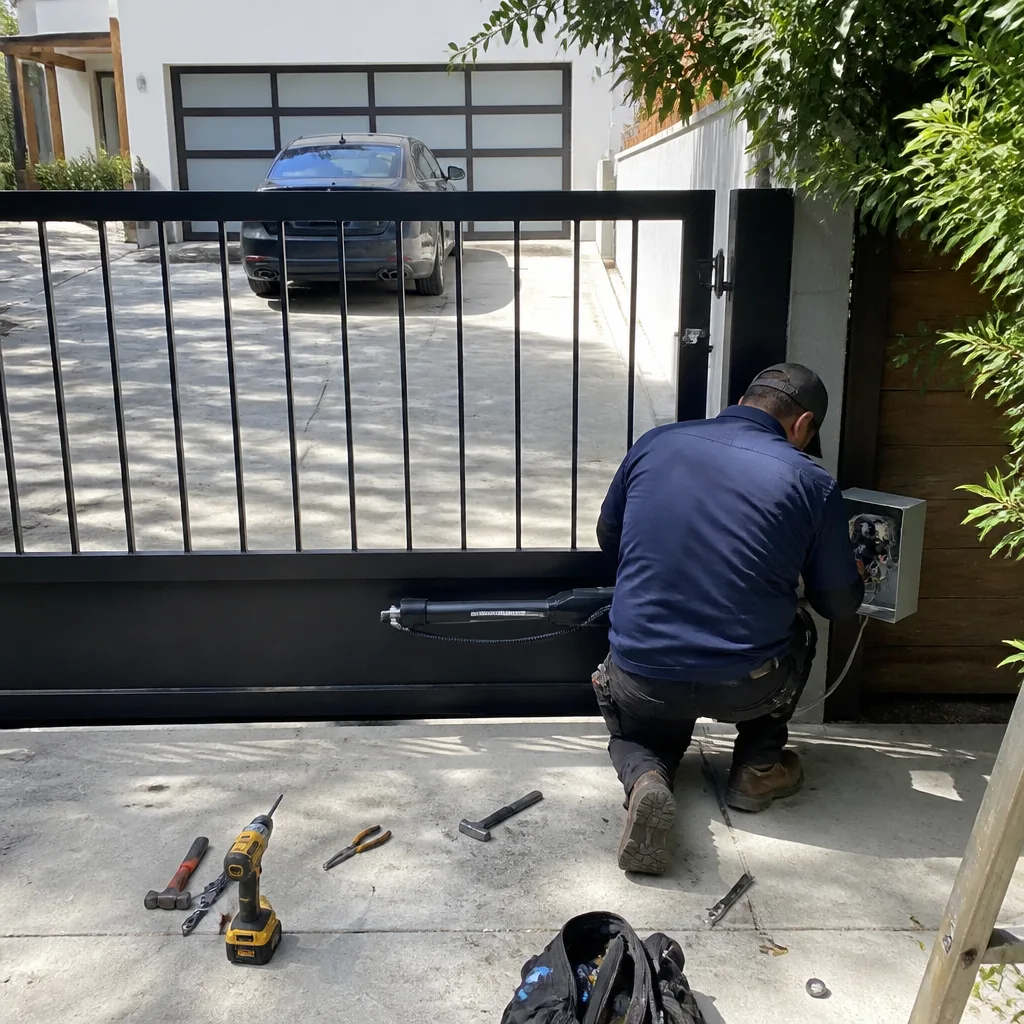 After
AfterDIY vs Professional Gate Motor Repair: What’s Safe to Do Yourself
Gate motor control boards run on low-voltage logic, but they sit inches from 120V line power. The homeowner who’s comfortable wiring a light switch is not automatically safe replacing a control board. In Los Angeles, where gate motors endure salt air near the coast, thermal cycling in the Valley, and occasional power surges from grid strain, we’ve seen too many well-intentioned repairs turn into full motor replacements. This guide draws a hard line between what’s genuinely safe for a homeowner to attempt and what creates risk that no YouTube tutorial can properly convey, similar to the considerations in our DIY vs Professional Gate Repair: What’s Safe to Do Yourself guide.
Quick Answer
Homeowners can safely clean photo-eye sensors, remove physical obstructions, swap remote batteries, and reprogram remotes per the manufacturer’s manual. Anything involving the control board enclosure, wiring splices, limit switch adjustment on a live system, or high-tension mechanical components requires a licensed technician. The dividing line is voltage exposure and liability, not mechanical aptitude.
Table of Contents
- Why Gate Motors Are Different from Other Home Devices
- Safe DIY Tasks: What You Can Handle Without Risk
- Never DIY: Tasks That Require a Licensed Technician
- The Warranty Voiding Reality Most Homeowners Miss
- The Real Financial Math: DIY vs. Professional Repair
- How to Describe Motor Symptoms to Get an Accurate Quote
- Los Angeles-Specific Risks: Climate, Codes, and Common Failures
- Common Mistakes to Avoid
- When to Call a Professional
- Frequently Asked Questions
- The Bottom Line
Why Gate Motors Are Different from Other Home Devices
Most homeowners understand that electrical panels and gas lines demand professional handling. Gate motors occupy a deceptive middle ground. The remote in your hand runs on a 3V coin cell. The control board processes signals at 12V or 24V DC. But the transformer feeding that board, and the line power entering the enclosure, are full household voltage. In many Los Angeles installations, especially older properties in neighborhoods like Silver Lake or Echo Park where gates were retrofitted in the 1990s, the motor housing shares space with line-voltage wiring that was never properly isolated.
The enclosure itself creates the danger. Unlike a thermostat or doorbell, which separate low-voltage components from line power by design, gate motor housings pack everything into a weatherproof box. Moisture intrusion, common in coastal Los Angeles after marine layer mornings, can bridge gaps between safe and hazardous zones. We’ve opened housings in Pacific Palisades where condensation had created conductive paths between a 24V terminal and the 120V input. A homeowner probing with a screwdriver would have no warning until contact.
The mechanical side carries its own risks. Swing operators use articulating arms that can develop stored energy. Slide gate motors engage racks that can bind and release unpredictably. These aren’t theoretical concerns. The Consumer Product Safety Commission tracks gate-related injuries annually, and a significant portion involve maintenance attempts by untrained individuals.
There’s also the grounding problem. Los Angeles electrical code requires gate motors to be properly bonded to ground, but retrofit installations often skip this step or use deteriorated connections. A homeowner working inside a housing with compromised grounding becomes the path of least resistance if they contact a live component.
Safe DIY Tasks: What You Can Handle Without Risk
These tasks require no enclosure opening beyond battery compartments, involve no line voltage, and carry no mechanical hazard. They’re appropriate for any competent homeowner.
Photo-Eye Sensor Cleaning
Dirty or misaligned photo eyes cause more “my gate won’t close” calls in Los Angeles than actual motor failures. Smog particulates, dust from Santa Ana winds, and spider webs across the beam path are constant issues. Clean both sensor housings with a dry microfiber cloth. Check that the LED indicators on both units show solid alignment (typically green or red, depending on brand). If one LED flickers, the bracket may have shifted in wind.
Obstruction Removal
Modern gate motors, including models from Ghost Controls and Mighty Mule, have sensitive obstruction detection. A pebble in the track, a displaced landscape light, or debris from a neighbor’s tree can trigger reverse cycles. Visually inspect the full gate path. On slide gates, check the rack for lodged stones. On swing gates, verify nothing restricts the arc.
Remote Battery Replacement and Reprogramming
Coin cell replacement is straightforward. Reprogramming varies by manufacturer. For DoorKing and Elite systems common in Los Angeles HOAs, the process typically involves a learn button sequence documented in the owner’s manual. If you’ve lost the manual, manufacturer websites maintain PDF archives by model number. Never guess at button sequences; incorrect programming can corrupt the receiver memory and require technician intervention.
Manual Release Operation
Every gate motor has a manual release for power outages. Practice engaging and disengaging it during daylight, with the gate fully closed, so you’re prepared for emergencies. The release mechanism is mechanical and safe, but know that some systems require significant force to move manually.
Visual Inspection of External Components
Walk the installation monthly. Look for corrosion on exposed metal, cracking in conduit runs, or vegetation encroaching on moving parts. In Los Angeles, UV degradation of plastic housings progresses faster than in less sunny climates. Catching a housing crack before water enters is legitimate preventive maintenance.
Never DIY: Tasks That Require a Licensed Technician
These tasks involve line voltage, stored mechanical energy, or manufacturer-protected components. Attempting them risks injury, property damage, and warranty voiding.
| Task | Specific Hazard | Why a Technician Is Required |
|---|---|---|
| Control board replacement | 120V line power present even when motor is “off”; capacitors hold charge | Requires lockout-tagout procedure; board must be programmed to gate travel limits |
| Wiring splices or repairs | Improper splice creates fire risk; Los Angeles code requires specific methods | Must meet NEC and local amendments; improper work voids insurance coverage |
| Limit switch adjustment on live system | Gate can move unexpectedly during adjustment; pinch and crush points active | Technician uses test mode with reduced force; knows mechanical backup positions |
| Transformer replacement | Primary side is line voltage; secondary feeds control logic | Requires voltage verification across both sides; wrong spec damages entire system |
| Loop detector installation or repair | Saw cuts in pavement; inductive loop sizing affects detection accuracy | Requires pavement saw and epoxy work; loop frequency must match detector board |
| Articulating arm service | Stored spring energy; improper disassembly causes uncontrolled release | Specialized tools and procedures vary by Viking, FAAC, and other manufacturers |
The loop detector deserves particular attention in Los Angeles. Many residential installations in the San Fernando Valley and Pasadena use in-ground loops for exit sensing. The detector board inside the housing connects to line voltage, but the loop itself is low-voltage. Homeowners sometimes assume the loop side is safe and attempt repairs. The problem: a damaged loop wire can short to ground, creating a fault condition that damages the detector board or creates a shock hazard at the housing.
Limit switch adjustment illustrates why “it looks simple” is dangerous. The limit switches tell the motor when to stop opening and closing. On a live system, adjusting them requires the gate to move through its cycle while you’re near the mechanical components. Technicians trained on LiftMaster and Linear systems know how to enter a reduced-force test mode. Homeowners typically don’t, and the default operating force can cause serious injury if the gate moves unexpectedly.
The Warranty Voiding Reality Most Homeowners Miss
Every major gate motor manufacturer includes language voiding coverage when non-qualified persons service control components. This isn’t a technicality. It’s enforceable, and we’ve seen claims denied on this basis.
DoorKing’s warranty terms specify that “service must be performed by an authorized dealer or factory-trained technician.” Elite requires registration of the installing dealer and subsequent service by authorized personnel. Viking’s commercial-grade operators, increasingly common in Los Angeles multi-family installations, carry explicit exclusion for “unauthorized enclosure entry.” Ghost Controls and Mighty Mule, popular in residential markets, use language about “qualified installers” that manufacturers interpret to exclude homeowner board work.
The documentation burden matters. When a homeowner replaces a board and the motor fails six months later, the manufacturer requests service records. No documentation means no coverage. A professional repair from Carver Gate Repair in Los Angeles generates the paper trail that preserves warranty rights.
There’s also the parts authenticity problem. Control boards sold through unauthorized channels, including some online marketplaces, may be refurbished, counterfeit, or region-locked. We’ve encountered boards that appeared new but carried firmware incompatible with North American voltage standards. A homeowner installing such a board not only voids warranty but may damage connected components.
The Real Financial Math: DIY vs. Professional Repair
The $60 part versus $150 service call comparison misses critical variables. Here’s the actual calculation homeowners should make.
Scenario: Control board failure on a mid-range residential operator
- DIY path: Board ($45 – $85 online, with authenticity risk) + shipping ($12 – $25) + diagnostic time (2 – 4 hours for a non-expert, often with incorrect initial diagnosis) + tools you may not own (torque screwdriver, multimeter for verification). If the first board is wrong or defective, the cycle repeats. If installation error damages the motor or creates a safety hazard, costs escalate rapidly.
- Professional path: Written diagnostic fee ($0 with repair at Carver Gate Repair) + parts at trade pricing + labor with guarantee. If the repair fails within a year, the second visit is free. The guarantee period alone often exceeds the lifespan of a DIY repair using questionable parts.
The hidden cost is time and disruption. A gate stuck open in Los Angeles isn’t merely inconvenient. It compromises security, may violate HOA requirements, and can trigger municipal code enforcement in areas with specific access control requirements. The homeowner who spends three weekends diagnosing a problem that a technician solves in 90 minutes has paid significantly more in personal time than the service call difference-one reason we explored the full cost breakdown in DIY vs Professional Gate Repair: The Los Angeles Homeowner’s Decision Guide.
There’s also the compounding error risk. We’ve responded to calls in Culver City and Studio City where a homeowner’s initial board replacement fixed the original symptom but created a new one, misaligned limit switches, or left a ground fault. The subsequent professional repair requires undoing the DIY work before addressing the root problem. The total cost exceeds what professional service would have been initially.
Our pricing at Carver Gate Repair is agreed in writing before work starts. The number doesn’t move once we’re on site. That’s part of The Garrison Standard we’ve operated to since 2008.
How to Describe Motor Symptoms to Get an Accurate Quote
Accurate phone descriptions lead to accurate quotes. Vague reports lead to worst-case estimates or multiple trips. Here’s how to communicate effectively with any gate motor technician.
- Identify the brand and model. The nameplate is typically inside the housing or on the motor casing. For Los Angeles installations, common brands include LiftMaster, FAAC, BFT, Linear, Viking, Ghost Controls, DoorKing, Elite, and Mighty Mule. Model numbers matter; “LiftMaster” alone isn’t specific enough.
- Describe the failure mode precisely. “Won’t open” is insufficient. Does the motor hum without movement? Click without humming? Move partially then reverse? Operate from the keypad but not remotes? Each pattern points to different causes.
- Note recent environmental events. Power outages, nearby lightning, landscaping work, or gate impacts change the diagnostic picture. In Los Angeles, SCE grid events and Santa Ana wind damage are relevant context.
- Report any previous service. When, by whom, and what was replaced. This history prevents redundant diagnostics.
- Specify access constraints. Gated communities, steep driveways, or limited parking affect dispatch planning and should be mentioned upfront.
A good description sounds like: “It’s a Viking H-10 slide operator, installed 2019. Yesterday it opened normally but wouldn’t close. The motor hums for three seconds, then stops. No grinding. Remotes and keypad both behave the same. No recent power outages, but gardeners were here Tuesday.” That description lets a technician bring the right parts and quote accurately.
Los Angeles-Specific Risks: Climate, Codes, and Common Failures
Los Angeles conditions create failure modes that don’t apply uniformly elsewhere. Understanding them helps homeowners recognize when professional service is urgent.
Coastal corrosion: Properties within two miles of the Pacific, from Malibu through Palos Verdes, experience accelerated corrosion of metal housings, terminal blocks, and ground connections. We’ve replaced control boards in Marina del Rey that failed not from electrical fault but from salt-air degradation of the enclosure seal, allowing moisture to reach the board. Homeowners can’t assess seal integrity without disassembly.
Thermal cycling: The San Fernando Valley and inland Empire-adjacent areas see daily temperature swings of 30°F or more. Repeated expansion and contraction stress solder joints on control boards. Intermittent failures, where the gate works in morning cool but fails afternoon heat, typically indicate board-level issues requiring replacement.
Power quality: Los Angeles Department of Water and Power and Southern California Edison both experience grid events, from planned maintenance to wildfire-prevention shutoffs. Voltage fluctuations damage transformers and control logic. Surge protection, often omitted in original installation, is a legitimate upgrade that requires professional assessment of the specific motor’s susceptibility.
Seismic considerations: California building code requires certain structural accommodations for gate installations. Post-earthquake, gate alignment can shift, causing motors to work against mechanical binding. A homeowner adjusting limit switches to compensate for binding addresses the symptom while accelerating motor failure.
HOA and municipal requirements: Many Los Angeles HOAs require licensed contractor work for any gate system modification. Some municipalities require permits for motor replacement. DIY work that violates these requirements can create liability if injury occurs.
Common Mistakes to Avoid
- Assuming “low voltage” means “safe voltage.” The control logic is low voltage. The power supply and often the motor itself are not. Enclosure opening crosses this boundary unpredictably.
- Following generic YouTube tutorials for specific brands. A video for a LiftMaster operator won’t correctly describe the limit switch procedure for a FAAC or BFT system. Wrong procedures damage components.
- Ignoring the manual release position. Some systems require the manual release to be re-engaged in a specific orientation. Incorrect re-engagement causes the motor to fight the release mechanism, stripping gears.
- Using non-OEM remotes or boards from unverified sellers. Counterfeit components are common online. They may pair initially but fail to maintain programming, or they may broadcast on non-compliant frequencies, creating interference liability.
- Adjusting force settings to compensate for mechanical problems. When a gate drags or binds, increasing motor force masks the underlying issue while accelerating wear and creating crush hazard. In Los Angeles, where children and pets are common in gated properties, this is particularly dangerous.
- Neglecting to verify GFCI protection. Outdoor gate motors require GFCI-protected circuits. A homeowner who discovers their installation lacks this protection should not simply proceed with other work. The missing protection indicates prior non-compliant installation that needs professional correction.
When to Call a Professional
Call when the problem involves enclosure entry, electrical diagnosis, or any component you can’t identify with certainty. Call when the gate poses a security or safety risk in its current state. Call when you’ve attempted the safe DIY steps and the problem persists, indicating deeper system involvement.
At Carver Gate Repair, we provide Gate Motor Repair services with a live person answering calls 24 hours a day, including weekends and holidays. No voicemail, no callback queues. Our technicians are background-checked, uniformed, and trained on nine gate motor brands. Every repair carries a written price before work starts and a 365-Day Done Right Promise. If a repair fails within that year, we return at no charge.
For gate motor repair in Los Angeles, or to discuss whether your specific situation is appropriate for DIY attention, call (469) 530-2485. Estimates are free.
Frequently Asked Questions
Most residential gate motor repairs in Los Angeles range from $180 to $450, depending on whether the issue is a simple component replacement or requires board-level work. Motor replacement, when necessary, typically runs $850 to $2,200 including installation and programming. We provide a written price before any work starts, so the number never changes at your gate. Call (469) 530-2485 for a free estimate specific to your system.
Yes, if you have the correct OEM remote and the owner’s manual for programming procedures. Purchase remotes from the manufacturer or an authorized dealer to ensure compatibility. If programming fails after following the manual exactly, the receiver board may have a fault that requires professional diagnosis.
This pattern most commonly indicates photo-eye misalignment or obstruction, a failed close limit switch, or a control board logic fault. Start with the safe DIY checks: clean and align photo eyes, remove any track obstructions, verify the keypad and remotes both produce the same behavior. If these steps don’t resolve it, the issue likely requires enclosure-level diagnosis.
Almost certainly, if the DIY work involves the control board, wiring, or any component inside the main enclosure. Major manufacturers including DoorKing, Elite, and Viking explicitly require authorized service for warranty coverage. Preserve your rights by using qualified technicians for any covered repair.
Check your electrical panel for a GFCI breaker protecting the gate circuit, or test the outlet or junction box feeding the motor with a GFCI tester. Outdoor gate motors in Los Angeles must have GFCI protection per California Electrical Code. If yours lacks it, the installation predates current requirements or was done improperly. This condition requires professional correction, not homeowner workaround.
Control board failure from power quality issues and moisture intrusion, particularly in coastal neighborhoods and older installations with degraded enclosure seals. The second most common is mechanical wear from gates that were never properly balanced, causing motors to work harder than designed. Both require professional assessment to address root causes rather than symptoms.
The Bottom Line
The safe boundary for homeowner gate motor work is clear: external cleaning, obstruction removal, battery replacement, and remote programming. Everything inside the enclosure, everything involving line voltage, and everything that affects force or limit settings belongs to trained technicians. The question isn’t whether you’re handy. It’s whether the risk of voltage exposure, mechanical injury, and warranty voiding justifies saving a service call fee. For most Los Angeles homeowners, especially those with systems from Viking, Ghost Controls, DoorKing, Elite, or other major brands, professional repair with written pricing and a year-long guarantee is the sounder investment. Explore more guides & resources to keep your system running safely.
Carver Gate Repair is part of the Garrison Partners family, operating to The Garrison Standard since 2008. We handle gate repair, gate installation, and gate motor repair across Los Angeles with background-checked, uniformed technicians and live phone coverage every hour of every day.
Call (469) 530-2485 for a free estimate. We’ll give you a written price before any work starts, and we back every repair with our 365-Day Done Right Promise.
Written by Lonnie Burke, Owner at Carver Gate Repair, serving Los Angeles since 2008.