
Last updated October 10, 2026
Free on-site gate assessment - hinges, posts, and your LiftMaster or Nice gate operator checked before anything is quoted
The assessment is free and the quote is the invoice.
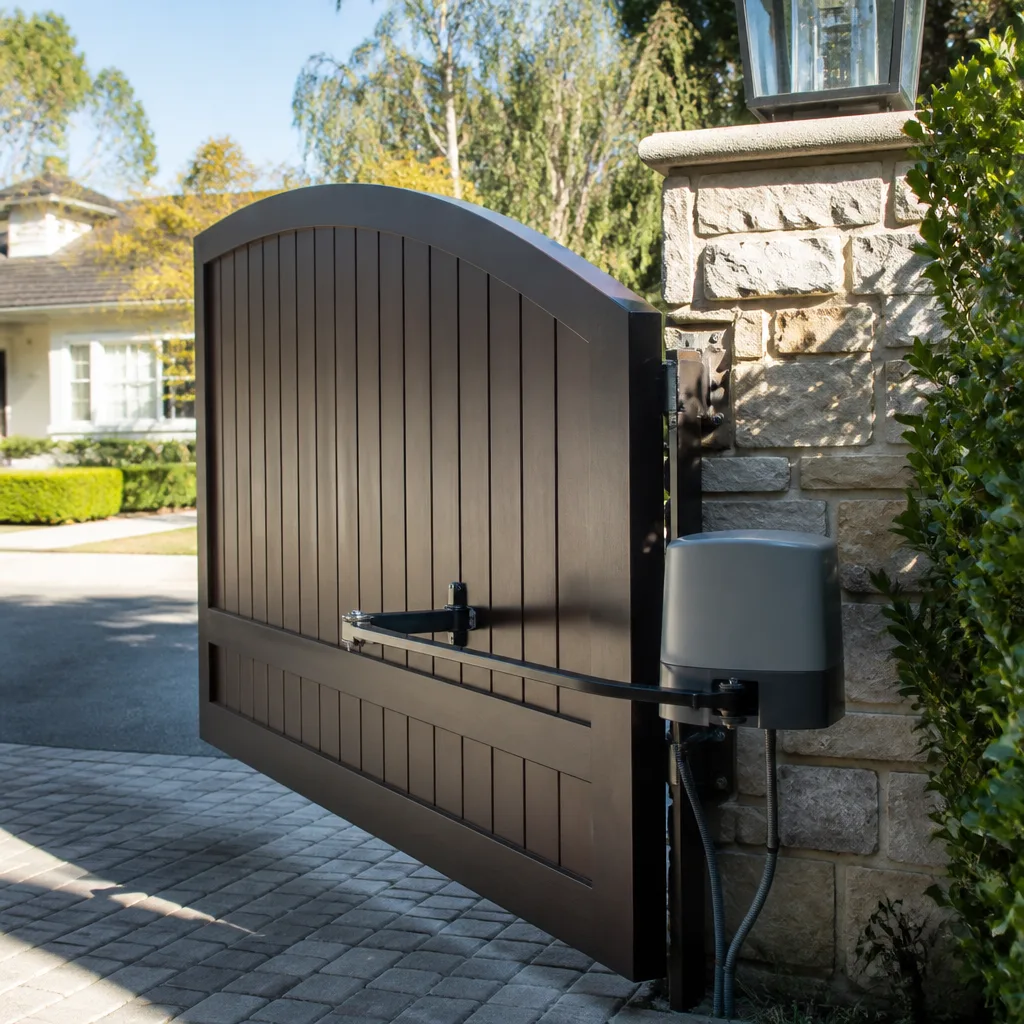
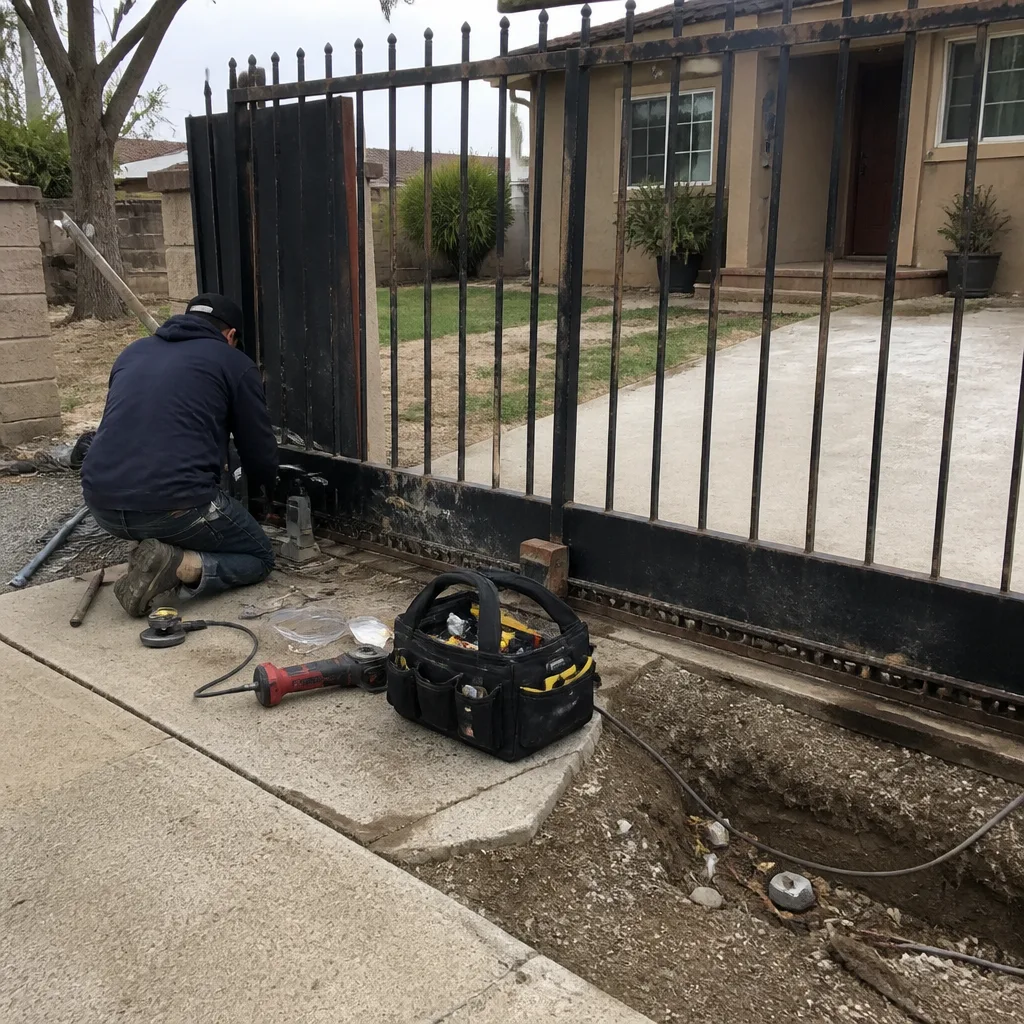 Before
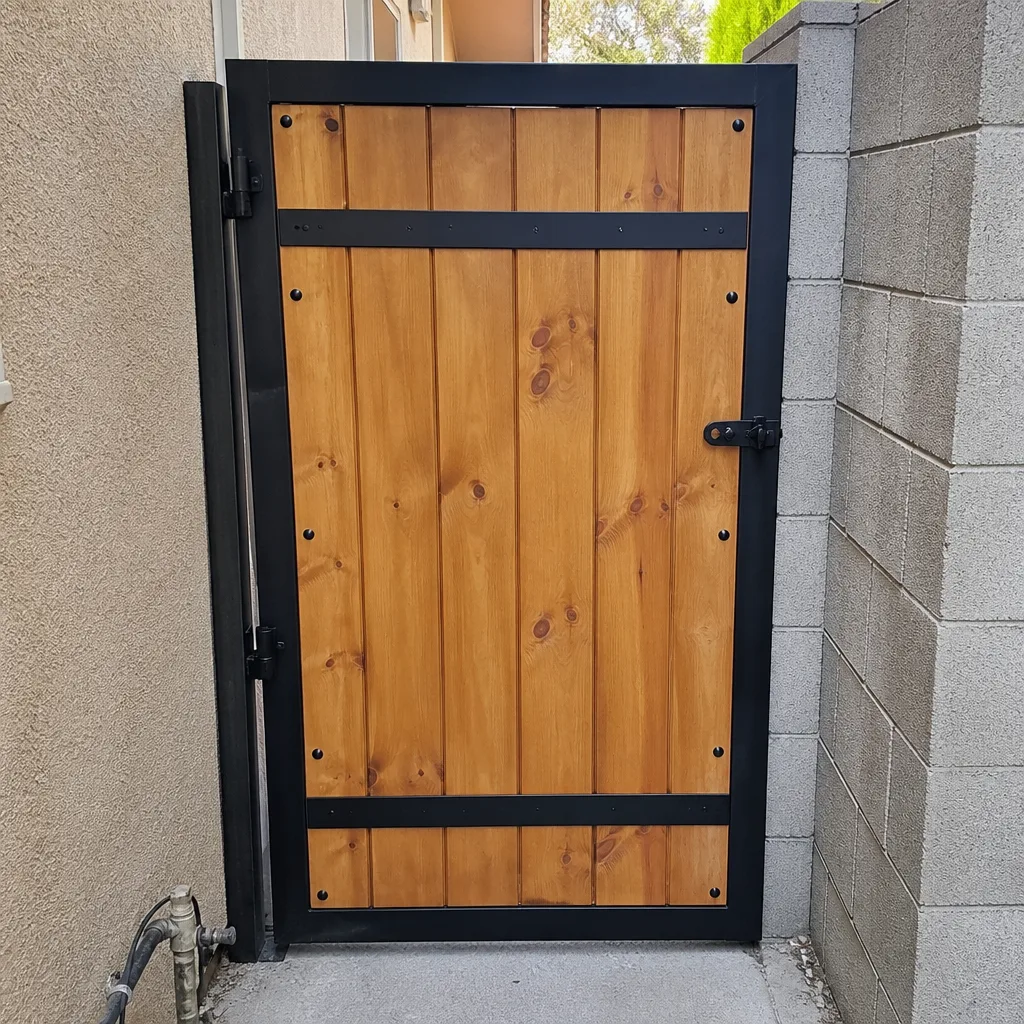 After
After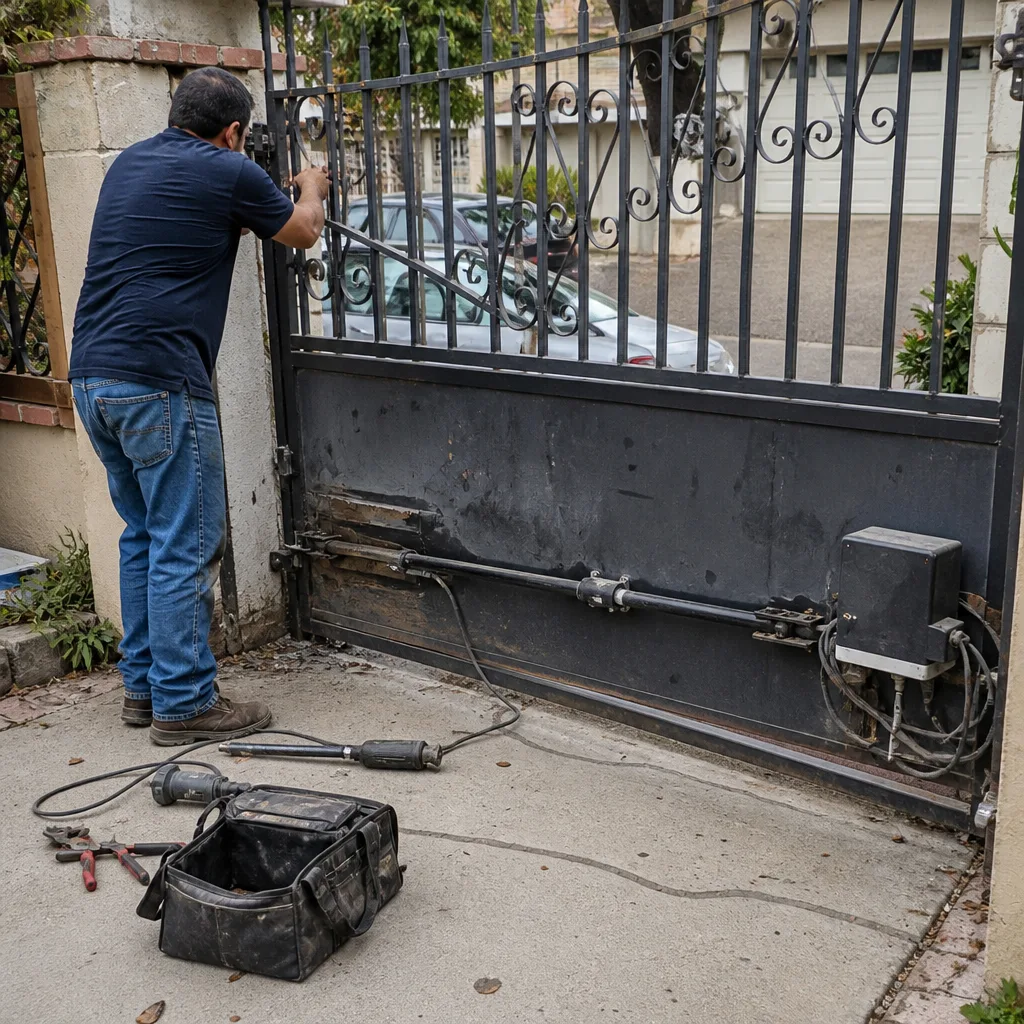 Before
 After
After Before
 After
AfterDIY vs Professional Gate Repair: The Los Angeles Homeowner’s Decision Guide
Here’s something most gate repair guides won’t tell you: a gate operator’s entrapment protection system – the sensor or pressure-reversal mechanism required by UL325 – can be inadvertently disabled during a DIY limit-switch adjustment. California liability law treats that as a dangerous condition, and your homeowner’s insurance may not protect you if the gate subsequently injures someone. In Los Angeles, where hillside properties, coastal corrosion, and aging electrical systems are common, the question isn’t whether you’re handy enough. It’s whether the specific task carries electrical, entrapment, or warranty risk that makes amateur work genuinely dangerous or financially costly. This guide breaks down exactly which repairs belong in each category, what LA-specific factors change the math, and how to protect yourself before you pick up a wrench. For hands-on help, see our Gate Repair services.
Quick Answer
Most Los Angeles homeowners can safely handle lubrication, debris clearing, and basic photo-eye alignment on their gates. Tasks involving high-voltage electrical work, spring or counterweight tension, or any adjustment to the limit switch or entrapment protection system should be left to a professional. The dividing line is not skill – it’s liability exposure, warranty voiding, and the potential for serious injury.
Table of Contents
- Safe DIY Gate Repairs
- DIY Repairs With Significant Risk
- Professional-Only Repairs
- The Warranty Voiding Problem
- Realistic Cost Comparison: DIY vs Professional
- Los Angeles-Specific Factors That Change the Calculus
- Tools, Parts, and Where to Source Them in LA
- Common Mistakes to Avoid
- When to Call a Professional
- Frequently Asked Questions
Safe DIY Gate Repairs
These three categories of maintenance and minor repair carry minimal risk of injury, property damage, or warranty voiding. They’re also the tasks that, when neglected, cause the majority of service calls we see across Los Angeles neighborhoods from Pacific Palisades to Pasadena.
1. Cleaning and Debris Removal
Gates in Los Angeles collect dust, leaf litter, and – in coastal areas like Marina del Rey or San Pedro – salt spray residue that accelerates corrosion on tracks and rollers. A homeowner can safely:
- Power down the operator at the disconnect switch
- Clear leaves and debris from the track, gate path, and operator housing
- Wipe down photo-eye lenses with a clean, dry cloth
- Inspect the gate path for obstructions like displaced paving stones or root growth
Cost: $0. Time: 15-30 minutes. Risk: negligible.
2. Lubrication of Moving Parts
LA’s dry climate means lubricants evaporate faster than in humid regions. Use a silicone-based spray or white lithium grease on hinges, rollers, and chain drives. Do not use WD-40 as a long-term lubricant – it displaces moisture but provides no lasting film.
Avoid lubricating the operator’s internal gears or the brake mechanism. These require specific lubricants and can attract dust if over-greased.
3. Basic Photo-Eye Alignment
Most modern operators, including common LiftMaster and Linear systems in Los Angeles, use through-beam photo eyes. When the LED indicator shows misalignment:
- Loosen the mounting bracket with a Phillips head screwdriver
- Adjust until both units show steady green LEDs
- Tighten and test the gate cycle
If alignment holds for three cycles, the fix is likely stable. If the LED flickers intermittently, the issue may be voltage drop from degraded wiring – that’s an electrician’s or gate technician’s job.
DIY Repairs With Significant Risk
These tasks can be done correctly by a competent homeowner, but each carries a specific risk profile that most online tutorials gloss over. Weigh these carefully.
Replacing a Gate Remote or Keypad Battery
Simple on the surface, but there’s a catch. Many FAAC and BFT operators require reprogramming all remotes after a complete power loss. If you pull the operator battery to replace it without noting the dip-switch positions or stored codes, you may lock yourself out entirely. Document everything with photos before disconnecting power.
Tightening Loose Hardware
Hinge bolts and track brackets loosen over time, especially on hillside properties in the Hollywood Hills or Laurel Canyon where soil movement shifts gate posts. A homeowner can tighten visible fasteners. But torque specifications matter: over-tightening a lag bolt into a pressure-treated post can split the wood, and under-tightening allows dangerous play in a heavy gate.
The hidden risk: a gate that appears stable at rest can rack or twist during operation, binding the operator and causing motor damage that costs $400-800 to repair professionally.
Replacing a Worn Gate Wheel or Roller
Sliding gate wheels and swing gate hinge rollers are replaceable by a determined homeowner. The risk is supporting the gate weight safely during replacement. A typical wrought-iron driveway gate in Los Angeles weighs 200-600 pounds. Improper support – a jack that slips, a makeshift prop that shifts – can crush hands or feet. Use proper jack stands, not hydraulic jacks alone, and never work under a gate supported only by a helper’s strength.
Professional-Only Repairs
These tasks should never be attempted by homeowners. The risk profile includes death, serious injury, or liability exposure that homeowner’s insurance may not cover. Preventing problems through scheduled care is safer-see our Gate Installation Maintenance Schedule: What to Do and When.
High-Voltage Electrical Work
Gate operators in Los Angeles draw 110V or 220V. Older homes in neighborhoods like Echo Park, Silver Lake, and parts of the San Fernando Valley still have aluminum wiring or ungrounded circuits. An operator installation on an aluminum circuit without proper antioxidant compound and compatible connectors creates a fire hazard. This is not hypothetical – we’ve responded to calls where DIY wiring melted the operator terminal block.
California Electrical Code requires a dedicated circuit for gate operators in new installations. Retrofit work on existing circuits should be performed by a licensed electrician or a gate technician with electrical competency certification.
Spring and Counterweight Systems
Some heavy swing gates use torsion springs or counterweight mechanisms to balance load. These store enormous mechanical energy. A spring under tension can sever fingers or cause facial injuries if released improperly. There is no safe DIY method for spring adjustment or replacement.
Limit Switch and Entrapment Protection Adjustment
This is the critical safety system. The limit switch controls where the gate stops in open and closed positions. The entrapment protection system – required by UL325 and enforced by California building inspectors – includes:
- Photo-eye sensors (non-contact)
- Edge sensors (contact)
- Pressure-reversal (force-sensing in the operator)
Adjusting the limit switch without recalibrating the entrapment protection can cause the gate to close with excessive force or fail to reverse on contact. In California, this creates premises liability exposure. If a visitor, delivery driver, or child is injured, your homeowner’s policy may deny coverage for “known dangerous conditions” or unpermitted modifications.
Control Board and Logic Module Replacement
Modern operators from LiftMaster, FAAC, and Viking use proprietary control boards with encrypted or brand-specific programming. Replacement boards often require factory initialization that demands software tools or dealer credentials. A board installed without proper initialization may run the gate but disable safety features silently.
The Warranty Voiding Problem
Here’s where the DIY calculation gets expensive. Most gate operator manufacturers explicitly void warranties on DIY repairs beyond basic maintenance. Here’s what the major brands state:
| Brand | Warranty Voiding Trigger | Typical Warranty Period |
|---|---|---|
| LiftMaster | Opening the operator housing or replacing internal components by non-dealer personnel | 3-5 years on motor, 1 year on parts |
| FAAC | Any repair not performed by FAAC-certified technician; serial number registration required | 2 years parts and labor |
| BFT | Control board replacement or limit switch adjustment without factory tool | 2 years |
| Linear | Modification of factory settings beyond user-accessible parameters | 3 years residential, 1 year commercial |
To check your coverage status, locate the serial number plate on the operator housing and call the manufacturer’s warranty line with your installation date. If the operator was installed by a previous homeowner, you may need the original invoice. Many Los Angeles homes have operators installed during flips or renovations where documentation was lost – in those cases, assume the warranty is void and factor that into repair decisions.
A $200 DIY control board replacement on a voided warranty becomes a $600-900 total loss if the board fails or is installed incorrectly. The professional repair with warranty backing is often the lower-risk financial choice.
Realistic Cost Comparison: DIY vs Professional
These ranges reflect Los Angeles market rates as of 2024-2025, including the San Fernando Valley, Westside, and downtown-adjacent neighborhoods.
Scenario 1: Photo-Eye Replacement
DIY: $35-80 for universal photo-eye pair from Amazon or local supplier. 30-60 minutes. Risk: low if aligned correctly.
Professional: $180-280 including diagnosis, parts, and alignment verification. Includes 1-year guarantee.
DIY error cost: Misaligned eyes causing repeated service calls, or incompatible voltage damaging the operator control board ($400-650).
Scenario 2: Gate Wheel Replacement (Sliding Gate)
DIY: $25-60 per wheel, plus jack stands ($40-80 if not owned). 2-3 hours. Risk: moderate – gate support is critical.
Professional: $250-450 including support equipment, wheel replacement, and track realignment.
DIY error cost: Gate drops and bends track ($300-500), or misalignment causes operator strain and motor failure ($600-1,200).
Scenario 3: Control Board Replacement
DIY: $150-350 for board, sourced online. 1-2 hours. Risk: high – warranty voiding, incorrect initialization, safety feature disablement.
Professional: $550-900 including board, programming, safety system verification, and 1-year guarantee.
DIY error cost: Board damaged by static discharge ($150-350 replacement), operator rendered inoperable requiring full replacement ($1,800-3,500), or injury liability from disabled entrapment protection (potentially catastrophic).
The pattern: savings shrink as complexity rises, and the tail risk of DIY error grows disproportionately. Explore more guides & resources to keep your gate running safely. On control board work, the professional route costs roughly 2x the parts but eliminates warranty voiding and liability exposure.
Los Angeles-Specific Factors That Change the Calculus
Three local conditions make DIY gate repair riskier in Los Angeles than in many other markets.
Aluminum Wiring in Older Homes
Homes built in Los Angeles between 1965 and 1973 often have aluminum branch circuit wiring. Gate operators draw significant current during startup, and aluminum expands and contracts more than copper under thermal load. Connections loosen over time. A DIY operator installation or electrical modification without proper Al/Cu-rated connectors and antioxidant compound creates fire risk. We’ve found charred terminal blocks in homes from Los Feliz to Van Nuys where aluminum connections were simply wrapped with electrical tape.
Hillside Properties and Soil Movement
Gate posts in the Hollywood Hills, Bel Air, Pacific Palisades, and other hillside neighborhoods shift as soil expands and contracts. A gate that operated smoothly in October may bind in April after winter rains. The DIY temptation is to force adjustment at the operator – tighten the clutch, increase motor force. This masks the underlying post movement and accelerates operator wear. Professional diagnosis includes checking post plumb and footing integrity, not just the gate mechanics.
Coastal Corrosion Acceleration
Properties within two miles of the Pacific – Santa Monica, Venice, Marina del Rey, San Pedro, Malibu – experience salt-air corrosion that degrades gate hardware 2-3x faster than inland areas. Stainless steel hardware rated for 10 years inland may show pitting in 3-4 years coastally. DIY parts sourcing often defaults to lowest-cost hardware that lacks marine-grade ratings. A professional repair specifies 316 stainless or hot-dip galvanized components appropriate to the exposure.
Tools, Parts, and Where to Source Them in LA
Not all gate hardware is available to retail consumers, and pricing varies dramatically by channel.
Consumer-Accessible Sources
Home Depot / Lowe’s (multiple LA locations): Basic hinges, rollers, generic remotes, lubricants. Limited operator-specific parts. Markup: moderate. Quality: adequate for basic hardware, rarely carries brand-specific components for FAAC, BFT, or Viking.
Amazon / Online: Broad selection, including aftermarket photo-eyes, replacement boards, and remote clones. Risk: counterfeit boards, incompatible firmware versions, no warranty support. Markup: low to moderate. Quality: highly variable.
Local fence and gate suppliers (San Fernando Valley, Commerce, Ontario): Professional-grade hardware, custom-fabricated components, welding supplies. Some sell to homeowners; others are trade-only. Markup: low. Quality: high. Access: requires phone calls and persistence.
Trade-Restricted Sources
Factory-authorized parts for LiftMaster, FAAC, BFT, and Linear are distributed through dealer networks. Manufacturers restrict certain components – control boards, encrypted receivers, safety edge systems – to certified installers. The stated reason is liability; the practical effect is that homeowners cannot obtain OEM replacement parts for some repairs at any price.
Aftermarket boards exist but often lack the firmware revisions that enable full safety feature compliance. A board that runs the gate but fails to meet UL325 entrapment standards is a liability time bomb.
Tool Requirements
Beyond basic hand tools, professional gate repair requires:
- Torque wrench (for hinge and track fasteners – specification matters)
- Multimeter with clamp ammeter (for diagnosing voltage drop and motor draw)
- Gate support equipment (engineered stands, not improvised props)
- Programming tools for specific brands (dealer-restricted)
The investment for occasional DIY use: $300-600. For a single repair, tool cost often erases the DIY savings.
Common Mistakes to Avoid
- Disconnecting the operator without photographing dip-switch settings first. On FAAC and older Linear systems, this erases all remote programming. Reprogramming requires a working master remote – which homeowners often don’t have.
- Adjusting the clutch or force setting to compensate for mechanical binding. This is the most common DIY error we correct in Los Angeles. It burns out the motor in weeks and creates entrapment hazard immediately.
- Using standard steel hardware within five miles of the coast. In Redondo Beach, Manhattan Beach, and similar areas, standard zinc-plated bolts show rust bloom in 6-12 months. The gate looks fine until the hinge pin seizes or shears.
- Ignoring the ground fault requirement. California code requires GFCI protection for outdoor gate operators. DIY electrical work often omits this, creating shock hazard and code violation that complicates home sales.
- Assuming all photo-eyes are interchangeable. NPN vs. PNP output, 12V vs. 24V supply, and modulated vs. non-modulated beams vary by brand. A mismatched photo-eye may appear to work but fail in bright sun or at range.
- Working alone on heavy gates. No gate repair is worth a crushing injury. If you cannot safely support the gate with engineered equipment, don’t attempt the repair.
When to Call a Professional
Call a technician when the repair involves electrical work beyond battery replacement, any spring or counterweight system, limit switch or safety system adjustment, or a gate that has shifted on its posts. Also call when you cannot identify the operator brand and model, or when the gate exhibits intermittent behavior that suggests a control logic issue rather than a mechanical problem.
Carver Gate Repair offers free estimates in Los Angeles. Our technicians are background-checked, uniformed, and trained on nine gate-motor brands including LiftMaster, FAAC, BFT, Linear, Viking, Ghost Controls, DoorKing, Elite, and Mighty Mule. Every repair includes a written price before work starts and our 365-Day Done Right Promise. Call (469) 530-2485 to schedule.
Frequently Asked Questions
Most residential gate repairs in Los Angeles range from $180 for simple photo-eye or remote issues to $900 for control board replacement or motor rebuilds. Full operator replacement typically runs $1,800-3,500 depending on gate weight, cycle frequency, and accessory requirements like intercoms or loop detectors. We provide a written price before any work starts, so the number never moves. Call (469) 530-2485 for a free estimate.
Generally no. LiftMaster, FAAC, BFT, and Linear all void warranties on internal repairs performed by non-authorized personnel. Basic maintenance – cleaning, lubrication, photo-eye alignment – typically does not void warranty, but opening the operator housing or replacing components usually does. Check your specific warranty terms by calling the manufacturer with your serial number.
LA’s dry heat causes metal expansion and lubricant evaporation. In hillside neighborhoods, summer soil contraction can shift gate posts slightly. The operator clutch compensates until it can’t, then the motor overheats. The fix is usually mechanical realignment, not operator replacement. A professional diagnosis separates post movement from operator wear.
Yes. Homes built 1965-1973 in neighborhoods like Los Feliz, Echo Park, and North Hollywood often have aluminum branch circuits. Gate operators draw high startup current, which accelerates connection degradation. Proper repair requires Al/Cu-rated connectors and antioxidant compound, not standard wire nuts. This is electrician or certified technician territory.
Test monthly: place a solid object in the gate path and verify reversal within 2 seconds of contact or beam interruption. Check that the gate stops at the same open and closed positions consistently. If the gate closes with increasing force, drifts from its stop positions, or fails to reverse, stop using it and call a technician. These are entrapment hazards, not inconveniences.
Assume the warranty is void. Document the brand, model, and serial number from the operator housing label. Photograph the control board and any visible dip-switch settings. This information lets a technician source correct parts and program remotes without factory support. For new gate installation in Los Angeles, insist on written documentation and warranty transferability.
The Bottom Line
The DIY vs. professional question for gate repair comes down to risk categories, not handiness. Cleaning, lubrication, and basic photo-eye alignment are safe homeowner tasks. Electrical work, spring systems, and any safety-system adjustment carry injury liability and warranty voiding risk that make professional service the rational choice. In Los Angeles, aluminum wiring, hillside soil movement, and coastal corrosion add local complications that favor expert diagnosis. When the repair involves components inside the operator housing or any force-bearing element, the savings of DIY rarely justify the exposure. Get a written price, verify the guarantee terms, and know who’s accountable if something goes wrong.
Written by Lonnie Burke, Owner at Carver Gate Repair, serving Los Angeles since 2008.